


Committee Chairman
46. Jay Bell
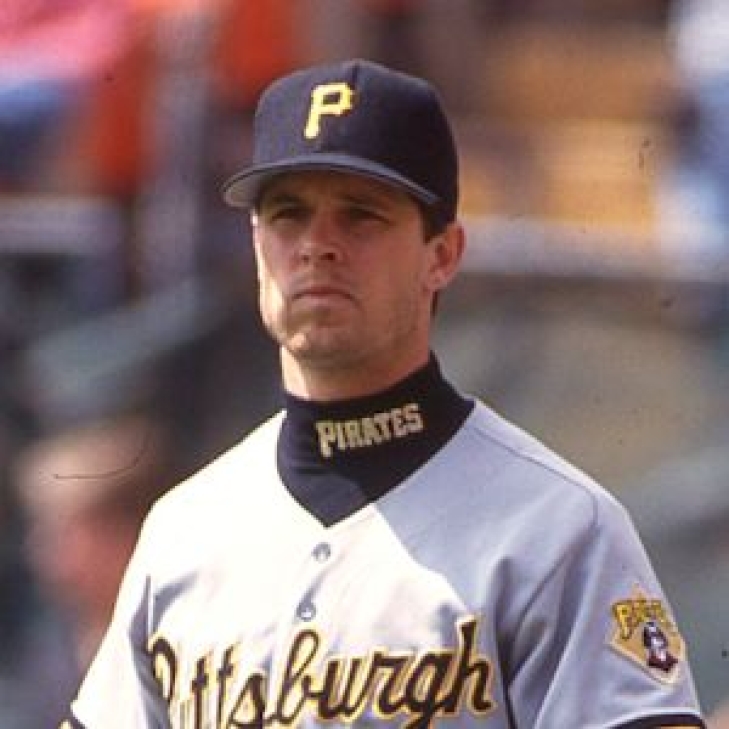
The early-1990s Pittsburgh Pirates featured flashy stars, but the team’s core was a smart, selfless player who understood his role. Acquired from Cleveland in 1989 as the player to be named later in the Felix Fermín trade, Jay Bell didn't rely on raw athleticism. Instead, he used his mental acuity, positional awareness, and situational skills to produce consistently excellent plays, thriving under manager Jim Leyland.
His initial appearance over 70 games in 1989 set the stage for him to take on the full-time starting shortstop position before the historic 1990 pennant race. He quickly established a reliable infield routine that minimized inconsistency. While Bell lacked exceptional lateral speed, he made up for it with sharp baseball intelligence, often predicting ball movements to position himself perfectly to cut off opposing offenses. He ranked among the top six in defensive bWAR in the Senior Circuit three times as a Pirate, led all National League shortstops in total assists four times and putouts three times, and earned a Gold Glove in 1993.
His best season was during a remarkable 1993 campaign. After star players Barry Bonds and Bobby Bonilla left through free agency, Bell took on a larger offensive role, breaking his previous limits by hitting .310 with a career-best 187 hits and 31 doubles. He was selected for his first All-Star game and received a Silver Slugger award, demonstrating his ability to lead a lineup with outstanding bat control.
During the mid-1990s, as the organization underwent a challenging financial restructuring in a small market, the front office formally indicated a shift for the remaining veteran core. After the 1996 season ended, management carried out a winter trade, sending the veteran leader to the Kansas City Royals in exchange for Joe Randa and Jeff Wallace.
Bell would go on to enjoy an exceptional second act in the desert, famously scoring the game-winning run in Game 7 of the 2001 World Series for Arizona, but his defensive foundation was forever built on the Three Rivers Stadium turf.
He departed the Pirates, leaving behind a magnificent, high-volume localized baseline: 1,124 hits, 185 doubles, 61 home runs, and 434 RBIs alongside a highly respectable .269 batting average across 1,098 games.
42. Frank Killen
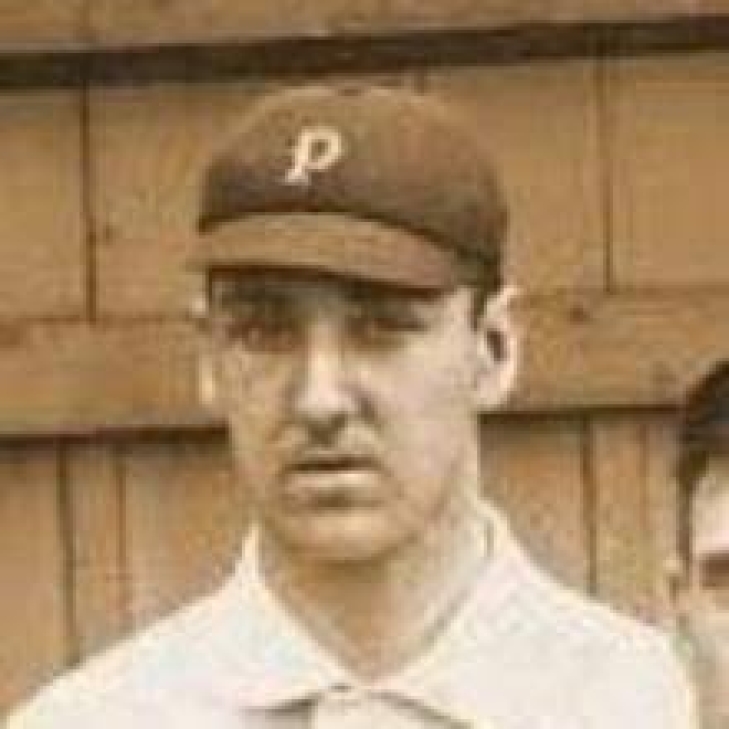
The early history of baseball features many modest, low-velocity pitchers who quietly filled rotation spots, but Frank DeHaas Killen seemed like he was built in a laboratory for the 1890s. Standing 6-foot-1 with a lean, athletic frame, the left-hander from Pittsburgh had a commanding presence, easily fitting into the modern game. His raw, high-velocity talent was paired with a notoriously explosive, hyper-emotional temperament. Killen was a mercurial, cocky figure who often lost control on the mound, creating a tense show that frustrated management. After a spectacular 29-win rookie season for Washington in 1892, the Senators' front office traded him to the Pirates, a hometown team willing to tolerate his headaches for a top-tier ace.
During the 1893 campaign, the gamble produced immediate, game-changing gains. Returning to his local roots, Killen delivered an intense, high-volume performance, leading the major leagues with 36 wins and 44 complete games, making winning a daily part of the season. However, just as he captured the city's attention, his physical health sharply declined.
Killen faced a grueling, injury-filled 1894 season before collapsing in the brutal summer of 1895, where his lost velocity and bloated 5.09 ERA made him appear completely washed up. Fans frequently heckled him, and the front office openly questioned if the temperamental southpaw had truly reached the end of his career.
Fully healthy and fueled by a fierce competitive spirit, Killen crafted a legendary redemption story during the 1896 pennant race. He refused to give up, reestablishing his elite status by leading the National League in wins (30), complete games (44), and an exhausting 432.1 innings pitched, league highs. With relentless volume and determination, he carried the pitching staff himself, winning back the fans who had abandoned him a year earlier.
Sadly, the hefty 432-inning workload became the final straw for his throwing shoulder. After pushing his arm to the limit at his peak, Killen's effectiveness declined sharply over the following two summers. Once he lost his ability to prevent runs, his confrontational attitude was no longer a manageable risk the organization could afford. In August 1898, the front office officially ended their association with him through a release.
With the Pirates, Killen had a record of 112-82 over 207 games.
43. Jake Beckley
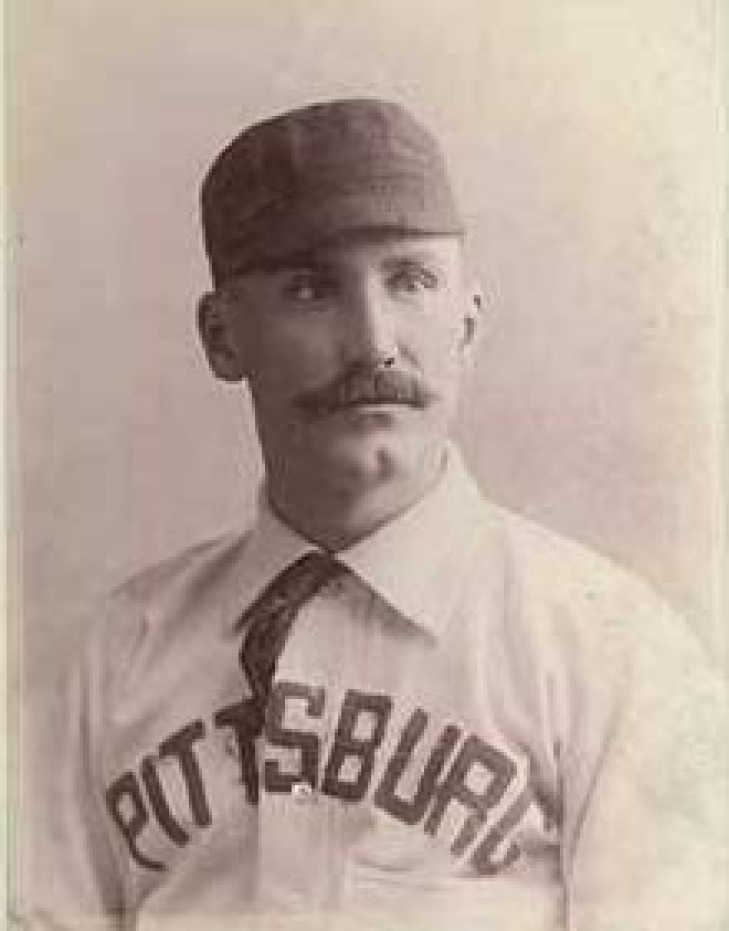
The modern Major League Baseball has a history of labor battles, but the pioneer of player autonomy, Jake Beckley—known as "Eagle Eye" for his strike zone judgment—was a foundational figure in late-19th-century baseball. Purchased by the Pittsburgh Alleghenys in 1888, the left-handed first baseman quickly became a star in Western Pennsylvania. Beckley was known for his low-variance hitting and durability, leaving a legacy of hitting milestones and challenging the sport's financial hierarchy.
His debut appearance after arriving in town during the 1888 season showcased top-tier talent, with the 20-year-old rookie posting an impressive .343 batting average over 71 games. He quickly established contact hitting and run production as a consistent part of his game, surpassing the 300 batting average again in 1889 and driving in 97 RBIs.
Beckley’s consistent rise in the National League was abruptly interrupted in 1890 by the emergence of the Players’ League. While many stars left the traditional league with lofty rhetoric, Beckley was notably honest about his motives, telling reporters he was "only in this game for the money’ when he joined the Pittsburgh Burghers. Despite the league's brief existence, Beckley performed exceptionally well, leading with 22 triples and driving in 123 runs, showcasing his talent during this short stint.
After stabilizing financially, Beckley rejoined the National League team, now known as the Pirates, for the 1891 season. Following a highly successful comeback, he experienced a difficult slump in 1892, with his batting average dropping to .236. Showing the intense internal resilience that earned him his famous nickname, "Eagle Eye,” he launched an impressive multi-year recovery. Over the next three summers, he greatly improved his performance, achieving batting averages of .303, .345, and .328, and driving in more than 100 runs each season, becoming a key player in the Steel City offense.
Tragically, after he limped out of the gate to a highly disappointing start during the 1896 schedule, the front office moved aggressively to reshape the core. In a landscape-shifting mid-season deal, management traded the franchise icon to the New York Giants for Harry Davis and cash, drawing a sudden curtain on his historic tenure in Pittsburgh.
With Pittsburgh, Beckley smacked 1,140 of his 2,938 career Hits while batting .300. The Baseball Hall of Fame inducted Beckley via the Veterans Committee in 1971.
41. Rick Rhoden
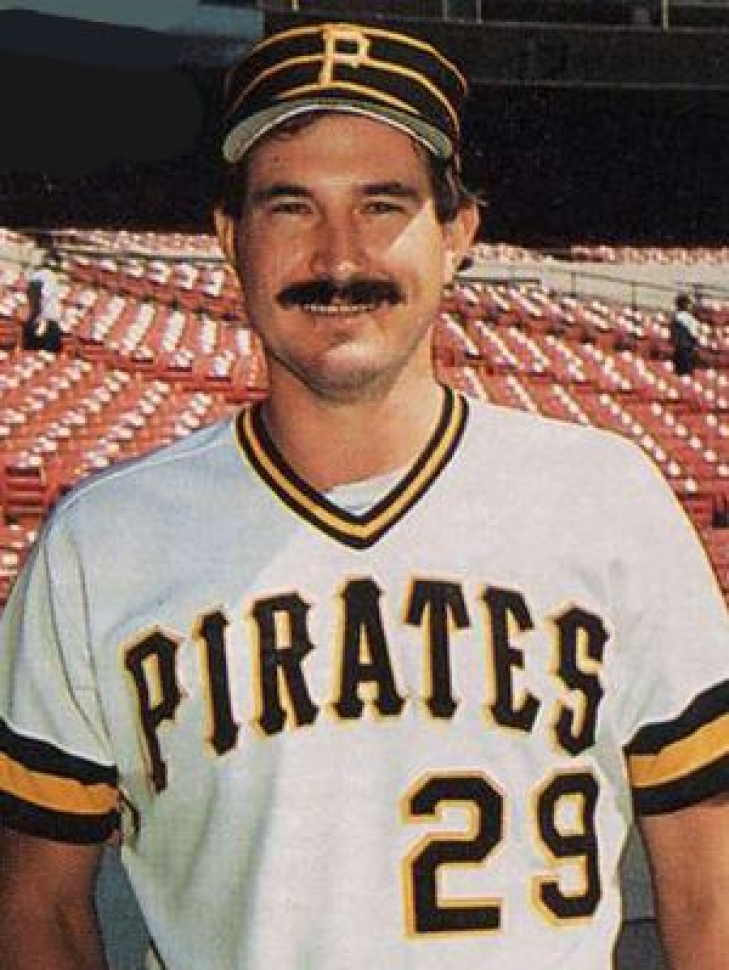
The blueprint of a top league pitcher is usually based on health and velocity, but Rick Rhoden's career was built on hard work. After shining with the Dodgers and helping them win consecutive NL pennants, shoulder issues led to a trade to the Pirates before 1979. Skeptics were right; Rhoden’s arm was so bad he played only one game during the 1979 championship run. However, unlike others, the Pirates waited patiently, a display of athletic resilience.
Once his shoulder finally stabilized, Rhoden made durability a regular part of his season under the lights at Three Rivers Stadium. With a strategic, high-efficiency pitching style, the right-hander achieved five straight seasons with at least 10 wins from 1982 to 1986, providing a steady, low-variance presence in an evolving rotation.
His peak season in Pittsburgh was 1986, when Rhoden demonstrated exceptional run prevention. He led the staff with a career-best 15–12 record, a superb 2.84 ERA, and an impressive 1.131 WHIP. His advanced efficiency stats earned him his first All-Star selection in ten years and a solid fifth-place finish in the National League Cy Young Award voting, the only major award of his career.
Evaluating Rhoden solely as a pitcher overlooks the complex skills that made him a versatile threat. Known as the top hitting pitcher of the 1980s, he had a quick, effective right-handed swing that managers often exploited. Rhoden consistently excelled against opposing batters, earning three straight National League Silver Slugger awards from 1984 to 1986, with 127 hits and a remarkable .251 batting average while playing for Pittsburgh. Additionally, his spatial awareness and athletic ability made him an excellent defensive player, achieving a perfect 1.000 fielding percentage over five summers and effectively shutting down opposing baserunners.
With his market value reaching an all-time peak and the organization pivoting toward a younger, small-market rebuilding cycle under Jim Leyland, the front office moved aggressively. In a high-profile winter blockbuster after the 1986 calendar, management traded the veteran ace to the New York Yankees in a six-player deal that brought Doug Drabek to town. His Pittsburgh stats included a 3.51 ERA, 852 strikeouts, and a record of 79- 73.
