
gold star for USAHOF

Top 50 Oakland Athletics

The history of the Athletics began in Philadelphia in 1901, where they were a charter member of the American League.  Under the tutelage of the legendary Connie Mack, the Athletics has two runs of glory.  The first in the second decade of the 1900s where they won the 1910, 1911 and 1913 World Series Titles. 

After years of futility, they reemerged in the late 1920s as an American League power.  They would win the 1929 and 1930 World Series, but that would be the end of their run as a power in the American League.  At least in Philadelphia anyway.

The A’s were bought and relocated to Kansas City in 1955, but they would be sold to Charlie Finlay in 1960.  After little success in KC, Finlay moved the team to California, and the Oakland Athletics were born.

Oakland would become one of the most intriguing teams in baseball both on the field and off of it, and they built a team that would win three straight World Series Titles (1972-74).  Free Agency rendered them a small market team, but they would eventually rebuild and won the World Series again in 1989.  They would follow the road of sabermetrics, and while that has not generated a title, it revolutionized the game.

Now, the Athletics are in limbo, playing in Sacramento while awaiting for their eventual move to Las Vegas.

This list is up to the end of the 2025 season.

Note: Baseball lists are based on an amalgamation of tenure, traditional statistics, advanced statistics, playoff statistics, and post-season accolades.
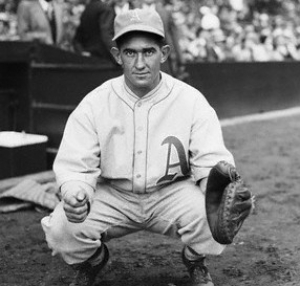
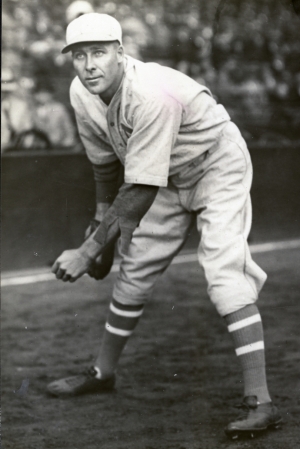
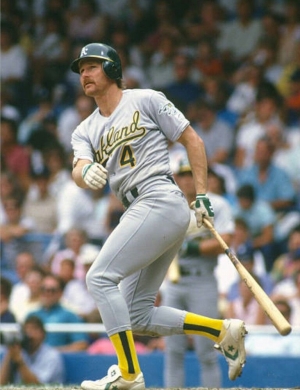
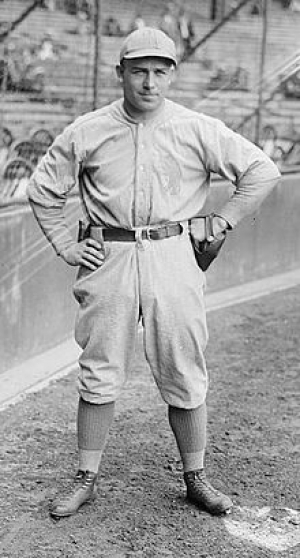
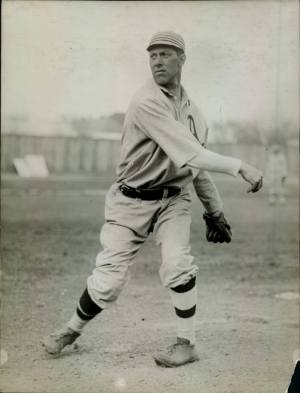
When Connie Mack surveyed the baseball landscape in late 1924, he knew his rebuilding Philadelphia Athletics required a dynamic center of gravity behind the plate to challenge the New York Yankees' emerging dominance. He found his man in the Pacific Coast League, aggressively prying Mickey Cochrane away from the Portland Beavers. Mack wasted absolutely no time, immediately thrusting the young backstop into the starting lineup for the 1925 campaign, igniting a run that permanently redefined the offensive baseline for the modern catcher. Cochrane burst onto the major league scene with an impressive rookie summer, batting .331 and finishing tenth in…
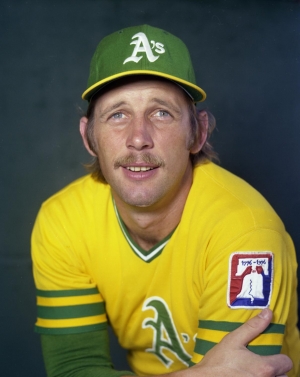
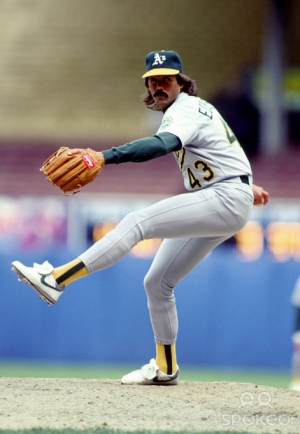
When the Chicago Cubs traded Dennis Lee Eckersley to the Oakland Athletics in April 1987, it seemed like a clear demotion—a subtle, final opportunity for a declining veteran. "Eck" had been a major league starting pitcher since 1975, earning two All-Star selections, but serious alcoholism was actively endangering both his career and his life. Upon his arrival, Oakland manager Tony La Russa envisioned the right-hander as a high-leverage setup weapon. Eckersley accepted the role until an injury to incumbent closer Jay Howell necessitated a tactical adjustment. Thrust into the ninth-inning vacancy, he initiated a career transformation that would fundamentally redraft…
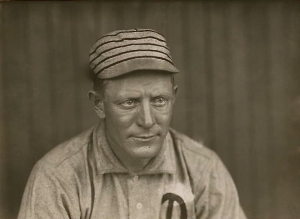
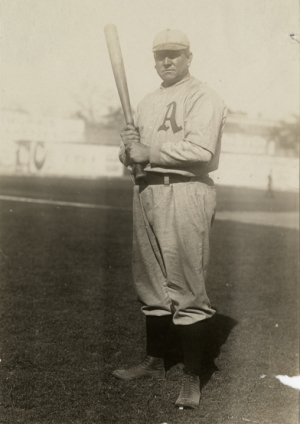
When Connie Mack established his pioneering Philadelphia Athletics dynasty at the beginning of the twentieth century, the team roster rapidly became filled with some of the most notable figures of the dead-ball era. Sharing the field with legendary players such as Home Run Baker, Chief Bender, and Eddie Plank, it was surprisingly easy for Danny Murphy to be neglected by history. Nevertheless, his adaptable, decade-long contribution served as the critical, high-impact offensive driver that contributed to the transformation of the early Athletics into a respected baseball empire. Murphy arrived in Philadelphia during the midpoint of the 1902 season, initially establishing…
When Tim Hudson emerged in summer 1999, he quickly sparked a new era of baseball in the East Bay. Together with rising stars Barry Zito and Mark Mulder, Hudson led the legendary "Big Three" starting rotation, which would dominate the American League and become the pitching core of the renowned "Moneyball" teams of the early 2000s. Hudson utilized a dynamic, explosive split-finger fastball and a powerful, biting sinker, establishing himself as a formidable competitor during his six years with Oakland. His skill in consistently producing weak ground balls and navigating high-pressure situations resulted in an impressive 92-39 record and a…
When contemporary fans reflect on the career of Jason Giambi, their understanding is often unjustly influenced by the lucrative, high-pressure contract he signed later in New York, as well as the subsequent injuries and controversies that impeded his progress. However, from this perspective, his entire baseball journey significantly misrepresents the actual scope of his achievements in the East Bay. During his peak years in Northern California, Giambi was not merely an outstanding player; he was arguably the most formidable and feared offensive force globally, serving as the pivotal and intimidating figure during the early "Moneyball" era. Giambi officially entered the…
When Barry Zito was called up midway through the 2000 season, he provided the final, mesmerizing piece to a pitching puzzle that would captivate the baseball world. Joining forces with Tim Hudson and Mark Mulder, Zito completed the triumvirate of Oakland’s "Big Three" starting rotation. While his counterpart aces relied on explosive, sinking fastballs to dismantle hitters, Zito operated as a true aesthetic magician on the mound, carving up the junior circuit with a high-arching, 12-to-6 curveball that became the most visually stunning and widely feared weapon of its generation. His ascent to the highest echelon of major league starting…
When the Oakland Athletics selected Eric Chavez tenth overall in the 1996 draft, they gained a player whose career would stand out as one of the most unique and unpredictable of his time. For more than ten years, Chavez served as the quiet, reliable anchor for the "Moneyball" teams. He is still recognized by many historians as one of the best players who never made an All-Star Game, despite being a top two-way performer during his physical prime. Chavez officially debuted in the major leagues late in the 1998 season. By the 2000 campaign, he had firmly secured the hot…
When Connie Mack established his second illustrious Philadelphia Athletics dynasty in the late 1920s, he assembled a roster featuring explosive, free-swinging Hall of Fame-caliber power. Nevertheless, to ensure the effective operation of this formidable lineup, the team required a highly disciplined and intensely focused lead-off batter. This role was fulfilled by Max Frederick Bishop. Renowned for his exceptional and precise strike zone discipline, earning the renowned nickname "Camera Eye”, Bishop’s decade-long service as a ball player who weaponized patience. In 1924, Bishop secured the permanent starting position at second base, thereby providing Philadelphia with a highly valuable, versatile asset. Had…
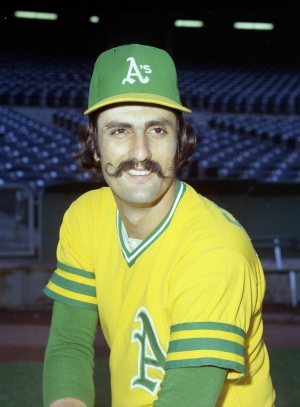
By the late 1960s, the idea of a relief pitcher wasn't new, but Rollie Fingers changed everything when he became the backbone of the Oakland Athletics’ bullpen. Before he stepped into the scene, relievers were often seen as either unsuccessful starters or veteran players nearing the end of their careers, fighting to stay on the team. Fingers broke those old stereotypes, turning the bullpen into an exciting and desirable role, and he was among the first relief pitchers to be celebrated as a true superstar in the sport. Fingers operated predominantly as a starting pitcher during his tenure in the…
When the front office quietly signed Dave Stewart in May 1986, the transaction did not attract significant notice within the local community. He was regarded as an underperforming journeyman, having been discarded by a struggling Philadelphia Phillies organization that had explicitly released him. Nevertheless, nobody in the East Bay would overlook his potential for long. By reviving a forgotten forkball at the behest of pitching coach Dave Duncan, Stewart achieved an immediate 9-5 record during the latter part of the season, setting the stage for one of the most relentless and industrious periods in modern American League history. What followed…
Rube Walberg holds the dubious distinction of serving up the most home runs to Babe Ruth with 17.  That might seem like a strange way to open, but remember the Athletics thought enough of him to keep putting him on the mound.
When Joe Rudi first donned the Athletics uniform, the franchise was preparing to relocate. He appeared in just 19 games in 1967 during its last summer in Kansas City, before moving west to California. His early years in Oakland were challenging; he was stuck in a part-time role and struggled to find his rhythm, with his batting average staying below .200. Everything shifted in 1970. With a permanent starting position in left field for a quickly ascending, powerhouse team, Rudi finally found his rhythm at the plate, showcasing a smooth, line-drive swing to achieve an impressive .309 batting average and…

2026 SEATTLE MARINERS FLEX MEMBERSHIPS

Jan 01, 1970

Buy your Tickets to see 2026 Seattle Mariners Flex Memberships HERE!

BOSTON RED SOX VS. TORONTO BLUE JAYS

Jun 18, 2026

Buy your Tickets to see Boston Red Sox vs. Toronto Blue Jays HERE!

MILWAUKEE BREWERS VS. CLEVELAND GUARDIANS

Jun 18, 2026

Buy your Tickets to see Milwaukee Brewers vs. Cleveland Guardians HERE!

TEXAS RANGERS VS. MINNESOTA TWINS

Jun 18, 2026

Buy your Tickets to see Texas Rangers vs. Minnesota Twins HERE!

 
When Dwayne Murphy first appeared for the Oakland Athletics in 1978, his long-term MLB prospects seemed uncertain. Drafted in 1973 as a high school shortstop, he spent five years in the minors sharpening his outfield skills. His initial 60 games in the majors tested his patience, with a sub-.200 batting average that raised doubts about his bat catching up to his speed. However, the front office persistently believed in his potential. Appointed as the regular starting center fielder in 1979, Murphy quickly developed into one of the most intellectually astute and defensively talented players of his time. His true legacy…
Connie Mack aimed to quickly turn his newly established Philadelphia Athletics into a dominant American League team. He sought a particular kind of player, one who was smart, disciplined, low-maintenance, and unaffected by a deep count. Tully Frederick "Topsy" Hartsel served as the ideal model for this approach. After an impressive 1901 season with the Chicago Orphans in the National League, where he made 187 hits and maintained a .335 batting average, Hartsel decisively moved to the emerging junior circuit. Mack promptly placed the short, 5-foot-5 outfielder at the top of the batting order, establishing a leadoff strategy that would…
Carney Lansford joined Oakland before the 1983 season, instantly bringing credibility to the hot corner. Just two years after winning an American League batting title with the Boston Red Sox, he was traded to the Athletics to be a reliable, professional presence during a pivotal period for the franchise. Although he didn't earn another batting crown in Northern California, Lansford spent the following decade solidifying his role as the cornerstone of the infield and establishing himself as one of the premier all-around third basemen in baseball. He instantly impressed East Bay fans by posting a consistent .300 average in his…
A Rule 5 Draft acquisition ahead of the 1918 season, expectations for Jimmy Dykes’s offensive production were incredibly low. Scouts widely regarded the gritty infielder as a premium glove-first prospect who possessed severe limitations at the plate. That scouting report looked entirely accurate during his first two brief tastes of the big leagues, as he slumped to a bleak, sub-.200 batting average that left many wondering if his bat would ever catch up to his defensive instincts.  However, Connie Mack saw Dykes’ determination and baseball IQ despite a slow start. Given the second base job in 1920, Dykes transformed into…
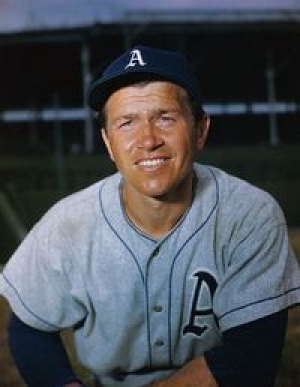
Born in Czechoslovakia, Imrich "Elmer" Valo moved to the U.S. at age six, settling in Pennsylvania. He embodied the American dream, channeling his athletic energy into a long MLB career. When he debuted with the Philadelphia Athletics in 1940, he brought a fierce, uninhibited style to Shibe Park that won him fans for generations. Valo was far from a conventional, headline-grabbing superstar, yet he possessed an exceptionally keen baseball intellect and a legendary degree of physical resilience. He gained recognition throughout the junior circuit for his complete disregard for personal physical safety in the outfield. Long before stadiums were equipped…
When baseball historians debate the greatest home run champions, Ralph "Socks" Seybold rarely comes up. His career is a collection of historical anomalies. Seybold was an imposing, burly athlete of the dead-ball era, weighing approximately 200 pounds. Due to his persistent difficulty in maintaining optimal physical condition, he spent nearly his entire twenties performing in minor league teams. Most scouts had entirely dismissed his potential; however, Connie Mack recognized a raw, substantial power that had been overlooked by others. Consequently, he took a chance on the veteran slugger, positioning the 30-year-old "rookie" in left field during the inaugural season of…
During the initial four years of his Major League career, Jack Coombs showed minimal indication that he would eventually rewrite the franchise record books. Upon his arrival in Philadelphia from Colby College in 1906, the right-handed pitcher epitomized an average, unrefined player. He maintained a perfectly balanced record of 35-35 entering the 1910 season, and when his early performances that spring were inconsistent, Connie Mack became sufficiently frustrated to demote him to the bullpen. Then, baseball alchemy took place. According to dugout lore, during his exile to the relief corps, Coombs entirely rediscovered the release point on his overhand, drop-off-the-table…