

218. Lave Cross
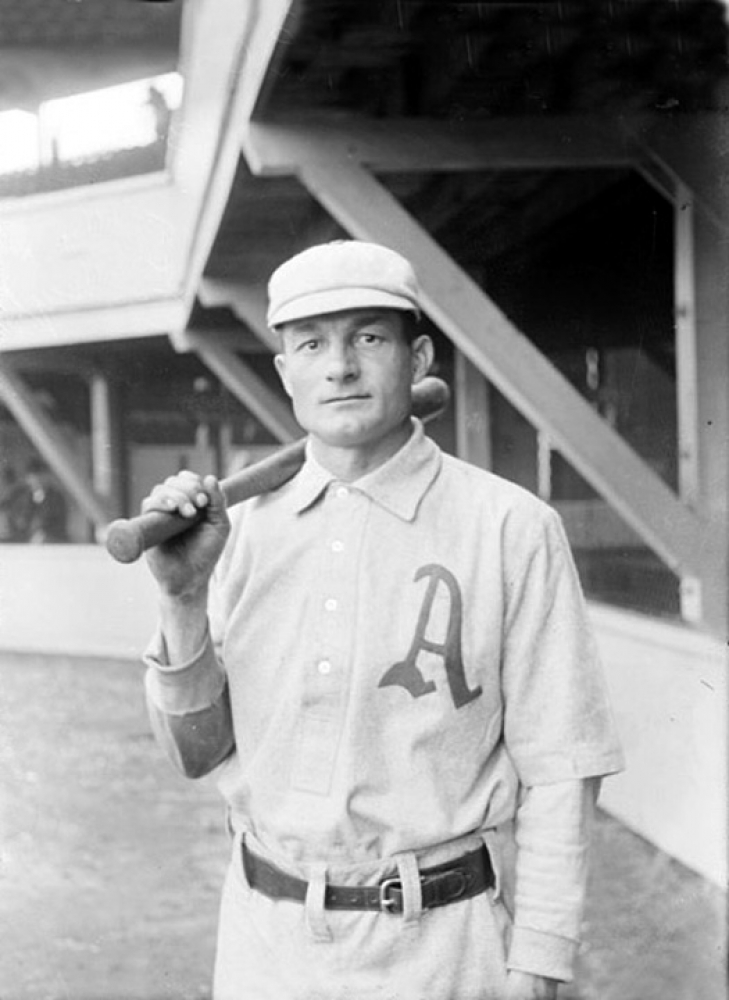
Lave Cross was a very good baseball player for his day, but because he bounced around so much, his 2,651 career Hits, then fifth-most all time, are largely forgotten.
Cross played for nine different teams in four different leagues (American Association, Players League, National League & American League), with Philadelphia being represented in all four! Also playing for St. Louis, Washington, Louisville, Cleveland, and Brooklyn, and had thirteen 130 Hit years, batting .292 overall.
Defensively, Cross usually played at Third Base, though he was exceptionally versatile, and he easily played at Catcher and the Outfield. He finished in the top ten in Defensive bWAR six times. Notably, he had 1,378 Runs Batted In over his career, an incredible number for any era, especially for someone who only had 47 career Home Runs.
185. Wally Schang
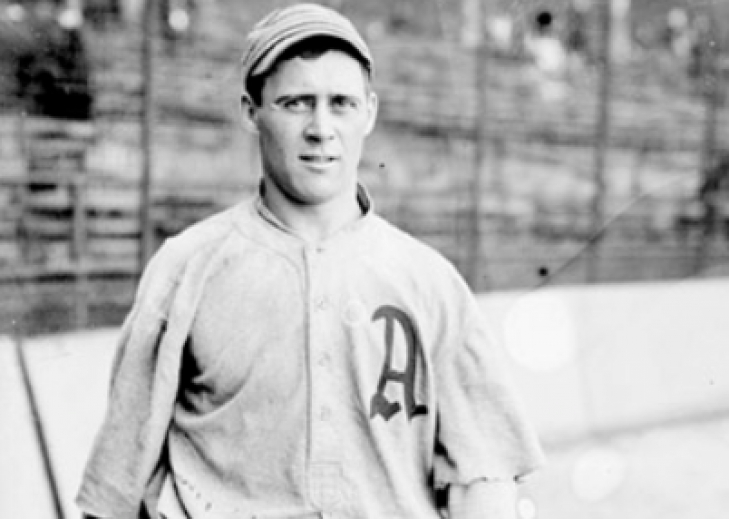
Many baseball historians have painted Wally Schang as one of the better offensive Catchers of the deadball era. In terms of his World Series Rings, you can argue that he is one of the most successful.
Schang won his first World Series as a rookie with the Philadelphia Athletics in 1913, and he would play there for the first five years of his career. The Athletics dealt Schang to the Red Sox in 1918, where again, he was a World Series Champion in his first year with a Major League Team. He batted over .300 for the BoSox in 1919 and 1920, but the Red Sox were in the middle of dismantling their team, and he was traded to the New York Yankees in 1921, where he again had two more .300 seasons, the second of which would see him win a World Series in 1922.
Schang later played for the St. Louis Browns and the Detroit Tigers, and, in addition to his excellent offense, he was considered a very good defensive player. He would also have five seasons in which he received an MVP vote, and he secured a fourth ring in 1930 as a reserve with the Athletics.
While his 1,506 career Hits may not seem like a lot, for a Catcher of his time, it was a lot. Throw in the lifetime Batting Averages of .284 and OBP of .393, and you have a special player.
208. Bobby Shantz
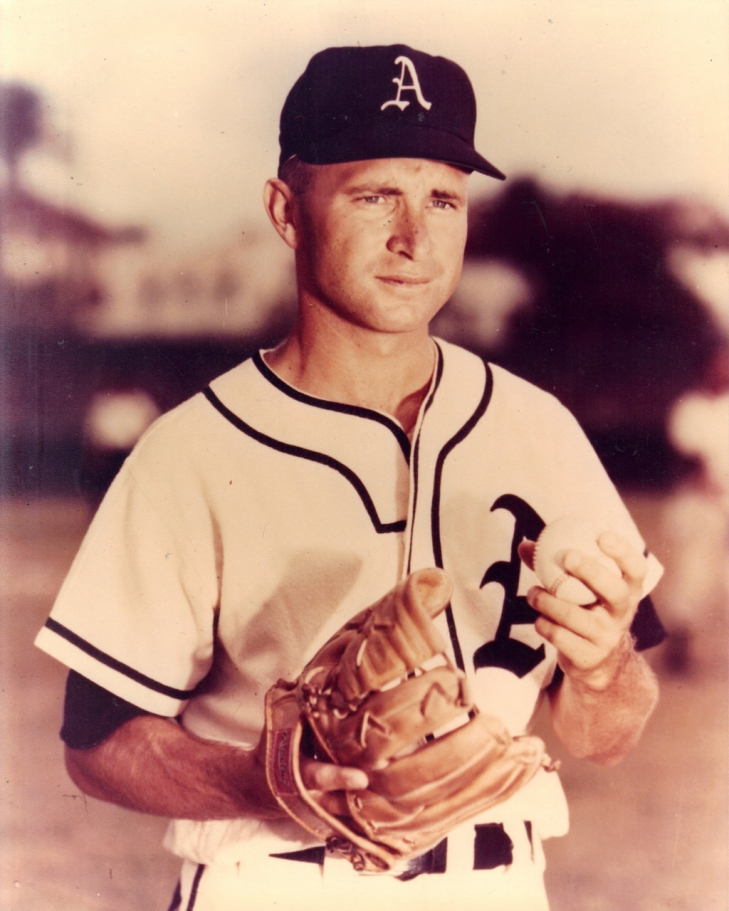
When you look at the past MVPs in baseball history, Bobby Shantz is one of the more curious players to win it.
210. Cy Williams
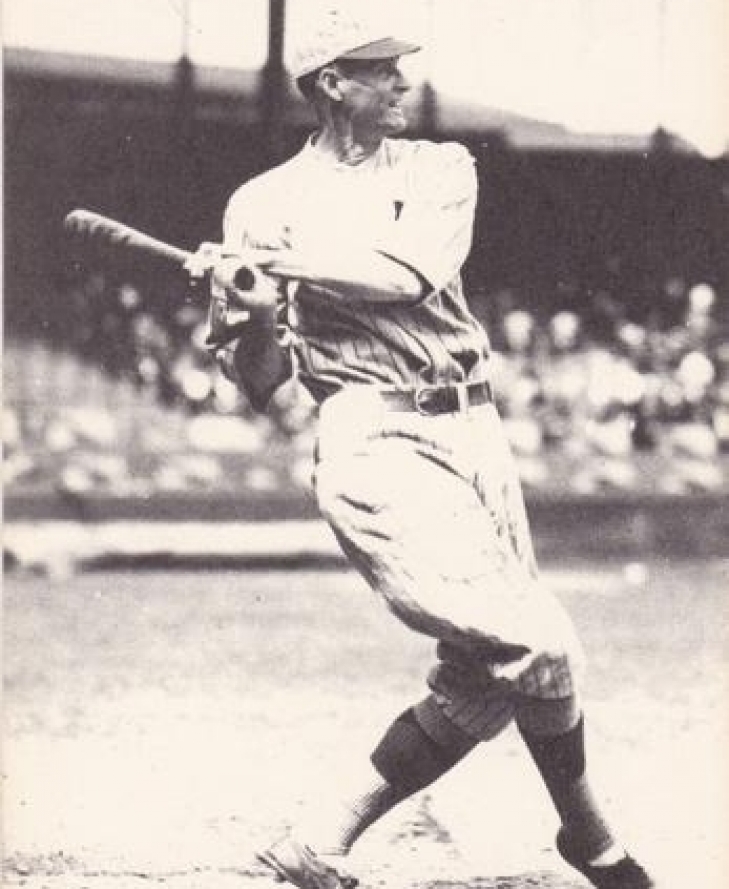
Cy Williams entered Notre Dame, having only played in a handful of baseball games. He left them as an accomplished player whom the Chicago Cubs signed after he finished school.
Williams joined the Cubs right away (1912), and a few years later, he was a regular in the Outfield. Williams won the Home Run Title in 1916 (12), but he was a defensive liability and was viewed as expendable. He was traded to the Philadelphia Phillies in 1918, and it turned out to be a lopsided transaction in the Phillies' favor.
The Baker Bowl, where the Phillies played, fit the strength of Williams, and as the ball started flying out of the park in the 1920s, he was one of those who perfected the art of the long ball. Williams led the NL in Home Runs in 1920 (15), 1923 (41), and 1927 (30), and he was also the leader in Slugging in 1926 (.568). Williams would also have six .300 seasons for Philadelphia.
At the time of his retirement in 1930, Williams was the all-time Home Run leader in the National League (251).
169. Harry Davis
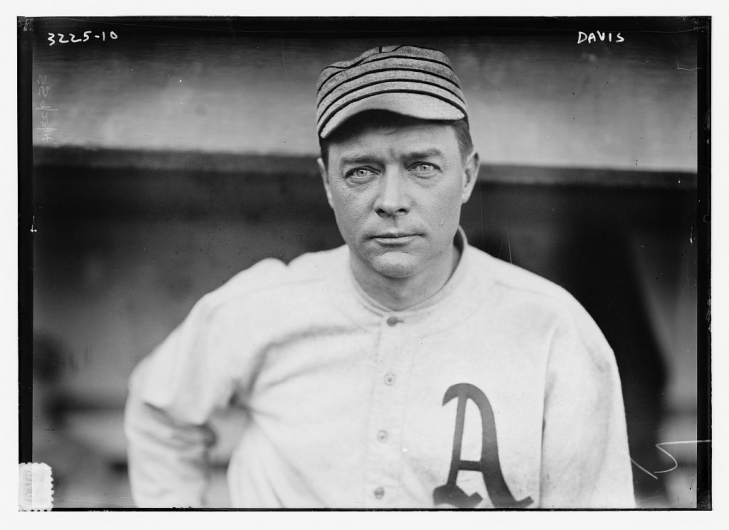
From 1895 to 1899, Harry Davis was either a budding journeyman or a future star. He played for four different teams in the National League and had a 28 Triple year in 1897 while batting .305. Davis was in the minors for all of 1900, and Connie Mack, the owner/manager of the Philadelphia Athletics, saw him as a building block for his brand new American League franchise, and he was one of their first signees.
232. Eddie Rommell
Eddie Rommel played his entire 13-year playing career with the Philadelphia Athletics (1920-32), where he became one of the first masters of the knuckleball.
After Rommel’s rookie year, he would become a workhorse for the Athletics, leading the American League in Wins twice (1922 & 1925) and Games Pitched (1922 & 1923). His best year was in 1922, when he went 27-13 with a 3.28 ERA and a second-place finish in MVP voting. Philadelphia became an AL power by the end of the decade, but by that time, Rommel was no longer the same Pitcher. He would, however, come out of relief to win a game in the 1929 World Series, which was won by Philadelphia.
Rommel would later have a successful career as an umpire, which included working in the 1943 and 1947 World Series.
95. Bob Johnson
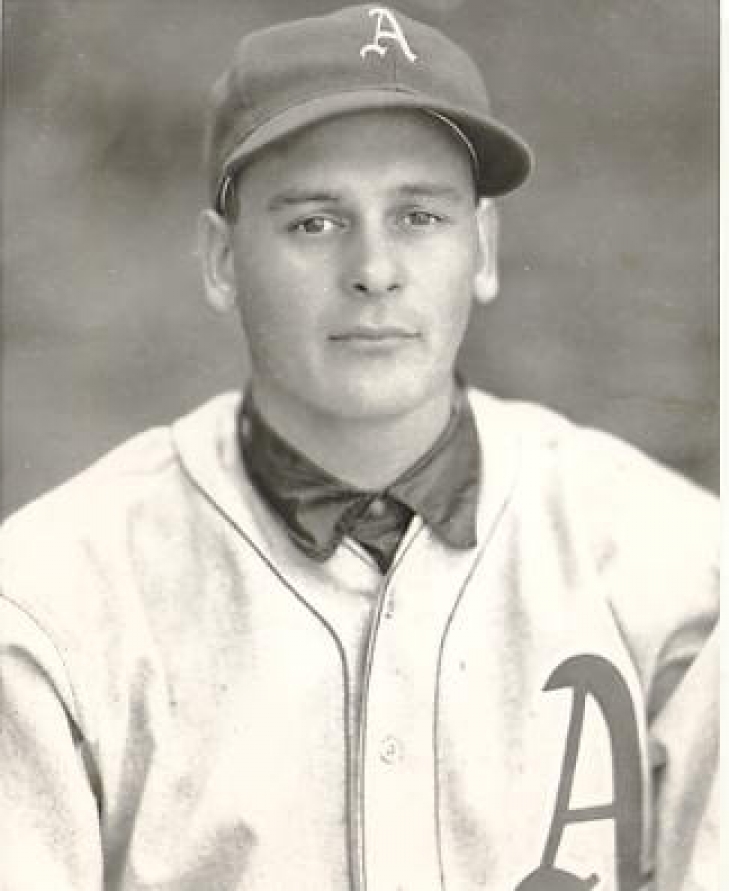
The Philadelphia Athletics were a powerhouse in the early 1930s, but the Great Depression led owner Connie Mack to unload his best players to keep the team afloat. As such, there was not a lot of talent left for the Athletics afterward, but Bob Johnson was an exception to that rule.
Debuting at Leftfield in 1933, Johnson played for the Athletics until 1942. With Philadelphia, he would go to five All-Star Games. With the exception of his last season with the Athletics, he has least 20 Home Runs, with three of those years seeing him exceed 30. From 1935 to 1941, he hit the 100-RBI mark and had four .300 seasons. Johnson joined Washington for one season, during which he was again an All-Star, and then completed his career with two seasons in Boston, where he was selected for his seventh and eighth All-Star Games. Notably, in 1944, he would win the OBP and OPS titles, the only times that he would do so.
While Johnson had a good 1945, many of the players who served the U.S. during World War II were coming back, and he elected to retire rather than compete for a job. He could have easily compiled more stats, but at age 39 and 2,051 Hits and 252 home runs, he had a great career.
83. Bobby Matthews
297 Wins.
With the exception of Roger Clemens, Bobby Matthews has the most Wins of any player who is not in the Baseball Hall of Fame. One of the main differences is that unlike Clemens, Matthews has never received Hall of Fame consideration once.
Matthews' pro career began in 1871, when he played in the National Association and the dawn of pro ball. Over the next few seasons, he bounced around in the infant league for teams like the Fort Wayne Kekiongas, Baltimore Canaries, and the New York Mutuals, and the 5' 5" Pitcher did well with three straight (1872-74) years where he led his league in Strikeouts.
The Mutuals would join the National League, and Matthews joined Cincinnati after the Mutuals folded. From 1887 to 1891, he slumped and bounced around from league to league, major to minor. In 1892, he had a comeback season with the Boston Red Stockings, where he led the league in FIP (2.15), BB/9 (0.7), SO/9 (4.8), and SO/BB (6.95).
Matthews joined the Philadelphia Athletics in 1883, where he had an even 30 Wins in the next three seasons. He had another first-place finish in BB/9 (1883), one more in FIP (2.17 in 1885), and twice in SO/BB (1883 & 1885).
He retired after 1887, with the aforementioned 297 Wins with an ERA of 2.86.
67. Harry Stovey
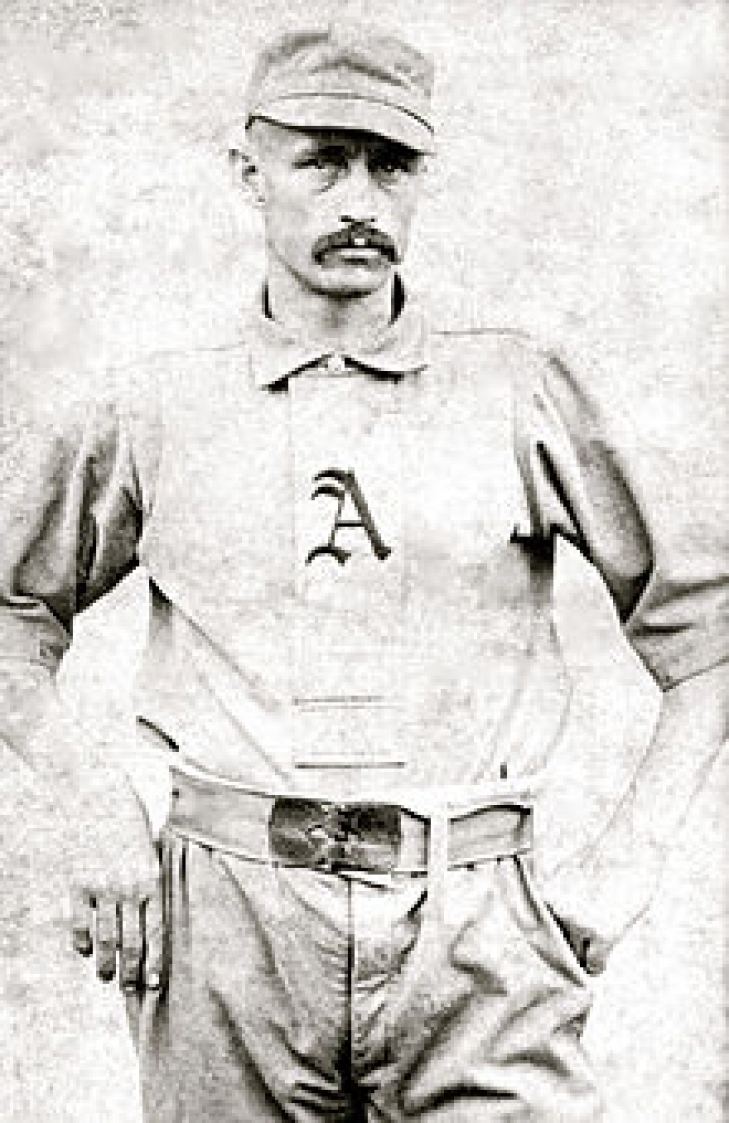
If you look at the career of Harry Stovey, accumulatively, the offensive statistics seem very good, but not Hall of Fame good. 1,775 Hits, 122 Home Runs, and a .288 Batting Average don't stand out, but another look shows that is not the case at all.
Stovey played from 1880 to 1893, an era not known for offensive greatness. Beginning his career with three decent seasons with the Worcester Ruby Legs of the National League, he would join the first incarnation of the Philadelphia Athletics, an inaugural team of the American Association. With Philadelphia, Stovey had four seasons in which he led the AA in Runs Scored, and his lowest total was 110. He won three Home Run Titles, two Triples Titles, and was a base-stealing machine. Four of his seasons saw Stovey bat over .300, and he also won two Slugging Titles.
He would finish his career with stops in Boston during the brief Players’ League and with three more teams in the NL (Boston, Baltimore, and Brooklyn). While hitting 100 Home Runs doesn't seem like much, he was the first to do so as a pro, and that means something.
46. Bing Miller
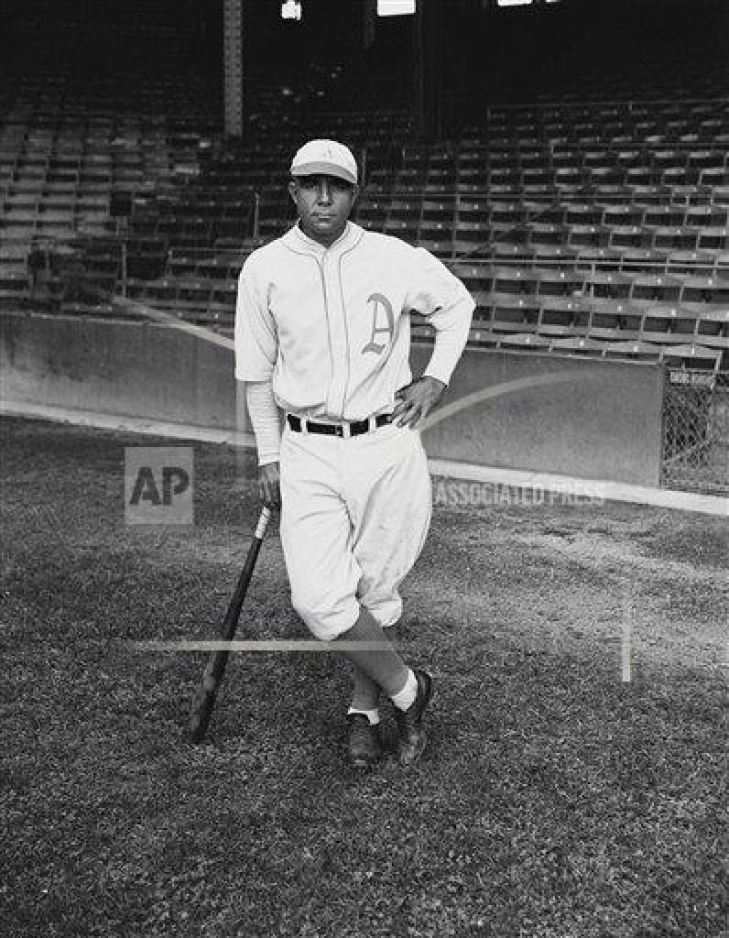
"Bing" Miller was a relatively late bloomer by baseball standards, not making his first extended major league appearance until he was a 26-year-old rookie with the Washington Senators. Seeking an injection of right-handed bat speed, Connie Mack engineered a trade to bring the Iowa native to Shibe Park ahead of the 1922 campaign.
The move proved highly fruitful. During his first four years with Philadelphia, Miller demonstrated exceptional contact-hitting skills, surpassing a .300 batting average three times. He narrowly missed a perfect four-for-four record, finishing at .299 in 1924. Despite his impressive performance, the team’s management viewed him as a tradeable asset in a competitive outfield market and sold him to the St. Louis Browns before the 1926 season.
However, his journey with the white elephant logo was not yet complete. Aware of the important veteran presence they had missing, Mack brought Miller back in 1928, placing him at the core of the franchise's most successful modern dynasty.
During his second period in Philadelphia, Miller posted three consecutive .300 seasons from 1928 to 1930, acting as a consistent line-drive hitter who regularly collected 150 hits annually for five summers in a row. Playing alongside legendary hitters Al Simmons and Mickey Cochrane, the right fielder was essential in helping the Athletics win consecutive World Series titles in 1929 and 1930.
He delivered his most crucial and impressive performance during the historic 1929 Fall Classic against the Chicago Cubs. Dominating National League pitching, Miller hit an outstanding .368 with four RBIs, including the renowned walk-off double in the bottom of the ninth inning of Game 5, which effectively secured the world championship for Philadelphia.
Advanced metric grids and modern spreadsheet purists do note that his defensive coverage in right field was a clear limitation, a reality that prevents him from climbing into the absolute top tier of all-time franchise outfielders. However, looking strictly at his defensive liabilities completely ignores his overwhelming regular-season volume and elite bat control.
Miller was released before the 1935 season, and with the Athletics, he batted .311 with 1,480 hits. He would later be chosen for the Philadelphia Baseball Wall of Fame in 1998.
39. Bobby Shantz
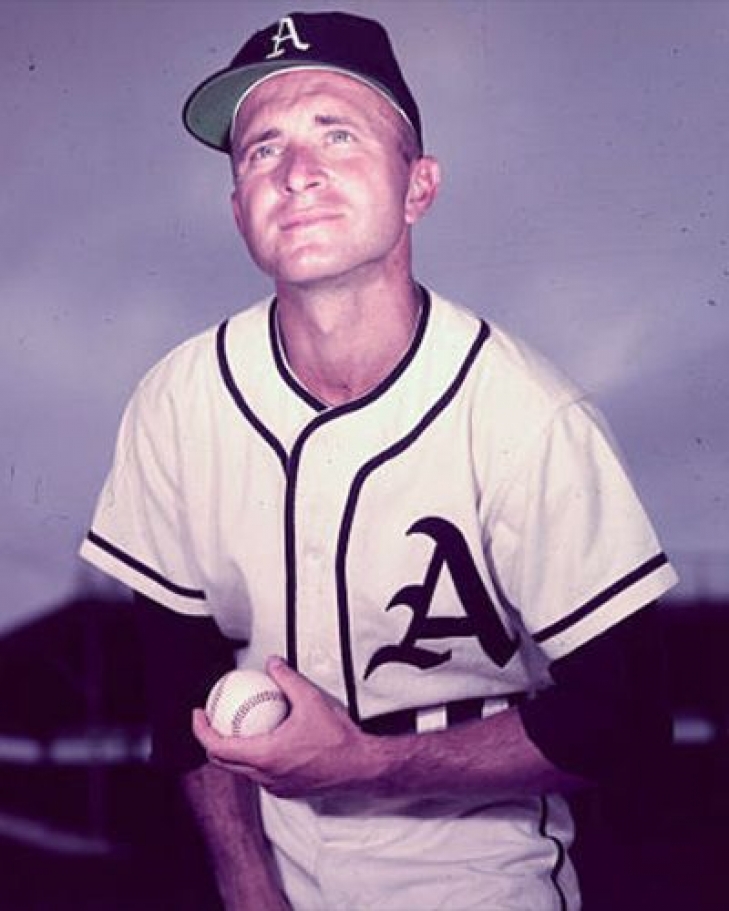
Back in the late 1940s, when Bobby Shantz was working his way through the semi-pro circuits of Pennsylvania, traditional baseball wisdom didn't see him as a future star. Scouts from major league teams mostly overlooked this little left-hander, thinking his 5-foot-6, 140-pound frame might be too small for the tough demands of a big-league starting pitcher. However, Connie Mack looked beyond his size, recognizing a quick, powerful arm and an impressive, fading changeup. The Philadelphia Athletics took a chance on him in 1948. After a few modest developmental summers, this undersized southpaw rose to unexpected heights, delivering a brief but stunning peak that captured the whole baseball world’s attention.
Shantz first discovered his frontline potential during the 1951 campaign. He amazed junior circuit hitters with his precise control and a sharp, biting curveball. His impressive performances earned him his first career All-Star selection, and he finished the season with a solid 18-12 record for a team going through changes in Philadelphia.
That breakout summer truly caught everyone's attention, but it was just the beginning of an incredible, award-winning season in 1952. Shantz became an unstoppable force on the mound, dominating the American League with an impressive 24 wins and only 7 losses. His efficiency was nothing short of spectacular, leading all of baseball with a tiny 1.048 WHIP, along with a stellar 2.0 walks per nine innings and a powerful 2.41 strikeout-to-walk ratio. The entire baseball world recognized his outstanding performance, overwhelmingly voting this small but mighty ace as the 1952 American League Most Valuable Player.
With the baseball world at his feet, tragedy unexpectedly struck the young lefty's delivery. Later in that fantastic 1952 season, Shantz suffered a serious, chronic shoulder injury that cost him his usual velocity and altered the course of his career. He spent the next four years courageously working on his mechanics and pushing through intense pain, but he simply wasn’t the same explosive pitcher anymore. From 1953 to 1956, a challenging period that included the franchise's move to Missouri, Shantz struggled with frustratingly poor records and rising ERAs. Recognizing that his days as a top starter were behind him, the financially struggling Kansas City front office finally made the tough decision to trade him to the powerful New York Yankees before the 1957 season.
With the Athletics, Shantz had a 69-65 record with a 3.80 ERA. Philadelphia later honored Shantz by placing him in their Baseball Wall of Fame in 1994.
43. George Earnshaw
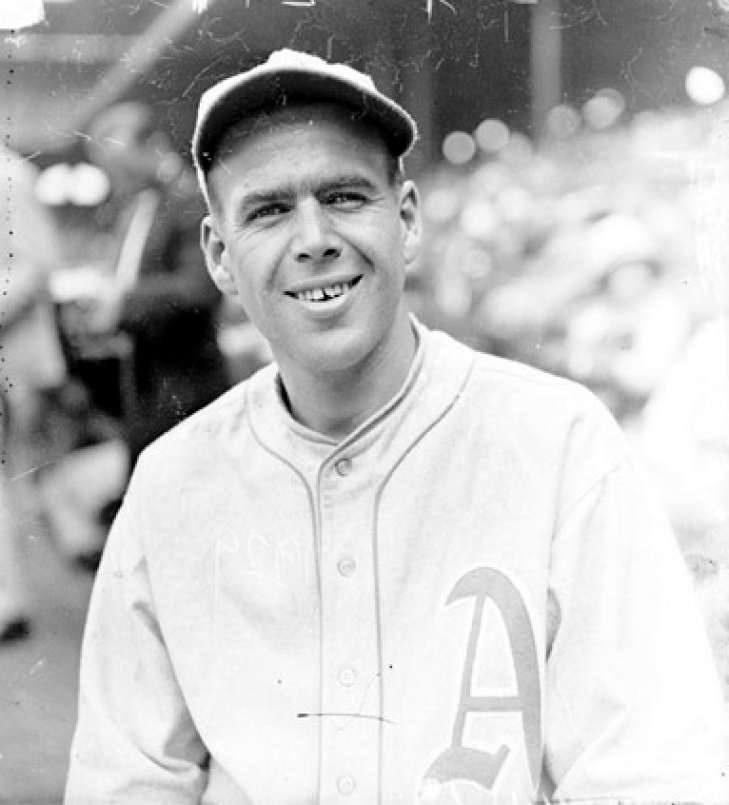
George Earnshaw took an unconventional path to major-league stardom. Because he prioritized finishing his college education and then spent several years refining his arsenal in the minor leagues, he didn't officially debut in the big leagues until he was 28 years old. But once the towering 6-foot-4 right-hander finally stepped onto a big-league mound, he wasted no time proving he belonged at the front of a rotation.
Connie Mack had personally scouted Earnshaw dominating hitters for the legendary Baltimore Orioles of the International League, and he aggressively pulled the trigger to secure his contract. Earning the nickname "Moose" due to his massive physical frame, Earnshaw joined the Philadelphia Athletics mid-season on June 1, 1928, turning in a respectable 7-7 introduction that merely hinted at the absolute dominance to come.
By the 1929 campaign, Mack had assembled an incredibly talented roster, with Earnshaw serving as its powerful, high-velocity engine. That summer, he dominated junior circuit lineups, leading the American League with an impressive 24-8 record and 21 complete games. He served as the key frontline pitcher alongside Lefty Grove, guiding the Athletics to the American League pennant and maintaining his strong performance into October, ultimately helping Philadelphia win the 1929 World Series against the Chicago Cubs.
Far from a single-season wonder, "Moose" proved to be an absolute workhorse over the next two individual campaigns, racking up 22 wins in 1930 and 21 victories in 1931 to form arguably the greatest one-two pitching punch of the era. The absolute peak of his baseball journey arrived during the 1930 postseason defense.
Earnshaw delivered an outstanding performance in the 1930 Fall Classic against the St. Louis Cardinals, participating in three games and pitching 25 impressive innings. He dominated the Cardinals' lineup, earning two complete-game wins, including a five-hit shutout in the pivotal Game 6, and achieved a remarkable 0.72 ERA to help secure consecutive world championships.
He pushed through to achieve yet another prolific 19-win season in 1932, but the heavy, continuous workload of innings eventually severely strained his right arm. Earnshaw experienced a sharp and sudden decline in 1933, finishing with a disappointing 5-10 record as his ERA rose to 5.97.
Due to the financial strain of the Great Depression, Mack had to break up his famous core team. After a tough 1933 season, Earnshaw was sold to the Chicago White Sox as a way to cut costs. As an Athletic, he had a 98-58 record and was later selected for the Philadelphia Baseball Wall of Fame in 2000.
44. Stuffy McInnis
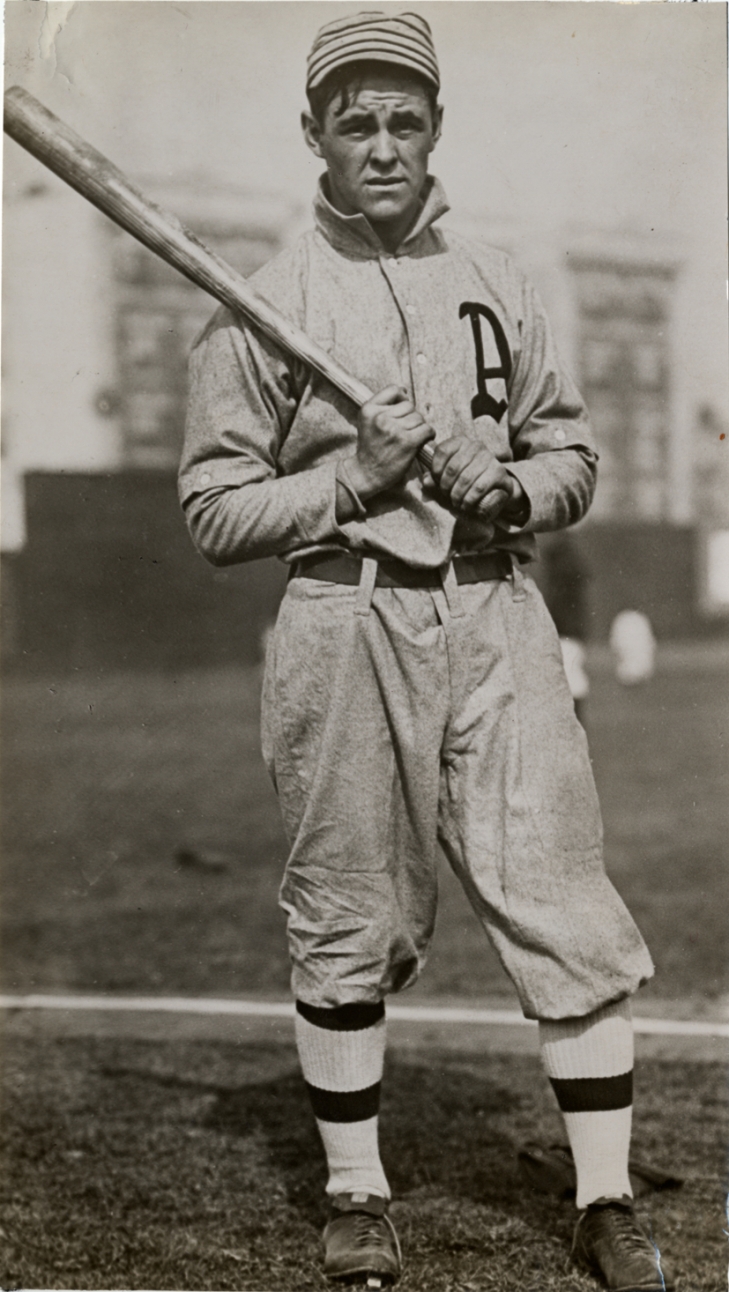
“Stuffy” McInnis first signed with the Philadelphia Athletics prior to the 1909 season, but his immediate path to the lineup was completely blocked. Connie Mack’s legendary infield was already crystallizing, forcing the versatile teenager to bide his time as a utility player, primarily logging reps at shortstop off the bench during his first two major league summers.
Mack saw a unique blend of contact ability and defensive instinct in the young player. When a vacancy at first base appeared before the 1911 season, McInnis quickly claimed the role, becoming the youngest and fiercest member of Philadelphia's renowned "$100,000 Infield,” joining Eddie Collins, Jack Barry, and Home Run Baker.
The structural shift transformed the Athletics into a buzzsaw. Standing just 5-foot-9, McInnis redefined dead-ball-era hitting mechanics by choking up significantly on his bat, wielding a short, compact swing that made him nearly strikeout-proof. He put on an offensive clinic from the moment he took over the bag, batting a spectacular .321 in 1911 and driving in 95 runs.
That breakout summer led to a remarkable, high-volume peak; McInnis would later surpass the .300 batting average in six of his seven seasons as Philadelphia's regular starter through 1917, just missing a perfect score when he posted a solid .295 in 1915.
Nevertheless, his lethal bat only conveyed half the narrative. On the baseball field, McInnis converted first base into an absolute vacuum, integrating exceptional agility with a distinctive, backhanded sweeping technique for fielding low throws from the dirt. He complemented his superior defensive range with rapid instincts on the basepaths, consistently stealing double-digit bases to exert continual pressure on opposing pitching staffs.
This relentless, multidimensional excellence was a vital cornerstone of the franchise's first golden era. McInnis anchored the infield, guiding the Athletics to three American League pennants in four years (1911, 1913, and 1914) and serving as a central catalyst for the historic World Series championships in 1911 and 1913.
When financial pressures eventually forced Mack to famously dismantle his high-priced powerhouse following the 1914 pennant, McInnis remained behind as the steady, veteran heartbeat of the rebuilding club, grinding through several tough seasons before finally being traded to the Boston Red Sox before the 1918 season.
McInnis would later win two more World Series Titles, one with Boston (1918) and another with Pittsburgh (1925). With the Athletics, he would accumulate 1,192 hits with a .313 batting average.
40. Eddie Joost
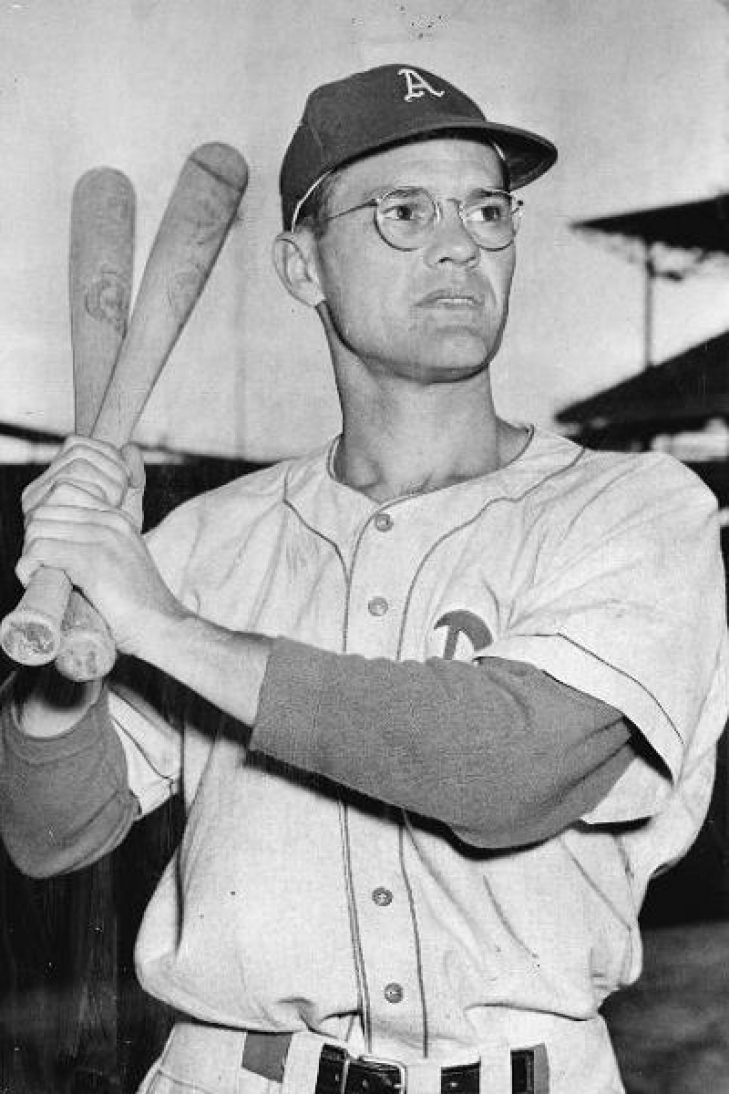
By the end of the 1946 season, the general consensus about Edwin Donald Joost was essentially settled. After a serious disagreement with Boston Braves management, the veteran infielder was banished to the minor leagues within the St. Louis Cardinals organization. At 31, his career seemed headed for a quiet conclusion. Most believed his best years were behind him, but Connie Mack dismissed this idea, offering Joost a chance to revive his career. This opportunity triggered an impressive late-career resurgence in Philadelphia.
When Joost first entered the Shibe Park infield in 1947, he appeared to be a textbook example of a glove-first, light-hitting shortstop. He demonstrated exceptional defensive skills, anchoring the middle of the diamond by leading all American League shortstops in both Range Factor per Game and total putouts.
On the other hand, his traditional offensive stats were disappointing; he posted a low .206 batting average and led the league with 110 strikeouts. However, behind that low average was a valuable asset aligned with Mack’s offensive approach: an exceptional, highly disciplined eye that resulted in 96 walks and boosted his on-base percentage to a solid .348.
That initial summer set the stage for a remarkable five-year peak from 1948 to 1952, during which Joost fully reinvented his hitting approach. He notably reduced his strikeouts and improved his contact rate, which boosted his batting average to much higher levels, reaching a career-high .289 in 1951.
He became a leading expert in driving traffic at the top of the lineup, finishing in the American League’s top ten for on-base percentage four times over five years, twice surpassing the elite .400 OBP mark. His impressive development gained him widespread national peer recognition, earning starting All-Star selections for the junior circuit in 1949 and 1952.
The inevitable effects of aging and accumulated physical wear ultimately impacted his performance during the 1953 season. After a significant decline in productivity, the front office entrusted him with managing the team for its final, bittersweet season in Philadelphia in 1954, before releasing him as the organization prepared to move to Kansas City.
Joost concluded his highly impactful eight-year stay with the Athletics, having collected 840 hits, 116 home runs, and a magnificent .392 on-base percentage. In 1995, he was inducted into the Philadelphia Baseball Wall of Fame.
36. Elmer Valo
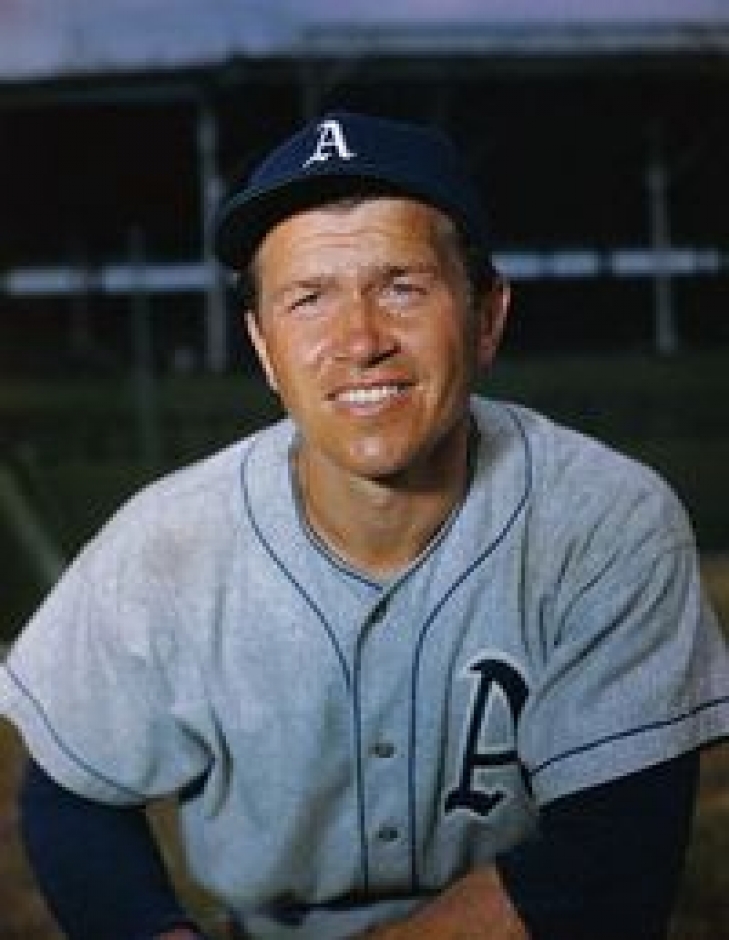
Born in Czechoslovakia, Imrich "Elmer" Valo moved to the U.S. at age six, settling in Pennsylvania. He embodied the American dream, channeling his athletic energy into a long MLB career. When he debuted with the Philadelphia Athletics in 1940, he brought a fierce, uninhibited style to Shibe Park that won him fans for generations.
Valo was far from a conventional, headline-grabbing superstar, yet he possessed an exceptionally keen baseball intellect and a legendary degree of physical resilience. He gained recognition throughout the junior circuit for his complete disregard for personal physical safety in the outfield. Long before stadiums were equipped with padded walls, Valo regularly collided at full speed with concrete barriers and chain-link fences to prevent extra-base hits by opposing batters. This unwavering intensity was complemented by an elite, notably sophisticated approach within the batter's box.
Although he did not have the raw power of the top sluggers of his time, Valo compensated by leveraging a tiny strike zone and a highly disciplined eye, resulting in high traffic. During his lengthy career with the organization, from 1940 to 1956, including a two-year military service during World War II, he recorded nine seasons with at least 100 hits.
His ability to draw walks and control the running game was truly exceptional; he achieved a remarkable .403 on-base percentage as an Athletic, finishing in the top ten of that important metric in the American League three times. This persistent blend of consistent on-base skill and fearless defense made him one of Connie Mack's most reliable players during a tough, transitional period for the team. Valo stayed deeply loyal to the organization, holding down the outfield as the team packed up and moved to Missouri for the 1955 season. He spent a year and a half as a veteran leader for the Kansas City Athletics before some roster changes led to his release. This paved the way for a highly successful second phase of his career, where he became one of the game's most formidable pinch-hitters for the Brooklyn Dodgers, Philadelphia Phillies, and New York Yankees.
Over 15 seasons as an Athletic, Valo compiled 1,229 hits, 218 doubles, and 595 walks. In 1990, he was honored with a spot on the Philadelphia Baseball Wall of Fame.
35. Jimmy Dykes
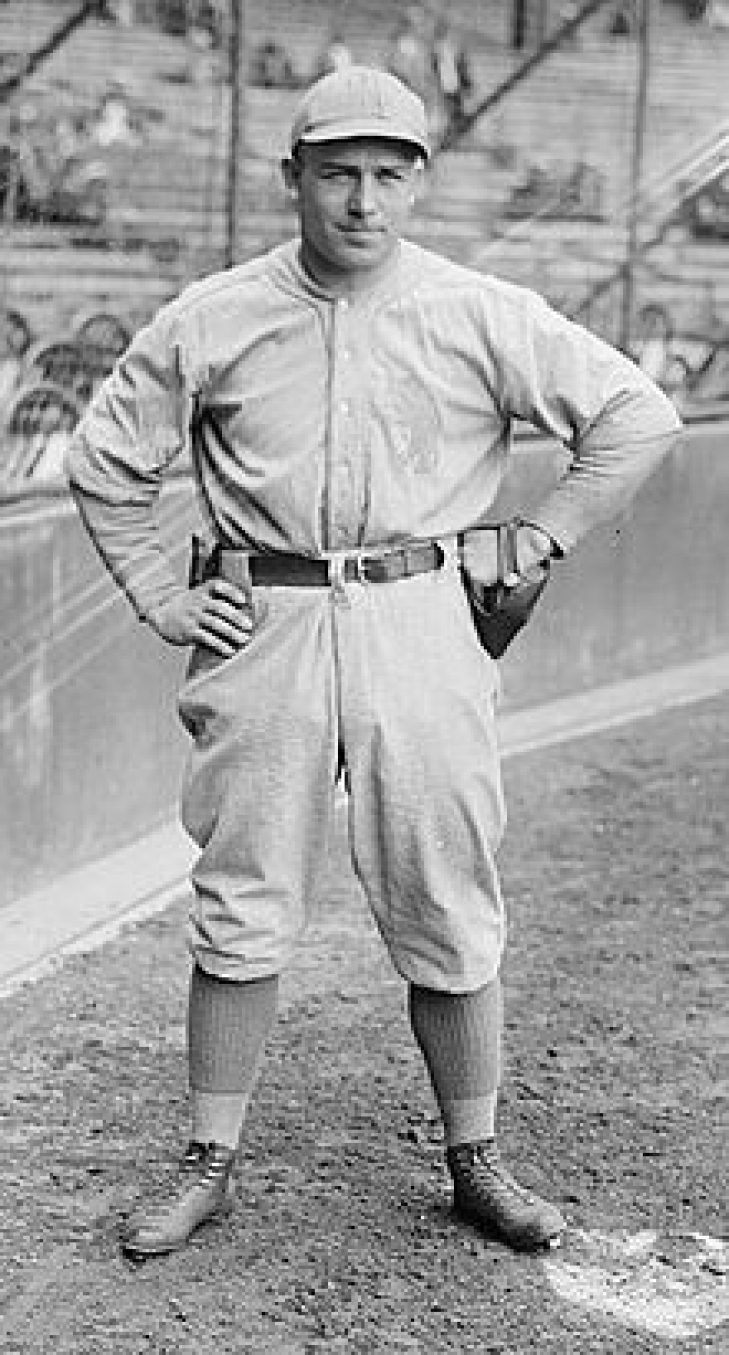
A Rule 5 Draft acquisition ahead of the 1918 season, expectations for Jimmy Dykes’s offensive production were incredibly low. Scouts widely regarded the gritty infielder as a premium glove-first prospect who possessed severe limitations at the plate. That scouting report looked entirely accurate during his first two brief tastes of the big leagues, as he slumped to a bleak, sub-.200 batting average that left many wondering if his bat would ever catch up to his defensive instincts. However, Connie Mack saw Dykes’ determination and baseball IQ despite a slow start. Given the second base job in 1920, Dykes transformed into a durable, respected franchise anchor.
His versatility became a crucial strategic asset for Mack as the roster evolved. Dykes managed second base flawlessly until the front office acquired additional middle-infield depth, prompting a smooth transition to third base. He secured the position with the same impeccable efficiency, employing an exceptional internal clock and a fast, accurate throwing arm to turn extra-base hits into routine outs.
As his defensive vacuum solidified the infield, his right-handed swing matured significantly. Dykes addressed his early critics by surpassing the .300 batting average threshold on four occasions while playing for Philadelphia, most notably by achieving a remarkable career-high .327 in 1929.
This exemplifies the ideal combination of superior defensive versatility and consistent, high-contact batting, which played a pivotal role in the organization’s development of its second legendary powerhouse dynasty. Dykes served as the cornerstone of the infield, leading the Athletics to secure three consecutive American League pennants from 1929 to 1931, including consecutive World Series titles in 1929 and 1930. He was an unwavering performer under high-pressure conditions at the sport's most significant events, notably driving in four runs during the remarkable eight-run rally in Game 4 of the 1929 Fall Classic against the Chicago Cubs.
While the roster remained an elite American League force into the early 1930s, the harsh financial realities of the Great Depression soon forced a painful institutional transition. With plummeting attendance threatening the franchise's solvency, a cash-strapped Mack was forced to liquidate his high-priced stars. Following the 1932 campaign, Dykes was packaged with legendary outfielder Al Simmons and Mule Haas and sold to the Chicago White Sox in a massive blockbuster deal designed to keep the Philadelphia front office afloat.
With the Athletics, Dykes accumulated 1,705 hits, 365 doubles, and gained entry into the Philadelphia Baseball Wall of Fame in 1984.
37. Socks Seybold
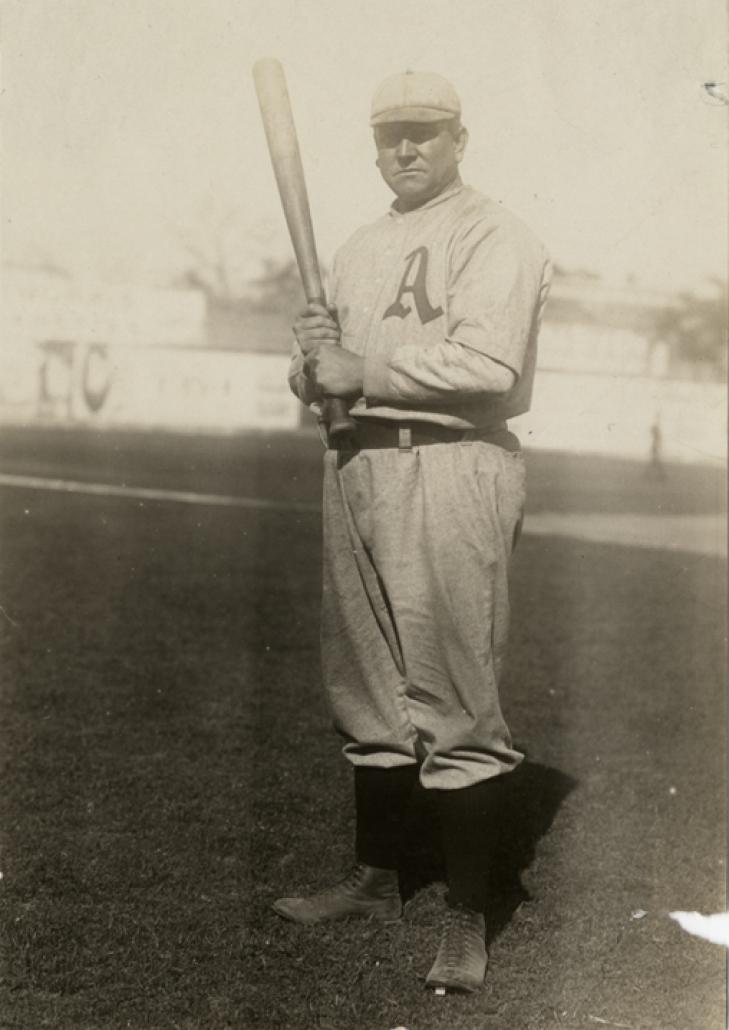
When baseball historians debate the greatest home run champions, Ralph "Socks" Seybold rarely comes up. His career is a collection of historical anomalies.
Seybold was an imposing, burly athlete of the dead-ball era, weighing approximately 200 pounds. Due to his persistent difficulty in maintaining optimal physical condition, he spent nearly his entire twenties performing in minor league teams. Most scouts had entirely dismissed his potential; however, Connie Mack recognized a raw, substantial power that had been overlooked by others. Consequently, he took a chance on the veteran slugger, positioning the 30-year-old "rookie" in left field during the inaugural season of the Philadelphia Athletics in 1901.
Seybold responded to his manager's trust with a stunning offensive breakout. He shut down his critics by posting an impressive .334 batting average, blending his powerful build with a surprisingly smooth swing, quickly earning him hero status among the Shibe Park fans.
The pinnacle of his major league career came in 1902. Seybold excelled in extra-base hits, winning the American League home run title with 16, a record that remained the league's single-season best until Babe Ruth broke it nearly 20 years later. That year, he also achieved a career-high 97 RBIs and maintained an impressive .316 batting average, helping the Athletics secure their first-ever American League pennant.
The natural effects of aging and his ongoing struggle with physical fitness quickly impacted his performance. During the 1908 season, Seybold's abilities declined sharply, and he soon left the major leagues, returning to finish his career in the minors.
He concluded his brilliant, compressed eight-year stay in Philadelphia with 1,066 hits, 51 home runs, and a strong .296 career batting average.
22. Danny Murphy
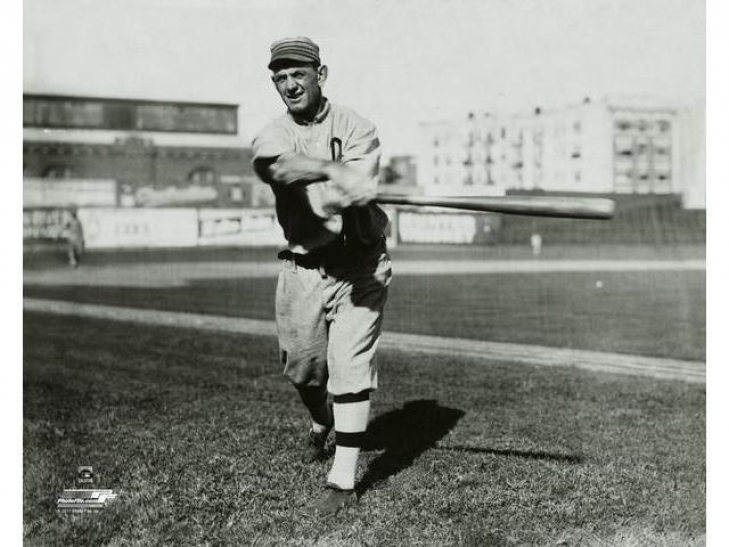
When Connie Mack established his pioneering Philadelphia Athletics dynasty at the beginning of the twentieth century, the team roster rapidly became filled with some of the most notable figures of the dead-ball era. Sharing the field with legendary players such as Home Run Baker, Chief Bender, and Eddie Plank, it was surprisingly easy for Danny Murphy to be neglected by history. Nevertheless, his adaptable, decade-long contribution served as the critical, high-impact offensive driver that contributed to the transformation of the early Athletics into a respected baseball empire.
Murphy arrived in Philadelphia during the midpoint of the 1902 season, initially establishing himself as the team's regular second baseman. He managed the position with consistent reliability until the emergence of a young, generational talent prompted a tactical adjustment. Acknowledging the exceptional defensive skills of future Hall of Famer Eddie Collins, Mack decided to reposition Murphy from the infield to the outfield. Rather than allowing the demotion to adversely affect his mindset, Murphy embraced the transition, demonstrating commendable selflessness and adaptability that maintained the elite defensive standard of the infield while ensuring his potent bat remained in the lineup.
That bat proved to be a highly potent weapon in an era defined by low-scoring, tactical baseball. Murphy was a remarkably aggressive, line-drive hitter who accumulated 1,489 hits during his pinstriped tenure. While his free-swinging approach resulted in a relatively low .336 on-base percentage, his raw, extra-base power was an absolute anomaly for the period. He possessed an uncanny ability to drive the ball deep into the gaps, twice finishing second in the American League in triples and placing inside the junior circuit's top ten in slugging percentage and overall OPS on six separate occasions.
His clutch, heavy-hitting style served as a critical catalyst when the franchise reached its absolute peak. Murphy acted as a driving force for the back-to-back 1910 and 1911 World Series Championship teams, routinely delivering high-leverage hits in the Fall Classic to help secure the organization's first tastes of global supremacy.
His extended tenure in Philadelphia ultimately concluded after the 1913 season. Similar to numerous undercompensated star athletes of his era who became increasingly dissatisfied with Mack's stringent financial policies, Murphy opted to switch leagues by signing a lucrative contract with the nascent Federal League's Brooklyn Tip-Tops. He ended his distinguished eleven-year tenure with the Athletics with a robust .290 batting average, leaving a legacy characterized by discreet, versatile excellence that laid the groundwork for the sport's inaugural significant American League dynasty.
30. Rube Walberg
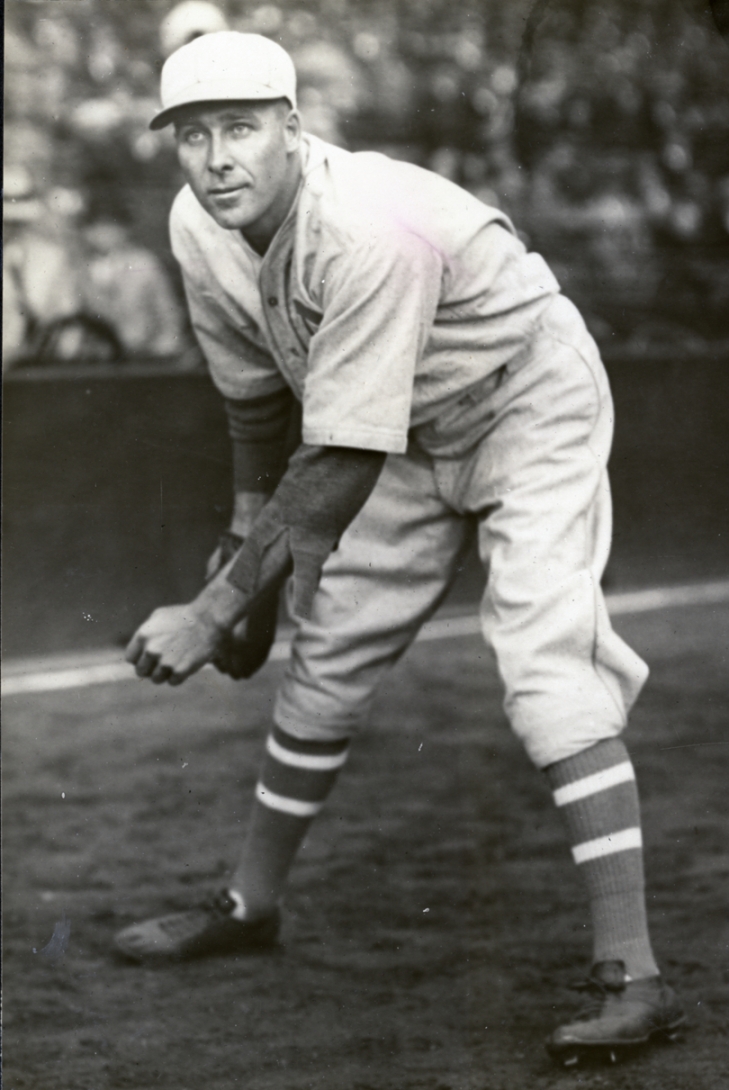
Rube Walberg holds the dubious distinction of serving up the most home runs to Babe Ruth with 17. That might seem like a strange way to open, but remember the Athletics thought enough of him to keep putting him on the mound.
33. Topsy Hartsel
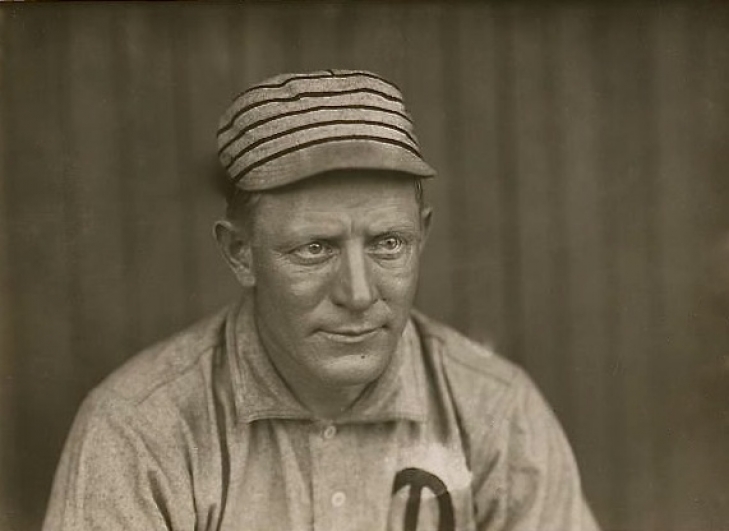
Connie Mack aimed to quickly turn his newly established Philadelphia Athletics into a dominant American League team. He sought a particular kind of player, one who was smart, disciplined, low-maintenance, and unaffected by a deep count. Tully Frederick "Topsy" Hartsel served as the ideal model for this approach.
After an impressive 1901 season with the Chicago Orphans in the National League, where he made 187 hits and maintained a .335 batting average, Hartsel decisively moved to the emerging junior circuit. Mack promptly placed the short, 5-foot-5 outfielder at the top of the batting order, establishing a leadoff strategy that would challenge opposing pitchers for the following decade.
Hartsel demonstrated exceptional proficiency as a leading offensive contributor from the moment he took to the field at Columbia Park. His debut season in 1902 with Philadelphia served as a distinguished example of excellence in the top of the batting order, as he led the American League in runs scored (109), walks (87), and stolen bases (47).
Although a severe hand injury and the inherent friction characteristic of the dead-ball era impeded his ability to attain that astronomical stolen base threshold again, his rapid baserunning continued to be remarkably effective, as he successfully stole double-digit bases in each successive summer through 1908.
Mainstream publications of the era occasionally mischaracterized Hartsel as a light hitter because he crossed the conventional .300 batting average threshold only once while wearing pinstripes, achieving a .309 batting average in 1903. However, evaluating his offensive prowess solely based on hits significantly underestimates his true skill. Possessing an exceptionally disciplined approach within a highly restricted strike zone, an advantage largely facilitated by his modest stature, Hartsel regarded a walk with the same respect as a line drive.
He demonstrated exceptional plate discipline from 1905 to 1908, leading the American League in walks for four consecutive seasons and winning the junior circuit's on-base percentage title twice. His consistent ability to generate traffic resulted in an impressive .402 on-base percentage during this peak period, ensuring that the power hitters batting behind him constantly received intentional bases on balls with runners in scoring position.
While his regular-season volume and sheer patience kept the Athletics in fierce contention throughout the 1900s, his role naturally evolved as Mack’s first great dynasty matured. During the historic 1910 championship run, the veteran outfielder was relegated to a part-time role, appearing in just one Fall Classic game as Philadelphia captured the world title. By the 1911 season, his transition away from the active roster was complete; he spent the summer as a highly respected player-coach under Mack rather than a daily lineup fixture, quietly securing his second World Series ring from the dugout steps before hanging up his cleats.
Hartsel concluded his brilliant ten-year run in Philadelphia with 1,087 hits, 725 walks, and a highly advanced .393 on-base percentage
