


gold star for USAHOF

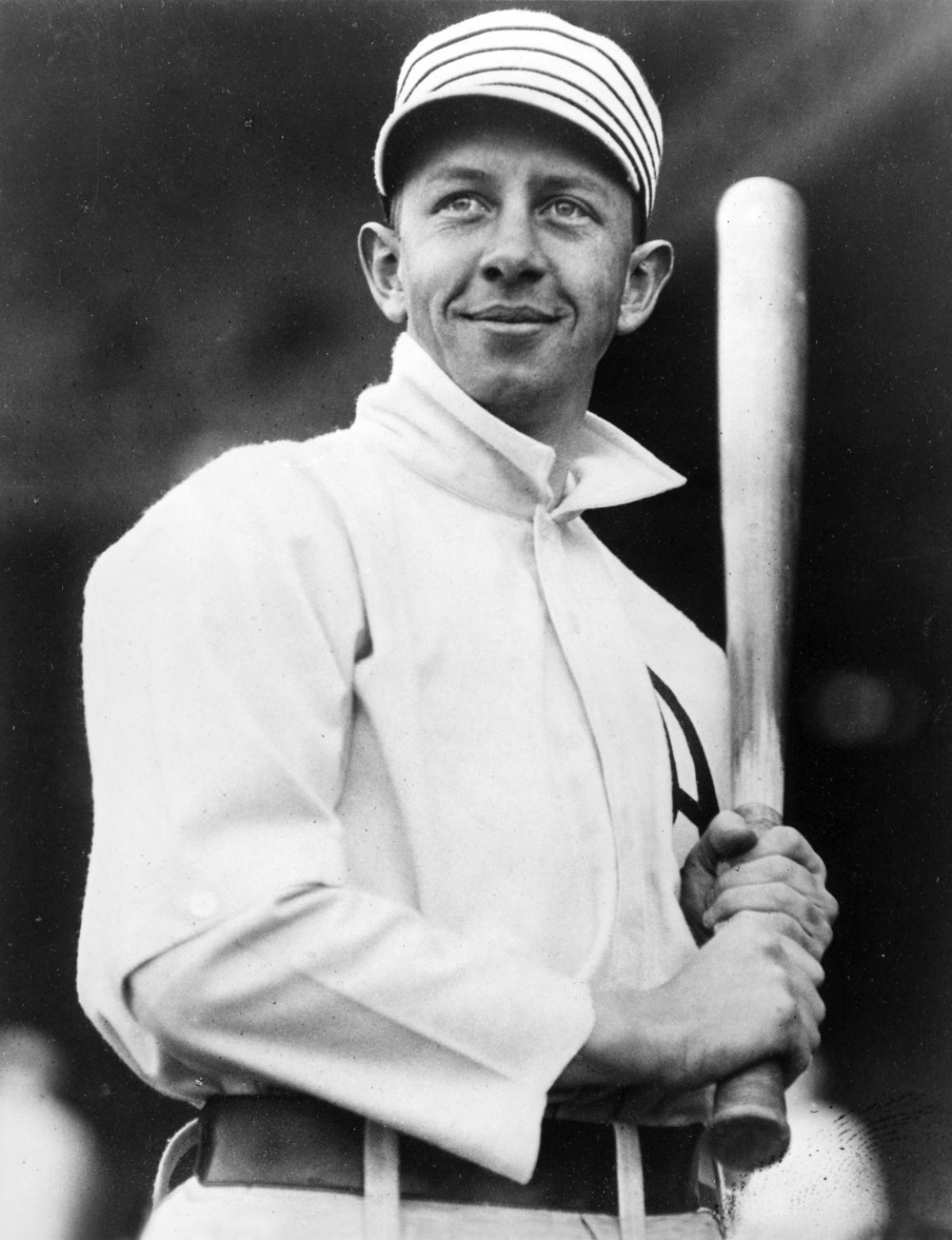
6. Eddie Collins

6. Eddie Collins
  1. General
  2. Awards
  3. Career Stats
  • Born: May 2, 1887 in Millerton, NY USA
  • Weight: 175 lbs.
  • Height: 5'9"
  • Bats: L
  • Throws: R
  • Debut: September 17, 1906
  • Final Game: August 05, 1930
  • Baseball Magazine All-Star - 1909
  • Baseball Magazine All-Star - 1909
  • Baseball Magazine All-Star - 1911
  • Baseball Magazine All-Star - 1911
  • Baseball Magazine All-Star - 1912
  • Baseball Magazine All-Star - 1913
  • Baseball Magazine All-Star - 1913
  • Baseball Magazine All-Star - 1914
  • Baseball Magazine All-Star - 1914
  • Most Valuable Player - 1914
  • Baseball Magazine All-Star - 1915
  • Baseball Magazine All-Star - 1915
  • Baseball Magazine All-Star - 1916
  • Baseball Magazine All-Star - 1916
  • Baseball Magazine All-Star - 1917
  • Baseball Magazine All-Star - 1917
  • Baseball Magazine All-Star - 1918
  • Baseball Magazine All-Star - 1918
  • Baseball Magazine All-Star - 1919
  • Baseball Magazine All-Star - 1919
  • Baseball Magazine All-Star - 1920
  • Baseball Magazine All-Star - 1920
  • Baseball Magazine All-Star - 1921
  • Baseball Magazine All-Star - 1922
  • Baseball Magazine All-Star - 1923
  • Baseball Magazine All-Star - 1923
  • Baseball Magazine All-Star - 1924
  • Baseball Magazine All-Star - 1925
  • Baseball Magazine All-Star - 1926
  • MVP - 1911
  • MVP - 1912
  • MVP - 1913
  • MVP - 1914
  • MVP - 1922
  • MVP - 1923
  • MVP - 1924
 
ABRHHRRBISBAVG
19898364266309426001485 0.333
 

In 1906, Eddie Collins arrived in Philadelphia as a collegiate standout from Columbia University, signing under a local alias to protect his amateur eligibility.  By 1909, he had emerged as the tactical brain of Connie Mack’s "$100,000 Infield," a second baseman whose mental acuity was matched only by his physical speed.

1909 was his first full season as a professional athlete, and he made the most of it. Collins achieved a significant milestone by batting .347 and stealing 63 bases. He reached an even more exceptional level in 1910, leading the American League with a career-high 81 stolen bases, becoming the first player in the history of the sport to surpass the 80-steal threshold. He contributed the dynamic energy that propelled the Athletics to three World Series championships in four years (1910, 1911, and 1913), establishing himself as a prominent figure of the Deadball Era, capable of influencing the game's tempo from the basepaths.

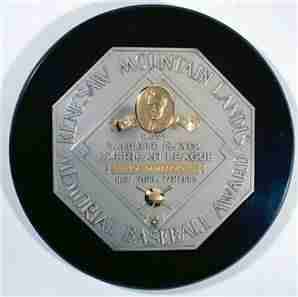
In 1914, Collins achieved an extraordinary level of individual recognition by producing an exceptional season that earned him the American League Most Valuable Player (MVP) Award. He demonstrated complete mastery of the game by leading the league in runs scored (122) for the third consecutive year and batting .344, thereby guiding the Athletics to their fourth pennant in five seasons. Nevertheless, the chapter in Philadelphia approached a pivotal juncture in 1915; amidst the imminent threat posed by the Federal League’s lucrative contracts, Connie Mack executed a significant transaction, transferring Collins to the Chicago White Sox for the sum of $50,000.

This would not be the end of Collins in Philadelphia.

After spending twelve productive seasons in Chicago, Collins’ return to Philadelphia in 1927 was a localized homecoming that brought his career full circle. Despite being 40 years old, he remained a sought-after professional mainstay, and he chose to reunite with Connie Mack to serve as a veteran player-coach for a rising Athletics squad. While he operated primarily as a tactical reserve, his localized value to the clubhouse was immeasurable as he mentored the next generation of Athletics legends. He reached a historic plateau of team success by serving as a professional mainstay on the 1929 and 1930 World Series championship rosters, making him the only player in franchise history to secure five championship rings with the team. He finalized his playing career after the 1930 season, departing as the only player in MLB history to spend at least 12 seasons with two different franchises.

As an Athletic, Collins compiled 1,308 hits, 337 stolen bases, and a .331 batting average.  He was inducted into the Baseball Hall of Fame in 1939 and the Philadelphia Baseball Wall of Fame in 1987.  The Athletics would also induct Collins into their franchise Hall of Fame in 2021.

The Bullet Points

  • Position: Second Base
  • Acquired: Signed as a Free Agent before the 1906 Season.
  • Departed:

    Purchased by the Chicago White Sox for $50,000 12/8/14.

    Acquired (2):Signed as a Free Agent 12/23/26.

    Departed (2): Retired after the 1931 Season.

  • Games Played: 1,156
  • Notable Statistics:

    756 Runs Scored
    1,308 Hits
    172 Doubles
    85 Triples
    16 Home Runs
    496 Runs Batted In
    373 Stolen Bases
    .337/.423/.437 Slash Line
    57.0 bWAR.

    20 Playoff Games
    14 Runs Scored
    26 Hits
    5 Doubles
    2 Triples
    0 Home Runs
    8 Runs Batted In
    10 Stolen Bases
    .347/.402/.467 Slash Line

  • Major Accolades and Awards:

    World Series Champion (1910, 1911, 1913, 1929 & 1930)
    MVP (1913)
    Highest bWAR for Position Players (1913)
    Highest Offensive bWAR (1914)
    Highest Defensive bWAR (1910)
    Most Runs Scored (1912, 1913 & 1914)
    Most Stolen Bases (1910)
    Most Singles (1913)
    Most Putouts by a Second Baseman (1909, 1910, 1911 & 1912)
    Most Assists by a Second Basemen (1909, 1910 & 1913)
    Most Double Plays Turned by a Second Baseman (1909, 1910 & 1912)
    Highest Range Factor per Game by a Second Baseman (1910 & 1911)
    Highest Fielding Percentage by a First Baseman (1909, 1910 & 1914)

  • Other Points of Note: Top Ten MVP Finishes:
    3rd in 1911, 6th in 1912, 3rd in 1913 & 1st in 1914

Comments powered by CComment