

 Not in Hall of Fame News
Yes, we know that this is taking a while! As many of…
 Not in Hall of Fame News
Yes, we know that this is taking a while! As many of…
 Not in Hall of Fame News
2002 SEMI-FINAL RESULTS: Thank you for your participation in the Pro Football…
 Not in Hall of Fame News
Yes, we know that this is taking a while! As many of…
 Not in Hall of Fame News
We are diligently working away at Notinhalloffame on revising our Football lists…
 Not in Hall of Fame News
We are diligently working away at Notinhalloffame on revising our Football lists…
 From the Desk of the Chairman
Unlike in the case of pre-match betting, where you have to pick…
 From the Desk of the Chairman
Kupu178 builds trust with people by using top-end end-to-end encryption. It checks…
 From the Desk of the Chairman
Sports fans thrive on calculating strategy, reading momentum, and maximizing every tactical…
 From the Desk of the Chairman
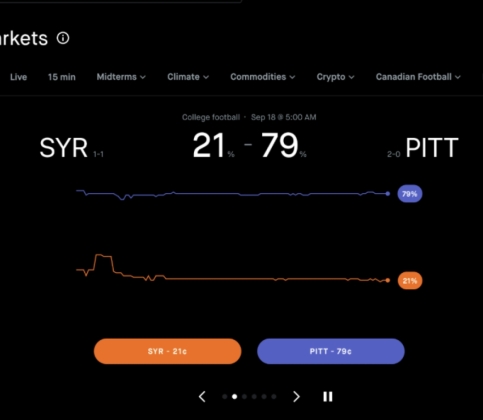
The 2026 NFL season is two weeks old and the division races…
 From the Desk of the Chairman
Sports communities are often built around things that have nothing to do…
 From the Desk of the Chairman
Every hall of fame eventually faces the same problem. The selection process…

100 Active Potential Football Hall of Famers
-
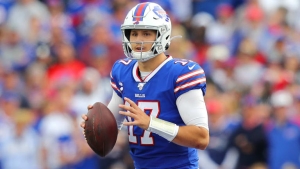 #16 Overall, Josh Allen, Buffalo Bills, #5 Quarterback2025 Pre-Season Rank #17, 2024 Pre-Season Rank #39, 2023 Pre-Season Rank #69, 2022 Pre-Season Rank #98, 2021 Pre-Season Rank #117. Peak Period: 2020-24.…in Quarterbacks
 -
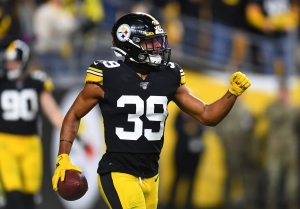 #44 Overall, Minkah Fitzpatrick, New York Jets, Free Safety, #3 Safety2025 Pre-Season Rank #43, 2024 Pre-Season Rank #56, 2023 Pre-Season Rank #63, 2022 Pre-Season Rank #99, 2021 Pre-Season Rank #108, 2020 Pre-Season Rank…in Safeties
 -
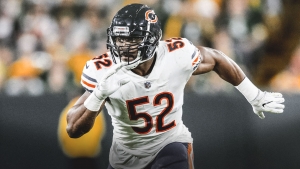 #13 Overall, Khalil Mack: Los Angeles Chargers, #5 Defensive Lineman/Linebacker: Pass Rusher2025 Pre-Season Rank #8, 2024 Pre-Season Rank #12, 2023 Pre-Season Rank #14, 2022 Pre-Season Rank #19, 2021 Pre-Season Rank #26, 2020 Pre-Season Rank…
 -
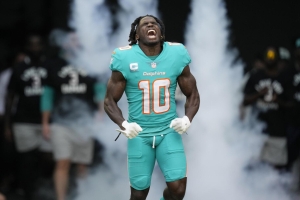 #25 Overall, Tyreek Hill, Free Agent, #3 Wide Receiver2025 Pre-Season Rank #18, 2024 Pre-Season Rank #8, 2023 Pre-Season Rank #28, 2022 Pre-Season Rank #35, 2021 Pre-Season Rank #53. Peak Period: 2019-23…
Visit the Fictitious Halls of Fame!


You May Also Like...
EDITOR’S CHOICE
 DDT's Pop Flies
When the veterans committee (VC), officially convening as the Contemporary Baseball Era…


 Live Music Head
Project/Objectan interview with André Cholmondeleyby Live Music HeadOriginally published at timessquare.com on…

LATEST RANKINGS

MOST POPULAR RANKINGS

Committee Chairman
347. Herman Moore
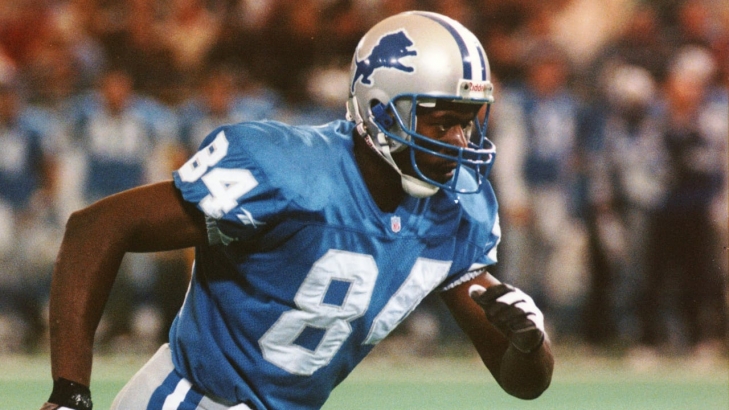
A dynamic offensive weapon for the Lions in the 1990s, Herman Moore would twice lead the National Football League in Receptions. Moore may have been overshadowed by Barry Sanders, but Moore was a four-time Pro Bowl selection who had over 1,000 Yards in each of those campaigns. He held all the major franchise receiving records until Calvin Johnson broke them.
Our All-Time Top 50 Houston Astros have been revised
Yes, we know that this is taking a while!
As many of you know, we here at Notinhalloffame.com are slowly generating the 50 of each major North American sports team. That being said, we have existing Top 50 lists out and we always consistently look to update them when we can and based on necessity. As such, we are very happy to present our pre-2021 revision of our top 50 Houston Astros of all-time.
As for all of our top 50 players in baseball we look at the following:
1. Advanced Statistics.
2. Traditional statistics and how they finished in their League.
3. Playoff accomplishments.
4. Their overall impact on the team and other intangibles not reflected in a stat sheet.
There are no new entries but three rank elevations, none of which were reflected on the top five, which, as always, we present in our news updates.
They are:
1. Jeff Bagwell
2. Craig Biggio
4. Jose Altuve
5. Cesar Cedeno
The complete list can be found here.
Outfielder, George Springer, moved up two spots to #16. Springer’s ascension ends here, as he signed with the Toronto Blue Jays as a Free Agent.
Infielder, Alex Bregman, also advanced two spots and is now at #19.
Fellow infielder, Carlos Correa went from #31 to #24.
We welcome your input and commentsand as always, we thank you for your support.
331. Ron McDole

Ron McDole’s professional football career got off to a slow start, as the former Nebraska Cornhusker did little as a rookie with the St. Louis Cardinals in 1961. 1962 was worse, as he migrated to the Houston Oilers of the American Football League and played even less.
McDole made the Buffalo Bills in 1963, and he went from journeyman to AFL star. Playing mostly at Defensive End, McDole became a two-time AFL All-Star and helped take the Bills to two AFL Championships (1964 & 1965). McDole remained with Buffalo until the end of the 1970 season, and he would be named a Second Team All-AFL player.
McDole’s career wasn’t over, as he played another 114 Games with his new team, the Washington Redskins, starting all but seven. He never made the Pro Bowl in Washington, but he was in contention for more than a few, and in the end, McDole had a long, productive 18-year career.
246. Jim David
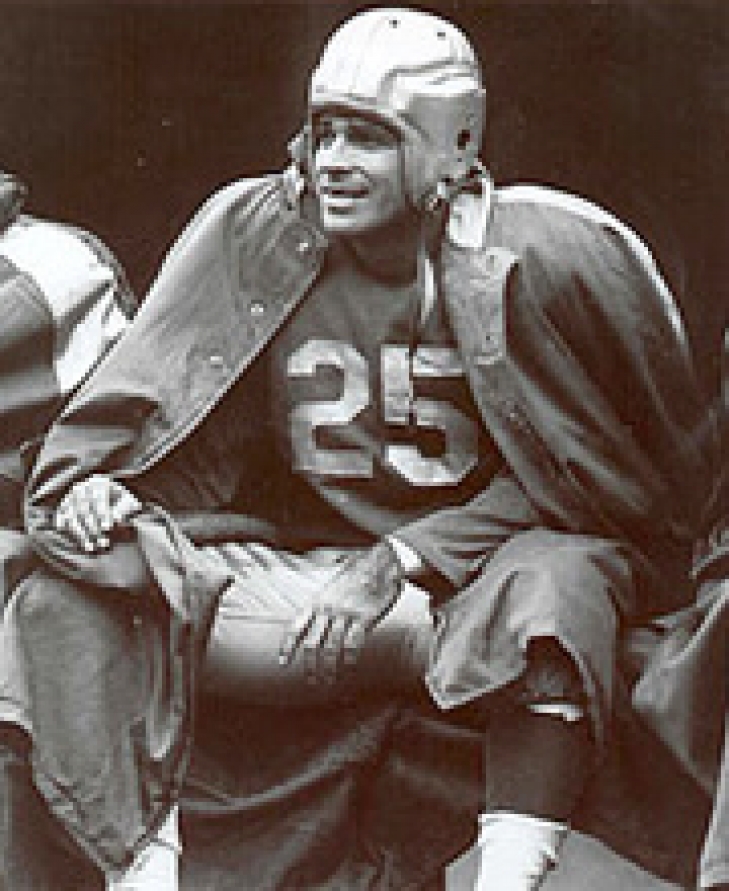
Known as “The Hatchet” (which is reason enough to rank him on any football list), the small-framed cornerback was one of the most punishing tacklers of his day and a major cog in the wheel of those three NFL Championship Teams in the 1950’s. It is definitely worth noting that Jim David recorded an Interception in all three of those Lions NFL Championships. Seriously, how impressive is that!
David was a six-time Pro Bowl Selection and two-time Second Team All-Pro.
