

 Not in Hall of Fame News
Yes, we know that this is taking a while! As many of…
 Not in Hall of Fame News
Yes, we know that this is taking a while! As many of…
 Not in Hall of Fame News
2002 SEMI-FINAL RESULTS: Thank you for your participation in the Pro Football…
 Not in Hall of Fame News
Yes, we know that this is taking a while! As many of…
 Not in Hall of Fame News
We are diligently working away at Notinhalloffame on revising our Football lists…
 Not in Hall of Fame News
We are diligently working away at Notinhalloffame on revising our Football lists…
 From the Desk of the Chairman
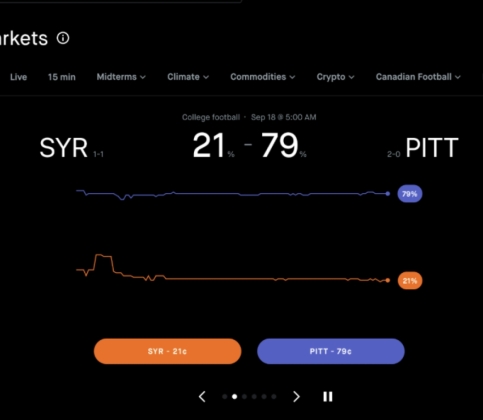
Unlike in the case of pre-match betting, where you have to pick…
 From the Desk of the Chairman
Kupu178 builds trust with people by using top-end end-to-end encryption. It checks…
 From the Desk of the Chairman
Sports fans thrive on calculating strategy, reading momentum, and maximizing every tactical…
 From the Desk of the Chairman
The 2026 NFL season is two weeks old and the division races…
 From the Desk of the Chairman
Sports communities are often built around things that have nothing to do…
 From the Desk of the Chairman
Every hall of fame eventually faces the same problem. The selection process…

100 Active Potential Football Hall of Famers
-
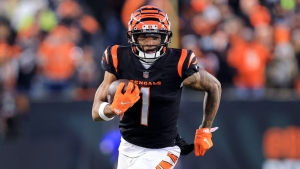 #42 Overall, Ja'Marr Chase, Cincinnati Bengals, #6 Wide Receiver2025 Pre-Season Rank #55, 2024 Pre-Season Rank #111, 2023 Pre-Season Rank #134, 2022 Pre-Season Rank #145. Peak Period: 2021-25* Ja’Marr Chase has been…
 -
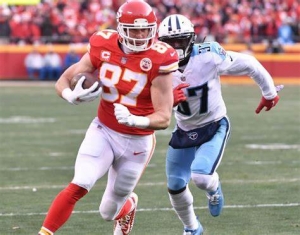 #5 Overall, Travis Kelce: Kansas City Chiefs, #1 Tight End2025 Pre-Season Rank #4, 2024 Pre-Season Rank #5, 2023 Pre-Season Rank #7, 2022 Pre-Season Rank #12, 2021 Pre-Season Rank: #20, 2020 Pre-Season Rank…in Tight Ends
 -
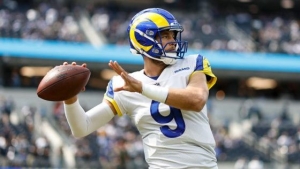 #9 Overall, Matthew Stafford, Los Angeles Rams, #3 Quarterback2025 Pre-Season Rank #26, 2024 Pre-Season Rank #31, 2023 Pre-Season Rank #37, 2022 Pre-Season Rank #37, 2021 Pre-Season Rank #59, 2020 Pre-Season Rank…in Quarterbacks
 -
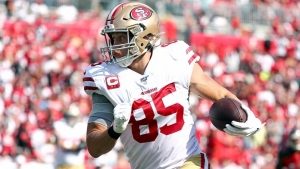 #26 Overall, George Kittle, San Francisco 49ers, #2 Tight End2025 Pre-Season Rank #34, 2024 Pre-Season Rank #42, 2023 Pre-Season Rank #59, 2022 Pre-Season Rank #74, 2021 Pre-Season Rank #86, 2020 Pre-Season Rank…in Tight Ends
Visit the Fictitious Halls of Fame!
You May Also Like...
EDITOR’S CHOICE
 DDT's Pop Flies
When the veterans committee (VC), officially convening as the Contemporary Baseball Era…


 Live Music Head
Project/Objectan interview with André Cholmondeleyby Live Music HeadOriginally published at timessquare.com on…

LATEST RANKINGS

MOST POPULAR RANKINGS


Committee Chairman
14. Juan Soto
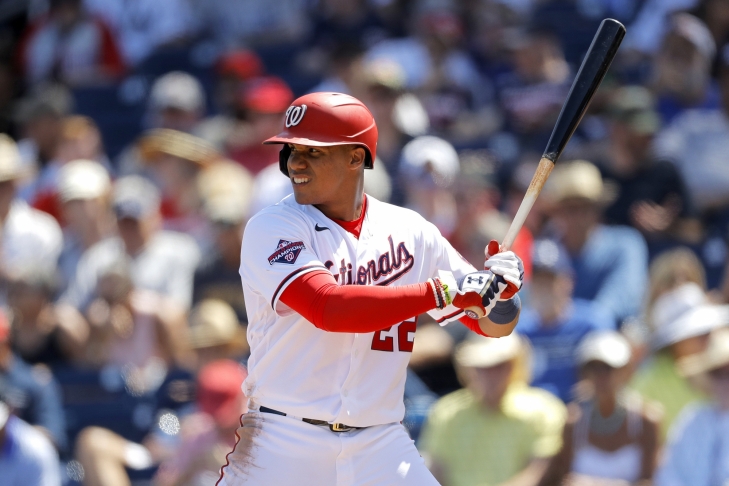
Juan Soto made his debut for the Washington Nationals in May 2018 at just 19, quickly making an impact that reshaped major league history. Known for his exceptional plate discipline—often compared to Ted Williams—he skipped typical rookie development stages. With his distinctive 'Soto Shuffle’ and remarkable left-handed swing, he rapidly became the team’s offensive star during a pivotal moment.
Soto's debut 2018 campaign demonstrated exceptional rookie efficiency. In just 116 games, he dominated National League pitching by hitting 22 home runs and drawing 79 walks, finishing narrowly second for the NL Rookie of the Year Award. He built on that success in 2019, hitting 34 home runs and driving in 110 RBIs while sustaining an impressive .949 OPS, solidifying his role at the heart of Washington's batting lineup.
That sophomore showcase set the stage perfectly for a memorable October run that made stars. As Washington navigated a challenging postseason, Soto made the 2019 playoffs his own arena. During the World Series against the Houston Astros, which coincided with his 21st birthday, he tore apart top-tier pitching to hit .333, with three significant home runs and a 1.178 OPS. His crucial, high-pressure hits helped lead the team to a seventh game, securing Washington's first-ever world title and earning him the Babe Ruth Award as co-MVP of the postseason, shared with Stephen Strasburg.
Rather than suffering a championship hangover, Soto achieved his peak individual performance in the abbreviated 2020 season. At only 21, he posted an impressive .351 batting average, making him the youngest player in Senior Circuit history to win the National League batting title. He also topped the league with a.490 on-base percentage and a .695 slugging percentage, demonstrating an unbeatable offensive strategy. In 2021, he continued his excellence by drawing 145 walks—leading all of baseball.—while hitting .313 with 29 home runs, His outstanding season earned him an All-Star selection, a Silver Slugger award, and a close second-place finish in the NL MVP voting.
As the franchise shifted its focus to a major roster overhaul and the star player refused a record contract extension, the front office executed a transformative trade in August 2022, sending the young superstar to the San Diego Padres. Soto later starred on multi-million dollar stages across Southern California, the Bronx, and Queens, ultimately securing a historic $765 million contract with the New York Mets.
With Washington, Soto accrued 569 hits, 108 doubles, 119 home runs, and 358 RBIs. He also generated a magnificent .291/.406/.538 slash line—good for an elite 160 OPS+.
49. Lance Lynn
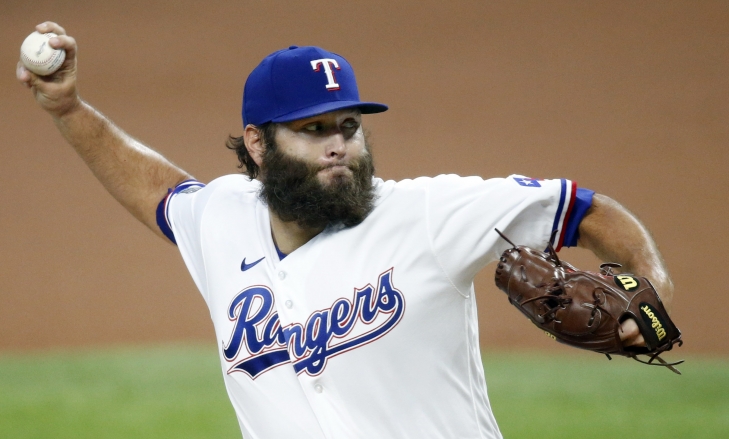
When Lance Lynn signed a three-year contract with the Texas Rangers in December 2018, it attracted little attention nationwide. The experienced right-hander had faced a challenging few seasons, transitioning from an All-Star in St. Louis to missing all of 2016 due to Tommy John surgery. After a modest 2018 season splitting time between Minnesota and New York, many analysts thought he was entering a quiet decline phase. However, Lynn's move to Arlington sparked a remarkable turnaround, leading to a late-career resurgence that became the crowning achievement of his career.
Lynn quickly became the Rangers’ most reliable workhorse, especially during a standout 2019 season. He overwhelmed American League hitters with a relentless mix of four-seam and two-seam fastballs. Over 208.2 innings, he expertly controlled the strike zone, finishing with a 16–11 record and a career-high 246 strikeouts. His aggressive, high-pressure pitching kept a rebuilding Texas team competitive each game, earning widespread praise and a fifth-place finish in the AL Cy Young Award voting.
Lynn's performance during the 2020 season went beyond a typical one-year anomaly. Throughout a challenging, condensed schedule caused by the pandemic, he elevated his baseline to an even higher level of efficiency. Operating under chaotic conditions, he set a standard for pitching endurance by starting 13 games, achieving a strong 6–3 record with a 3.32 ERA, and leading Major League Baseball in innings pitched with 84.0. His consistent ability to go deep into games earned him a sixth-place finish in the 2020 Cy Young Award voting.
The 2019-2020 period marked Lynn's peak in his major league career. As the franchise shifted to a youth-focused rebuild and his trade value peaked, the front office traded him. In December 2020, Texas sent Lynn to the White Sox for Dane Dunning and prospect Avery Weems, enabling him to pursue postseason baseball before ending his career.
During his short stint in Texas, Lynn started 45 games, achieving a 22–14 record, a 3.57 ERA, and a 1.17 WHIP. He pitched 292.2 innings in high-pressure situations, recording 335 strikeouts and maintaining an impressive 133 ERA+.
Dee Snider slams the Rock Hall
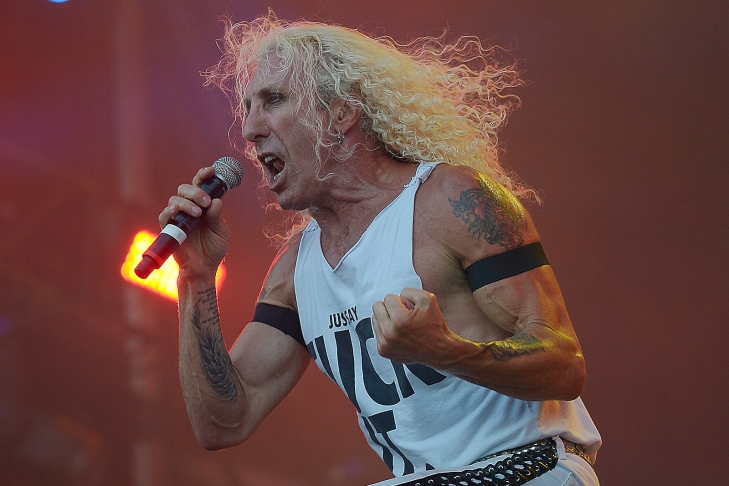
We have said since we began our website a decade ago that the Rock and Roll Hall of Fame has no little love for the Heavy Metal genre. The metal artists know it too, but generally, we don’t hear them utter those statements often, so when they do, we consider it news.
On his Twitter, Twisted Sister front man, Dee Snider said the following about the Rock and Roll Hall of Fame committee:
"The RnR Hall committee members are arrogant elitist assholes who look down on metal & other bands that sell millions because we're not their definition of cool. The fan vote is their 'throwing a bone' to the peasants. I want to say FU, but I want them to have to deal with us!"
Iron Maiden is nominated for the first time this year, but they have been eligible for fifteen years. Judas Priest and Motorhead have been nominated before, but have failed to get in.
The Rock and Roll Hall of Fame fan vote is open until April 30, but has no impact on who will get in.
Major Update: Our Baseball List has been revised
We are a month removed from the Baseball Hall of Fame 2021 vote, and that means it is time to release our new list of those to consider for Cooperstown in 2022. With nobody elected in 2021, there are no removals from the list, but there are four new entries. We currently have 108 on this list, and by Spring, we will be expanding it to an even 300, which will be our fixed number moving forward.
As per our first year, there are three number ones, with the rational showing one eligible, and two ineligibles (Pete Rose and Shoeless Joe Jackson) due to gambling.
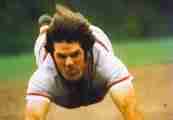
Remaining at #1A is Pete Rose, the man who collected an all-time record 4,256 Hits. Rose was banned from the game over 30 years ago for betting on baseball.
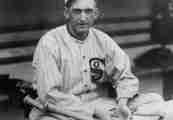
Also, staying at #1B, is “Shoeless” Joe Jackson. Jackson was suspended for his alleged participation in the Chicago White Sox throwing of the 1919 World Series.
Barry Bonds is at #1C. Bonds is the all-time leading Home Run leader with 762, and he is also first in Walks (2,558), Win Probability Added (127.7) and Power-Speed # (613.9). While never caught, the seven-time MVP was widely suspected of PED use, and the Baseball Hall of Fame voters have kept him out. He only has one year left of eligibility.
Roger Clemens is just behind Bonds at #2. Like Bonds, Clemens has been kept out of Cooperstown due to PED suspicion, and he is also entering his tenth and final year on the ballot. Clemens is a seven-time Cy Young Award winner and is third all-time in Strikeouts (4,672).
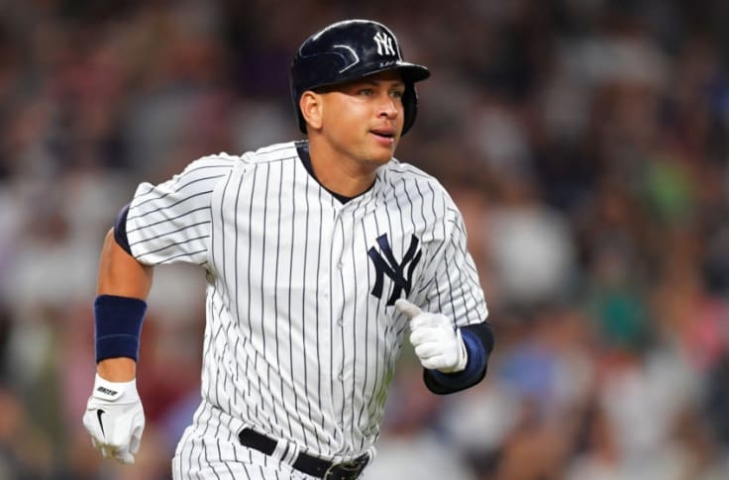
The highest debut is Alex Rodriguez, who appears at #3. Unlike Bonds and Clemens, Rodriguez was twice suspended for PED use, but also, unlike Bonds and Clemens, he seems to be welcomed back as shown by his gig at Fox. Rodriguez is fourth all-time in Home Runs (696).
Former Detroit Tiger Second Baseman, Lou Whitaker, is at #4. Whitaker was a member of Detroit’s 1984 World Series Championship team, and is considered one of the best infielders not in the Baseball Hall.
Bill Dahlen, a former star in the 1900s is in at #5. Dahlen won a World Series with the New York Giants in 1905, and is still in the top-fifty in bWAR for Position Players.
Curt Schilling is at #6. The former two-time World Series champion has one year left and has asked to be removed from the ballot after failing to enter the Hall. He has feuded with media in the past, and his current right-wing politics have alienated many others.
At #7 is Manny Ramirez. Like Rodriguez, Ramirez has also been suspended for PEDs twice, and it has hampered his pursuit for a Hall of Fame plaque.
Our second top-ten debut is at #8, David Ortiz, Ramirez’s former teammate in Boston. With the Red Sox, Ortiz became the best Designated Hitter that baseball has ever seen, and would win three World Series rings.
Todd Heltonremains in the top ten at #9. The career Colorado Rockie is trending towards induction in roughly three years.
Tommy Johnrounds out the top ten. Ironically, the surgery that bears his name, is recognized by the Hall. His only path for induction is with the Veteran’s Committee.
There are two other new entries, Mark Teixeira at #93 and Jimmy Rollins at #102.
Thank you all for your support, and look for our revised Football list next month.
