

 Not in Hall of Fame News
Yes, we know that this is taking a while! As many of…
 Not in Hall of Fame News
Yes, we know that this is taking a while! As many of…
 Not in Hall of Fame News
2002 SEMI-FINAL RESULTS: Thank you for your participation in the Pro Football…
 Not in Hall of Fame News
Yes, we know that this is taking a while! As many of…
 Not in Hall of Fame News
We are diligently working away at Notinhalloffame on revising our Football lists…
 Not in Hall of Fame News
We are diligently working away at Notinhalloffame on revising our Football lists…
 From the Desk of the Chairman
October baseball often turns individual pitching performances into lasting postseason memories. Strikeout…
 From the Desk of the Chairman
For decades, the sports debate ran on gut feeling. Barstool arguments, call-in…
 From the Desk of the Chairman
Introduction to Private Adult Tennis Camps in Prague Adult club players increasingly…
 From the Desk of the Chairman
Unlike in the case of pre-match betting, where you have to pick…
 From the Desk of the Chairman
Kupu178 builds trust with people by using top-end end-to-end encryption. It checks…
 From the Desk of the Chairman
Sports fans thrive on calculating strategy, reading momentum, and maximizing every tactical…
100 Active Potential Football Hall of Famers
-
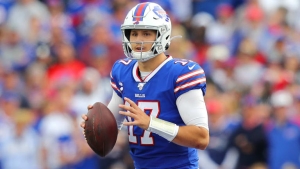 #16 Overall, Josh Allen, Buffalo Bills, #5 Quarterback2025 Pre-Season Rank #17, 2024 Pre-Season Rank #39, 2023 Pre-Season Rank #69, 2022 Pre-Season Rank #98, 2021 Pre-Season Rank #117. Peak Period: 2020-24.…in Quarterbacks
 -
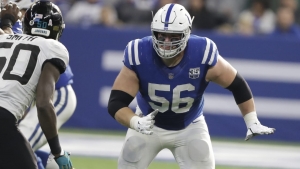 #22 Overall, Quenton Nelson, Indianapolis Colts, Left Guard, #2 Offensive Lineman2025 Pre-Season Rank #2025, 2024 Pre-Season Rank #29, 2023 Pre-Season Rank #42, 2022 Pre-Season Rank #51, 2021 Pre-Season Rank #78, 2020 Pre-Season Rank…
 -
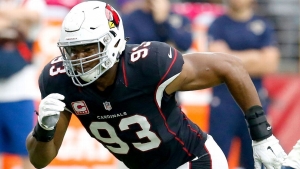 #14 Overall, Calais Campbell, Baltimore Ravens, Defensive End, #6 Defensive Lineman/Linebacker: Pass Rusher2025 Pre-Seasn Rank #14, 2024 Pre-Season Rank #19, 2023 Pre-Season Rank #19, 2022 Pre-Season Rank #26 2021 Pre-Season Rank #28, 2020 Pre-Season Rank…
 -
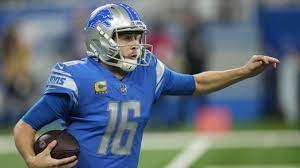 #45 Overall, Jared Goff, Detroit Lions, #8 Quarterback2025 Pre-Season Rank #46, pSeason 2024 Pre-Season Rank #89, 2023 Pre-Season Rank #100, 2022 Pre-Season Rank #112. 2021 Pre-Season Rank #106, 2020 Pre-Season…in Quarterbacks
Visit the Fictitious Halls of Fame!

You May Also Like...
EDITOR’S CHOICE
 DDT's Pop Flies
When the veterans committee (VC), officially convening as the Contemporary Baseball Era…


 Live Music Head
Project/Objectan interview with André Cholmondeleyby Live Music HeadOriginally published at timessquare.com on…

LATEST RANKINGS

MOST POPULAR RANKINGS
Committee Chairman
10. Ted Kennedy
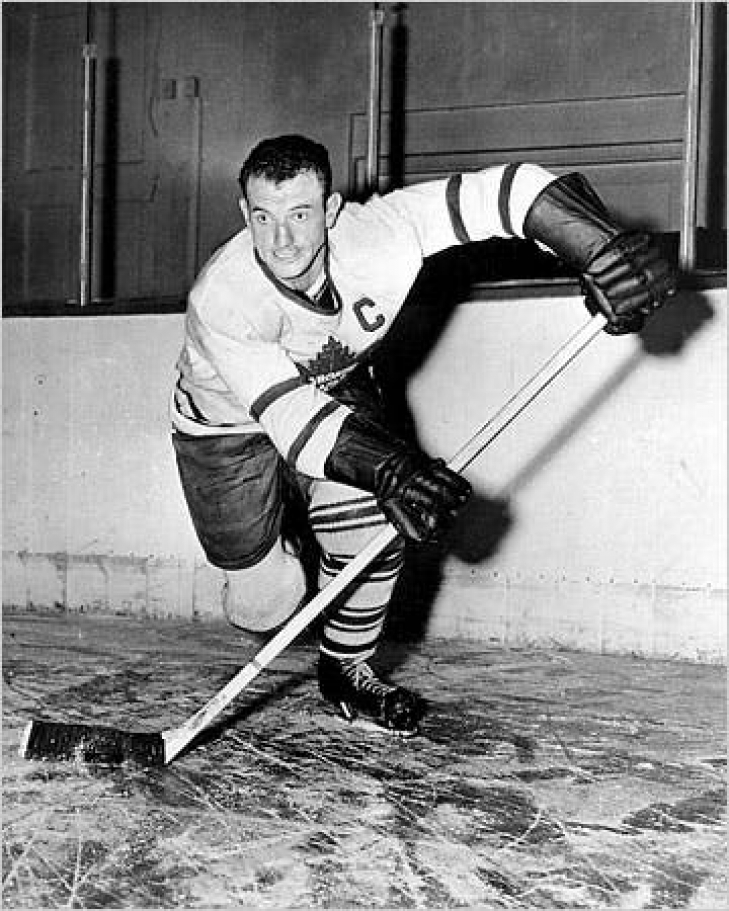
There are so many former Maple Leafs whom fans and writers have dubbed the consummate representative of the team. One that comes up often, and certainly did in his day, was Ted Kennedy.
Kennedy played his entire NHL career for Toronto, debuting as a teenager in 1943 and scoring 49 Points in 1943-44 and 54 Points in 1944-45, with the latter season earning Kennedy and the Maple Leafs win the Stanley Cup. Kennedy had arrived, leading all skaters in Goals (7) in the playoffs, and his two-way skills and selfless play endeared him to his teammates and coaches alike.
Toronto would win three straight Cups (1947-49), with Kennedy being a key performer in all of them. It was as though he saved his best performances when it mattered the most, and he lit the lamp twice in the Cup-winning game in 1948. Kennedy and the Leafs were considered one of the first dynasties in the NHL, and while he was not the top star, he was the glue.
In 1949-50, Kennedy again had a decent year, but the playoff semi-final against Detroit saw the Center injure the Red Wings’ up-and-coming star, Gordie Howe, on a botched check. Some believed (including the Red Wings) that Kennedy did this on purpose, and it invigorated Detroit, which upset the Leafs. Kennedy would, however, lead Toronto to a Stanley Cup win the following season, his fifth overall.
In the 1950s, Kennedy's production remained the same, but his individual trophy case gained accolades. Kennedy was a Second Team All-Star in 1950, 1951, and 1954. Even though he was not a post-season All-Star in 1954-55, he was named the Hart Trophy winner. With all due respect to Kennedy, he likely should not have won the award, as it was more of a lifetime achievement honor than actual recognition of what he accomplished that season. Kennedy retired after that year but did return a year later for 30 Games before retiring for good.
He had 560 Points in 696 Games with another 60 in 78 Playoff Games.
Kennedy was elected to the Hockey Hall of Fame in 1966, and in 1993, he was part of the prestigious group that was honored by the Leafs with a banner. His number 9 was retired (along with Charlie Conacher) in 2016.
9. Mats Sundin
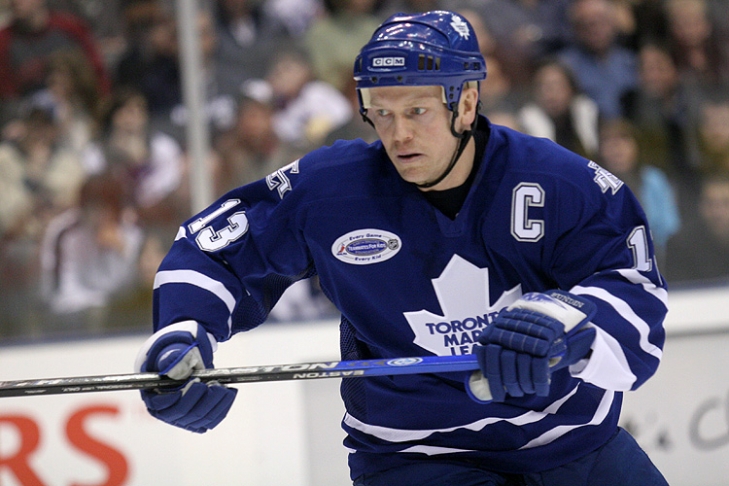
Mats Sundin played four seasons with the Quebec Nordiques before he was traded to the Toronto Maple Leafs in the transaction that sent Wendel Clark the other way. It was a tough start for Sundin in Toronto, as Clark’s popularity in Toronto was astronomical, but Sundin proved quickly that Toronto won the trade.
Sundin could not match the 114 Points he scored in the 1992-93 season as a Nordique, but the rules changed that favored a more defensive game, and he was still a Point-per-Game player with Toronto. From 1995-96 to his final year in Toronto, 2007-08, Sundin scored at least 70 Points and would lead the Leafs in scoring eight times. The Swedish Center would be a two-time Second Team All-Star and was arguably the face of the franchise for a decade. Toronto might not have won or even made a Stanley Cup when Sundin was their leader, but any player at the top of their food chain for an Original Six team is a legendary figure.
Sundin entered the Hockey Hall of Fame in 2012, the same year his name was added to the list of honored players at the ACC. The Maple Leafs retired his number #13 in 2016.
8. King Clancy
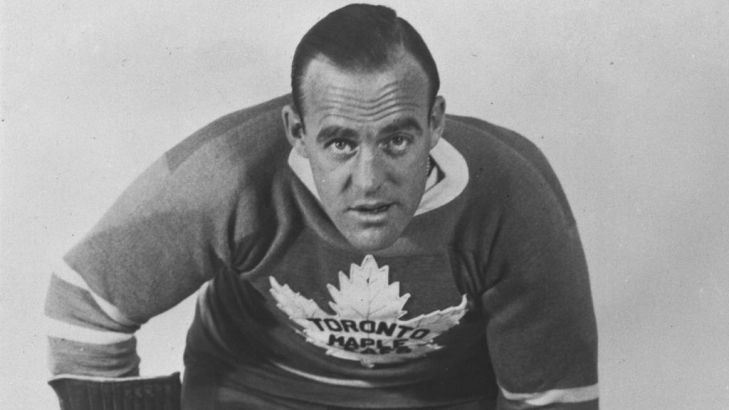
In the 1920s, while he was playing for the Ottawa Senators, Francis Michael "King" Clancy was one of the top Defenseman in professional hockey. While he likely lost most of the fights he was in, the 150-pounder was afraid of nobody. Clancy led the Sens to two Stanley Cups, but Ottawa made a colossal error, as they traded him to the Toronto Maple Leafs before the 1930/31 Season.
The transaction became known in circles as the "best deal in hockey," and Clancy’s already stellar game had a bigger platform. Clancy led Toronto to a Stanley Cup win in 1932, and he would be named a post-season All-Star four times as a Maple Leaf. Clancy brought leadership and identity to Toronto and was also known for his charitable work off the ice.
Clancy retired in 1936, and he would forever be associated with Toronto, later serving as their Coach, then General Manager, and multiple capacities in between. The NHL would later name an annual award given to the NHL player who demonstrates leadership qualities on and off the ice and who has made exceptional humanitarian contributions in the community.
Clancy was chosen for the Hockey Hall of Fame in 1958. In 1995, his name was part of the group that had their name honored at the Air Canada Center, and in 2016, his number 7 (also with Tim Horton) was retired by the team.
7. Darryl Sittler
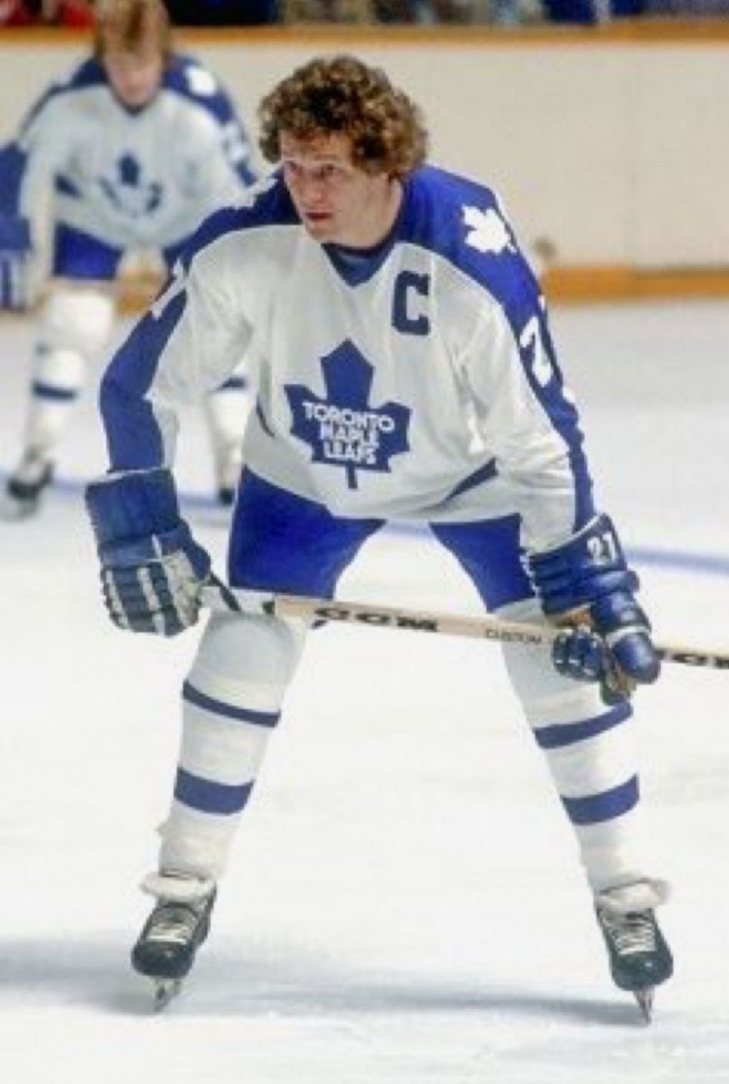
Darryl Sittler was not only the top sniper for the Toronto Maple Leafs throughout the 1970s, but he was among the best in goal-scoring prowess in the entire league.
Sittler was a First Round Pick in 1970, and two years later, the Center had his breakout year with a 77-Point campaign. Sittler had arrived, and the Leafs faithful had a new favorite. After surpassing the 80-point mark for the next two years, Sittler was anointed the Maple Leafs’ captain, and he rewarded that choice by becoming the first Maple Leaf to crack 100 Points in a season. This was also the year when Sittler scored ten Points in a Game, a record that remains intact today.
After scoring 90 Points in 1976-77, Sittler had his best season in the NHL, scoring 117 Points, with a Second Team All-Star nod and a third-place finish for the Hart Trophy. Sittler had at least 87 points over the next three seasons. Still, around this time, his relationship with Maple Leafs owner, Harold Ballard, deteriorated, mostly over Sittler’s support of the ousted Head Coach, Roger Neilson. It got so bad that Toronto traded Sittler’s close friend and linemate, Lanny McDonald, to Colorado out of spite, and Sittler stepped down as captain.
Sittler was eventually traded to the Philadelphia Flyers in 1982, and the Leafs fans knew that Sittler was wronged; he remained an icon in Toronto. Overall with the Leafs, Sittler scored 916 Points in 844 Games for a sparkling 1.09 PPG.
Sittler entered the Hockey Hall of Fame in 1989 and was welcomed back with warm fanfare in 2003 when his name was added to the rafters as an honored member. In 2016, his #27 (along with Frank Mahovlich) was retired by the team.
