

 Not in Hall of Fame News
Yes, we know that this is taking a while! As many of…
 Not in Hall of Fame News
Yes, we know that this is taking a while! As many of…
 Not in Hall of Fame News
2002 SEMI-FINAL RESULTS: Thank you for your participation in the Pro Football…
 Not in Hall of Fame News
Yes, we know that this is taking a while! As many of…
 Not in Hall of Fame News
We are diligently working away at Notinhalloffame on revising our Football lists…
 Not in Hall of Fame News
We are diligently working away at Notinhalloffame on revising our Football lists…
 From the Desk of the Chairman
October baseball often turns individual pitching performances into lasting postseason memories. Strikeout…
 From the Desk of the Chairman
For decades, the sports debate ran on gut feeling. Barstool arguments, call-in…
 From the Desk of the Chairman
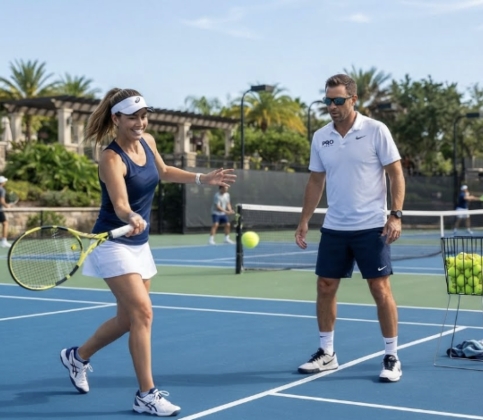
Introduction to Private Adult Tennis Camps in Prague Adult club players increasingly…
 From the Desk of the Chairman
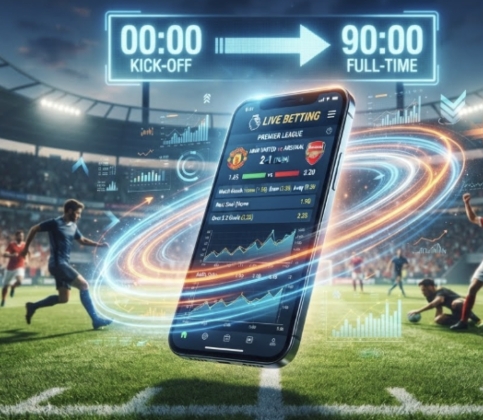
Unlike in the case of pre-match betting, where you have to pick…
 From the Desk of the Chairman
Kupu178 builds trust with people by using top-end end-to-end encryption. It checks…
 From the Desk of the Chairman
Sports fans thrive on calculating strategy, reading momentum, and maximizing every tactical…
100 Active Potential Football Hall of Famers
-
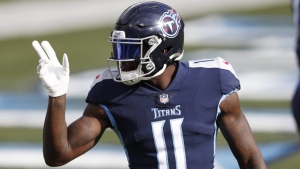 #50 Overall, A.J. Brown, New England Patriots, #9 Wide Receiver2025 Pre-Season Rank #49, 2024 Pre-Season Rank #76, #2023 Pre-Season Rank #106, 2022 Pre-Season Rank #142, 2021 Pre-Season Rank #141. Peak Period: 2020-24…
 -
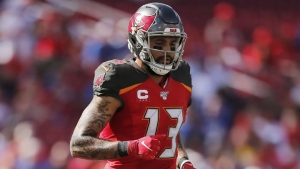 #18 Overall, Mike Evans, San Francisco 49ers, #1 Wide Receiver2025 Pre-Season Rank #13, 2024 Pre-Season Rank #18, 2023 Pre-Season Rank #35, 2022 Pre-Season Rank #58, 2021 Pre-Season Rank #73. Peak 2020-24 How…
 -
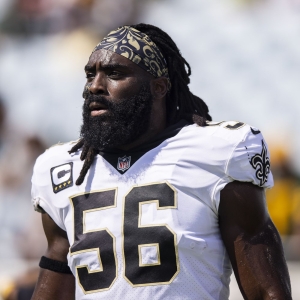 #48 Overall, DeMario Davis, New York Jets, Linebacker, #4 Defensive Lineman/Linebacker: Interior Lineman2025 Pre-Season Rank #47, 2024 Pre-Season Rank #47, 2023 Pre-Season Rank #61, 2022, Pre-Season Rank #137. Peak Period: 2019-23 Davis, a veteran player,…
 -
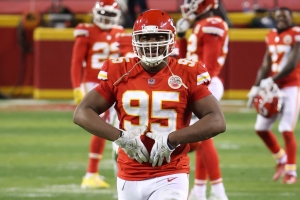 #19 Overall, Chris Jones, Kansas City Chiefs, Defensive Tackle, #8 Defensive Lineman/Linebacker: Pass Rusher2025 Pre-Season Rank #15, 2024 Pre-Season Rank #15, 2023 Pre-Season Rank #58, 2022 Pre-Season Rank #100. Peak Period 2020-24. When you think of…
Visit the Fictitious Halls of Fame!


You May Also Like...
EDITOR’S CHOICE
 DDT's Pop Flies
When the veterans committee (VC), officially convening as the Contemporary Baseball Era…


 Live Music Head
Project/Objectan interview with André Cholmondeleyby Live Music HeadOriginally published at timessquare.com on…

LATEST RANKINGS


MOST POPULAR RANKINGS





Committee Chairman
Our All-Time Top 50 Oklahoma City Thunder have been revised
Yes, we know that this is taking a while!
As many of you know, we here at Notinhalloffame.com are slowly generating the 50 of each major North American sports team. That being said, we have existing Top 50 lists out and we always consistently look to update them when we can and based on necessity. As such, we are very happy to present our pre-2021-22 revision of our top 50 Oklahoma City Thunder of all-time.
As for all of our top 50 players in basketball we look at the following:
1. Advanced Statistics.
2. Traditional statistics and how they finished in the NBA.
3. Playoff accomplishments.
4. Their overall impact on the team and other intangibles not reflected in a stat sheet.
Please note, that this is our first revision in two years, and as such, players with significant achievements in 2019-20 are reflected here.
As always, we present our top five immediately, though nothing has changed in this upper-tier.
2. Gary Payton
3. Kevin Durant
4. Shawn Kemp
5. Jack Sikma
You can find the entire list here.
There are two new entries, and moderate increases, and again, remember this is indicative of the last two years.
Steven Adams, who is now with New Orleans, inched up one spot to #16.
Chris Paul, who was only with OKC for one year in 2019-20, and was a Second Team All-NBA Selection enters at #43.
Current OKC star, Shai Gilgeous-Alexander, debuts at #46.
We welcome your input and comments and as always, we thank you for your support.
RIP: Biz Markie
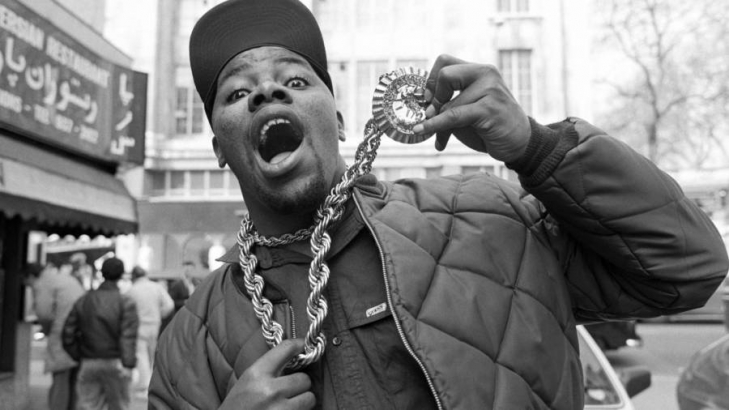
The world of rap lost one of its own, as Biz Markie, passed away at the age of 57. While it was announced how he died, he had been suffering from Type 2 Diabetes for an extended period of time.
Born Marcel Hall, Markie had a unique sound, as he was not a skilled rapper, nor was he a competent singer. As such, he used humor, quirkiness, occasional self-deprecation, and his ability to beatbox to create a style all his own. It resulted in what was one of the great one-hit wonders ever, “Just a Friend” in 1989. The song catapulted Markie, albeit briefly, to the mainstream, but it would be the only significant hit of his career.
Nevertheless, he paved the way for other comedic rappers, and he was dubbed the “Clown Prince of Hip-Hop”. He put out five albums over his career.
We here at Notinhalloffame.com would like to extend our condolences to the fans, friends and family of Biz Markie.
6. Shai Gilgeous-Alexander
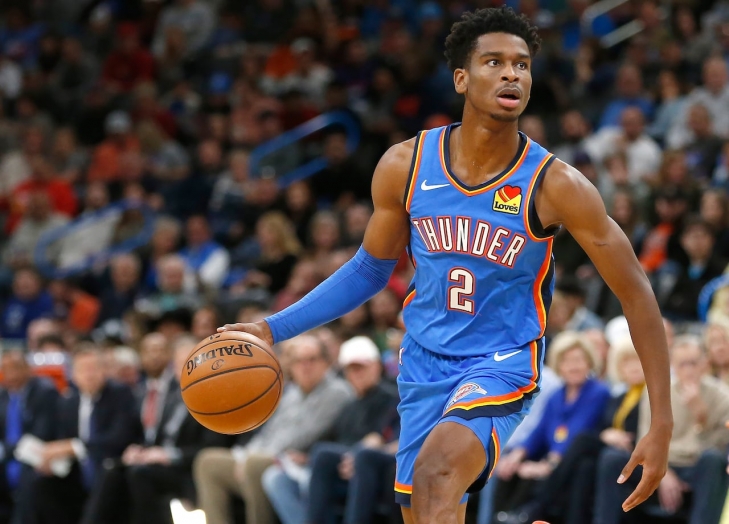
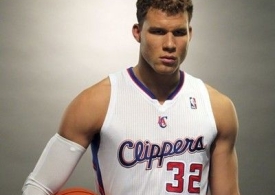
From Ontario, Canada, Shai Gilgeous-Alexander had a promising rookie season (2018-19) when he played for the Los Angeles Clippers. The Clippers were going for it all, and dealt the young Canadian in a package to OKC for Paul George, and it allowed Gilgeous-Alexander to show what type of player he could be.
What a steal it turned to be.
Gilgeous-Alexander inflated his PPG from his rookie year in L.A. from 10.8 to 19.0, while his PER also jumped from 13.4 to 17.7. While he was held to 35 Games due to injury in 2020-21, the Guard clearly emerged as the top player in OKC, again increasing his metrics to a 21.6 PER and a 23.7 PPG. SGA was also injured for a good amount of 2021-22, but averaged over 24 Points per Game in 56 Games. The Canadian exploded to the elite level in 2022-23, wth a 31.4 PPG, All-Star and All-NBA Selection, establishing Gilgeous-Alexander as a top ten player in the NBA
Two years ago, SGA went to the next level, finishing second in MVP voting, propelling the Thunder to a deep playoff run, with a sweet 31.0 PPG. It also netted the star with his second First Team All-NBA Selection. How do you follow that? You become the final boss of Basketball.
In 2024-25, Gilgeous-Alexander won the Scoring Title (32.PPG), was a First Team All-NBA player again, and won the prestigious MVP award. How did he cap that? By taking the Thunder to their first league title since the relocation from Seattle.
Gilgeous-Alexander is a very special basketball player, and he has no ceiling.
48. Chris Paul
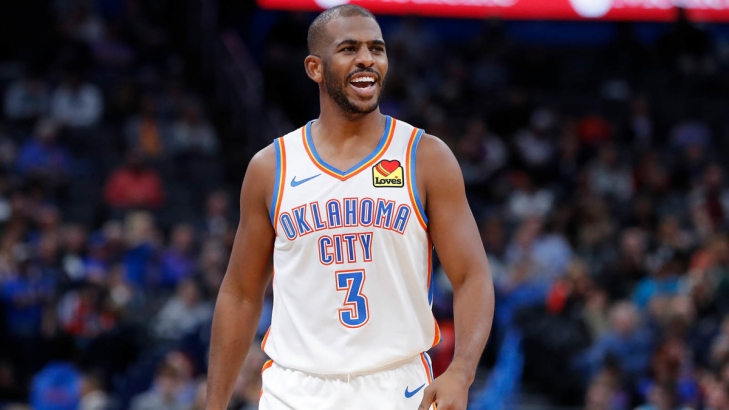
Chris Paul only played one season (2019-20) with Oklahoma City, and while it was near the end of his career, make no mistake, he was still a star, and a player who led them to the playoffs.
Paul was an All-Star and All-NBA player (Second Team) for the first time in four years, and in his lone OKC season, he was rejuvenated and developed his already strong leadership skills. The Point Guard averaged 17.7 Points per Game, and brought back his .550 eFG% over .550. In terms of his advanced numbers, his PER went back over 20 (21.7) after dipping below that mark the year before with Houston.
Paul, who had been traded to Oklahoma City in a transaction that sent Russell Westbrook the other way, was shipped to Phoenix the year after, making CP3 a one-and-done with the Thunder.
Again, if this seems strange, remember that in basketball, a single player makes more impact than in any other team sport.
