

 Not in Hall of Fame News
Yes, we know that this is taking a while! As many of…
 Not in Hall of Fame News
Yes, we know that this is taking a while! As many of…
 Not in Hall of Fame News
2002 SEMI-FINAL RESULTS: Thank you for your participation in the Pro Football…
 Not in Hall of Fame News
Yes, we know that this is taking a while! As many of…
 Not in Hall of Fame News
We are diligently working away at Notinhalloffame on revising our Football lists…
 Not in Hall of Fame News
We are diligently working away at Notinhalloffame on revising our Football lists…
 From the Desk of the Chairman
October baseball often turns individual pitching performances into lasting postseason memories. Strikeout…
 From the Desk of the Chairman
For decades, the sports debate ran on gut feeling. Barstool arguments, call-in…
 From the Desk of the Chairman
Introduction to Private Adult Tennis Camps in Prague Adult club players increasingly…
 From the Desk of the Chairman
Unlike in the case of pre-match betting, where you have to pick…
 From the Desk of the Chairman
Kupu178 builds trust with people by using top-end end-to-end encryption. It checks…
 From the Desk of the Chairman
Sports fans thrive on calculating strategy, reading momentum, and maximizing every tactical…






100 Active Potential Football Hall of Famers
-
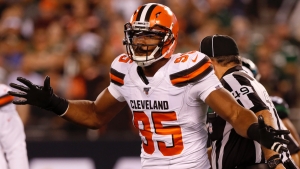 #7 Overall, Myles Garrett, Los Angeles Rams, Defensive End, #2 Defensive Lineman/Linebackers: Pass Rushers2025 Pre-Season Rank #9, 2024 Pre-Season Rank #17, 2023 Pre-Season Rank #34, 2022 Pre-Season Rank #53, 2021 Pre-Season Rank #99, 2020 Pre-Season Rank…
 -
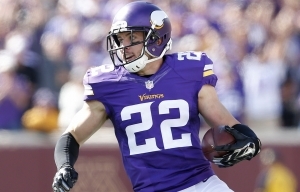 #28 Overall, Harrison Smith, Minnesota Vikings, Strong Safety, #2 Safety2025 Pre-Season Rank #38, 2024 Pre-Season Rank #50, 2023 Pre-Season Rank #72, 2022 Pre-Season Rank #79, 2021 Pre-Season Rank #90, 2020 Pre-Season Rank…in Safeties
 -
 #32 Overall, Jalen Hurts, Philadelphia Eagles, #6 Quarterback2025 Pre-Season Rank #33, 2024 Pre-Season Rank #53, 2023 Pre-Season Rank #121. Peak Period: 2021-25 And in 2024, he became a champion. Jalen…in Quarterbacks
 -
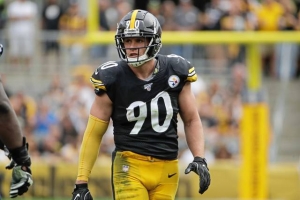 #10 Overall, T.J. Watt, Pittsburgh Steelers, #4 Defensive Lineman/Linebacker Pass Rusher2025 Pre-Season Rank #7, 2024 Pre-Season Rank #11: 2023 Pre-Season Rank #15, 2022 Pre-Season Rank #24, 2021 Pre-Season Rank #68, 2020 Pre-Season Rank…
Visit the Fictitious Halls of Fame!


You May Also Like...
EDITOR’S CHOICE

 DDT's Pop Flies
When the veterans committee (VC), officially convening as the Contemporary Baseball Era…



 Live Music Head
Project/Objectan interview with André Cholmondeleyby Live Music HeadOriginally published at timessquare.com on…

LATEST RANKINGS





MOST POPULAR RANKINGS
















Committee Chairman
31. Bob Pulford
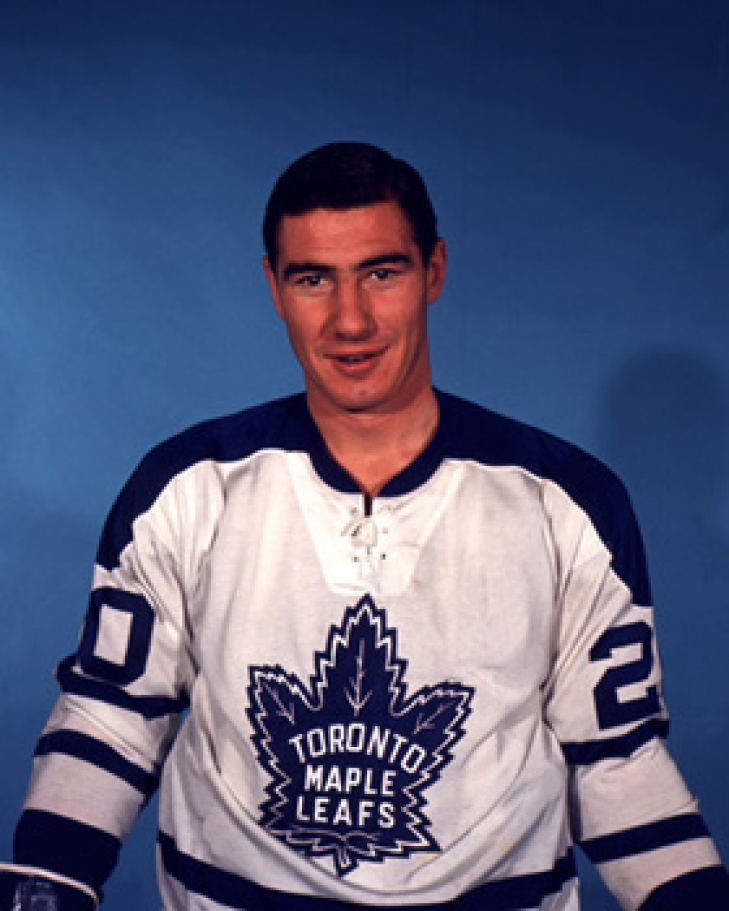
Bob Pulford played his junior hockey for the Toronto Marlboros, where he helped them win two Memorial Cups. The winning ways would continue in the same city when he signed with the Toronto Maple Leafs, the team he played the first 14 of his 16 NHL seasons.
Pulford played at Left Wing, where he proved to be a consistent presence on the lower lines. Pulford had four 20-Goal seasons, three of which saw him exceed 50 Points. His greatest asset to the Leafs was his penalty killing, as few in the 1960s were better at playing hockey a man down than Pulford. Leading the NHL in Short-Handed Goals three times, Pulford had 28 of his 251 Goals with the Buds, with his team at a disadvantage. His efforts helped Toronto win four Stanley Cups in the 1960s, and he led all skaters in Assists (10) in the 1967 Playoffs.
After he stopped playing, he would become a successful coach and executive for the Chicago Blackhawks, winning the Jack Adams Award as the Coach of the Year in 1975.
Pulford was chosen for the Hockey Hall of Fame in 1991.
30. Ron Ellis
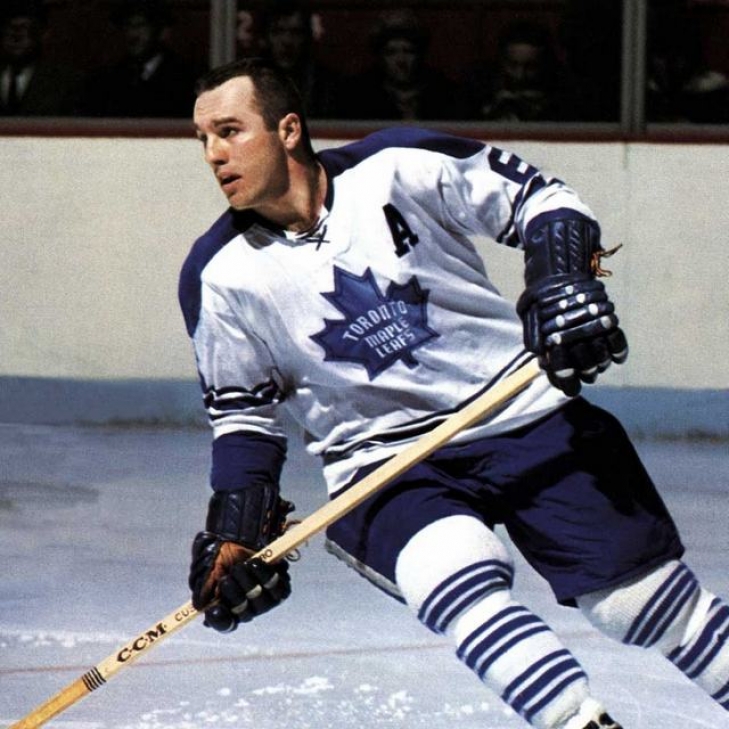
Ron Ellis played 1,034 Games in the National Hockey League, all of which were in the blue and white of the Toronto Maple Leafs.
Ellis played in one game in the 1963-64 Season and was then a fixture at Right Wing for years to come. Aiding the Maple Leafs in securing the 1967 Stanley Cup, Ellis had at least 42 Points each year from 1965-66 to 1974-75, with the last year seeing Ellis score a career-high 61 Points. Ellis abruptly retired after that year, allegedly upset that he was passed over for the captaincy in favor of Darryl Sittler. That lasted two seasons before he returned for three more years, retiring after the 1980-81 Season with 640 career Points.
29. Jimmy Thomson
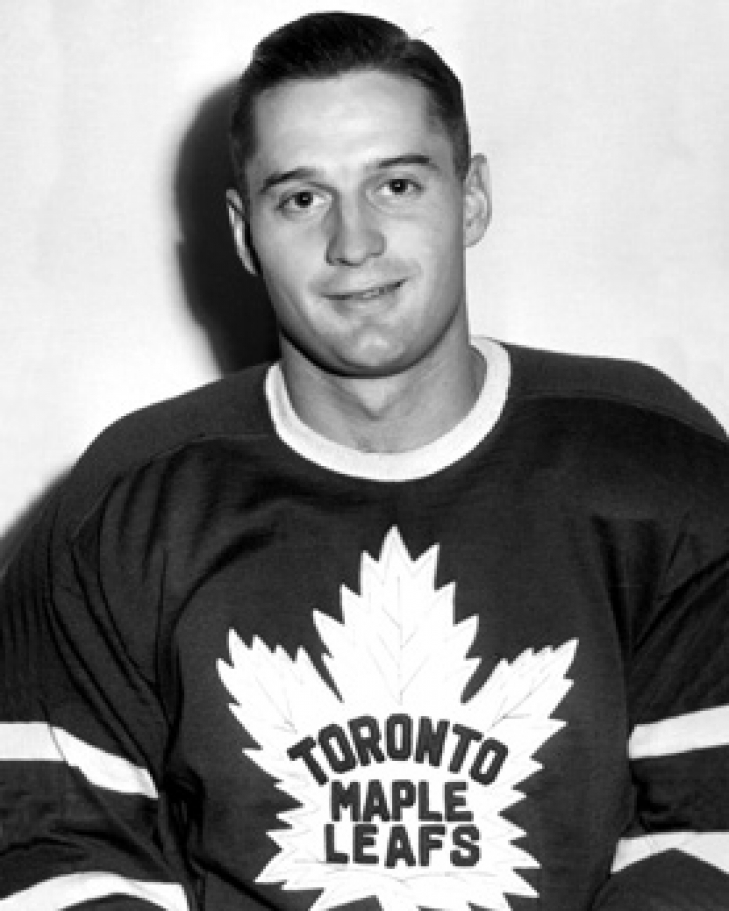
Jimmy Thomson was an underappreciated cog in the machine that won four Stanley Cups in five seasons (1947-51), a period that coincidentally is not as respected as their four titles in the 1960s.
Playing at Defense, Thomson was twice a Second Team All-Star and led the NHL in Defensive Point Shares three times. Thomson was not a scorer but was an expert passer who managed to land in the top ten in Assists twice. Thomson played twelve years with the Leafs, with a final one in Chicago.
As a Maple Leaf, Thomson had 233 Points and ensured a lot more did not happen on his end of the ice.
28. Wendel Clark
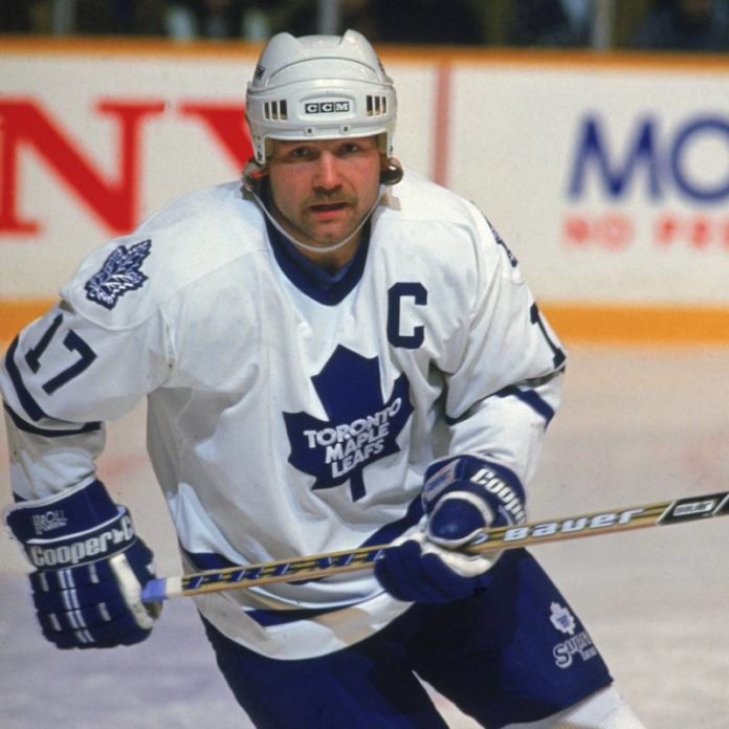
If this list were based purely on popularity, Wendel Clark would be near the top.
Clark was taken number one in the 1985 Draft, and he joined a struggling Maple Leafs team that lacked an identity. The Left Wing immediately became a fan favorite for his no-nonsense play, willingness to fight, and ability to score. As a rookie, Clark scored 45 Points and finished second in Calder voting to Gary Suter. The Left Wing had 60 Points as a sophomore, but in his third year, he began to be plagued with back problems that affected him for the rest of his career and resulted in many games lost.
Despite his medical setbacks, Clark remained the heart of the team and became the team captain. A trade from Calgary brought Doug Gilmour to the Leafs and with other pieces in tow, the Maple Leafs made a deep run in the 1993 Playoffs. Clark had his best year the season after, with a career-high 76 Points, but the Leafs dealt Clark to Quebec for Mats Sundin, and the Leaf Nation wept for days.
Clark returned two years later, where he was again often-injured but always popular and pugilistic. He signed with the Tampa Bay Lightning in 1998 but made one more stop in Toronto to finish his career.
Of the 564 career Points Clark scored, 441 came in a Maple Leafs uniform. Toronto would hang his banner in 2008, with his number 17 retired in 2016.
