

 Not in Hall of Fame News
Yes, we know that this is taking a while! As many of…
 Not in Hall of Fame News
Yes, we know that this is taking a while! As many of…
 Not in Hall of Fame News
2002 SEMI-FINAL RESULTS: Thank you for your participation in the Pro Football…
 Not in Hall of Fame News
Yes, we know that this is taking a while! As many of…
 Not in Hall of Fame News
We are diligently working away at Notinhalloffame on revising our Football lists…
 Not in Hall of Fame News
We are diligently working away at Notinhalloffame on revising our Football lists…
 From the Desk of the Chairman
October baseball often turns individual pitching performances into lasting postseason memories. Strikeout…
 From the Desk of the Chairman
For decades, the sports debate ran on gut feeling. Barstool arguments, call-in…
 From the Desk of the Chairman
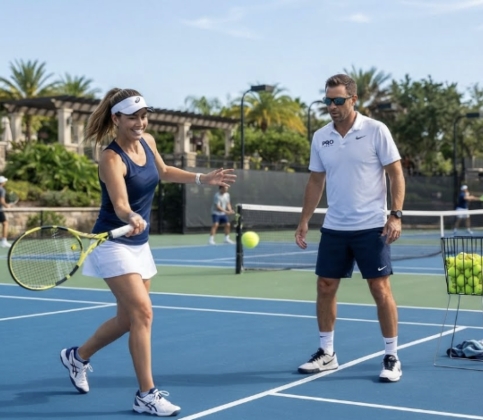
Introduction to Private Adult Tennis Camps in Prague Adult club players increasingly…
 From the Desk of the Chairman
Unlike in the case of pre-match betting, where you have to pick…
 From the Desk of the Chairman
Kupu178 builds trust with people by using top-end end-to-end encryption. It checks…
 From the Desk of the Chairman
Sports fans thrive on calculating strategy, reading momentum, and maximizing every tactical…






100 Active Potential Football Hall of Famers
-
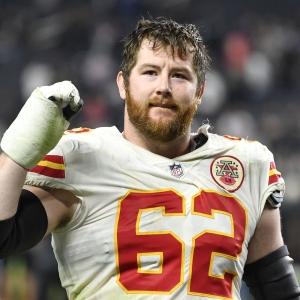 #41 Overall, Joe Thuney, Chicago Bears, Left Guard, #5 Offensive Lineman2025 Pre-Season Rank #64, 2024 Pre-Season Rank #75, 2023 Pre-Season Rank #120, 2022 Pre-Season Rank: #140. Peak Period: 2021-25 Over the last few…
 -
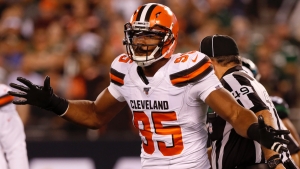 #7 Overall, Myles Garrett, Los Angeles Rams, Defensive End, #2 Defensive Lineman/Linebackers: Pass Rushers2025 Pre-Season Rank #9, 2024 Pre-Season Rank #17, 2023 Pre-Season Rank #34, 2022 Pre-Season Rank #53, 2021 Pre-Season Rank #99, 2020 Pre-Season Rank…
 -
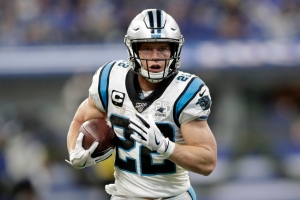 #17 Overall, Christian McCaffrey, San Francisco 49ers, #2 Running Back2025 Pre-Season Rank #21, 2024 Pre-Season Rank #16, 2023 Pre-Season Rank #55 Pre-Season Rank #66, 2021 Pre-Season Rank #76, 2020 Pre-Season Rank #81.…
 -
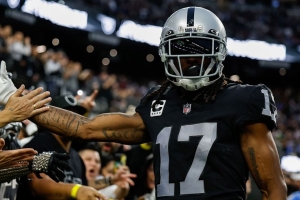 #21 Overall, Davante Adams, Los Angeles Rams, #2 Wide Receiver2025 Pre-Season Rank #23, 2024 Pre-Season Rank #27, 2023 Pre-Season Rank #24, 2022 Pre-Season Rank #43, 2021 Pre-Season Rank #67, 2020 Pre-Season Rank…
Visit the Fictitious Halls of Fame!


You May Also Like...
EDITOR’S CHOICE

 DDT's Pop Flies
When the veterans committee (VC), officially convening as the Contemporary Baseball Era…

 Live Music Head
Project/Objectan interview with André Cholmondeleyby Live Music HeadOriginally published at timessquare.com on…

LATEST RANKINGS





MOST POPULAR RANKINGS
















Committee Chairman
14. Frank Mahovlich
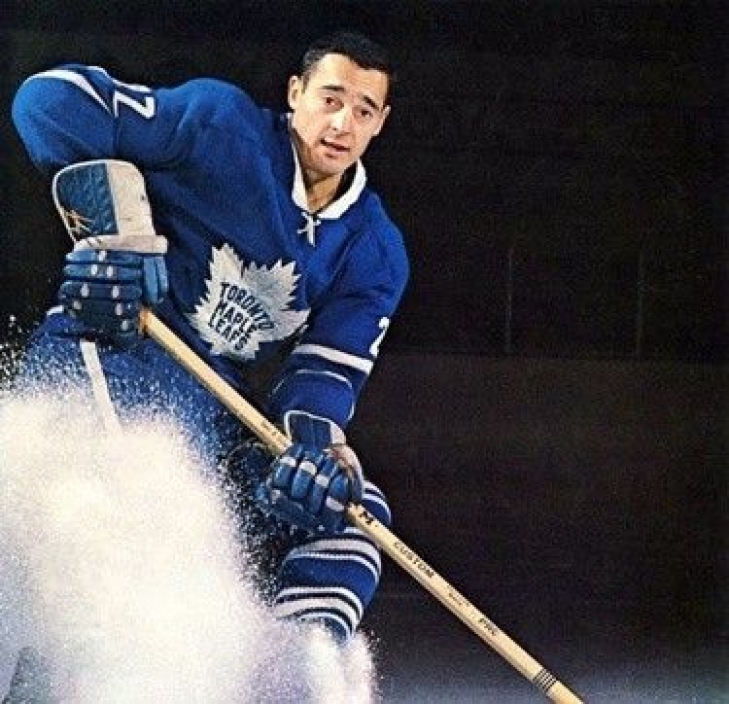
Frank Mahovlich entered the NHL with lofty expectations, and he delivered immediately, winning the Calder Trophy as the best rookie in the 1956-57 Season.
The “Big M” built on his skills, becoming one of Toronto’s top offensive threat in the 1960s. In the 1960-61 campaign, Mahovlich scored 84 Points, which would be a personal best in Toronto, and he led the league in Even Strength Goals (41). Mahovlich was named a First Team All-Star that year, and he would help lead the Maple Leafs to the first of three straight Stanley Cup wins.
After his first Cup, Mahovlich was named a First Team All-Star in 1963 and had Second Team honors in 1962, 1964, 1965 & 1966. The Left Wing again helped them win another Cup in 1967. This added up to a substantial amount of success, but management would sour on the star like so many Leafs.
For Mahovlich, Punch Imlach, Toronto’s Head Coach and Executive, was the bane of his existence. Imlach constantly berated Mahovlich, who in modern terms suffered severe mental health issues because of it. Allegedly, the two did not speak for the last five years of his time in Toronto, which ended in a trade to the Detroit Red Wings in March of 1968.
Mahovlich would later win two more Stanley Cups with the Montreal Canadiens, but he was always best known for his time as a Maple Leaf despite the issues with Toronto. With the Leafs, Mahovlich scored 597 Points in 720 Games.
Mahovlich entered the Hockey Hall of Fame in 1981, and he had a banner raised in 2001. His number 27 (along with Darryl Sittler) was retired by the organization in 2016.
13. Johnny Bower
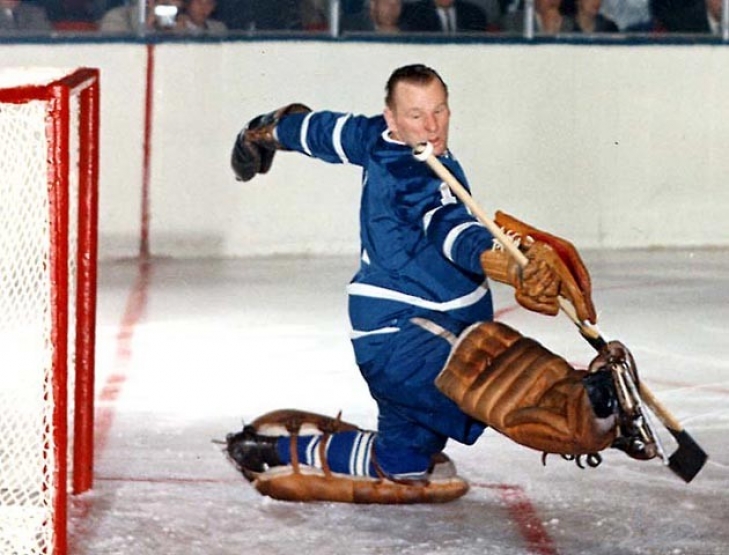
A product of rural Saskatchewan, Johnny Bower first made the NHL with the New York Rangers at age 29, where he played every minute in his rookie year (1953-54). The Goalie lost his job to Gump Worsley and was relegated to the minors until the Maple Leafs took him from Cleveland of the AHL in 1958. At age 34, he was about to put forth an unexpected Hall of Fame run.
Bower remained with the Maple Leafs into his mid-40s, and he was not there to ride the pine but to provide the netminding necessary to bring Toronto to playoff dominance. In the 1960-61 Season, Bower won the Vezina Trophy, was a First Team All-Star, and backstopped the Leafs to three straight Stanley Cup wins. He followed it up with a second Vezina in 1965.
After his second Vezina, Bower’s eyesight began to fail, yet his grit kept him in the NHL. Bower, who was fearless, even in his era, helped the Leafs win another Cup in 1967, though fellow veteran Terry Sawchuk was the primary Goalie. He played until 45 and had 219 Wins with Toronto.
Bower was inducted into the Hockey Hall of Fame in 1976. In 1995, his name was hung to the rafters of the Air Canada Center, and his #1 (shared with Turk Broda) was retired by the franchise.
12. Dave Keon
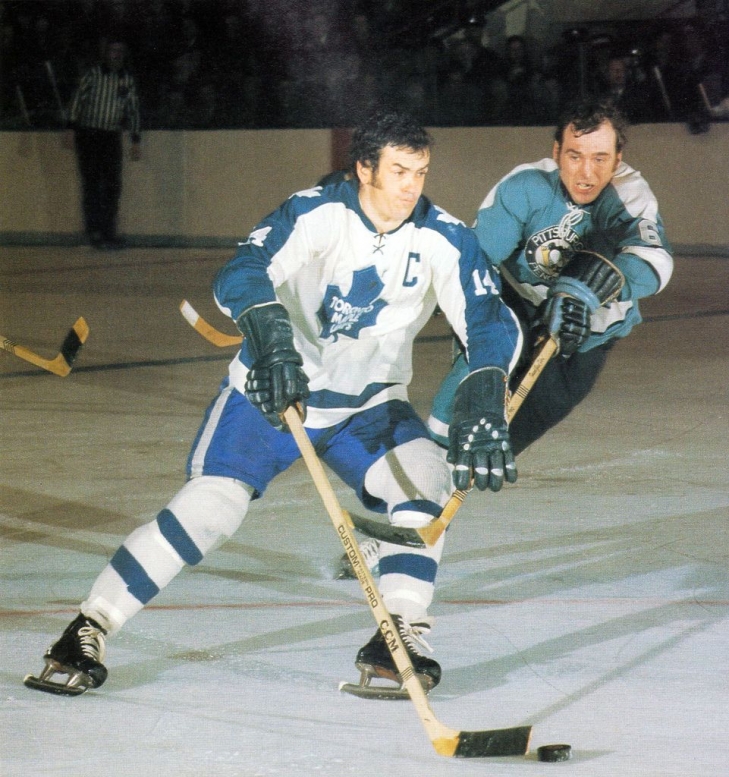
Dave Keon made an immediate impact in the National Hockey League, making the Toronto Maple Leafs straight out of junior. Keon scored 45 Points, winning the Calder Trophy, and his solid two-way play made him an instant celebrity in Toronto.
The Center had an effortless backhand and a booming shot. As good as his offense was, Keon was one of the best offensive defensemen of the 1960s and a demon on the penalty kill. A two-time Second Team All-Star, Keon twice led the NHL in Short-Handed Goals (1968-69 & 1970-71) and had 31 in total with the Leafs. Incredibly, that number is not as impressive as the 75 total Penalty Minutes in the 1,062 Games he played in Toronto.
Keon won the Lady Byng Trophy as the NHL’s most gentlemanly player twice (1962 & 1963) and was in the top four in voting seven other times. The Maple Leafs won four Stanley Cups in the 1960s, with Keon playing a vital role in all of these wins, peaking with a Conn Smythe Trophy in the 1967 win.
In the 1970s, Keon feuded with Toronto owner Harold Ballard, who held his rights after his contract expired in 1975. Since Ballard set unreasonable terms for compensation, Keon had to continue his career in the WHA. It would be decades before he would ever reenter the Leafs fold in any capacity.
Keon was chosen for the Hockey Hall of Fame in 1986. Keon would not accept having his name honored by the team, but his number 14 was retired by the team in 2016.
11. Busher Jackson
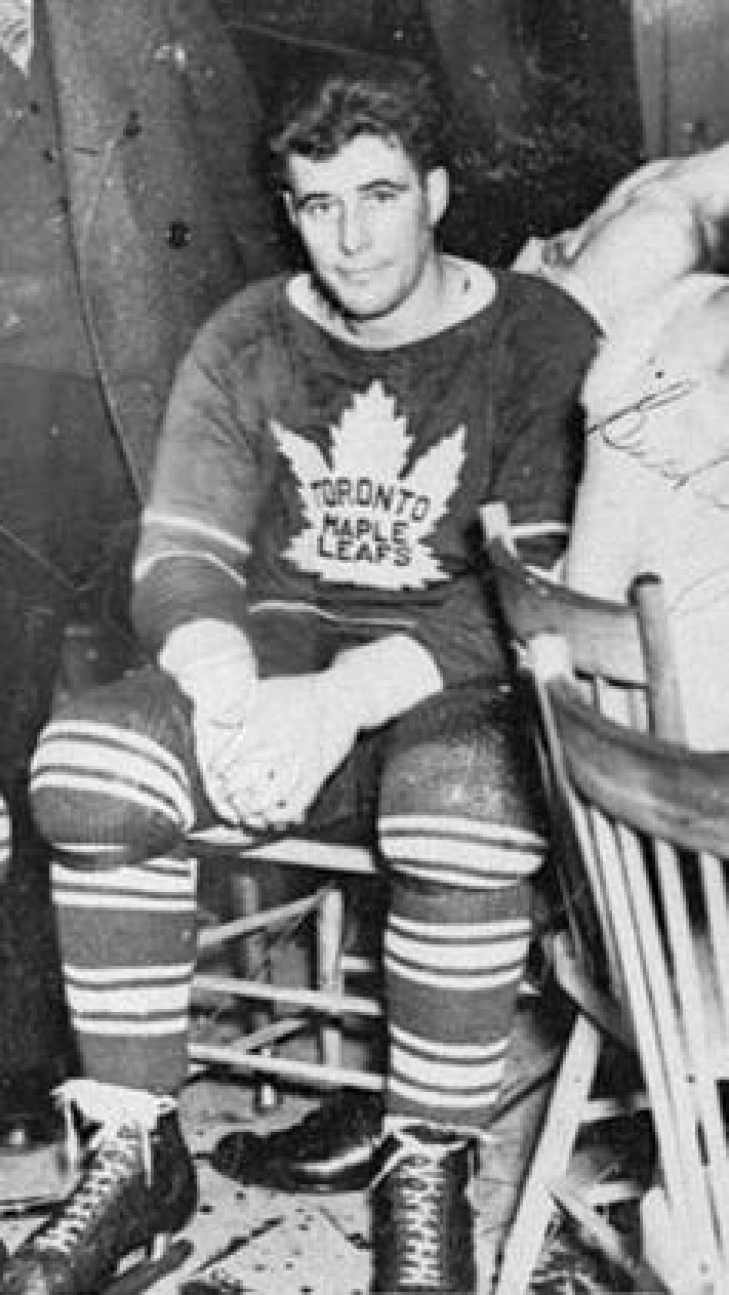
When you are in the Hockey Hall of Fame, it is hard to call you underrated, but in the lore of the Toronto Maple Leafs, Harvey “Busher” Jackson does not nearly receive the due he is deserved.
Jackson was the top Left Wing in hockey, where he starred on the “Kid Line” along with Charlie Conacher and Joe Primeau. Leading Toronto to a Stanley Cup in 1933, Jackson was four-time First Team All-Star, who finished in the top-six in Goals five times. Jackson would lead the NHL in Points in 1931-32 and was the runner-up the year after.
Jackson was known for a blistering backhand, and at times, a cocky attitude. It did not always serve him well, but he backed it up on the ice. After his play slipped, he was traded to the New York Americans for Sweeney Schriner.
With the Leafs, Jackson scored 351 Points in 433 Games, and he entered the Hockey Hall of Fame in 1971.
