

 Not in Hall of Fame News
Yes, we know that this is taking a while! As many of…
 Not in Hall of Fame News
Yes, we know that this is taking a while! As many of…
 Not in Hall of Fame News
2002 SEMI-FINAL RESULTS: Thank you for your participation in the Pro Football…
 Not in Hall of Fame News
Yes, we know that this is taking a while! As many of…
 Not in Hall of Fame News
We are diligently working away at Notinhalloffame on revising our Football lists…
 Not in Hall of Fame News
We are diligently working away at Notinhalloffame on revising our Football lists…
 From the Desk of the Chairman
October baseball often turns individual pitching performances into lasting postseason memories. Strikeout…
 From the Desk of the Chairman
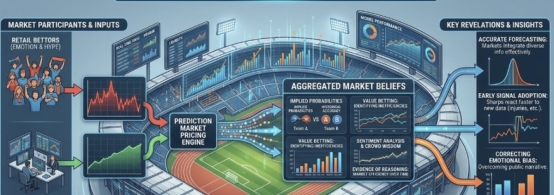
For decades, the sports debate ran on gut feeling. Barstool arguments, call-in…
 From the Desk of the Chairman
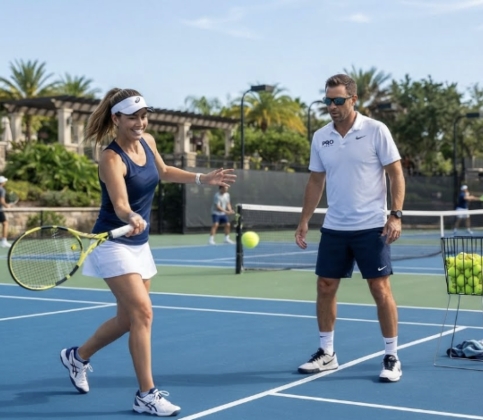
Introduction to Private Adult Tennis Camps in Prague Adult club players increasingly…
 From the Desk of the Chairman
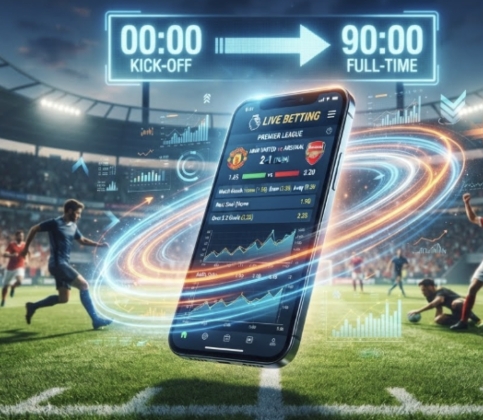
Unlike in the case of pre-match betting, where you have to pick…
 From the Desk of the Chairman
Kupu178 builds trust with people by using top-end end-to-end encryption. It checks…
 From the Desk of the Chairman
Sports fans thrive on calculating strategy, reading momentum, and maximizing every tactical…
100 Active Potential Football Hall of Famers
-
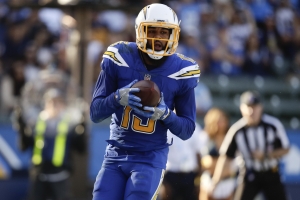 #49 Overall, Keenan Allen, Indianapolis Colts, #8 Wide Receiver2025 Pre-Season Rank #46, 2024 Pre-Season Rank #41, 2023 Pre-Season Rank #45, 2022 Pre-Season Rank #48, 2021 Pre-Season Rank #66, 2020 Pre-Season Rank…
 -
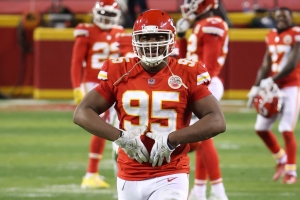 #19 Overall, Chris Jones, Kansas City Chiefs, Defensive Tackle, #8 Defensive Lineman/Linebacker: Pass Rusher2025 Pre-Season Rank #15, 2024 Pre-Season Rank #15, 2023 Pre-Season Rank #58, 2022 Pre-Season Rank #100. Peak Period 2020-24. When you think of…
 -
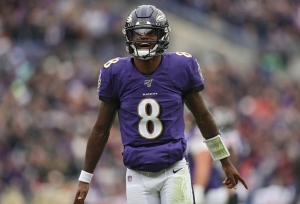 #12 Overall, Lamar Jackson, Baltimore Ravens, #4 Quarterback2025 Pre-Season Rank #10, 2024 Pre-Season Rank #14, 2023 Pre-Season Rank #30, 2022 Pre-Season Rank #38, 2021 Pre-Season Rank #46, 2020 Pre-Season Rank…in Quarterbacks
 -
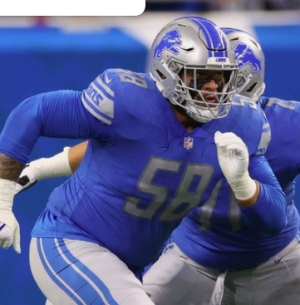 #38 Overall, Penei Sewell, Detroit Lions, Tackle, #4 Offensive Lineman2025 Pre-Season Rank #68, 2024: Pre-Season Rank: #121. Peak Period: 2021-25*Standing at 6'5” and 330 pounds, Penei Sewell can state that going into…
Visit the Fictitious Halls of Fame!


You May Also Like...
EDITOR’S CHOICE
 DDT's Pop Flies
When the veterans committee (VC), officially convening as the Contemporary Baseball Era…
 Live Music Head
Project/Objectan interview with André Cholmondeleyby Live Music HeadOriginally published at timessquare.com on…

LATEST RANKINGS
MOST POPULAR RANKINGS


Committee Chairman
19. Chris Boucher
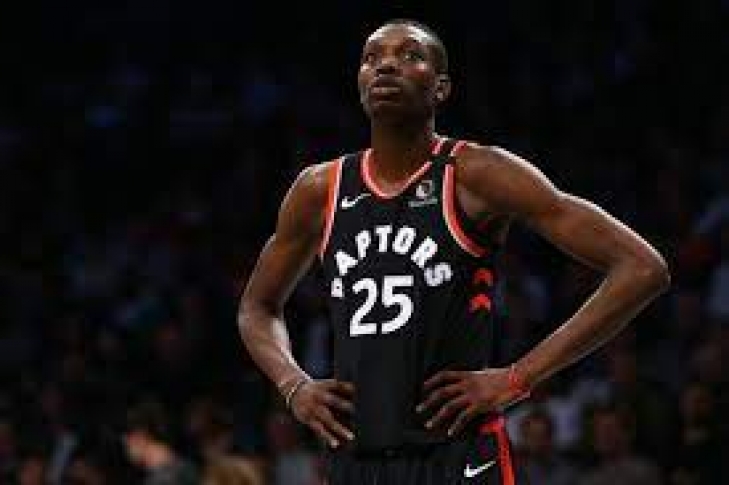
What Chris Boucher has been able to accomplish has been nothing short of inspirational.
Born in St. Lucia and raised in Canada, Boucher went from New Mexico Junior College, Northwest College, and then to Oregon. Boucher went undrafted and signed with Golden State, playing one minute for the Dubs and mostly with Santa Clara of the G-League. The Warriors cut bait with Boucher, and he signed with the Raptors, winning the G-League MVP and Defensive Player of the Year, and also seeing limited action in the Raptors' NBA Championship.
The Center had an established lockdown defensive game, and his days in the G-League were over. Boucher came off the bench for Toronto over the last two years, with him averaging 24.2 Minutes per Game in 2020-21, with a fifth-place finish in Blocks per Game (1.9). Notably, in his first three full seasons in Toronto, he never had a year in Toronto where his PER was under 20, an incredible achievement that should turn heads.
Boucher played four more seasons off of the bench for the Raptors, and though he was never a star, or even close to starting, his solid defensive game proved valuable for Toronto for 406 Games. Not too shabby, for someone who had to work so hard just to make it to the pros.
14. O.G. Anunoby
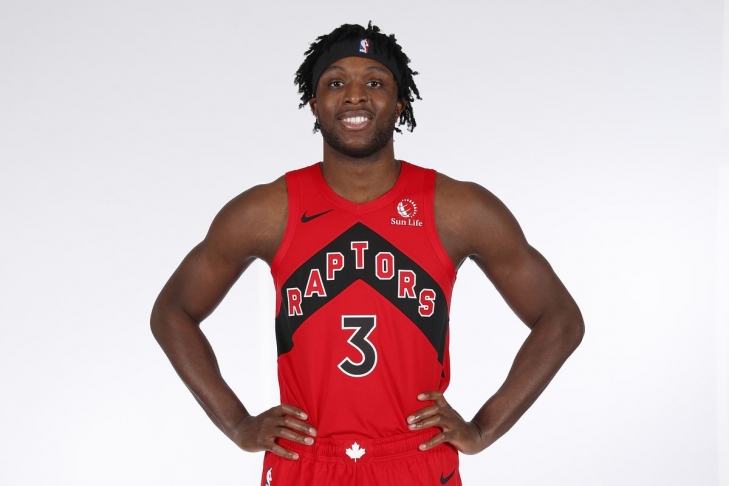
O.G. Anunoby was a late First Round Pick (23rd) from Indiana, and in a mild surprise, he was logging most of the starts as a rookie.
Anunoby helped Toronto win the 2019 NBA Championship, and while he averaged the same amount of Minutes per Game that he did as a rookie, he did so off the bench, as the Raptors had Kawhi Leonard that year. With Leonard departing for the Clippers afterward, Anunoby was again a starter, showing even better defense and finally breaking through offensively in 2020-21 with a 15.9 PPG. He built on that with an increased 17.1 PPG in 2021-22. In 2002-23, Anunoby took another leap, as he was the NBA's leader in Steals per Game (1.9), and earned a Second Team All-Defensve nod.
Going into 2023-24, the Raptors were in clear rebuilding mode and shipped off Anunoby to the Knicks. Overall as a Raptor, Anunoby played 395 Games with a 11.8 PPG.
8. Fred VanVleet
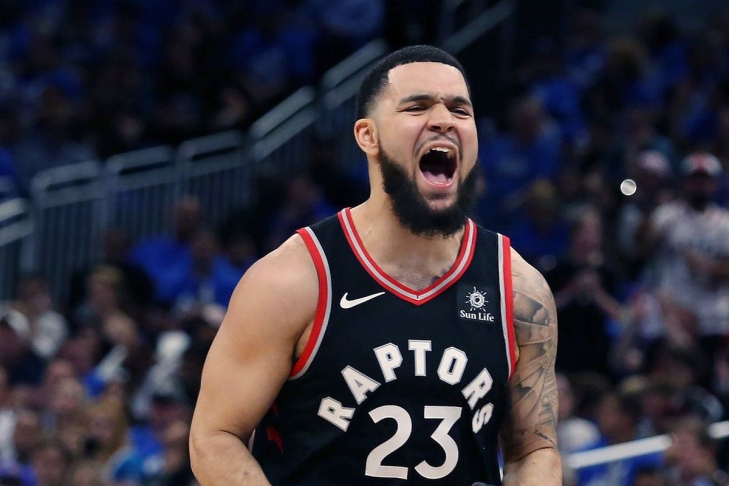
After four years at Wichita State (including a "shocking" trip to the Final Four," Fred VanVleet signed as an undrafted Free Agent with the Toronto Raptors in 2016. Usually, undrafted American players don't make the NBA, but someone forgot to tell Fred VanVleet.
VanVleet, who was a two-time MVC Player of the Year, would turn out to be a steal. The Point Guard appeared in 37 Games as a rookie and 76 in his second year. Van Vleet saw more action in his third year (2018-19), starting a third of his games and helping Toronto win the NBA Title.
Playing more at Shooting Guard afterward, VanVleet became a permanent starter after the championship season, elevating his PPG to 17.6 and up to what is currently a career-high of 19.6 in 2020-21, a year in which Toronto slumped, and Van Vleet was required to do more heavy lifting. Over the last three seasons, Van Vleet has finished in the top ten in both Steals per Game and Minutes per Game, with him cracking 20 Points per Game fo rthe first time last season, with a trip to his first All-Star Game. VanVleet had another good year with the Raps, approcahing 20 PPG season with the Raptors, but it would be his last, as he left for Houston via free agency.
13. Kawhi Leonard
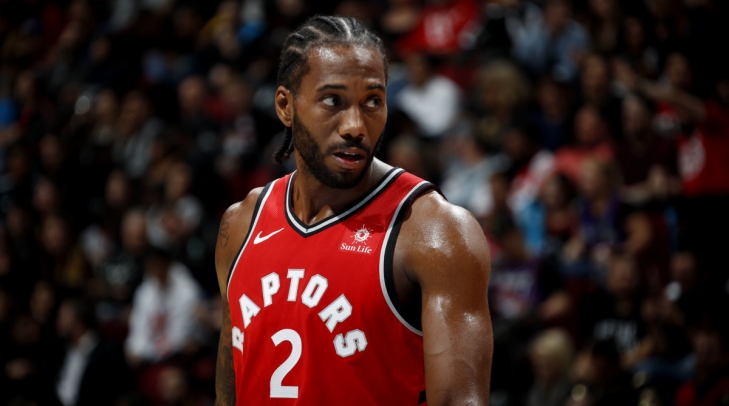
Including playoffs, only 84 Games.
That is all that Kawhi Leonard played for the Toronto Raptors, and if you want to place him at number one and build a 50-foot statue outside the Air Canada Center, we get it. After all, the Raptors don't win the 2019 NBA Championship without him.
Raptors General Manager Masai Ujiri rolled the dice in what has to be considered one of the biggest gambles in sports transactions. He traded his top player, DeMar DeRozan, an All-Star who wanted to stay in Toronto, for a bigger name, Leonard, but one who had become miserable and longed to play in his hometown of Los Angeles once his contract was up. It was a short-term play to go for it, and it worked.
Leonard arrived as the top player he had already proved to be, and he meshed well with his new teammates. His tenacious play on both ends set the team’s ethos, and he would be a Second Team All-Star, Second Team All-Defensive Player with a 26.6 PPG and a PER over 25.
Leonard was an absolute beast in the 2019 Playoffs. Not only was the overwhelming choice as the Finals MVP, his heart-stopping buzzer-beater that bounced four times off the rim before falling through was the shot that put won them Game 7 against Philadelphia in the Eastern Conference Semi-Final. The “Claw” did what was thought of as impossible, bring a title to a city where many NBA players did not want to go to.
As expected, Leonard left for L.A., joining the Clippers, but the Raptors fans were not upset. Leonard never promised to stay, and he delivered what was once thought of as impossible.
