

 Not in Hall of Fame News
Yes, we know that this is taking a while! As many of…
 Not in Hall of Fame News
Yes, we know that this is taking a while! As many of…
 Not in Hall of Fame News
2002 SEMI-FINAL RESULTS: Thank you for your participation in the Pro Football…
 Not in Hall of Fame News
Yes, we know that this is taking a while! As many of…
 Not in Hall of Fame News
We are diligently working away at Notinhalloffame on revising our Football lists…
 Not in Hall of Fame News
We are diligently working away at Notinhalloffame on revising our Football lists…
 From the Desk of the Chairman
October baseball often turns individual pitching performances into lasting postseason memories. Strikeout…
 From the Desk of the Chairman
For decades, the sports debate ran on gut feeling. Barstool arguments, call-in…
 From the Desk of the Chairman
Introduction to Private Adult Tennis Camps in Prague Adult club players increasingly…
 From the Desk of the Chairman
Unlike in the case of pre-match betting, where you have to pick…
 From the Desk of the Chairman
Kupu178 builds trust with people by using top-end end-to-end encryption. It checks…
 From the Desk of the Chairman
Sports fans thrive on calculating strategy, reading momentum, and maximizing every tactical…
100 Active Potential Football Hall of Famers
-
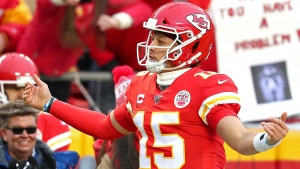 #4 Overall, Patrick Mahomes: Kansas City Chiefs, #2 Quarterback2025 Pre-Season Rank #4, 2024 Pre-Season Rank #2, 2023 Pre-Season Rank #10, 2022 Pre-Season Rank #21, 2021 Pre-Season Rank #31, 2020 Pre-Season Rank…in Quarterbacks
 -
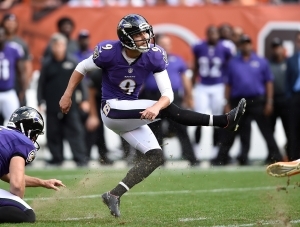 #36 Overall, Justin Tucker: Free Agent, Place Kicker, #1 Kickers & Special Teams2025 Pre-Season Rank #29, 2024 Pre-Season Rank #26, 2023 Pre-Season Rank #22, 2022 Pre-Season Rank #28, 2021 Pre-Season Rank #42, 2020 Pre-Season Rank…
 -
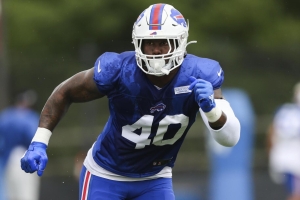 #8 Overall, Von Miller, Dallas Cowboys, #3 Defensive Lineman/Linebackers: Pass Rushers2025 Pre-Season Rank #6, 2024 Pre-Season Rank #7, 2023 Pre-Season Rank #4, 2022 Pre-Season Rank #7, 2021 Pre-Season Rank #8, 2020 Pre-Season Rank…
 -
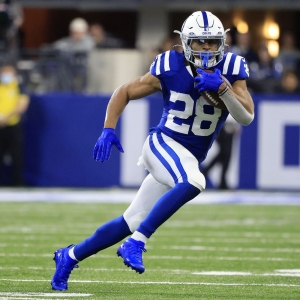 #47 Overall, Jonathan Taylor, Indianapolis Colts, #4 Running Back2025 Pre-Season Rank #70, 2024 Pre-Season Rank #98, 2023 Pre-Season Rank: #107, 2022 Pre-Season Rank #111. Peak Period: 2021-25 After a good rookie…
Visit the Fictitious Halls of Fame!

You May Also Like...
EDITOR’S CHOICE
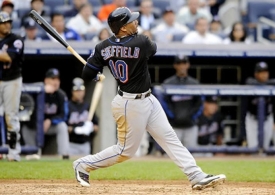 DDT's Pop Flies
When the veterans committee (VC), officially convening as the Contemporary Baseball Era…

 Live Music Head
Project/Objectan interview with André Cholmondeleyby Live Music HeadOriginally published at timessquare.com on…

LATEST RANKINGS

MOST POPULAR RANKINGS


Committee Chairman
46. Harry Lumley
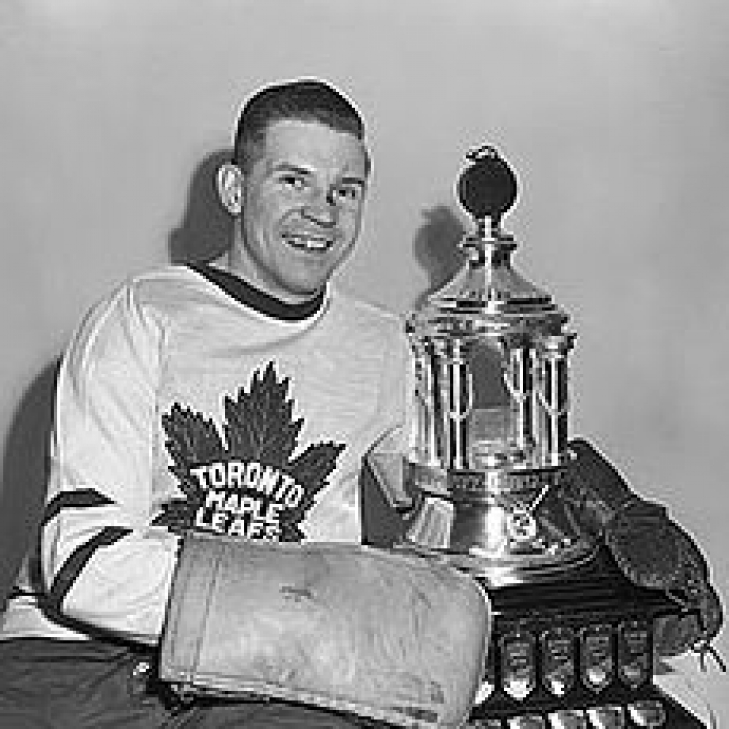
Harry Lumley had already made history when, in 1944, at the age of 17, he became the youngest (and still is) Goalie to play in the NHL when he suited up for the Rangers. Later, he won a Stanley Cup with Detroit, though he was traded to Chicago in favor of Terry Sawchuk. A few years later, Lumley was dealt again, this time to Toronto, where he had his best period in terms of individual performance.
The Leafs at this stage were not world-beaters, but Lumley was their bright spot. He won the Vezina in 1953-54, where he was also named a First Team All-Star. For the first time in his career, Lumley led the NHL in GAA (1.86) and was fifth in Hart voting. He was as good the year after, again winning the GAA Title (1.91) and again earned First Team All-Star honors. Lumley was also the runner-up for the Hart Trophy.
After another season in Toronto, Lumley was traded back to Chicago, where he refused to report. He was eventually traded to Boston, where he would finish his career.
Lumley was chosen for the Hockey Hall of Fame in 1980.
45. Ian Turnbull
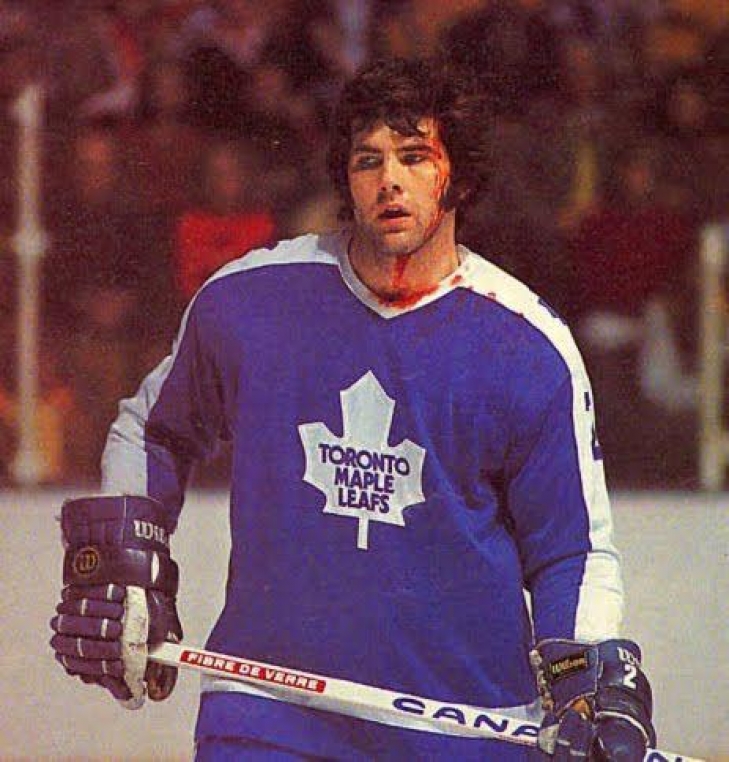
Paired with Swedish Hall of Famer Borje Salming, Ian Turnbull was one half of an offensive tandem from the blueline that was one of the best in the National Hockey League.
Turnbull was a First Round Pick in 1973 and would make the Maple Leafs roster as a rookie with a 35 Point year. The Defenseman was injured for most of his sophomore year, but he bounced back as one of the top offensive Defenseman in hockey. From 1976-77 to 1980-81, Turnbull scored at least 60 Points in four of those five years, and in that period, he had a five-goal game, which remains a record for an NHL Defenseman.
An All-Star in 1977, Turnbull was traded to Los Angeles in 1981, leaving Toronto with 414 Points and a PPG of .71, which is among the best of any Defenseman in franchise history.
44. Tod Sloan
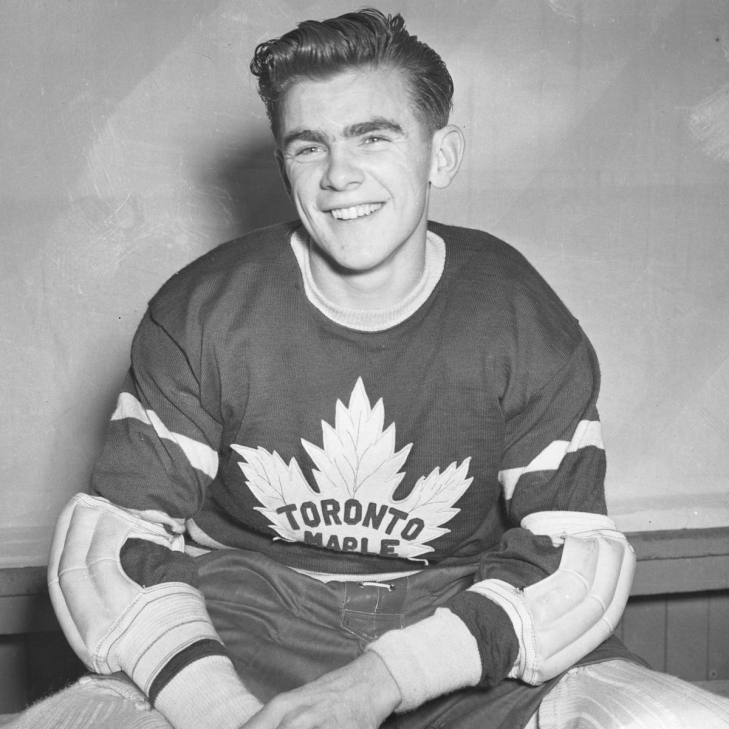
Tod Sloan signed with the Toronto Maple Leafs in 1946 and was called up for one game that year and 29 the year after. The Leafs won the Cup that year, though Sloan was not on the roster. The following season, he was there to stay.
A versatile forward who played at both Center and Right Wing, Sloan had his breakout season in 1950-51 with 31 Goals. Sloan was on the post-season roster for Toronto that year, and he got his name engraved on the Stanley Cup that year. Sloan remained strong the year after, leading the NHL in Power Play Goals in 1951-52, but he would struggle in the two seasons after, failing to come close to 20 Goals.
Sloan rebounded in 1955-56, with 37 Goals and a league-leading 28 on Even Strength. He was named a Second Team All-Star and was the runner-up to Montreal's Jean Beliveau for the Hart. He played two more years in Toronto before he was traded to Chicago.
As a Leaf, Sloan had 346 Points.
43. Bob Baun
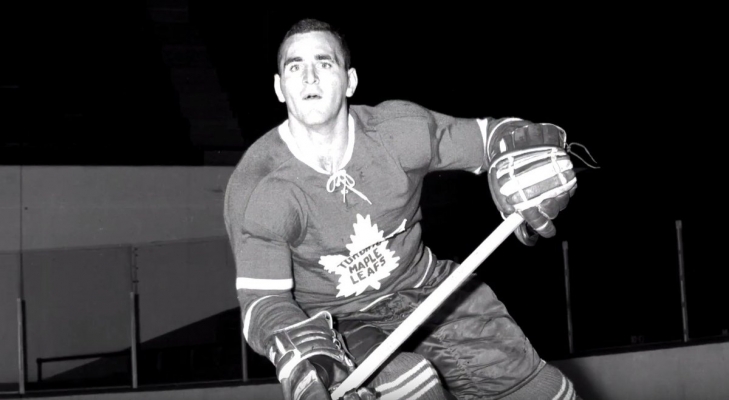
Bobby Baun reminds us a lot of Paul Henderson in that he is best known for one game. Baun fractured his ankle early in Game 3 of the 1964 Stanley Cup Championship but returned to the ice to score the game-winning goal against the Detroit Red Wings and would help Toronto win the Cup that year.
Overall, Bob Baun had an excellent stay-at-home blueline career in the National Hockey League, where he was a five-time All-Star, four-time Stanley Cup winner, and was the NHL leader in Defensive Point Shares (1960-61). He is also a five-time All-Star.
