

 Not in Hall of Fame News
Yes, we know that this is taking a while! As many of…
 Not in Hall of Fame News
Yes, we know that this is taking a while! As many of…
 Not in Hall of Fame News
2002 SEMI-FINAL RESULTS: Thank you for your participation in the Pro Football…
 Not in Hall of Fame News
Yes, we know that this is taking a while! As many of…
 Not in Hall of Fame News
We are diligently working away at Notinhalloffame on revising our Football lists…
 Not in Hall of Fame News
We are diligently working away at Notinhalloffame on revising our Football lists…
 From the Desk of the Chairman
October baseball often turns individual pitching performances into lasting postseason memories. Strikeout…
 From the Desk of the Chairman
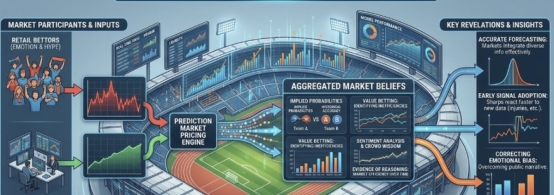
For decades, the sports debate ran on gut feeling. Barstool arguments, call-in…
 From the Desk of the Chairman
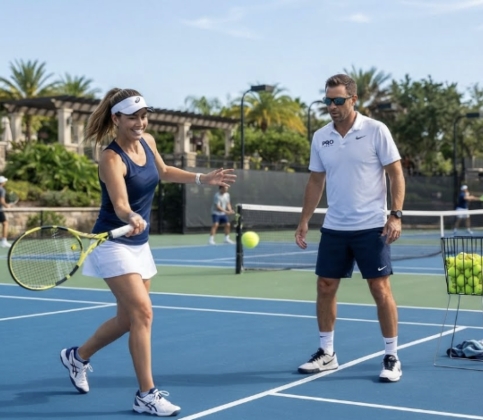
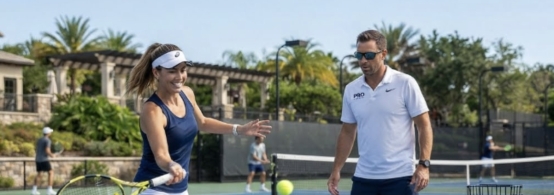
Introduction to Private Adult Tennis Camps in Prague Adult club players increasingly…
 From the Desk of the Chairman
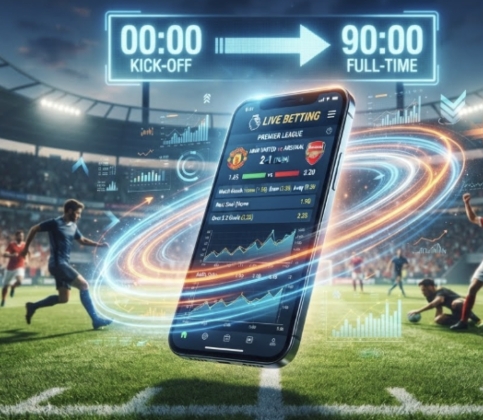
Unlike in the case of pre-match betting, where you have to pick…
 From the Desk of the Chairman
Kupu178 builds trust with people by using top-end end-to-end encryption. It checks…
 From the Desk of the Chairman
Sports fans thrive on calculating strategy, reading momentum, and maximizing every tactical…
100 Active Potential Football Hall of Famers
-
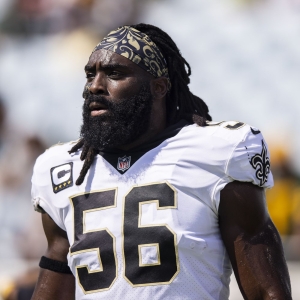 #48 Overall, DeMario Davis, New York Jets, Linebacker, #4 Defensive Lineman/Linebacker: Interior Lineman2025 Pre-Season Rank #47, 2024 Pre-Season Rank #47, 2023 Pre-Season Rank #61, 2022, Pre-Season Rank #137. Peak Period: 2019-23 Davis, a veteran player,…
 -
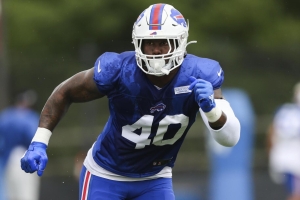 #8 Overall, Von Miller, Dallas Cowboys, #3 Defensive Lineman/Linebackers: Pass Rushers2025 Pre-Season Rank #6, 2024 Pre-Season Rank #7, 2023 Pre-Season Rank #4, 2022 Pre-Season Rank #7, 2021 Pre-Season Rank #8, 2020 Pre-Season Rank…
 -
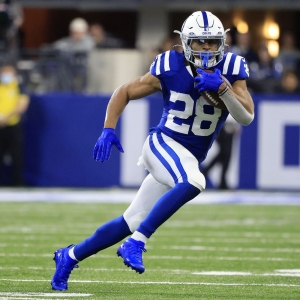 #47 Overall, Jonathan Taylor, Indianapolis Colts, #4 Running Back2025 Pre-Season Rank #70, 2024 Pre-Season Rank #98, 2023 Pre-Season Rank: #107, 2022 Pre-Season Rank #111. Peak Period: 2021-25 After a good rookie…
 -
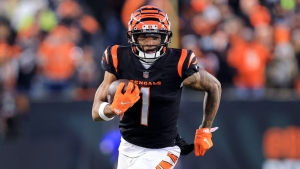 #42 Overall, Ja'Marr Chase, Cincinnati Bengals, #6 Wide Receiver2025 Pre-Season Rank #55, 2024 Pre-Season Rank #111, 2023 Pre-Season Rank #134, 2022 Pre-Season Rank #145. Peak Period: 2021-25* Ja’Marr Chase has been…
Visit the Fictitious Halls of Fame!

You May Also Like...
EDITOR’S CHOICE
 DDT's Pop Flies
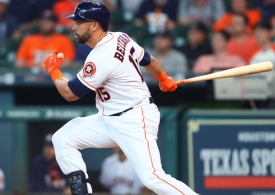
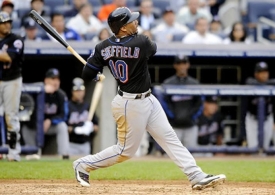
When the veterans committee (VC), officially convening as the Contemporary Baseball Era…
 Live Music Head
Project/Objectan interview with André Cholmondeleyby Live Music HeadOriginally published at timessquare.com on…

LATEST RANKINGS

MOST POPULAR RANKINGS

Committee Chairman
Saddest Upsets in Preakness Stakes So Far

The Preakness Stakes is one of the three legs of the Triple Crown Series. It is dubbed as the "Run for the Black-Eyed Susans". Only 14 horses can compete in the Preakness, and their previous race results determine their eligibility.
The Run for the Black-Eyed Susans has featured the fastest and strongest horses of their generation. That’s why many bet the preakness stakes online along with the other legs in the Triple Crown Series. Unfortunately, at the same time, it has exhibited the most disappointing upsets in its history. In case you’ve missed them, here's the list of the saddest upsets in Preakness Stakes.
Charismatic Vs. Menifee (1999)
Menifee finished second in the Kentucky Derby, barely a neck behind the champion Charismatic. But, he had a lot of support in the 1999 Preakness Stakes, where he was sent out as the morning line favorite at 2–1 in a field of 13 colts and one filly.
Charismatic won by one and a half lengths beating Menifee, who finished second. The race was completed in 1:55.32 on a fast track. Cat Thief and Vicar claimed the lead early in the race, while Menifee fell into mid-pack at eighth and Charismatic trailed in tenth. Charismatic won by 1 1/2 lengths after making a move on the outside around the second turn. Menifee finished second in the Preakness Stakes.
On the betting odds, Charismatic was the fourth option. However, the race outcome has proved that the window favorites aren't always favored in the track. Charismatic defeated Menifee two consecutive times.
Red Bullet Vs. Fusaichi Pegasus (2000)
In Preakness 2000, Red Bullet, ridden by Jerry Bailey, won by three and three-quarter lengths over Fusaichi Pegasus, who finished second. Fusaichi Pegasus won in 2:01.12 for the 1 14 mile race in Kentucky.
Red Bullet was listed at Pimlico Race Course as the second choice in the 1 3/16 miles classic in Pimlico. Red Bullet, who started from the fourth position, had a slow start in the race. Having passed the stands in seventh place 6 1/2 lengths behind in the field of eight, jockey Jerry Bailey restrained his horse. Red Bullet took an unfortunate stride into the clubhouse turn. He made his way forward and passed Impeachment and Captain Steve on the backstretch.
Fusaichi Pegasus and High Yield were in front when Red Bullet entered the far turn and succeeded in overtaking each of them. Then, with each stride, he started to ace ahead of the Kentucky Derby champion.
Fusaichi Pegasus skipped the Belmont Stakes after his loss in the Preakness.
Bernardini Vs. Barbaro (2006)
The Kentucky Derby 2006 was won by Barbaro. He went on to compete in the Preakness Stakes at odds of 1-2. The Kentucky Derby hero then faltered and slid behind the storming field before being yanked in frustration by jockey Edgar Prado in the first 200 yards of the race to the first turn.
Barbaro, the 1-2 favorite in a field of nine, crashed through the starting gate moments before the race was scheduled to begin. He was driven back into the gate, and the second try went off without a hitch. But, with the horse limping in distress, jockey Edgar Prado pulled Barbaro midway along the front stretch of the 1 3/16-mile race.
On January 29, 2007, Barbaro was euthanized after his vets concluded that he could not be saved.
Bernardini, a 12-1 underdog, won by 5 1/4 lengths in 1:54.65 over the 1 3/16 mile course at Pimlico. Unfortunately, Bernardini didn't participate in the Belmont Stakes. It's the fourth time in 60 years that neither the Kentucky Derby winner nor the Preakness heroes were in the race.
Shackleford Vs. Animal Kingdom (2011)
Animal Kingdom, the Kentucky Derby winner, finished second in the Preakness Stakes in 2011. The Kentucky Derby hero, favored at 2-1, recovered from last to second in the field of 14 horses, finishing second in 1:56.47 as the winner completed the 1 3/16-mile race in 1:56.47.
Shackleford fought for the lead in the Preakness from the start. He followed Flashpoint at first, then took the lead and wouldn't give it up, despite a strong surge by Animal Kingdom.
Oxbow Vs. Orb (2013)
Orb arrived as the Kentucky Derby favorite in 2013. Orb had become the center of attention ever since he won the Kentucky Derby.
Kentucky Derby champion Orb started the first period in the center of the pack behind leader Oxbow, then moved to the outside and began making a run before being caught back in the pack and finished fourth.
Oxbow led from the start of the 1-3/16 mile race and became the first wire-to-wire champion since 1982. Additionally, he was the third horse to collect $1 million in purse money after finishing second at Belmont Stakes. The National Thoroughbred Racing Association (NTRA) recognized him as the top three-year-old racehorse in the United States.
Final Thoughts
The Preakness Stakes is a prestigious race that jockeys and thoroughbreds aspire to win at least once in their careers. While this race has showcased the strongest heroes, it has also featured some of the most dramatic upsets fans will never forget.
RIP: Bobby Bowden
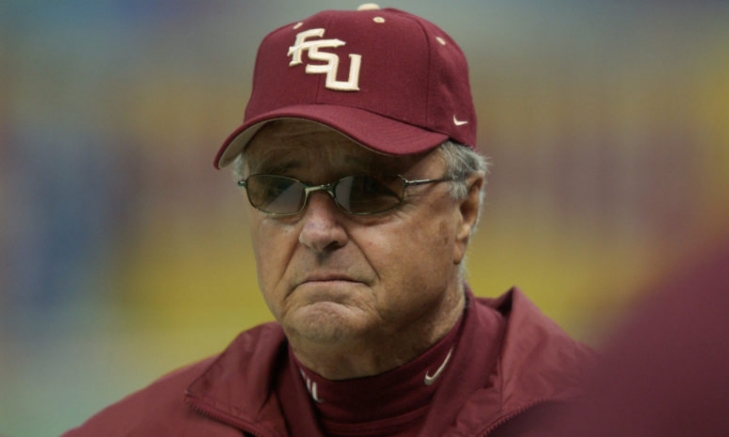
It feels like we are losing so many great ones. Today we lost another.
Bobby Bowden, who was the Head Coach of at Florida State from 1976 to 2009 passed away at the age of 91 following a long battle with pancreatic cancer.
Bowden played Quarterback at Howard College (Samford) and he would become an assistant coach there shortly after. He later became the Head Coach at South Georgia State College (1956), and returned to Samford as their Head Coach in 1959. His solid work there got him to big time, first at Florida State as the Wide Receivers Coach (1963), and then on to West Virginia (1966) as the offensive Coordinator, which led to him taking over as the Mountaineers Head Coach in 1970, and led them to a win at the 1975 Peach Bowl. Following that, he would return to FSU as their Head Coach, and under Bowden the Seminoles became a national power.
Under Bowden, Florida State were absolutely incredible. From 1987 to 2000, the Seminoles never finished below #5 in the season end AP Poll, and won the 1993 and 1999 National Championship, and they overall won 21 Bowl Games. His 377 wins are second only to Joe Paterno.
Bowden was inducted to the College Football Hall of Fame in 2006.
We here at Notinhalloffame.com would like to extend our condolences to the fans, friends and family of Bobby Bowden.
RIP: J.R. Richard
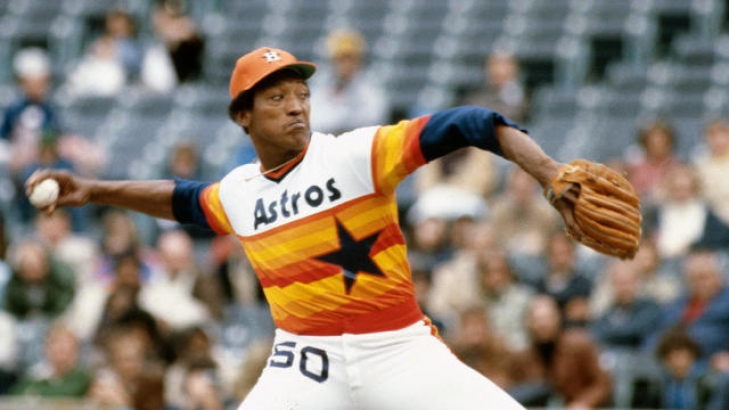
It was announced today that J.R. Richard, the flamethrowing Pitcher best known for his time with the Houston Astros, died at the age of 71.
A ten-year veteran, Richard posted a lifetime record of 107-71 with 1,493 Strikeouts and a 3.13 ERA. His best season was in 1979, when his 313 Strikeouts were then a team record. He was one of the first players who threw for a recorded 100 mph.
In 1980, his career was abruptly halted when he suffered a stroke in late July, only weeks after he started for the National League in the All-Star Game.
We here at Notinhalloffame.com would like to extend our condolences to the fans, friends and family of J.R. Richard.
RIP: Bobby Eaton
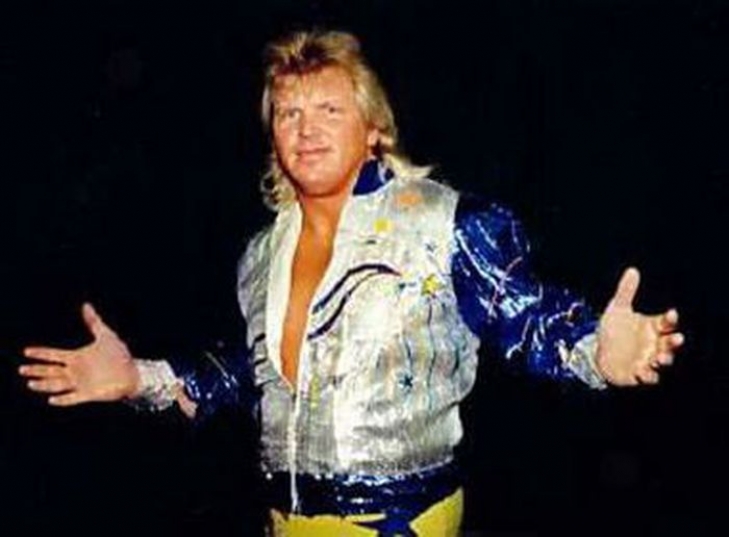
The sadness in professional wrestling continues. “Beautiful” Bobby Eaton, best known for his tag team work in the Midnight Express, passed away at the age of 62. It is not known at this time how he passed.
Eaton debuted in 1976 after being trained by Tojo Yamamoto, and would quickly be used in various tag teams. One of the most natural in-ring workers in the business, Eaton was regarded by his peers as one of the best.
His career really took off when he first teamed with “Loverboy” Dennis Condrey, managed by Jim Cornette, as the Midnight Express. They drew money in Mid South, World Class, and then the NWA, where they had legendary feuds with the Rock and Roll Express and the Road Warriors, even after Condrey was replaced by “Sweet” Stan Lane.
Lane and Cornette would depart WCW (which was previously the NWA), and Eaton remained as a single, winning the Television Title. He again returned to tag teams, staying with the company until 2000.
Behind the scenes, Eaton was considered to be one of the nicest guys, not just in wrestling, but in life.
We here at Notinhalloffame.com would like to extend our condolences to the fans, friends and family of Bobby Eaton.
