

 Not in Hall of Fame News
Yes, we know that this is taking a while! As many of…
 Not in Hall of Fame News
Yes, we know that this is taking a while! As many of…
 Not in Hall of Fame News
2002 SEMI-FINAL RESULTS: Thank you for your participation in the Pro Football…
 Not in Hall of Fame News
Yes, we know that this is taking a while! As many of…
 Not in Hall of Fame News
We are diligently working away at Notinhalloffame on revising our Football lists…
 Not in Hall of Fame News
We are diligently working away at Notinhalloffame on revising our Football lists…
 From the Desk of the Chairman
October baseball often turns individual pitching performances into lasting postseason memories. Strikeout…
 From the Desk of the Chairman
For decades, the sports debate ran on gut feeling. Barstool arguments, call-in…
 From the Desk of the Chairman
Introduction to Private Adult Tennis Camps in Prague Adult club players increasingly…
 From the Desk of the Chairman
Unlike in the case of pre-match betting, where you have to pick…
 From the Desk of the Chairman
Kupu178 builds trust with people by using top-end end-to-end encryption. It checks…
 From the Desk of the Chairman
Sports fans thrive on calculating strategy, reading momentum, and maximizing every tactical…





100 Active Potential Football Hall of Famers
-
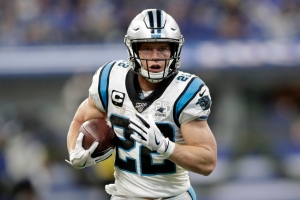 #17 Overall, Christian McCaffrey, San Francisco 49ers, #2 Running Back2025 Pre-Season Rank #21, 2024 Pre-Season Rank #16, 2023 Pre-Season Rank #55 Pre-Season Rank #66, 2021 Pre-Season Rank #76, 2020 Pre-Season Rank #81.…
 -
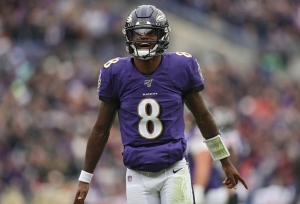 #12 Overall, Lamar Jackson, Baltimore Ravens, #4 Quarterback2025 Pre-Season Rank #10, 2024 Pre-Season Rank #14, 2023 Pre-Season Rank #30, 2022 Pre-Season Rank #38, 2021 Pre-Season Rank #46, 2020 Pre-Season Rank…in Quarterbacks
 -
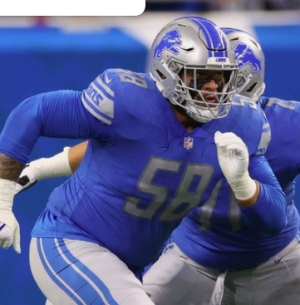 #38 Overall, Penei Sewell, Detroit Lions, Tackle, #4 Offensive Lineman2025 Pre-Season Rank #68, 2024: Pre-Season Rank: #121. Peak Period: 2021-25*Standing at 6'5” and 330 pounds, Penei Sewell can state that going into…
 -
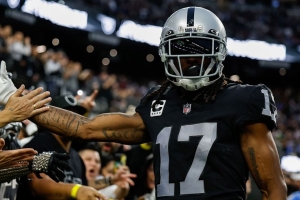 #21 Overall, Davante Adams, Los Angeles Rams, #2 Wide Receiver2025 Pre-Season Rank #23, 2024 Pre-Season Rank #27, 2023 Pre-Season Rank #24, 2022 Pre-Season Rank #43, 2021 Pre-Season Rank #67, 2020 Pre-Season Rank…
Visit the Fictitious Halls of Fame!


You May Also Like...
EDITOR’S CHOICE
 DDT's Pop Flies
When the veterans committee (VC), officially convening as the Contemporary Baseball Era…



 Live Music Head
Project/Objectan interview with André Cholmondeleyby Live Music HeadOriginally published at timessquare.com on…

LATEST RANKINGS


MOST POPULAR RANKINGS




Committee Chairman
25. Derrick Mason
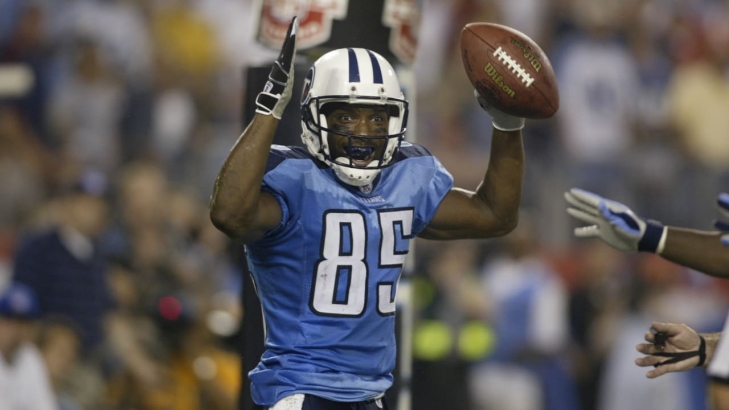
Derrick Mason did not play much in his first three seasons after Tennessee took him in the Fourth Round in the ’97 Draft, but he became a starter in 2000, and it initiated a long and consistent run as a close-to-the-top tier Wide Receiver.
Mason was a First Team All-Pro as a Returner, leading the NFL in Punt Return Yards (662), with another 1,132 Yards from Kick Returns. Mason also had 895 Yards from the air, totaling 2,690 All-Purpose Yards, again leading the NFL. He returned less in the following years, as Titans used him more on offense. Mason became a top option, exceeding 1,000 Receiving Yards over the next four seasons and earning a Pro Bowl trip in 2003.
Mason bolted for the Ravens after that year, but with the Titans, he produced 11,202 All-Purpose Yards.
24. Drew Hill
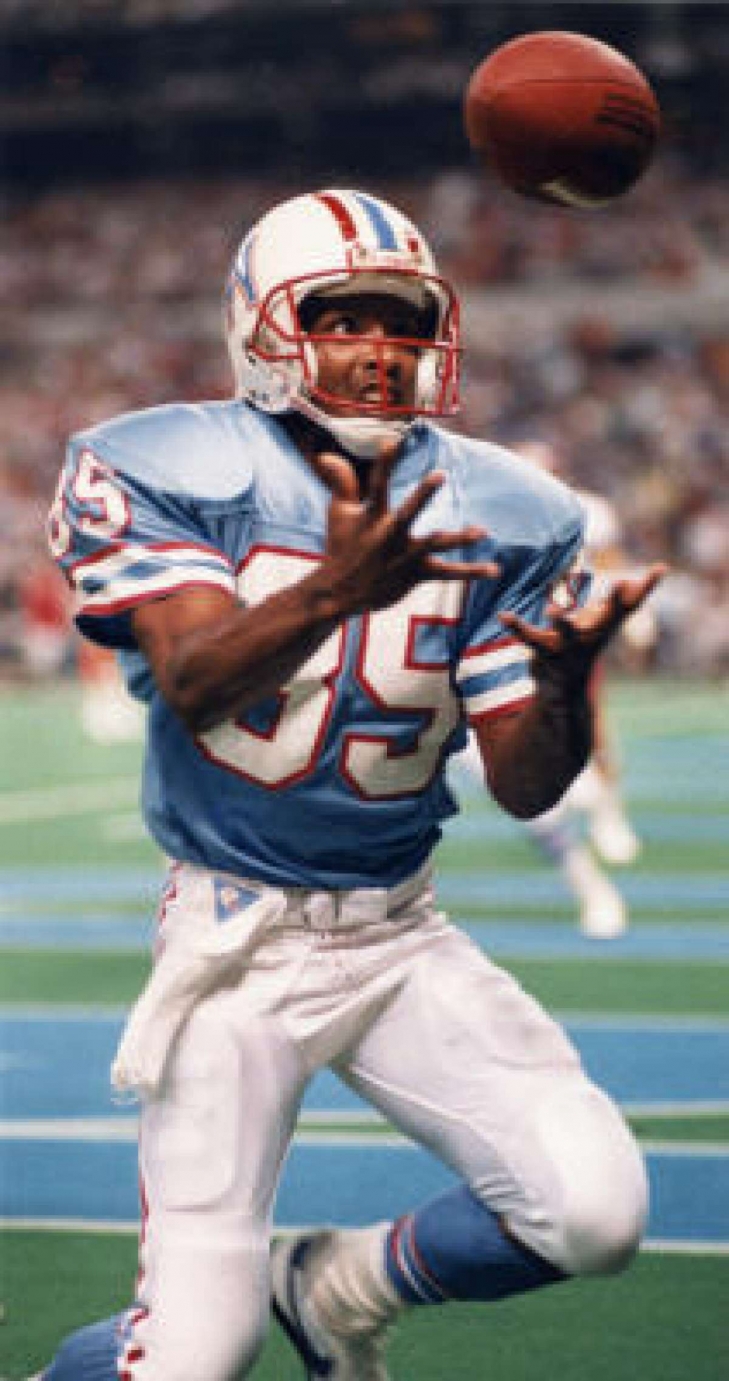
Drew Hill played his first six seasons (one on the injured list) for the Los Angeles Rams, but they were nothing special, and none of which saw him crack 20 Receptions. This changed when he joined the Oilers in 1985.
At age 28, Hill had his first four-digit Receiving Yard season (1,168). It would be easy to see this is a fluke, but Hill proved to be a worthy staring Wide Receiver, cracking 1,000 Yards four more times and becoming the first man to break that mark four times after 30. Hill was a two-time Pro Bowl Selection (1988 & 1990) and amassed 7,477 Yards for Houston, a number that nobody would have projected when he joined the team.
23. Ken Burrough
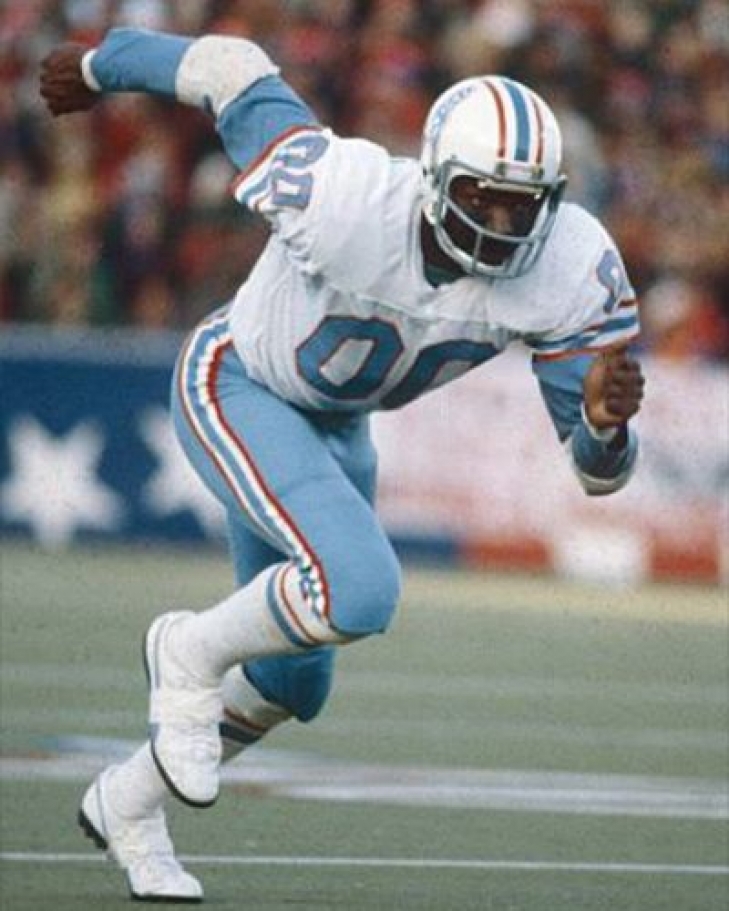
Ken Burrough was a First Round Pick in 1970, chosen 10th Overall by New Orleans. Burrough had a lousy rookie year, oft-injured and only recording 13 Receptions. The Saints decided to trade him to Houston, and while he didn’t do much as an NFL sophomore, the rest of the decade would become more productive.
Burrough became a regular starter in 1972, and in 1975, he caught 53 passes for a league-leading 1,063 Yards. For his efforts, he went to his first Pro Bowl and was a Second Team All-Pro. This would be Burrough's peak year, but he still eclipsed over 800 Yards the next two years and was a Pro Bowler again in 1977. After two more good years, injuries took him out of most of 1980, though he rebounded for one final year, a 668 Yard and 7 TD campaign.
He had 6,906 Yards with 47 Touchdowns as an Oiler.
9. Derrick Henry
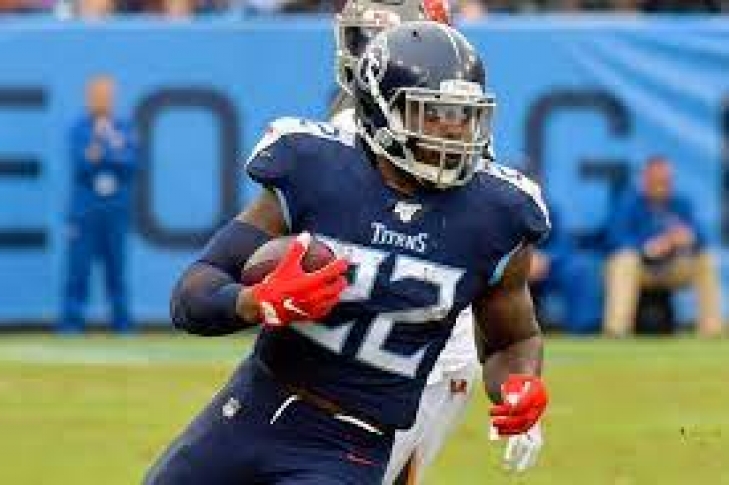
Derrick Henry was a power Running Back at Alabama, where as a junior, he won the Heisman and led the Crimson Tide to a National Championship. Despite this, there were concerned that his playing style would not be conducive to a long NFL career, and it dropped him to the Second Round, where the Titans took him.
Henry backed up DeMarco Murray as a rookie and sophomore, accumulating over 1,100 Rushing Yards over those two campaigns. He took over as the lead Back in 2019, rushing for 1,059 Yards with 12 Touchdowns, but it was the springboard for what was to come.
Henry won the Rushing Title in 2019 (1,540) with what also a league-leading 16 Rushing Touchdowns. This was not a fluke, as he joined the exclusive 2,000-Yard club (2,027) and breaking his previous record with 17 TDs on the ground. Henry was named the AP Offensive Player of the Year, an appropriate honor for the Titan's workhorse. Had Henry not got injured during the 2021 Season, it is possible that a second Rushing Title and OPOY occured. The year after, Henry was again one of the beasts on the ground, rushing for 1,538 Yards and 13 Touchdowns while adding a third Pro Bowl. Henry played one more season with the Titans where he rushed for 1,167 Yards and went to his fourth Pro Bowl.
The Baltimore Ravens signed Henry afterward, and he left the team with 9,502 Rushing Yards and 90 Touchdowns.
