

 Not in Hall of Fame News
Yes, we know that this is taking a while! As many of…
 Not in Hall of Fame News
Yes, we know that this is taking a while! As many of…
 Not in Hall of Fame News
2002 SEMI-FINAL RESULTS: Thank you for your participation in the Pro Football…
 Not in Hall of Fame News
Yes, we know that this is taking a while! As many of…
 Not in Hall of Fame News
We are diligently working away at Notinhalloffame on revising our Football lists…
 Not in Hall of Fame News
We are diligently working away at Notinhalloffame on revising our Football lists…
 From the Desk of the Chairman
October baseball often turns individual pitching performances into lasting postseason memories. Strikeout…
 From the Desk of the Chairman
For decades, the sports debate ran on gut feeling. Barstool arguments, call-in…
 From the Desk of the Chairman
Introduction to Private Adult Tennis Camps in Prague Adult club players increasingly…
 From the Desk of the Chairman
Unlike in the case of pre-match betting, where you have to pick…
 From the Desk of the Chairman
Kupu178 builds trust with people by using top-end end-to-end encryption. It checks…
 From the Desk of the Chairman
Sports fans thrive on calculating strategy, reading momentum, and maximizing every tactical…

100 Active Potential Football Hall of Famers
-
 #28 Overall, Harrison Smith, Minnesota Vikings, Strong Safety, #2 Safety2025 Pre-Season Rank #38, 2024 Pre-Season Rank #50, 2023 Pre-Season Rank #72, 2022 Pre-Season Rank #79, 2021 Pre-Season Rank #90, 2020 Pre-Season Rank…in Safeties
 -
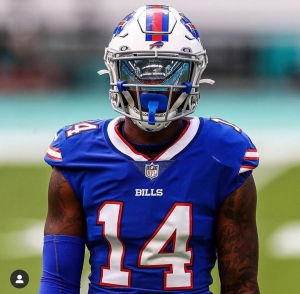 #43 Overall, Stefon Diggs, Washington Commanders, #7 Wide Receiver2025 Pre-Season Rank #40, 2024 Pre-Season Rank #38, 2023 Pre-Season Rank #48, 2022 Pre-Season Rank #57, 2021 Pre-Season Rank #118. Peak Period 2019-23…
 -
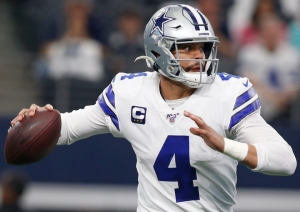 #37 Overall, Dak Prescott, Dallas Cowboys, #7 Quarterback2025 Pre-Season Rank #40, 2024 Pre-Season Rank #32, 2023 Pre-Season Rank #44, 2022 Pre-Season Rank #55, 2021 Pre-Season Rank #63, 2020 Pre-Season Rank…in Quarterbacks
 -
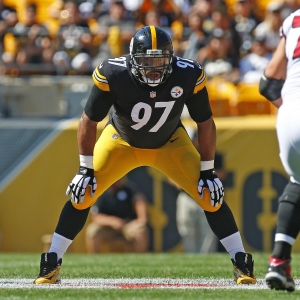 #20 Overall, Cameron Heyward, Pittsburgh Steelers, Defensive End, #9 Defensive Lineman/Linebackers: Pass Rushers2025 Pre-Season Rank #19, 2024 Pre-Season Rank #28, 2023 Pre-Season Rank #33, 2022 Pre-Season Rank #38, 2021 Pre-Season Rank #75, 2020 Pre-Season Rank…
Visit the Fictitious Halls of Fame!
You May Also Like...
EDITOR’S CHOICE
 DDT's Pop Flies
When the veterans committee (VC), officially convening as the Contemporary Baseball Era…



 Live Music Head
Project/Objectan interview with André Cholmondeleyby Live Music HeadOriginally published at timessquare.com on…

LATEST RANKINGS



MOST POPULAR RANKINGS









Committee Chairman
Our All-Time Top 50 Philadelphia Flyers have been revised to reflect the the 2020-21 Season.

Yes, we know that this is taking a while!
As many of you know, we here at Notinhalloffame.com are slowly generating the 50 of each major North American sports team. That being said, we have existing Top 50 lists out and we always consistently look to update them when we can and based on necessity. As such, we are very happy to present our pre-2021-22 revision of our top 50 Philadelphia Flyers.
As for all of our top 50 players in hockey we look at the following:
1. Advanced Statistics.
2. Traditional statistics and how they finished in the NHL.
3. Playoff accomplishments.
4. Their overall impact on the team and other intangibles not reflected in a stat sheet.
Please note, that this is our first revision in in the last three years, and it has generated two new entries, one of which, should have been listed before.
As always, we present our top five immediately, although there are no changes from our last list:
1. Bobby Clarke
3. Bill Barber
4. Eric Lindros
5. Mark Howe
You can find the entire list here.
Jakub Voracek moves up from #23 to #18.
Former Defenseman, Kimmo Timonen, was incorrectly left off our inaugural list, enters at #27.
Sean Couturier climbs from #42 to #33.
Shayne Gotlisbehere, who is now with Arizona, debuts at #50.
We welcome your input and comments and as always, we thank you for your support.
29. Kimmo Timonen

Kimmo Timonen began his career with the Nashville Predators, where he was a two-time All-Star. In 2007, Timonen and Scott Hartnell were traded to Philadelphia for a first-round pick, who would never make it to the NHL. It is easy to see who won this trade.
Timonen went to his third All-Star Game in his first year as a Flyer, and did so again in 2012. Timonen had three 40-Point seasons with Philly, with another three cracking the 30-Point threshold. Although he never finished in the top ten in Norris voting as a Flyer, he received votes in three of his years and was considered one of the top Defensemen for the Flyers during his tenure, which ended in 2014.
Timonen scored 270 Points of his 571 career Points in Philadelphia.
3. Trisha Yearwood

Being born in Georgia to a schoolteacher and a banker doesn’t help you get a foot in the door to the music business, but Trisha knew from a young age that she wanted to pursue music. After spending a childhood singing everywhere she could, she eventually moved to Nashville and earned an internship at a record label. At the label, Trisha began as a background singer on the demos of new artists, and one of those artists ended up being Garth Brooks (2012 Hall Of Fame inductee). He told her he would help her if he ever made it big. When her debut single came along in 1991, he offered her a spot as his opening act. (In 2005, he also became her husband). From there, she was able to begin her highly respected career, which included winning 3 Grammy awards, 3 Academy of Country Music Awards, and 3 Country Music Association awards. She also continued to get critical acclaim throughout her years of popularity, for both her incredible vocal power as well as the quality of her song choices. Her debut album also became the first debut by a female country singer to sell over one million copies. Although her radio career faded out after about 10 years, she has continued to put out acclaimed albums, has a cooking television show (for which she won an Emmy award), and has put out a few New York Times best-selling cookbooks. Could a slot in the Hall Of Fame be in her future too?
6. Martina McBride

One of the biggest female country voices of the 1990s, Martina used her star power to sing songs dealing with female empowerment and other topics including abuse (“Independence Day”), disabilities (“God’s Will”), and cancer (“I’m Gonna Love You Through It”). The journey to her career started out in 1988 when she married her husband John, who was a sound engineer. The two of them moved to Nashville hoping to get Martina the dream she was chasing. John ended up joining Garth Brooks’ sound crew (the biggest country artist at that time and 2012 Hall Of Fame inductee), so Martina sold merchandise during the shows. Garth was impressed by her, so he offered her a spot as an opening act if she could get a recording contract. John helped make her a demo, and she signed with RCA. From there, she put together a music resume that any up-and-coming artist would dream of: songs that are considered classics in the genre, 14 Grammy award nominations and eventually she will earn a spot in the Country Music Hall Of Fame.
