
gold star for USAHOF
 

Top 50 Cleveland Guardians


The origin of the Cleveland Indians begins in Grand Rapids, Michigan, in 1894, where they played in the Western League.  The franchise relocated in 1900, becoming the Cleveland Lake Shores, and eventually were an inaugural team of the American League, going through multiple name changes (Bluebirds, Broncos, Naps) before becoming the Indians for over a decade.

Cleveland would become a great sports town, but the baseball team has not given them very much to cheer for over the years.  The Indians have only won the World Series twice (1920 and 1948), with three other appearances.  

Following the 2021 Season, Cleveland changed its controversial team name to the Guardians, and this is likely how it will remain as long as the team remains on the North Shore.

This list is up to the end of the 2024 regular season.

Note: Baseball lists are based on an amalgamation of tenure, traditional statistics, advanced statistics, playoff statistics, and post-season accolades.
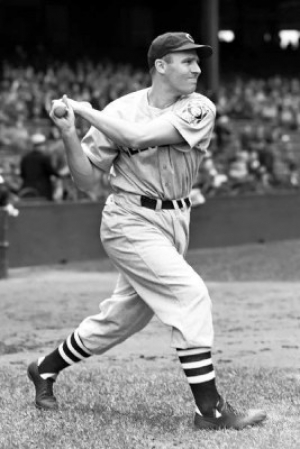
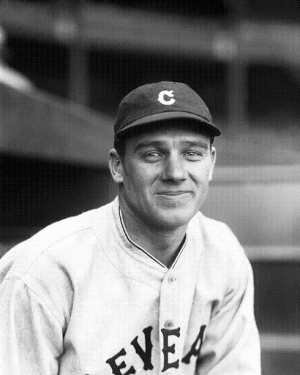
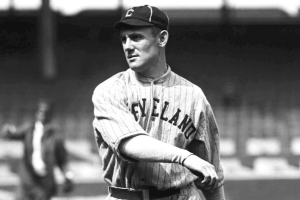
The narrative of Hal Trosky is one of the most compelling "what-if" stories in the history of the American League. Arriving on the North Coast in 1933, the Iowa native carried expectations that bordered on the impossible, with some observers prematurely labeling him the heir to Babe Ruth’s throne. While he never reached the mythical status of the "Bambino," Trosky established a baseline of specialized power that, in any other era, would have made him a perennial All-Star and a household name across the country. Trosky’s tenure in Cleveland was a study in elite offensive efficiency during the most crowded…
In the high-scoring landscape of the 1920s American League, Charlie Jamieson emerged as the quintessential leadoff man for Cleveland. Arriving via trade in 1919 after modest stints in Washington and Philadelphia, the left-handed outfielder didn't just find a home on the North Coast; he became the table-setter for one of the most prolific offensive eras in franchise history. Known for a specialized ability to manipulate the bat and a relentless approach at the plate, "Cuckoo" Jamieson spent over a decade proving that a hitter didn't need the frame of a titan to become a star. Jamieson’s tenure in Cleveland was…
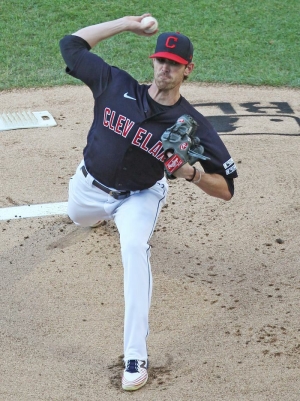
When Shane Bieber arrived in Cleveland in 2018, he brought a level of specialized control that seemed to belong to a different era. A fourth-round find who prioritized precision over raw velocity, the right-hander quickly evolved into the premier tactical force of the American League. For most of the early 2020s, he served as the high-leverage anchor of a Guardians rotation that has long been the gold standard for pitching development, providing a blueprint for how to dismantle elite lineups with a devastating knuckle-curve and an almost surgical command of the strike zone. Bieber’s tenure in Cleveland was defined by…
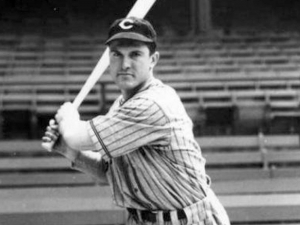
The arrival of Jeff Heath in Cleveland in 1936 brought a specialized blend of Canadian-born grit and explosive athletic power to the Indians. By the time he secured a full-time role in 1938, the left-handed outfielder had established himself as one of the most dangerous and efficient triple-threats in the American League. Heath’s tenure in Cleveland was defined by an immediate and relentless offensive efficiency. During the 1938 campaign, a summer when he batted a staggering .343 and led the American League with 11 triples. This performance earned him an 11th-place finish in the MVP voting and signaled the arrival…
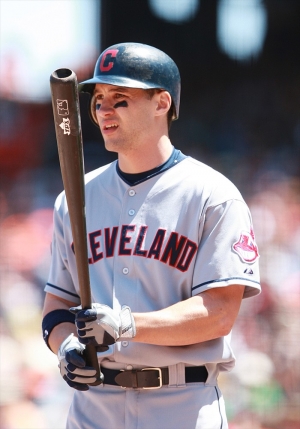
The arrival of Grady Sizemore in Cleveland was a masterstroke of organizational foresight, acquired as a "throw-in" in the legendary 2002 trade with Montreal that also brought Cliff Lee to the Indians. While he debuted in 2004, it was the following summer that signaled the dawn of a new era, as the dynamic center fielder combined a reckless, high-speed defensive style with a sophisticated offensive approach. For a brilliant, condensed window in the late 2000s, Sizemore was the undisputed engine of the franchise, a five-tool superstar who played with all-out intensity, making him the most electric talent in the American…
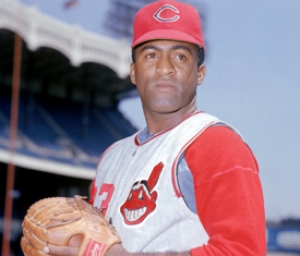
While the high-leg kick and Fu Manchu mustache became icons of Fenway Park, the foundation of Luis Tiant’s legend was laid in the specialized pitching environment of 1960s Cleveland. Arriving from the Mexican League with a deceptive delivery and a professional resilience that would define his two-decade career, "El Tiante" transformed from a high-upside rookie into one of the most untouchable arms in the American League. Tiant’s tenure in Cleveland began with a high-velocity entrance in 1964, where he posted a 10-4 record and a 2.83 ERA. He immediately established a model of specialized efficiency, ranking tenth in bWAR for…
Ray Chapman was more than just a shortstop for Cleveland; he was the soul of an era that balanced the gritty mechanics of the Deadball age with the emerging power of the 1920s. Arriving in 1912, the Kentucky native quickly became a fixture in the middle of the diamond, earning a reputation as one of the most intellectually sharp and physically reliable players in the American League. Chapman’s tenure in Cleveland was defined by defensive brilliance and a selfless offensive approach. He established himself as an elite run-preventer at shortstop, three times leading the league in putouts, assists, and range…
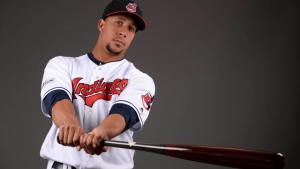
The acquisition of Michael Brantley in 2008 remains one of the most lopsided "player to be named later" transactions in baseball history. Originally a secondary piece in the blockbuster trade that sent C.C. Sabathia to Milwaukee, Brantley arrived on the North Coast with a quiet confidence and a left-handed stroke that would eventually become the gold standard for contact hitters in the American League. Known as "Dr. Smooth" for his effortless mechanics and professional approach, he evolved from a "throw-in" prospect into the steady heart of a Cleveland lineup that returned to postseason prominence in the mid-2010s. After a foundational…
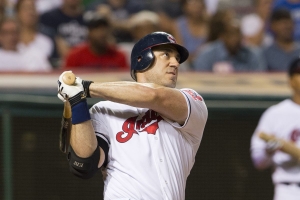
The acquisition of Travis Hafner in late 2002 stands as one of the most lopsided trades in Cleveland history, as the front office managed to extract a premier middle-of-the-order force from Texas for a package that barely registered in the box scores. Known as “Pronk”, a nickname that perfectly captured his imposing physical frame and easygoing demeanor, Hafner arrived in 2003 and quickly transformed the North Coast into a destination for high-velocity offensive output. For a terrifying four-year stretch in the mid-2000s, he was arguably the most feared left-handed hitter in the American League, providing a blend of plate discipline…
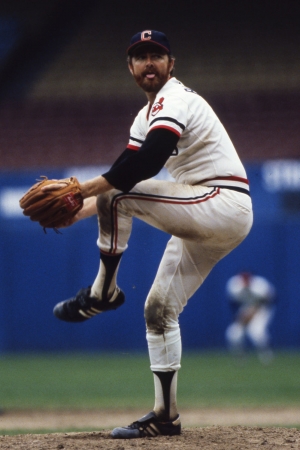
While Bert Blyleven is often draped in the colors of Minnesota or Pittsburgh, his five-season residency in Cleveland provided some of the most statistically dominant pitching of the 1980s. Born in the Netherlands and raised in California, Blyleven arrived in 1981 as a proven champion with a curveball many hitters considered the best in the sport's history. Blyleven’s arrival in Cleveland was defined by an immediate and relentless efficiency. Despite the strike-shortened nature of the 1981 campaign, he established himself as a model of specialized dominance, finishing the year with an 11-7 record and leading the American League in bWAR…
In the bruising, bare-knuckle world of early 20th-century catching, Steve O’Neill was the ultimate ironman of the Cleveland infield. Arriving in 1911, he didn't just occupy the space behind the plate; he anchored the franchise through its most transformative decade. Known for a defensive resilience that bordered on the supernatural. O’Neill’s stay in Cleveland was defined by a steady evolution from a defensive specialist into a complete, high-frequency offensive contributor. While his reputation was built on being a wizard with the glove, smothering wild pitches and neutralizing the era's aggressive baserunners, his bat caught up to his elite fielding as…
Sonny Siebert was a multi-sport athlete as he was not just a coveted baseball player but was drafted by the St. Louis Hawks of the NBA.  Siebert focused on baseball, which proved to be the right move.