
gold star for USAHOF
 

Top 50 Cleveland Guardians


The origin of the Cleveland Indians begins in Grand Rapids, Michigan, in 1894, where they played in the Western League.  The franchise relocated in 1900, becoming the Cleveland Lake Shores, and eventually were an inaugural team of the American League, going through multiple name changes (Bluebirds, Broncos, Naps) before becoming the Indians for over a decade.

Cleveland would become a great sports town, but the baseball team has not given them very much to cheer for over the years.  The Indians have only won the World Series twice (1920 and 1948), with three other appearances.  

Following the 2021 Season, Cleveland changed its controversial team name to the Guardians, and this is likely how it will remain as long as the team remains on the North Shore.

This list is up to the end of the 2024 regular season.

Note: Baseball lists are based on an amalgamation of tenure, traditional statistics, advanced statistics, playoff statistics, and post-season accolades.
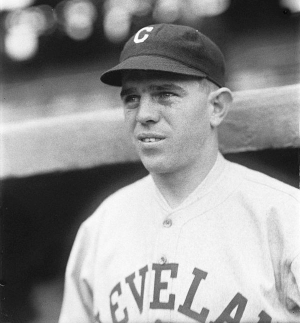
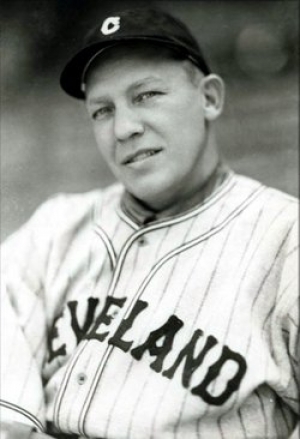
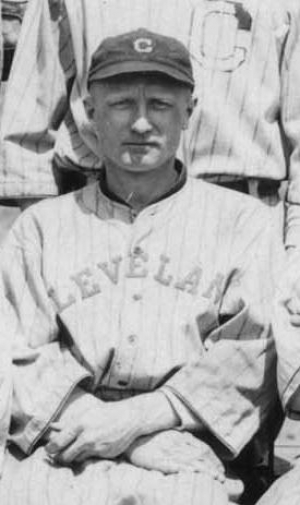
Joe Sewell’s entry into the Major Leagues was forged in the fire of the 1920 season, arriving just weeks after the tragic death of Ray Chapman. Tasked with replacing a beloved icon in the midst of a pennant race, the young infielder matured instantly, anchoring the infield and helping propel the Indians to their first World Series championship. He emerged with a specialized, contact-heavy approach that relied on the most discerning eye in the history of the Junior Circuit. During his tenure, he was a model of relentless efficiency, achieving an incredible stretch where he batted over .300 in eight…

ARIZONA DIAMONDBACKS VS. SAN DIEGO PADRES

Mar 15, 2026

Buy your Tickets to see Arizona Diamondbacks vs. San Diego Padres HERE!

DETROIT TIGERS VS. PHILADELPHIA PHILLIES

Mar 16, 2026

Buy your Tickets to see Detroit Tigers vs. Philadelphia Phillies HERE!

MINNESOTA TWINS VS. PITTSBURGH PIRATES

Mar 16, 2026

Buy your Tickets to see Minnesota Twins vs. Pittsburgh Pirates HERE!

ATLANTA BRAVES VS. TAMPA BAY RAYS

Mar 16, 2026

Buy your Tickets to see Atlanta Braves vs. Tampa Bay Rays HERE!

 
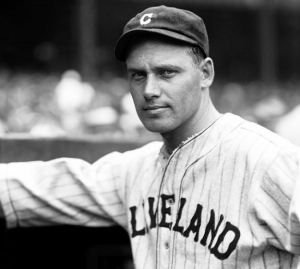
George Uhle surfaced in the Cleveland lineup in 1919, and “The Bull” quickly became a fixture of the staff, playing a supporting role in the franchise’s historic 1920 World Series championship. He emerged with a specialized repertoire that relied on durability and a deceptive breaking ball, embarking on a stretch where he became the undisputed ace of the Tribe. By the early 1920s, he had reached a remarkable ceiling of productivity, achieving three 20-win seasons and twice leading the American League in victories. He was a model of specialized workload, leading the league in innings pitched and complete games in…
After debuting in 1947, Al Rosen became a regular player in 1950 and became a serious power threat in the Junior Circuit. He made an immediate statement by capturing the home run title in his first full season as a starter, launching 37 homers and driving in 116 runs. It was the beginning of a remarkable five-year run of consistency, where he authored at least 24 home runs and 100 RBIs every single summer. Rosen was a model of specialized efficiency, proving that his game was built on a sophisticated balance of raw power and elite plate discipline, eventually evolving…
After playing one game for the Indians in 1937, Ken Keltner surfaced as a regular in 1938 and matured instantly into the premier defensive presence in the American League. He possessed a specialized ability to react to the sharpest line drives, a gift that earned him seven All-Star selections during his tenure. He was a model of defensive efficiency, twice leading the league in fielding percentage and consistently shrinking the field for opposing hitters. He wasn't just a steady glove, though; he provided a sophisticated level of offensive production, authored by three seasons with at least 20 home runs and…
Flick’s path to Cleveland was forged in the chaos of the American League's birth. After jumping from the Phillies to the cross-town Athletics, a Pennsylvania injunction prohibited him from playing for any team within the state. To keep his career alive, he was sent to Cleveland alongside Lajoie in 1902—a move that secured the club's offensive identity for the next nine years. He emerged with a specialized, contact-heavy approach that relied on elite acceleration, maturing instantly into a premier leadoff threat. By 1905, he had reached a remarkable apex, capturing the American League Batting Title with a .308 average and…
Manny Ramirez became a full-time fixture in the 1994 lineup, narrowly missing out on Rookie of the Year honors before anchoring a legendary core of homegrown talent. He matured instantly into a premier middle-of-the-order threat, following a 1995 breakout in which he hit 31 home runs and drove in over 100 runs. He possessed a specialized, rhythmic approach at the plate that prioritized elite bat speed and a sophisticated understanding of the strike zone. This craftsmanship allowed him to serve as the tactical engine for the 1995 and 1997 World Series squads, providing the high-leverage power that turned a young…
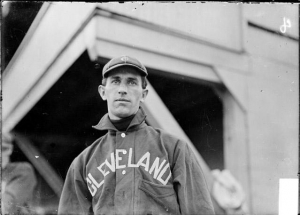
Terry Turner’s path to the American League was paved by the depth of the Pittsburgh roster, where future Hall of Famers Honus Wagner and Tommy Leach blocked his path to a starting role. Cleveland recognized the opening and secured the young infielder in 1904, a move that stabilized their defense for the next decade and a half. He surfaced as a shortstop and matured instantly into a premier run-preventer, reaching a defensive apex in 1906 when he recorded a staggering 5.4 dWAR, a mark that stands as one of the most statistically dominant fielding seasons in baseball history. He was…
Wes Ferrell’s career shifted from a slow burn to an inferno after a brief, two-game audition in the late 1920s. He secured a permanent spot in the rotation by 1929 and immediately evolved into the league's premier workhorse. Between 1929 and 1932, he anchored the staff with a relentless accumulation of victories, winning at least 21 games every summer and leading the American League in complete games in 1931. He was a model of specialized durability, navigating the era’s high-scoring environment with a sophisticated mix of pitches and mental toughness, allowing him to shoulder nearly 300 innings annually during his…
Bill Bradley’s migration to Cleveland in 1901 was a foundational moment for the fledgling American League club. He surfaced as the primary engine of the offense during the franchise's infancy, maturing instantly into one of the league’s most feared contact hitters. He authored a spectacular four-year run to open the century, surpassing 150 hits in each campaign and recording three different seasons with a batting average north of .300. His craftsmanship reached a unique level of dominance in 1902 when he became the first player in Major League history to hit a home run in four consecutive games, a feat…
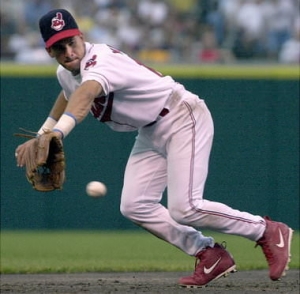
Omar Vizquel’s path to Cleveland was forged by a shrewd 1994 trade that sent Félix Fermín and Reggie Jefferson to the Mariners, a move that secured the franchise’s defensive identity for over a decade. He surfaced in 1994 and matured instantly into a premier run-preventer, authoring an incredible stretch of eight consecutive Gold Glove Awards in a Cleveland uniform. He possessed a specialized, rhythmic grace on the dirt, maintaining some of the highest fielding percentages in American League history. He wasn't just a steady glove; he was a tactical genius who understood the geometry of the field, consistently leading the…
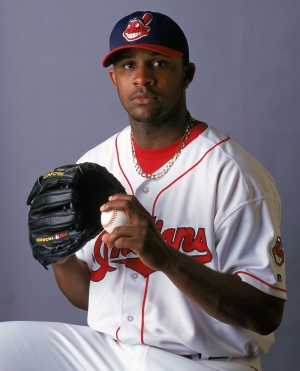
When a twenty-year-old C.C. Sabathia first stepped onto a Major League mound in 2001, he didn't just join the Cleveland rotation—he ignited it. Standing as a physical titan with a high-velocity arm to match, the young lefty authored a debut season for the ages, storming to a 17-5 record. While Ichiro Suzuki’s historic arrival in Seattle ultimately edged him out for Rookie of the Year honors, Sabathia’s presence in Cleveland was an immediate statement of intent. He possessed a specialized, heavy fastball that allowed him to navigate seven-and-a-half seasons in a Tribe uniform without ever recording a losing record, earning…
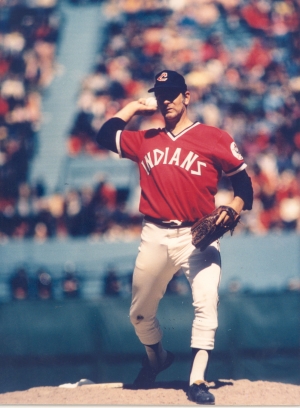
The trade that brought Perry from San Francisco following the 1971 season proved to be one of the most impactful transactions in franchise history. He made an immediate, seismic impact, authoring a 1972 campaign that remains etched in the record books as a masterclass of durability and deception. That year, he recorded 24 wins and a microscopic 1.92 ERA, earning him the American League Cy Young Award and a sixth-place finish in the MVP race. He possessed a specialized ability to disrupt a hitter’s focus, utilizing a vast repertoire of pitches and a high-frequency routine of fidgeting with his jersey…
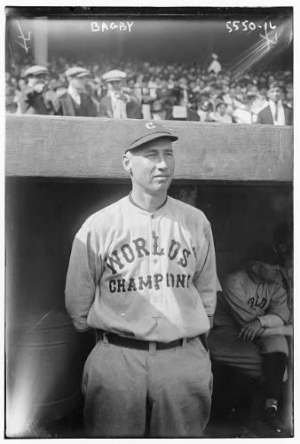
Bagby evolved into a premier workhorse as the franchise adopted the "Indians" moniker, consistently providing the high-leverage durability needed to keep the club in contention. He possessed a specialized ability to eat innings, maintaining a sharp 2.49 ERA over his first four seasons in a Cleveland uniform. However, his career reached an incredible inflection point during the legendary 1920 season. That summer, Bagby authored a workload that seems impossible by modern standards, leading the American League with 339.2 innings pitched and securing a staggering 31 victories. He was the definition of a high-frequency winner, serving as the tactical engine that…
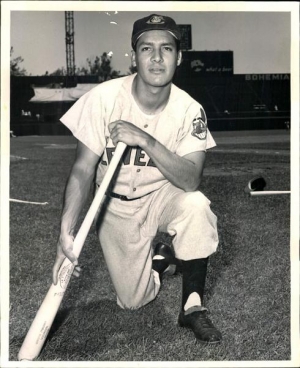
The 1949 arrival of Bobby Avila in Cleveland wasn't just a roster move; it was a watershed moment for international baseball. As the first Mexican-born player to truly seize a starring role in the Major Leagues. Avila forced his way into the permanent starting lineup by 1951, immediately proving that his bat belonged at the top of a championship-caliber order. He possessed a specialized knack for finding gaps, hitting over .300 in each of his first two full seasons as a regular. His athleticism was on full display in 1952 when he led the Junior Circuit in triples and earned…
When Willis Hudlin stepped onto the mound at League Park in the late 1920s, he brought with him a pitch that was still a dark art to most hitters: the sinker. A mainstay of the Cleveland rotation for fifteen seasons, Hudlin wasn't the kind of fireballer who hunted headlines; he was the blue-collar engine of the staff, a dependable right-hander who could transition seamlessly from the starting block to the bullpen. Hudlin’s career in Cleveland began with a splash in 1926, and by his first full season, he had established himself as a frontline winner, posting an 18-12 record as…
Colavito’s rise to stardom was nearly instantaneous, providing a jolt of electricity to the lineup when he took over a full-time role. He finished as the runner-up for the 1956 Rookie of the Year after launching 21 home runs in limited action, but his game reached a spectacular inflection point in 1958. That summer, he hit .303 and blasted 41 round-trippers, following it up in 1959 by leading the Junior Circuit with 42 homers. He possessed a specialized, high-leverage power that terrified opposing pitchers, and his craftsmanship in the field was equally feared; his arm was a high-velocity weapon that…
Long before he was a fixture in the Cleveland rotation, Charles Nagy was already a champion, arriving on the North Coast with an Olympic Gold Medal from the 1988 Seoul Games. When he stepped onto the Major League stage in 1990, he traded his national colors for the Tribe’s navy and red, beginning a thirteen-season journey that would see him become the iron man of the franchise's most explosive decade. Nagy’s career in Cleveland was a study in professional resilience, as he evolved from a young prospect into the staff’s undisputed workhorse. He established himself as a frontline winner during…
Hal Trosky is a fascinating baseball player when it comes to "rating" their overall contributions.  Very early in his career, some writers viewed him as the next Babe Ruth, which were about as lofty expectations as you can get.  It goes without saying that Trosky was not the next "Bambino," but now historians look at him as one of the best players never to be named an All-Star.
Charley Jamieson had already played in the Majors for four years before being traded to Cleveland before the 1919 season.  He didn't do much early, but in 1920, he began to see more playing time, and he helped the Indians win the World Series. That would be the only time he was in the playoffs, but his best years were about to occur.