

Our All Time Top 50 San Diego Padres have been updated to reflect the 2025 Season

Yes, we know that this is taking a while!
As many of you know, we at Notinhalloffame.com are slowly generating the top 50 of each major North American sports team. That being said, we maintain and update our existing Top 50 lists annually. We are pleased to present our pre-2026 revision of our top 50 San Diego Padres.
As for all of our top 50 players in baseball, we look at the following:
1. Duration and Impact.
2. Traditional statistics and how they finished in the Major League Baseball.
3. Advanced Statistics.
4. Playoff performance.
5. Their respective legacy on the team.
6. How successful the team was when he was there.
7. Respecting the era in which they played.
Criteria 1-4 will make up the lion’s share of the algorithm. Please note that we have implemented this for the first time. This has changed the rankings all throughout the board.
Last year, the Padres finished second in the National League West with a 90-72 record and made the playoffs, though they fell to the Chicago Cubs in the Wild Card. There were multiple elevations on the list for the 2025 season, along with one new entrant. Notably, there is one new addition, but that is based on the algorithm.
As always, we present our top five, which saw significant changes.
1. Tony Gwynn
2. Trevor Hoffman
3. Jake Peavy
4. Dave Winfield
5. Fernando Tatis Jr.
You can find the entire list here.
According to the new algorithm, Jake Peavy and Dave Winfield switched their #3 and #4 rankings.
Tatis Jr., who was an All-Star and Gold Glove winner last season, moved from #7 to #5. He was also 8th in MVP voting last year.
Notably, while Manny Machado had a good 2025 season, he did not move from the #6 spot. He overtook former Cy Young winner Randy Jones, but Tatis Jr. passed both of them.
Jake Cronenworth went from #28 to #22.
Despite pitching sparingly in 2025, Yu Darvish benefited from the new algorithm and went up from #44 to #41.
The algorithm also brought back Gaylord Perry. He returns at #47.
Robert Suarez, who is now an Atlanta Brave, did enough last year to enter the list. He is at #50.
Jurickson Profar and Trent Grisham fell off the list.
We thank you for your continued support of our lists on Notinhalloffame.com.
50. Robert Suarez

Robert Suarez's journey to the back end of the San Diego Padres' bullpen is truly remarkable and inspiring. Ignored by scouts in Venezuela during his youth, Suarez worked construction and grocery jobs in his early twenties before finally making his professional debut in the Mexican League at 24. His talents flourished in Japan’s Nippon Professional Baseball over five dominant seasons, turning raw ability into top-tier bullpen performance. Recognizing his late-blooming, explosive potential, the Padres signed the 31-year-old rookie before the 2022 season, bringing a blazing fastball right into their late-inning plans.
His first year in Southern California was simply extraordinary. As the go-to setup man behind closer Josh Hader, Suarez dazzled National League batters with his powerful fastball and changeup combo. He finished his rookie season with a fantastic 5–1 record and a very impressive 2.27 ERA across 45 appearances, striking out 61 hitters in just 47.2 innings. Suarez kept up his stellar form into October, throwing scoreless innings throughout the NLDS against the Dodgers, quickly becoming a fan favorite at Petco Park.
His outstanding start earned him a generous five-year, $46 million contract extension in November 2022, ensuring he would be part of the Padres’ future. Despite facing challenges like elbow inflammation and a sticky-substance suspension that limited his 2023 season and raised his ERA to 4.23, the team remained confident in his incredible talent. When Hader left in free agency, manager Mike Shildt trusted Suarez to step into the closer role for 2024, setting the stage for another exciting chapter in his career.
Suarez seized this opportunity with a breakout season in 2024. He proved he was back at his best, successfully recording 36 saves to finish third in the National League and anchoring a strong Padres bullpen. He pitched 65 innings with a tidy 2.77 ERA, earning his first All-Star nod and taking on a key leadership role for a team pushing hard for October again.
His momentum soared even higher during an exceptional 2025 season, his personal masterpiece with the Padres. Suarez emerged as a true workhorse, making a career-high 70 appearances and tossing nearly 70 innings. He led the National League with 40 saves, registered a stellar 2.97 ERA, and achieved a career-best 2.3 bWAR. His consistent performance down the stretch proved to be the backbone for a talented San Diego squad chasing postseason success.
After that historic 40-save season, Suarez chose to test free agency, turning his outstanding closing record into a lucrative contract with the Atlanta Braves. Over his three seasons with the Padres, Suarez amassed 18 wins, 77 saves, and maintained a sharp 2.94 ERA over 141 high-pressure games.
Our All Time Top 50 San Diego Padres have been revised to reflect the 2024 Season

Yes, we know that this is taking a while!
As many of you know, we at Notinhalloffame.com are slowly generating the top 50 of each major North American sports team. That being said, we have existing Top 50 lists and consistently look to update them when necessary and based on necessity. As such, we are delighted to present our post-2024 revision of our top 50 San Diego Padres.
As for all of our top 50 players in baseball, we look at the following:
1. Advanced Statistics.
2. Traditional statistics and how they finished in the National League.
3. Playoff accomplishments.
4. Their overall impact on the team and other intangibles that are not reflected in a stat sheet.
Please note that our algorithm has changed, which yielded minor changes throughout the baseball lists.
Last year, the Padres won 93 Games and made it to the Division Series, where they lost to the eventual World Series Champions, the Los Angeles Dodgers. There were four new entrants bases on 2024, and several elevations.
As always, we present our top five, which saw one change based on the new algorithm.
1. Tony Gwynn
4. Jake Peavy
5. Randy Jones
You can find the entire list here.
Winfield moved ahead of Peavy to claim the #3 spot.
Infielder Manny Machado climbed one spot to #6.
Another Infielder, Fernando Tatis Jr., moved to #7 from #10.
The first of four new entrants is Infielder, Ha-Seong Kim, who is now with Tampa. He enters at #25, and was erroneously left off last year’s revision.
Second Baseman Jake Cronenworth advanced to #28 from #34.
Pitcher Blake Snell, who is now with the Giants, climbed to #34 from #40.
Outfielder Jurickson Profar, who is now an Atlanta Brave, debuts at #42.
Pitcher Joe Musgrove enters at #43.
Pitcher Yu Darvish begins his Padres list at #44.
We thank you for your continued support of our lists on Notinhalloffame.com.
41. Yu Darvish
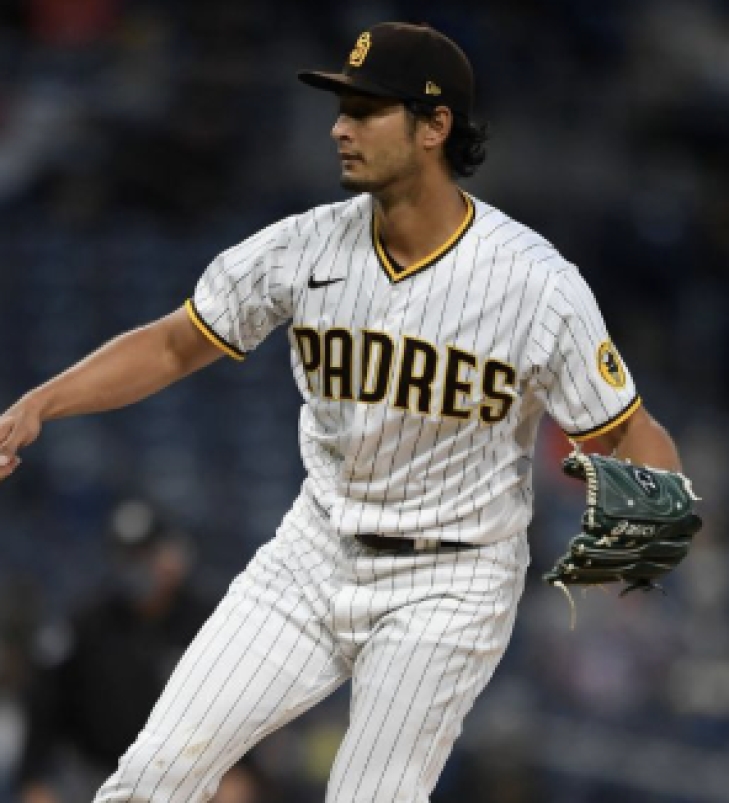
Yu Darvish is a legendary figure in Japan and was the most sought-after international player before the 2012 season. He joined the Texas Rangers through a record posting bid, using a diverse, double-digit pitch mix to earn four All-Star selections. After notable stints with the Los Angeles Dodgers and Chicago Cubs, he was part of a major winter trade in December 2020, joining the San Diego Padres to lead their competitive, win-now rotation.
Darvish began his run in San Diego, turned slicing up National League bats into a strict personal routine, forming a highly seamless, productive chemistry with his personal catcher, Victor Caratini, who followed him over in the Cubs transaction. The tandem worked in perfect harmony all summer, with Darvish capturing his fifth career Major League All-Star selection during a strong debut campaign in a Padres uniform.
In 2022, Darvish posted an impressive 16–8 record, leading his team with a remarkable 3.10 ERA, an exceptional 0.95 WHIP, and 197 strikeouts over 194.2 innings. He further demonstrated outstanding composure during the 2022 postseason, securing two pivotal starts that contributed significantly to guiding the underdog Friars to an memorable appearance in the National League Championship Series. Furthermore, he ranked eighth in Cy Young Award voting for that year.
However, performance leaks that inevitably caught up to him as he advanced through his late 30s. Following a solid but abbreviated 2024 showing, his 2025 campaign turned into a highly frustrating, lopsided battle with structural efficiency. Darvish wrestled with uncharacteristic command leaks across 15 starts, finishing a bumpy 2025 stretch with a 5–5 record and a bloated 5.38 ERA over 72.0 innings.
The ultimate physical crossroads arrived late in the year when severe elbow damage forced him to undergo a complex internal brace surgery and flexor tendon repair. Darvish elected to be placed on the restricted list, gracefully foregoing his entire salary to provide the front office with critical fiscal flexibility while he dedicates himself to a grueling rehab process.
At 39, his future is uncertain, but he nevertheless did enough to earn a spot on this list.
46. Joe Musgrove
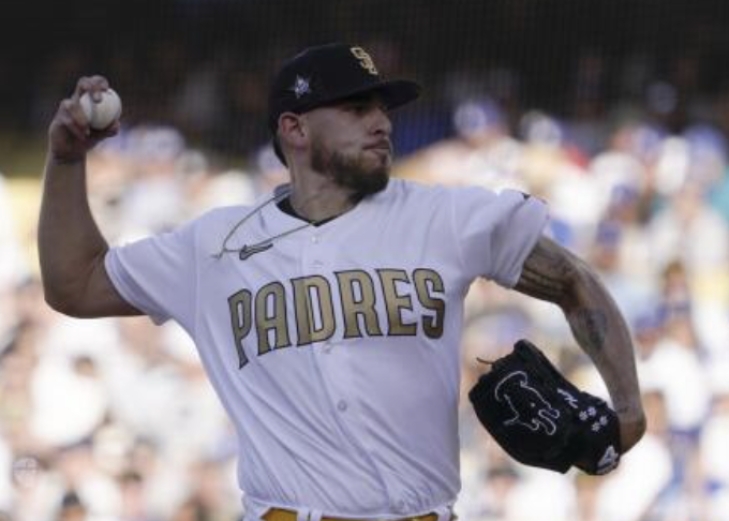
After five seasons spent with Houston and Pittsburgh respectively, Joe Musgrove was traded to San Diego, and the California weather must have agreed with him as the past four seasons have been the best of the right-hander’s career.
Musgrove threw a no-hitter in his first season as a Padre, finishing the year with an 11-9 record, 203 Strikeouts and a 3.18 ERA. He followed that up with his first All-Star, and a season where he posted his first 3.00 ERA (2.93). Since then, Musgrove has dealt with injuries, including a torn UCL that will cost him the entirety of 2025. If he returns healthy in 2026, he should be able to shoot up this list.
30. Ha-Seong Kim
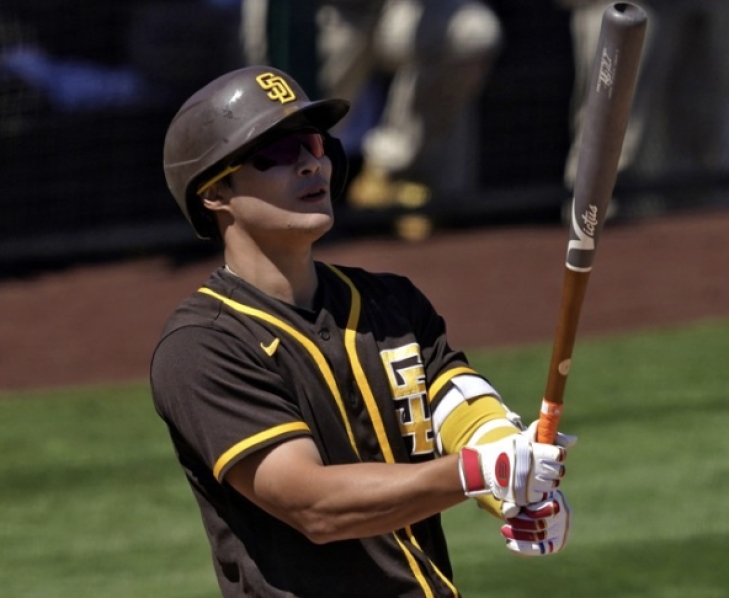
When a top athlete moves from the international stage to Major League Baseball, they often face a tough period of adjustment and cultural change. After proving himself as a five-tool star for the Kiwoom Heroes in the KBO League, Kim Ha-seong entered the international posting system and signed a four-year deal with the San Diego Padres in January 2021. With a quick defensive response and a compact right-handed swing, Kim arrived in Southern California under intense external pressure and amidst a star-packed infield. Although his initial summer involved a steep learning curve offensively, his resilience and exceptional defensive awareness quickly turned him from a versatile utility player into a key, high-impact player who is now highly regarded in the modern game.
His first introduction to the local fans in 2021 focused on strong defensive skills. Although his batting lagged with a .202 average over 117 games due to slower bat speed, his exceptional instincts enabled him to defend the left side of the infield with remarkable skill.
The definitive, frontline breakthrough occurred during the 2022 season. Placed into regular shortstop responsibilities following a season-ending wrist injury sustained by Fernando Tatís Jr., Kim transformed elite, high-volume consistency into a rigorous daily regimen. He supported the entire defense by participating in 150 games, achieving 130 hits, 29 doubles, and 11 home runs, thereby leading a remarkable campaign to the National League Championship Series, while also earning a prestigious second-place finish for the National League Gold Glove Award.
Kim’s performance in the 2023 regular season was standout and career-defining. After a major free-agent signing led to a reshuffle of team positions, he showed remarkable versatility and offensive skill across multiple roles. He set a personal record with 38 stolen bases and drew 75 walks through patience at the plate. He also achieved a career-high 17 home runs, scored 84 runs, and played a key offensive role in 152 games, posting a slash line of .260/.351/.398. Kim made history by earning the 2023 National League Gold Glove Award as a utility player, becoming the first Asian-born infielder in MLB history to win this prestigious honor. His all-around contributions helped him achieve a 5.8 position-player bWAR, prompting national writers to see beyond basic stats and acknowledge his comprehensive value with a 14th-place finish in NL MVP voting.
He maintained his high-efficiency approach in 2024, drawing 58 walks and stealing 22 bases, but his aggressive style led to a severe labrum tear in his right shoulder in August, requiring surgery and sidelining him during the postseason.
Kim walked away from his option after the season, leaving behind 418 hits, 74 doubles, 47 home runs, 200 runs batted in, and 78 stolen bases across 540 appearances.
Our All-Time Top 50 San Diego Padres have been revised to reflect the 2023 Season
Yes, we know that this is taking a while!
As many of you know, we here at Notinhalloffame.com are slowly generating the top 50 of each major North American sports team. That being said, we have existing Top 50 lists out, and we always consistently look to update them when we can and based on necessity. As such, we are very happy to present our post-2023 revision of our top 50 San Diego Padres.
As for all of our top 50 players in baseball, we look at the following:
1. Advanced Statistics.
2. Traditional statistics and how they finished in Major League Baseball.
3. Playoff accomplishments.
4. Their overall impact on the team and other intangibles that are not reflected in a stat sheet.
Last year, the Padres were considered to be World Series contenders, but they failed even to make the playoffs while barely having a winning record. Nevertheless, there were three elevations and two new entrants to the list.
As always, we present our top five, which saw no changes:
1. Tony Gwynn
3. Jake Peavy
5. Randy Jones
You can find the entire list here.
Manny Machado, had a modest jump from #9 to #7.
Fernando Tatis Jr., who won his first Gold Glove last year, rocketed to #10 from #20.
Jake Cronenworth also rose, climbing to #34 from #39.
Making the list were reigning Cy Young winner, Blake Snell, who enters at #40, and current New York Yankee Outfielder, Trent Grisham, who debuts at #47.
We thank you for your continued support of our lists on Notinhalloffame.com.
26. Blake Snell
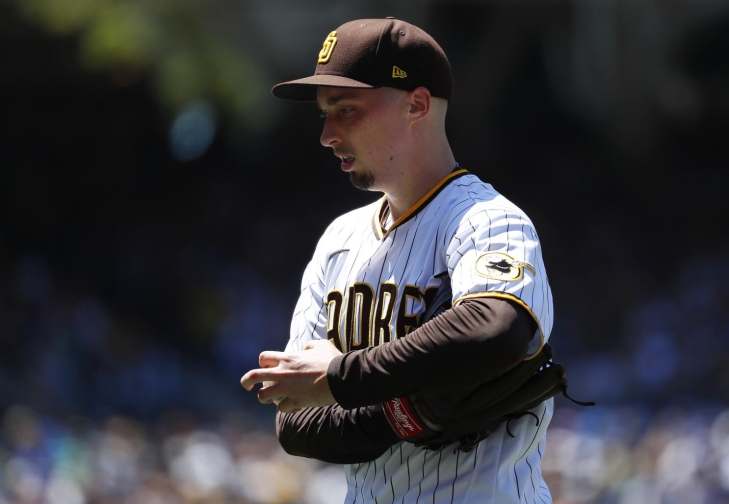
When a front office orchestrates a major blockbuster trade for a reigning award-winner, they are deliberately aiming for an exceptional, almost rare achievement. In December 2020, the San Diego Padres did exactly that by making a large deal involving multiple prospects with the Tampa Bay Rays to acquire left-handed starter Blake Snell. Known for his fastball and a sharp mix of breaking pitches that earned him the American League Cy Young Award in 2018, Snell was welcomed in Southern California with high expectations. Although his early time there was marked by inconsistency and mechanical issues, it eventually culminated in one of the most dominant single-season pitching performances in modern baseball history.
To be equitable, his 2021 introductory campaign with the Padres was notably challenging, marked by shorter innings and inconsistent command. Snell endeavored to establish a consistent rhythm in his new milieu, often grappling with his delivery, ultimately finishing the summer with a 4.20 ERA and a 1.322 WHIP across 27 starts. Despite these mechanical difficulties, his innate ability to induce swings and misses persisted unequivocally, as evidenced by his accumulation of 170 strikeouts in merely 128.2 innings of play.
The 2022 schedule showed a steady, middle-ground progression as he settled into his surroundings. Though his traditional 8–10 record didn't turn heads, he flashed elite frontline capabilities in the second half, lowering his ERA to a sharp 3.38 and striking out 171 batters over 128 frames, helping anchor a deeper postseason run.
The third year was what they paid for. While he issued a major-league-leading 99 walks, his skill in deep counts and his unhittable stuff allowed him to eliminate traffic on the bases. He finished with a 14–9 record, leading the league with a stunning 2.25 ERA, a formidable 182 ERA+, and just 5.8 hits allowed per nine innings. He also achieved a personal best with 234 strikeouts, ending the summer by allowing only 2 earned runs over his last 23 innings. His command in tough situations earned him widespread national recognition, and Snell won the 2023 National League Cy Young Award. By securing this trophy, he joined an elite group of just seven pitchers in baseball history who have won this award in both leagues.
The Padres would make the playoffs in 2024, but did so without Snell, who left the club for their NL West rival, San Francisco, in free agency. In San Diego, he had a 30–29 record, 575 strikeouts in 436.2 innings, and a sharp 3.22 ERA across 83 career starts.
Our All-Time Top 50 San Diego Padres have been updated to reflect the 2022 Season

Yes, we know that this is taking a while!
As many of you know, we here at Notinhalloffame.com are slowly generating the 50 of each major North American sports team. That being said, we have existing Top 50 lists out and we always consistently look to update them when we can and based on necessity. As such, we are very happy to present our post 2022 revision of our top 50 San Diego Padres.
As for all of our top 50 players in baseball we look at the following:
1. Advanced Statistics.
2. Traditional statistics and how they finished in the National League.
3. Playoff accomplishments.
4. Their overall impact on the team and other intangibles not reflected in a stat sheet.
Last year, the Padres loaded up for a run to the World Series, but they were unable to win the pennant. 2022 yielded one new entrant to the Top 50, and some elevations.
As always, we present our top five, which had no changes.
1. Tony Gwynn
3. Jake Peavy
5. Randy Jones
You can find the entire list here.
Manny Machado, who was the runner-up for last year’s MVP exploded to #9 from #28.
The one new entrant was Jake Cronenworth, who has gone to the last two All-Star Games. He enters at #41.
We welcome your input and comments and as always, we thank you for your support.
22. Jake Cronenworth
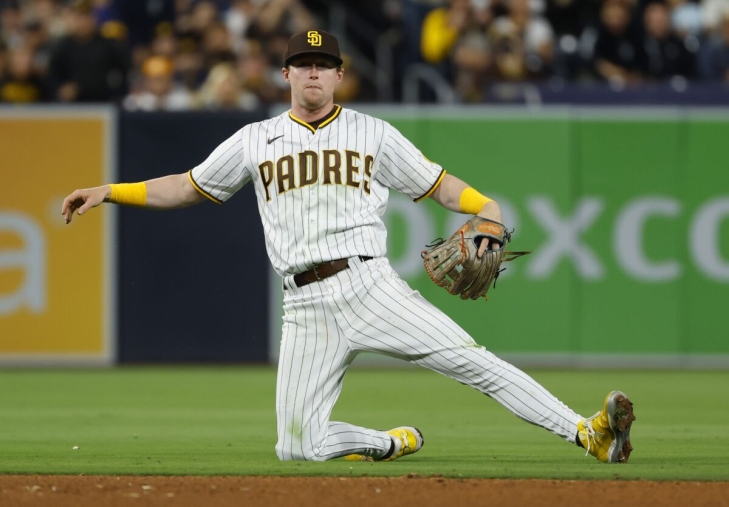
When examining the multi-player trade that sent Tommy Pham to the Tampa Bay Rays in December 2019, the baseball community initially zeroed in on the immediate outfield swap. However, as the seasons passed under the Southern California sun, a minor prospect unexpectedly changed the story of the deal. Jake Cronenworth was originally drafted by the Rays as a two-way player, but after moving west, he gave up pitching to focus solely on his left-handed batting. He made his MLB debut during the shortened 2020 season, delivering a remarkable debut by hitting .285 and narrowly finishing as the runner-up for the National League Rookie of the Year.
His 2021 follow-up performance demonstrated that his rookie burst was no fleeting moment. As a sophomore, Cronenworth established a consistent elite level, recording 151 hits, 33 doubles, 7 triples, and 21 home runs, along with 71 RBIs, which earned him his first All-Star spot.
He maintained his high-volume authority into the 2022 season, hitting 17 more home runs, setting a career high with 70 walks, and driving in 88 runs. His performance in the middle of the lineup earned him a second straight All-Star selection. Cronenworth's ability to perform under pressure became legendary that autumn when his clutch, game-winning single in Game 4 of the NLDS beat the division-rival Dodgers, igniting an unforgettable celebration at Petco Park.
The physical and strategic grind over the next two summers led to a natural dip in performance. Facing positional shuffling and a lower slot in a star-studded batting order, Cronenworth labored through a frustrating, injury-hampered 2023 run where his baseline slipped to 105 hits and just 10 long balls. While the 2024 schedule yielded a respectable bounce-back effort—as he elevated his output to 139 hits, 29 doubles, and 17 home runs—the front office challenges him to rediscover the elite, frontline efficiency that originally defined his peak.
He is coming off a solid 2025, but as he is still a Padre, there is room for him to eventually break the top 15 of this list.
47. Gaylord Perry
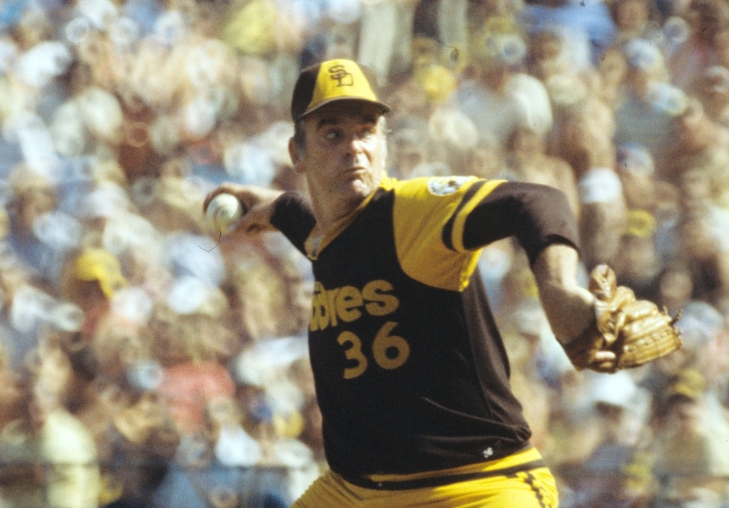
Gaylord Perry was already an established superstar when the Texas Rangers traded him to San Diego before the 1978 season, and the 1972 American League Cy Young winner was poised to add more trophies to his mantle.
The spitball specialist led the NL in Wins in 1978 (21), and he made history as the first hurler to win the Cy Young in both leagues. Perry turned 40 during his second year with San Diego but was still good, going to his fifth (and final) All-Star Game, while posting a 12-11 record with a 3.06 ERA. He was traded back to Texas afterward, leaving San Diego with 33 Wins against 17 Losses and a 2.88 ERA.
While Perry’s sabermetrics hold him back on this list, and it could be argued that he should not have won the ’78 Cy Young, he DID win it, and it will never be taken from him.
Perry entered the Baseball Hall of Fame in 1991.
39. Will Venable
Will Venable didn't just seamlessly enter the major leagues. Drafted in the seventh round of 2005, this graceful, left-handed outfielder spent nearly four years developing in the minors before securing a regular spot on the main roster in August 2008. During his respected seven-and-a-half seasons with the team in Southern California, he acted as a key backup—an elite athlete offering essential depth, occasional powerful hits, and efficient base running to a team in transition.
Although he exhibited top-tier athleticism at the forefront of his position, his early development was limited by elevated strikeout rates and deficiencies in structural contact, which initially confined his playing time to platoon roles or late-innings defensive positions. It demanded considerable patience; however, he remarkably exceeded the three-digit hit mark for the first time during the 2012 season, recording 101 hits, 26 doubles, and a career-high of eight triples, thereby cementing his role defensively.
In 2013, Venable experienced a significant career milestone. Due to multiple everyday starters being sidelined by injuries, he assumed a prominent role and systematically weakened National League defenses, utilizing a rapid pull-side swing to achieve personal bests across various statistical categories: 129 hits, 22 doubles, and a commendable .268 batting average. Notably, his power-hitting ability combined with high-velocity base-stealing contributed to a historic season; he hit a remarkable 22 home runs and stole 22 bases, becoming only the eighth player in San Diego Padres history to record a 20-20 season, an achievement that earned him the team's local Most Valuable Player award.
As good as he could be, Venable was an aggressive swinger whose advanced efficiency filters were routinely hindered by a sub-.300 career on-base percentage (.249 batting average / .315 OBP as a Padre), meaning he spent large portions of his career functioning as a high-quality fourth outfielder who insulated the primary starters.
While he still had value, the Padres traded Venable to the Texas Rangers in exchange for a prospect package. He had 694 hits, 119 doubles, 33 triples, 81 home runs, and 130 stolen bases in a Padres uniform.
40. Roberto Alomar
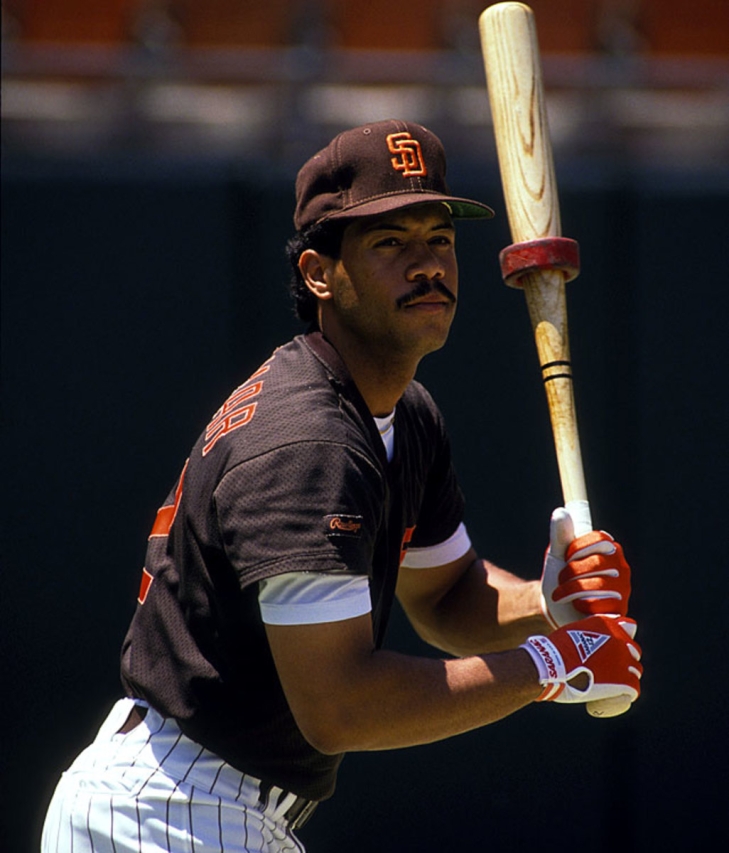
It’s tempting to judge Roberto Alomar’s legacy solely by his legendary postseason moments, ten Gold Gloves, and his induction to Cooperstown with a Blue Jays cap on his plaque. However, before he became an international baseball icon, Alomar was a highly regarded 20-year-old prodigy challenging expectations in Southern California. When he debuted in the majors in April 1988, his exceptionally smooth switch-hitting style meant he didn't need a long development period; he seamlessly filled the second baseman role and immediately brought a vibrant mix of aggressive baserunning, precise hitting, and innate style, indicating a future baseball superstar.
His 1988 intro showed his advanced baseline as he swiftly bypassed early challenges. Alomar made collecting line drives and playing infield his routine. He systematically dismantled NL pitching, earning 145 hits, 24 doubles, and 24 stolen bases, finishing fifth in NL Rookie of the Year voting.
He really shone that year, making a remarkable breakthrough in 1989 and demonstrating excellent skill at the top of the order. That summer, Alomar worked on his batting, hitting a team-high 184 times, maintaining a strong .295 average, and stealing a career-high 42 bases, leading the local offense and establishing himself as a key player. Beyond his hitting, his great range and sharp instincts impressed fans and teammates alike. Though he didn’t officially win a Gold Glove during his brief three seasons in San Diego, an award he would later earn many times, advanced stats now show that his quickness and awareness on the field were truly deserving of recognition.
He earned his very first career All-Star selection in 1990, hitting a steady .287 with 168 hits, 27 doubles, and 60 runs batted in, proving to be the highly coveted engine of a rising team.
It’s easy to mistakenly remember him staying on through the following campaign, but in reality, the front office made its most famous blockbuster move before the 1991 season even started. Eager to add a powerful, middle-of-the-order hitter under general manager Joe McIlvaine, the Padres teamed up with Toronto for an exciting four-player trade in December 1990. They sent their promising young second baseman and outfielder Joe Carter to the Blue Jays in exchange for Fred McGriff and Tony Fernandez. This was a remarkable, high-stakes swap that truly benefited both teams; McGriff brought impressive power to San Diego, while Alomar's arrival in Canada helped lead the Blue Jays to two consecutive World Series titles in 1992 and 1993.
In San Diego, he accumulated exactly 497 hits, 78 doubles, and 90 stolen bases, entirely validated by a sharp .283 batting average. His Cooperstown call came on his first ballot in 2011.
42. Kevin Brown
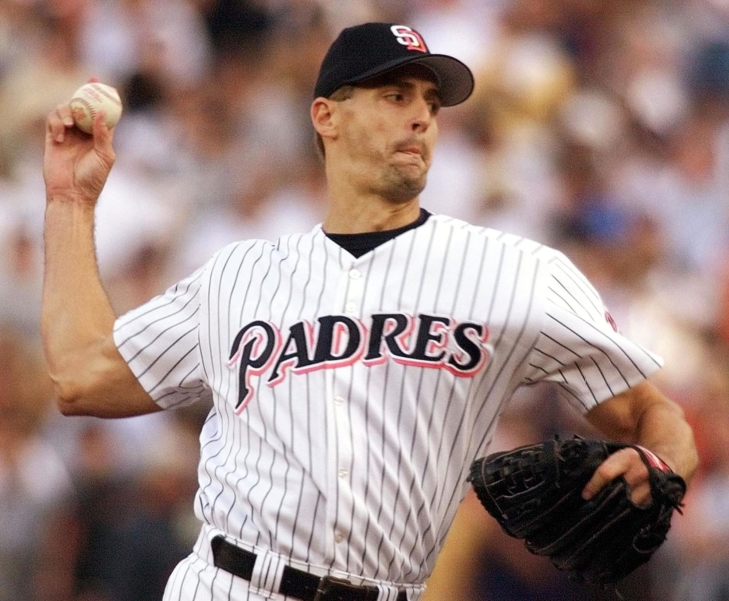
When building an objective, data-driven framework to evaluate a historical ledger, you inevitably encounter the ultimate philosophical puzzle: how do you weigh a single, volcanic season of absolute transcendence against decades of steady, standard compilation? For a franchise that has handed the ball to iconic multi-year Cy Young winners like Gaylord Perry, Jake Peavy, and Blake Snell, the concept of elevating a one-year mercenary above them feels almost sacrilegious.
Kevin Brown did not just have a good year down in Southern California; his lone summer on the grass represents the most ruthlessly dominant, high-leverage single-season pitching masterpiece in the history of the organization—and it isn't particularly close.
The scenario was driven by straightforward small-market economics. After winning the 1997 world title, the Florida Marlins conducted a major corporate fire sale, trading their formidable ace to San Diego in December. Like in Miami, Brown quickly changed the dynamics of his new rotation. Instead of relying on subtlety, he showcased a relentless display of raw power with a high-velocity 96 mph sinking fastball and a deadly slider, which often forced veteran hitters to hit ground balls into the infield dirt.
His 1998 regular-season performance showcased exceptional durability on the front line, breaking local records. Brown made consuming deep, high-stakes frames a disciplined routine, starting 35 games and finishing with an impressive 18–7 record. He systematically dominated National League lineups, leading the league with an outstanding 2.23 FIP, and set a franchise record with 257 strikeouts in 257.0 innings. Advanced analytics strongly confirm his efficiency, as he topped all Major League pitchers with an 8.6 pitching bWAR (9.1 including batting), a benchmark that remains the standard for any season in San Diego history.
While traditional BBWAA voters overlooked his difficult clubhouse demeanor, placing him third in the Cy Young voting behind Tom Glavine and Trevor Hoffman, other baseball circles recognized his excellence. The Sporting News honored him by naming Brown its Major League Pitcher of the Year.
More significantly, his fierce competitive drive was the key force behind the underdogs reaching the 1998 pennant. He delivered an outstanding performance in his first two postseason series, including an iconic 11-strikeout complete-game shutout against the strong Houston Astros in the NLDS, and then dominated the Atlanta Braves in the NLCS. However, his final performance lacked that elite consistency; he showed signs of physical exhaustion in the World Series, where the formidable New York Yankees ultimately defeated him as they swept to the championship.
Brown orchestrated a definitive, earth-shaking departure by signing a historic seven-year, $105 million contract with the regional rival Los Angeles Dodgers—becoming the first player in professional sports history to cross the elusive $100 million threshold.
36. Steve Finley
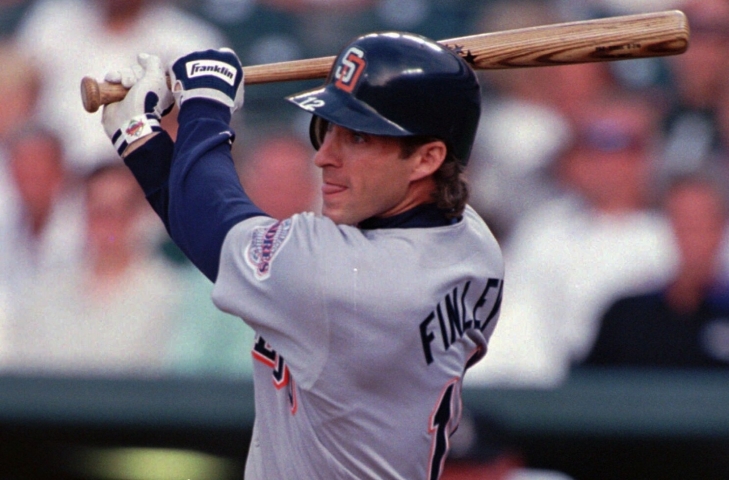
Few players have traveled the major leagues as extensively as the center fielder who played for eight teams. While Steve Finley later became a division champion and World Series winner in other teams, his early career in Southern California marked his rise from a potential asset to a superstar. Coming from the Astros before 1995 in a trade with Ken Caminiti, the left-handed hitter didn't just fill a defensive need but brought speed, power, and energy that changed the team’s trajectory.
His introductory 1995 campaign instantly proved that his natural toolkit was perfectly optimized for the spacious coordinates of his new home ballpark. Finley turned lashing line drives and tracking deep fly balls into a strict daily routine, hitting a career-high .297 with 167 hits, 104 runs scored, and a magnificent 36 stolen bases.
His sophomore year with the Padres marked his best season in baseball. Finley delivered an outstanding all-around offensive performance, setting career highs with 195 hits, 45 doubles, and 126 runs scored. Most notably, his power surged unexpectedly; previously never hitting more than 11 home runs in a season, he used a quick pull swing to hit 30 home runs and drive in 95 RBIs. This effort earned him tenth place in the National League MVP race and helped San Diego secure a surprising division title. He beautifully maintained that dynamic frontline baseline over the next two summers, weaponizing enough muscle to hammer 28 more home runs in 1997 to command his very first career All-Star selection.
Nevertheless, a thorough algorithmic review reveals his defensive contributions. While traditional voters praised his speed and impressive, wall-crashing plays—earning him consecutive National League Gold Glove Awards in 1995 and 1996—modern efficiency metrics and retrofitted defensive measurements tend to undervalue his hardware. They consider his overall route efficiency and deep-range coverage to be quite inconsistent, leading to a career -0.4 defensive bWAR with San Diego that significantly limits his overall advanced value.
He made 159 appearances in the 1998 pennant-winning season, but his offensive efficiency declined; his batting average dropped to.249, though his 40 doubles and 14 home runs helped the underdogs reach the Fall Classic against the Yankees.
The inevitable business exit occurred right after that last World Series appearance. With his contract ended and the front office unable to afford his rising market value due to an aggressive roster rebuild, Finley entered free agency. In December 1998, he made a clear business move by signing a lucrative deal with the regional rival Arizona Diamondbacks.
With San Diego, Finley compiled 662 hits, 134 doubles, 31 triples, 82 home runs, and 88 stolen bases.
37. Mark Loretta
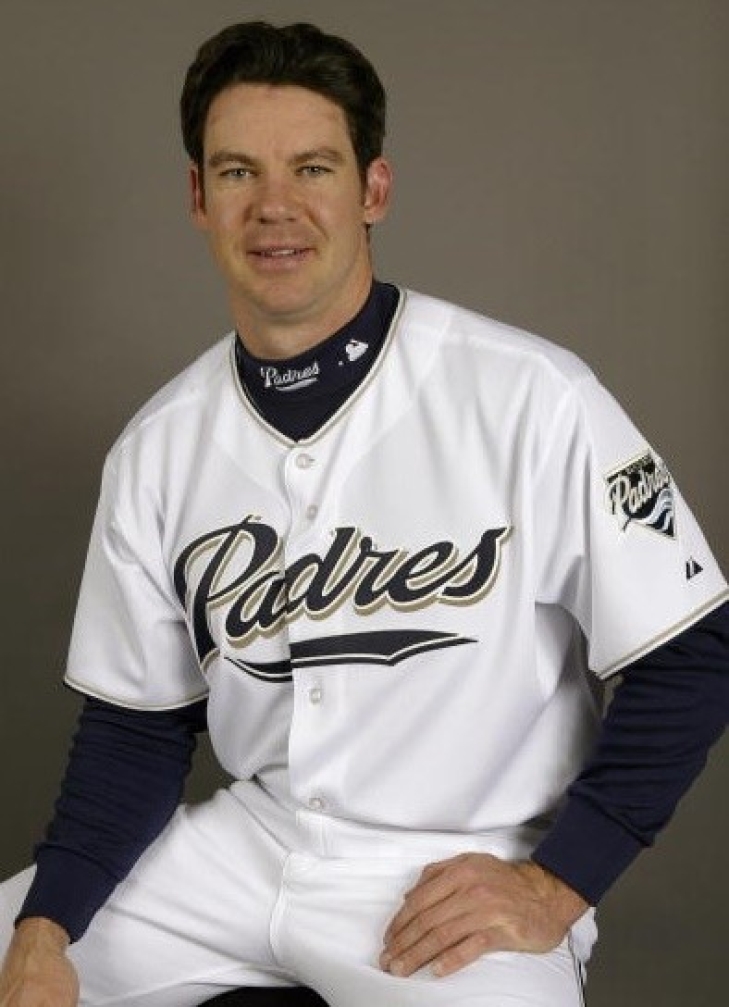
The 2004 season marked a major change as the club moved from Jack Murphy Stadium to the new Petco Park, designed for pitching and defense. Fans wondered who would boost the offense, and the answer was a skilled, cerebral right-handed infielder who had spent eight years as a versatile utility player for the Milwaukee Brewers. He was signed to a modest free-agent deal before the 2003 season.
In 2003, he quickly set a high standard with outstanding top-of-the-order performance, smoothly settling into the West Coast vibe. He finished the season with a solid .314 batting average, 185 hits, 28 doubles, and 13 home runs. Loretta made hitting line drives into a daily habit, earning the team's local Most Valuable Player honors, showcasing his dedication and talent.
Nevertheless, that initial achievement served merely as a preparatory indication for the momentous, award-winning breakthrough he revealed during the notable 2004 stadium inauguration. In simple terms, Loretta produced a regular-season performance of exceptional quality that skillfully emulated the renowned batting style of Tony Gwynn himself. Loretta employing a concise, line-drive swing to lead the senior league with an outstanding, career-high of 208 hits—joining Gwynn as the sole players in franchise history to surpass the distinguished 200-hit mark in a single season.
Loretta concluded that the remarkable 2004 season, during which he achieved career bests across all statistical categories: 108 runs scored, 47 doubles, 16 home runs, and 76 runs batted in, was notably anchored by an impressive .335/.391/495 slash line. He notably struck out only 45 times in 707 plate appearances, a testament to his efficiency, and finished third in the National League batting race. These outstanding achievements readily earned him his first career All-Star selection, a well-deserved National League Silver Slugger Award, and an exceptional ninth-place finish in the National League Most Valuable Player balloting.
Before the 2005 campaign, a severe thumb ligament injury required complex surgery, reducing his leverage and costing nearly two months of play. Despite returning to 105 games, his power dropped to three home runs and 38 RBIs, with a batting average of .280. He was traded to the Red Sox after the season.
With San Diego, Lorreta had 506 hits, 91 doubles, 32 home runs, and 186 runs batted in, entirely validated by an exceptional .314 batting average and a pristine .377 on-base percentage.
35. Dave Dravecky
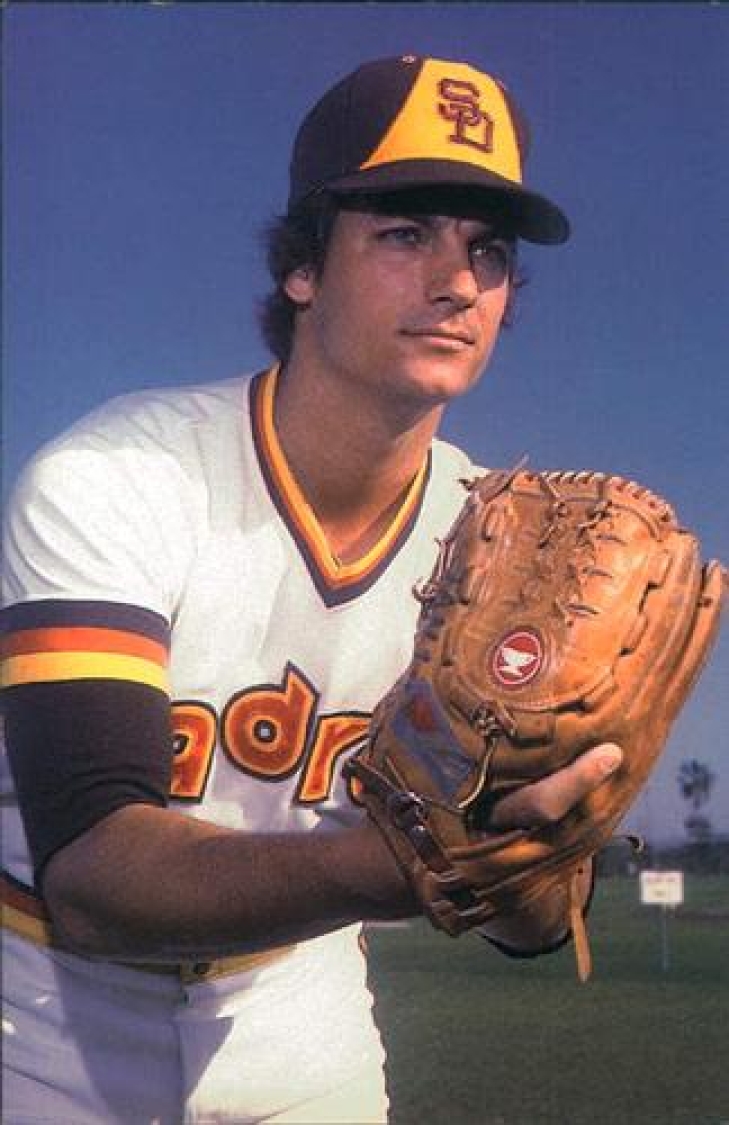
Dave Dravecky began his baseball career with San Diego in 1982, making the starting rotation during his rookie year. The southpaw was an All-Star as a sophomore, with a 14-10 year, and he followed that with back-to-back 2.93 ERA years and helped the Padres win the 1984 Pennant.
Dravecky continued to do well, but the struggling Padres traded him to the Giants. Dravecky contracted cancer in his pitching arm, eventually resulting in its amputation. Dravecky had a 53-50 Record with a 3.12 ERA with 456 Strikeouts with the Padres.
49. Dave Roberts
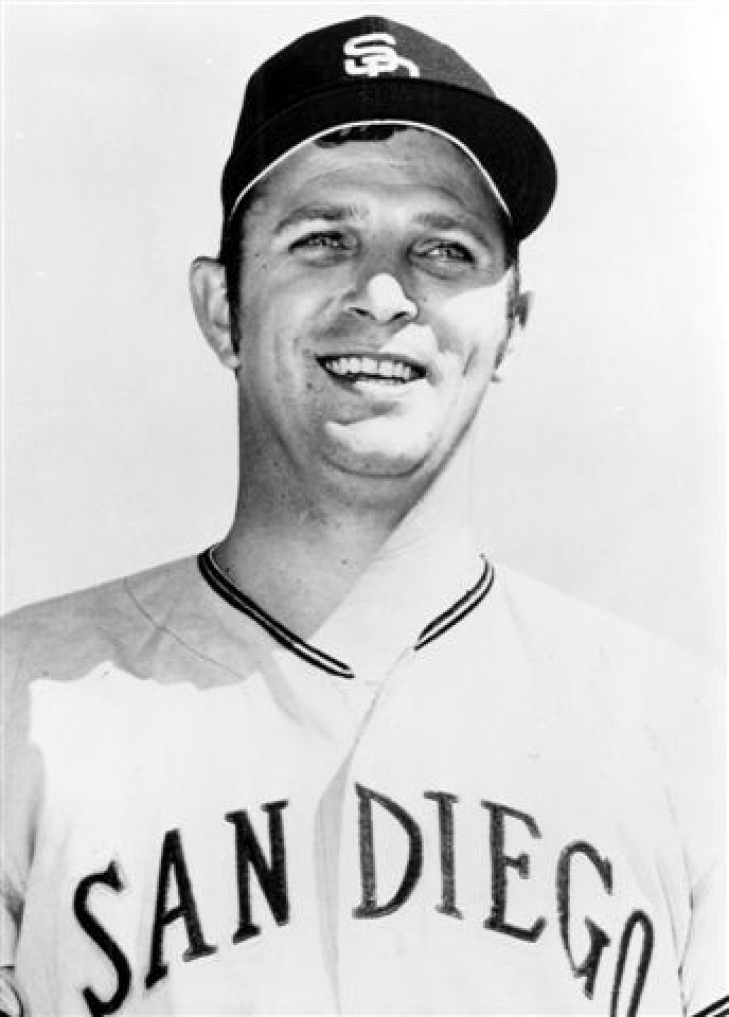
The history of the San Diego Padres commences with the 1968 MLB Expansion Draft, a process designed to assemble a team from the remnants of established franchises. With their 24th selection, the newly established Padres selected a young left-handed pitcher named Dave Roberts from the Pittsburgh Pirates organization. Arriving in Southern California with limited major league experience, Roberts assumed the role of a supporting player for an expansion team, responsible for pitching innings for a team that was destined to remain at the lower end of the National League West standings during its formative years.
His first season in San Diego in 1969 was a quiet period of learning, with the rookie southpaw splitting time between the rotation and bullpen as he adapted to the demands of the senior circuit. By 1970, Roberts was beginning to understand how to handle major-league lineups. He became a key part of the rotation, throwing 181.1 innings in 26 starts. Although he finished with a misleading 8–14 record due to limited run support, his solid 3.81 ERA showed a quick improvement in his composure and stamina.
During the historic 1971 summer season, Roberts delivered his finest performance on the field. While pitching for the struggling Padres—a team that lost 100 games and ranked last in offense—he transformed his starts into must-see events at Jack Murphy Stadium. Although his 14–17 record reflected the team's poor offense, Roberts was outstanding, posting a remarkable 2.10 ERA and a tiny 1.109 WHIP over a career-high 269.2 innings.
That summer, his dominance was highlighted by his remarkable efficiency under pressure. Roberts pitched 15 complete games and two shutouts, providing much-needed relief for a heavily taxed bullpen every fifth day. His skill in limiting runs on a last-place expansion team drew notice from national writers, earning him a sixth-place finish in the National League Cy Young Award voting. This was the only season in his career where he received award consideration, marking the peak of the young franchise's success.
Aware that the young left-hander was at the height of his value, the Padres management chose to capitalize on his breakout performance. In December 1971, San Diego traded Roberts in a significant multi-player deal with the Houston Astros, acquiring veteran pitcher Skip Guinn and infielder Denis Menke. This move typified the early Padres strategy of transforming brief individual success into a set of roster components to strengthen the team's foundational depth.
Roberts would go on to pitch another decade in the majors, carving out a highly respectable career as a versatile arm for Houston, Detroit, and the Texas Rangers, but he never again matched the statistical wizardry of his magical 1971 peak. He left San Diego having compiled 27 wins, 335 strikeouts, and a sharp 3.05 ERA across his 547.1 innings of work.
45. Bip Roberts
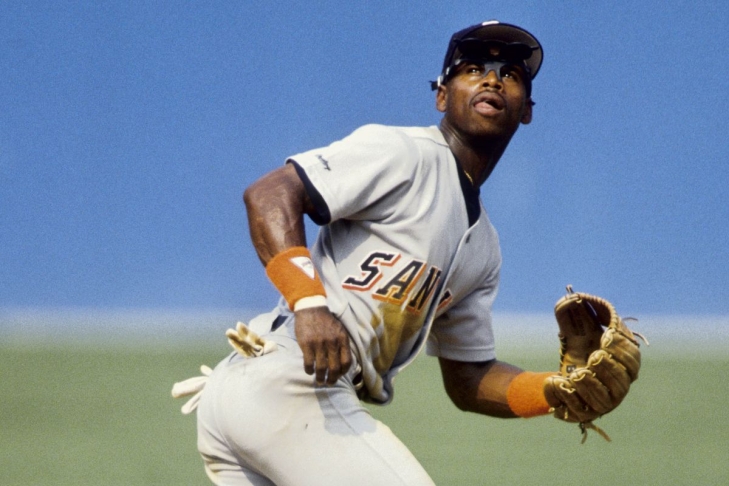
Plucked away from the Pittsburgh Pirates organization as a dynamic Rule 5 draft choice in December 1985, Bip Roberts was instantly subjected to the rigid roster restrictions of the big leagues. Because the front office had to carry him on the major-league bench for the entirety of the 1986 campaign to avoid losing his rights, his initial phase in Southern California was a lesson in pure professional patience, spent operating almost exclusively as a high-velocity pinch runner, situational pinch hitter, and late-game defensive replacement before returning to the minors for two years of essential seasoning.
Once he permanently claimed an everyday role, however, the diminutive switch-hitter universally celebrated as “Bip” transformed the entire operational ceiling of the lineup. He didn't rely on over-the-fence power; instead, Roberts turned tracking pitches, slapping line drives, and orchestrating pure panic on the basepaths into a strict daily routine.
His true breakthrough erupted during the 1989 campaign, where he smooth-talked National League pitchers to log a brilliant .301 batting average across 117 highly productive games.
The peak of his hardware-certified legacy was reached during a stunning 1990 regular season. Roberts delivered an exceptional display of top-of-the-order hitting. That summer, he achieved an impressive 172 hits, 36 doubles, and a career-high 104 runs scored. He maintained a solid .309 batting average and stole 46 bases, finishing in the top ten in the National League batting race and earning his team's local Most Valuable Player award.
After a noticeable performance decline in 1991 caused by persistent physical issues, the front office made a dramatic move in December by trading their versatile player to the Cincinnati Reds in a high-profile deal for top closer Randy Myers. Although Myers gained national recognition in Ohio, ending 1992 with an All-Star appearance and finishing in the top ten MVP voting, his strong emotional connection to Southern California remained deeply rooted.
He orchestrated a highly celebrated, nostalgic homecoming by signing back with San Diego as a free agent ahead of the strike-shortened 1994 calendar.
Roberts quickly regained his elite contact form under the sun, extending his impressive 24-game hitting streak—the best in Major League history—and achieving a strong .320 batting average before the season was cut short. He carried that same steady performance into 1995, batting .304 and stealing 20 bases in only 73 games.
Yet, because the Padres were rapidly approaching a total payroll restructuring under general manager Kevin Towers, a second definitive business departure materialized that December. The organization executed a winter trade, shipping their popular veteran catalyst to the Kansas City Royals in exchange for first baseman Wally Joyner.
Over his 667 total games representing San Diego across two separate stints, he accumulated exactly 673 hits, 98 doubles, 21 triples, and 148 stolen bases, completely validated by an exceptional .298 career batting average and a sterling .361 on-base percentage.
27. Wil Myers
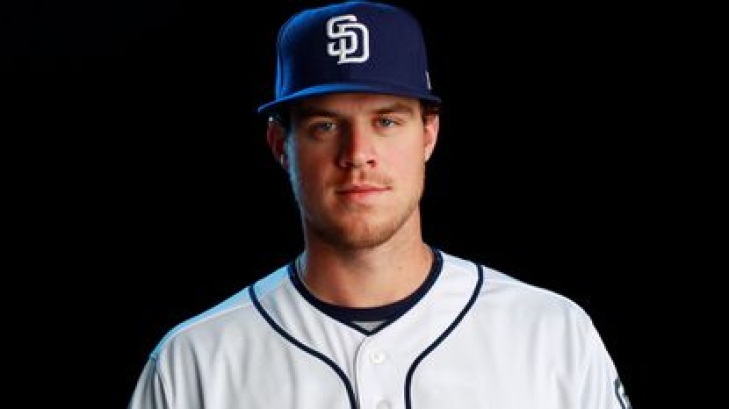
In 2015, as part of a major roster overhaul by the front office, a high-profile three-team trade involving Tampa Bay and Washington brought Wil Myers to Southern California. Coming with the title of American League Rookie of the Year, he showcased a smooth right-handed swing and an athletic build, signaling potential as a franchise cornerstone. Over the following eight summers, his time beneath the palm trees became one of the most intriguing, complex, and versatile periods in recent club history, characterized by long stretches of inconsistent performance mixed with moments of outstanding brilliance.
His initial introduction to the local fan base was significantly impeded by physical ailments, as severe wrist injuries restricted his debut season to merely 60 games. The definitive, healthy breakthrough occurred during the 2016 calendar year, facilitated by a permanent transition to first base. Myers transformed run production into a consistent daily routine, recording 155 hits, 29 doubles, and a career-high 28 home runs while driving in 94 runs. This outstanding performance earned him his first career All-Star selection, inspiring great local enthusiasm as he became the prominent face of the franchise during the hosting of the Midsummer Classic at Petco Park. He sustained this momentum the following summer, managing a slight decrease in contact efficiency to achieve a career-best 30 home runs and steal 20 bases during the 2017 season.
Yet, sustaining that frontline trajectory proved maddeningly elusive. Over the next two schedules, Myers was thrust into a highly volatile defensive carousel, shuffling between first base, third base, left field, and center field as managers desperately sought to maximize his athletic tools. That persistent positional fluidity frequently disrupted his timing at the plate, resulting in high strikeout volume and a noticeable drop in overall efficiency.
In 2020, Myers excelled under manager Jayce Tingler, settling in right field, playing superb defense, and hitting well. Over 55 games, he posted a .288 average, 15 homers, and 40 RBIs. His stats included a .606 slugging and a .950 OPS, helping the Padres reach the postseason for the first time in 14 years. He finished 16th in NL MVP voting.
Over his last two summers in San Diego, his production declined due to knee and finger injuries that slowed his bat speed. After a key role in the team’s 2022 NLCS run, he left Southern California that winter to sign with the Cincinnati Reds, ending his multi-era residency.
Myers had 134 Home Runs and 771 Hits with the team.
