


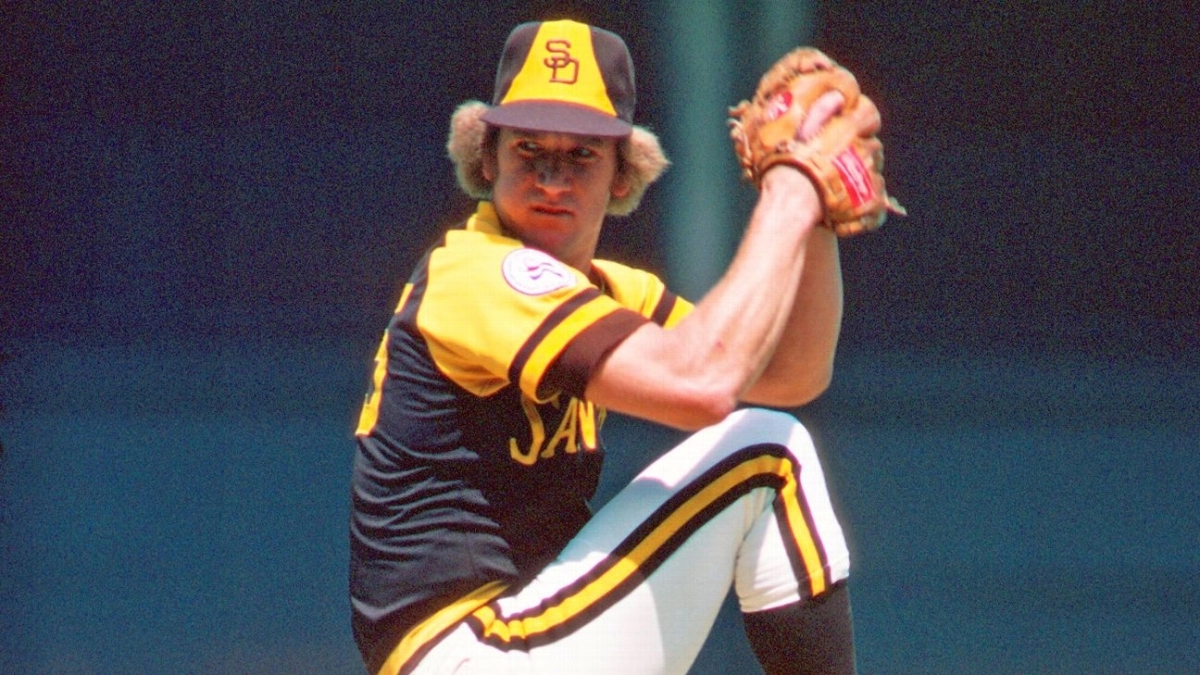



The early years of the San Diego Padres were marked by a lack of success during the expansion era, but they were occasionally broken up by a curly-haired left-hander who brought recognition to the team. Randy Jones stood out as the opposite of today's high-velocity pitchers. Known as "The Junkman," he relied on a heavy sinker, consistent pace, and precise control of the lower strike zone. During an era when radar guns were becoming a measure of a pitcher's worth, Jones was notable for his quick and efficient outings, often finishing games in less than two hours.
Making his major league debut in 1973 with a respectable 7–6 record, he quickly found himself at the mercy of a structurally weak team roster the following summer. Demonstrating how high volume can backfire on a poor team, Jones suffered through a terrible 1974 season, leading the National League with 22 losses despite pitching with more talent than his record showed. Instead of letting this setback derail his progress, the resilient southpaw returned in 1975 to deliver a season of exceptional performance. He confounded hitters in the Senior Circuit by changing his mechanics, lowering his ERA to a league-best 2.24, and posting an outstanding 156 ERA+. He earned 20 wins for a Padres team that finished below .500 and narrowly missed winning the Cy Young Award, finishing second to Tom Seaver in a competitive race. This would be a springboard for what was to come.
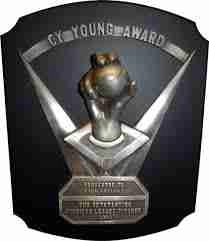
The 1976 campaign was a highlight of durability and precise, low-variance pitching. Jones’ dominance was evident as he tore through the first half of the season, tying a historic National League record by pitching 68 straight innings without giving up a walk. He headed into the All-Star break with an impressive 16–3 record. He also started and won the Midsummer Classic and finished the year leading the major leagues in wins (22), starts (40), complete games (25), and total innings (315.1). His outstanding performance earned him the National League Cy Young Award, making him the first in franchise history to win a major individual honor.
Sadly, the heavy workload of that famous 300-inning season took a significant physical toll. In his last start of 1976, Jones suffered a serious nerve injury in his throwing arm, which needed major surgery. He made a comeback with his characteristic determination but was unable to fully regain his top form, instead settling into a reliable, dependable starting role.
After gutting out three more high-volume campaigns, including a resilient 13-win bounce-back in 1978, the front office officially signaled a transition following the 1980 schedule, trading the veteran icon to the New York Mets. As a Padre, Jones had a 92-105 record with a 3.30 ERA and 677 strikeouts.
In 1999, the Padres enshrined Jones into their inaugural Hall of Fame Class two years after they retired his number 37.
