

41. Kevin Klein

Kevin Klein played his first 403 Games in the NHL with the Nashville Predators, who selected him in the Second Round in 2003. Klein only played 18 Games for the Predators in his first three years, spending most of his time in the AHL, but by 2008, he was never sent down again.
Klein would find his role as a lockdown defender, known for his clean play. The blueliner’s best year in Nashville was in 2011-12, where he had 21 Points with only four Penalty Minutes and 173 Blocked Shots.
Klein was traded to the Rangers midseason during the 2013-14 campaign, and with the Predators, he produced 82 Points with 716 Blocked Shots.
35. Chris Mason
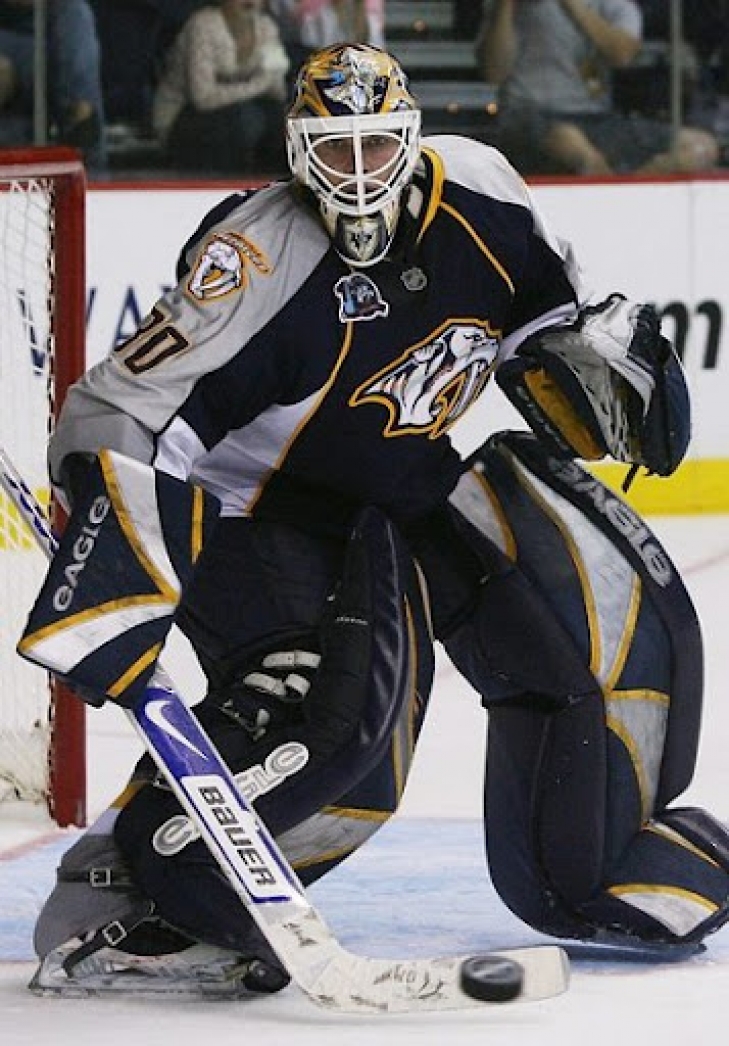
Chris Mason made his NHL debut in the 1998-99 Season, appearing in three games. It took another two years before he played in another NHL contest, a single one in the 2000-01 campaign. Mason signed with Florida in 2002 but never made it to their main roster and was claimed back by the organization a year later. He would finally see some serious action in the biggest hockey league in the world.
Mason was his backup in 2003-04 and 2005-06 (2004-05 was a lockout), but he was in between the pipes for 40 Games in 2006-07, posting a 2.38 GAA and 9.25 Save Percentage. The following year, those numbers were lower, but he was elevated to the top Goalie in Nashville, appearing in 51 Games. Mason was traded to St. Louis at season's end, but he returned as a Free Agent for one final season in 2012-13, appearing in 11 Games before retiring.
He had a record of 59-50-13 with the Predators with a 2.68 GAA.
34. Mark Eaton

Undrafted players generally don't make the NHL, but Delaware-born Defenseman Mark Eaton defied the odds, making the Philadelphia Flyers a year after signing him. Eaton would then be traded to the Nashville Predators, and he would find his niche as a lockdown Defenseman.
Eaton played for the Predators for five years, scoring only 45 Points, but he performed his role as one of Nashville’s best shot blockers. His best year was in 2003-04, where he had 13 Points and 4.7 Defensive Point Shares, the latter of which was by far his personal best. He signed with Pittsburgh in 2006 and later won a Stanley Cup with the Penguins in 2009.
30. Calle Jarnkrok

Calle Jarnkrok, a Draft Pick from Sweden, was traded from Detroit to Nashville before making it to the National Hockey League. As history showed, the Predators were the winners of the transaction.
Playing at Center, Jarnkrok debuted for the Predators for 12 Games in the 2013-14 Season before becoming a full-blown NHL player the year after. Working on the grinding line, Jarnkrok had five 30-Point seasons and helped Nashville reach the 2017 Stanley Cup Finals.
His run in Tennessee ended in 2021 when he was chosen by the expansion Seattle Kraken. With the Preds, Jarnkrok had 211 Points in 508 Games.
29. Scott Walker
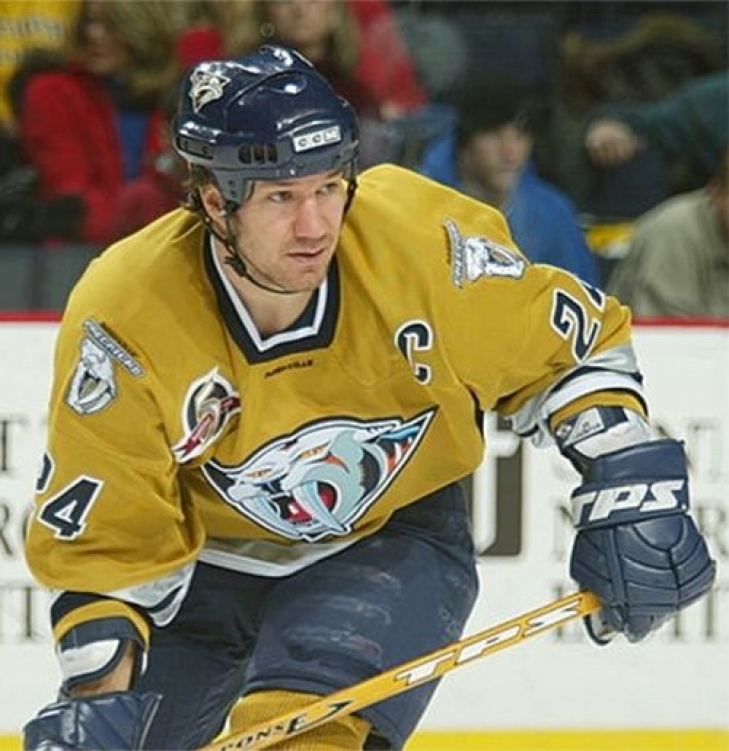
Plucked from the Vancouver Canucks in the Expansion Draft, Scott Walker entered the Predators organization with four years of NHL experience under his belt. It was in Nashville where the Right Wing found his greatest success and most time on the ice.
Walker had 40 Points in his first full year in Tennessee (1998-99), and two years later, he broke that with 54. After some injuries, Walker scored 67 Points in 2003-04, his best year in hockey. Walker did not play much more for the Preds, first because of the lockout and second due to injury, and he was dealt to the Hurricanes in 2006.
With Nashville, Walker had 247 Points.
39. Drake Berehowsky
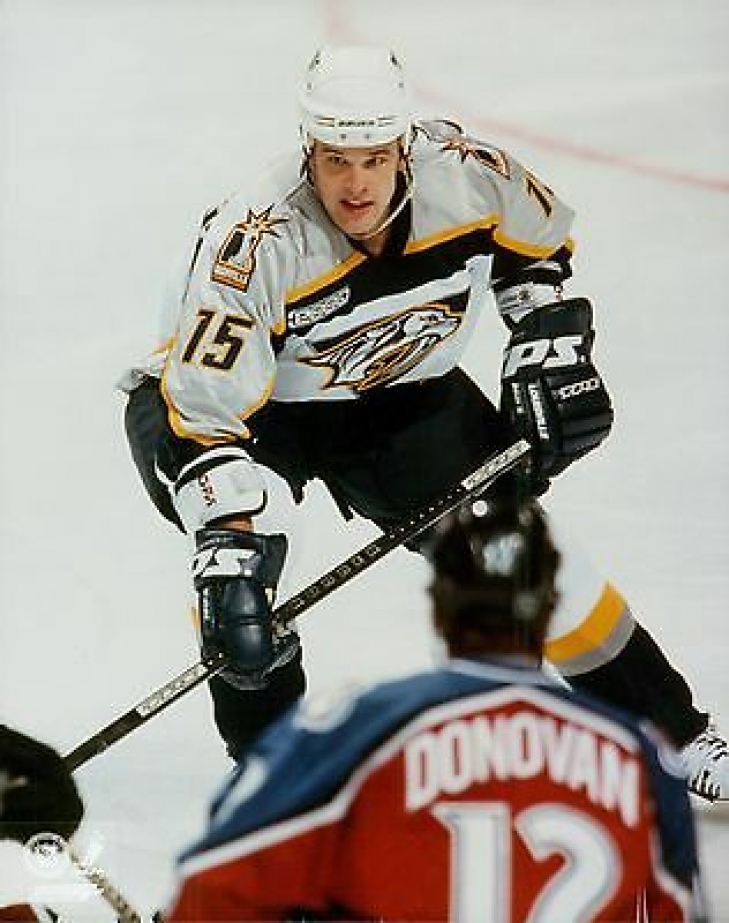
Whenever a new expansion team enters a sport, it creates opportunities for players struggling to find homes at the elite level. One of the most significant recipients of playing time when the Nashville Predators began operations was Drake Berehowsky, who was traded to the team nine days before the puck dropped for the first time.
Berehowsky scored 17 Points in his first year in Nashville, which he increased to 32 in 1999-00, a career high for the Defenseman who enjoyed his role as a team leader and tough guy. After scoring 24 Points in 66 Games in the 2000-01 campaign, Berehowsky, whose stock was worth a lot more than when he arrived in Nashville, was dealt to Vancouver for their playoff push.
As a Predator, Berehowsky amassed 73 Points and 327 Penalty Minutes in 219 Games, which was by far his most successful run in professional hockey.
28. James Neal
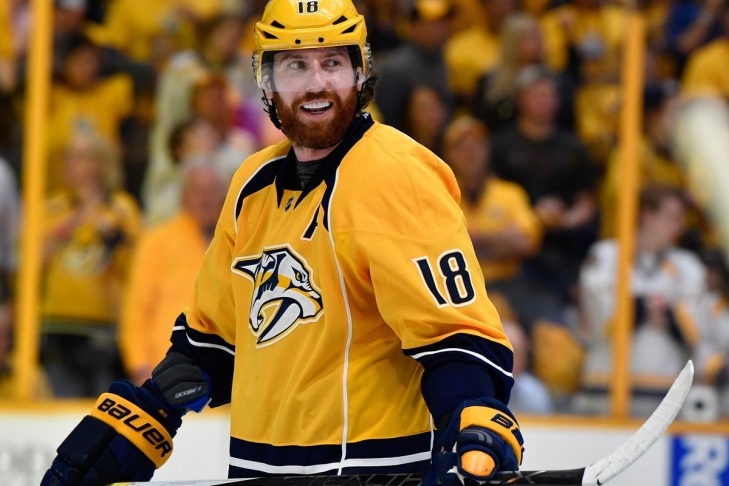
James Neal was a First Team All-Star for Pittsburgh in 2012, and three years later, he was traded to Nashville.
Neal was not as productive in terms of Points with Nashville as he was with the Penguins, but he provided depth and leadership to a Predators squad that reached their first Stanley Cup Final in 2017, although they lost to his former team. Neal played for Nashville for three seasons, scoring 136 Points, which is a solid number.
Neal left Nashville when the Vegas Golden Knights chose him in the Expansion Draft.
27. Paul Karıya
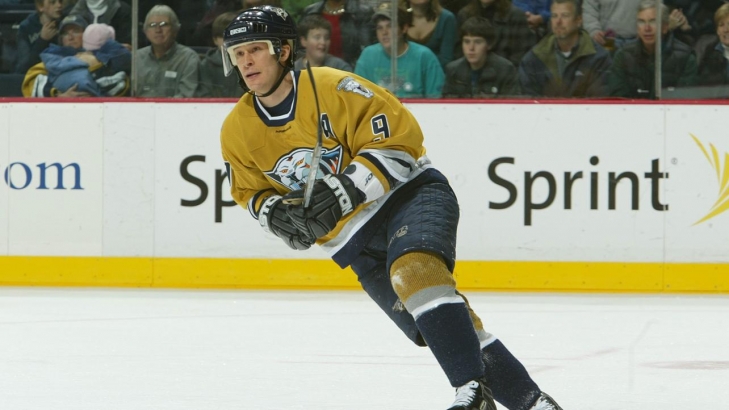
Paul Kariya is best known for his time with the Ducks, but he also played for the Predators, where he spent two years as a Left Wing.
Kariya’s best days were behind him when he first suited up for Nashville, but he was still better than most other hockey players in the NHL. In Kariya’s two years in Tennessee, he had 161 Points in 164 Games, averaging .98 Points per Game. Kariya also received (although not many) Hart Trophy and Lady Byng Trophy votes in both of those years.
Kariya signed with St. Louis in 2007, and he would enter the Hockey Hall of Fame in 2017.
26. Scott Hartnell
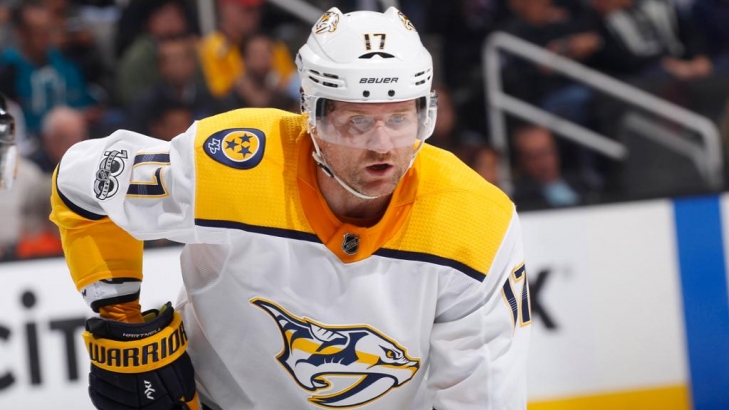
A high First Round Pick (6th Overall) in 2000, Scott Hartnell, made the team as a rookie, scoring only 16 Points but gaining valuable experience in his limited ice time. It would not be limited after that.
Hartnell was a fan favorite (though he would be even more so in Philadelphia), and his tenacious, grinding play helped generate wins for Nashville. Hartnell had a pair of 40-Point years for the Preds and three PIM years on a checking line.
The Predators traded Hartnell and Kimmo Timonen to the Flyers for a 1st Round Pick, who would never make the NHL. Needless to say, it was a lopsided trade against Nashville. He would return to the Preds for a final year in 2017, retiring before the next hockey campaign.
With the Predators, Hartnell totaled 235 Points.
24. Cliff Ronning
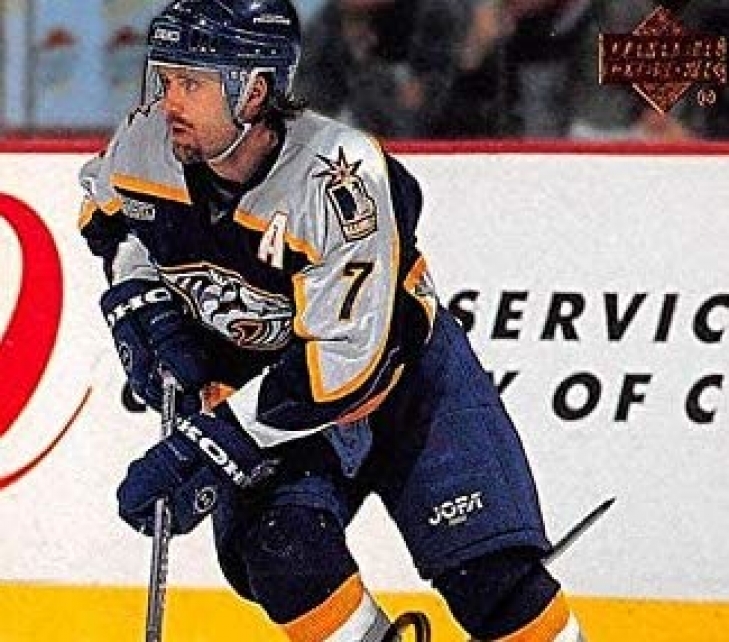
Cliff Ronning was an established presence for years in the NHL. Seven games into the 1998-99 Season, he was traded to the expansion Predators, who desperately needed his veteran presence.
Ronning was in his early 30s, but he could still score. The Center finished his year with 60 Points, and over the next two years, Ronning posted back-to-back years of 62 Points. His mentorship of young Nashville players proved invaluable in the team's early days. Although his overall numbers might not seem high, he was the Predators' leading scorer twice.
Nashville dealt Ronning to Los Angeles late in the 2001-02 Season to help with their playoff run. With the Predators, Ronning had 226 Points in 301 Games.
22. Marek Zidlicky
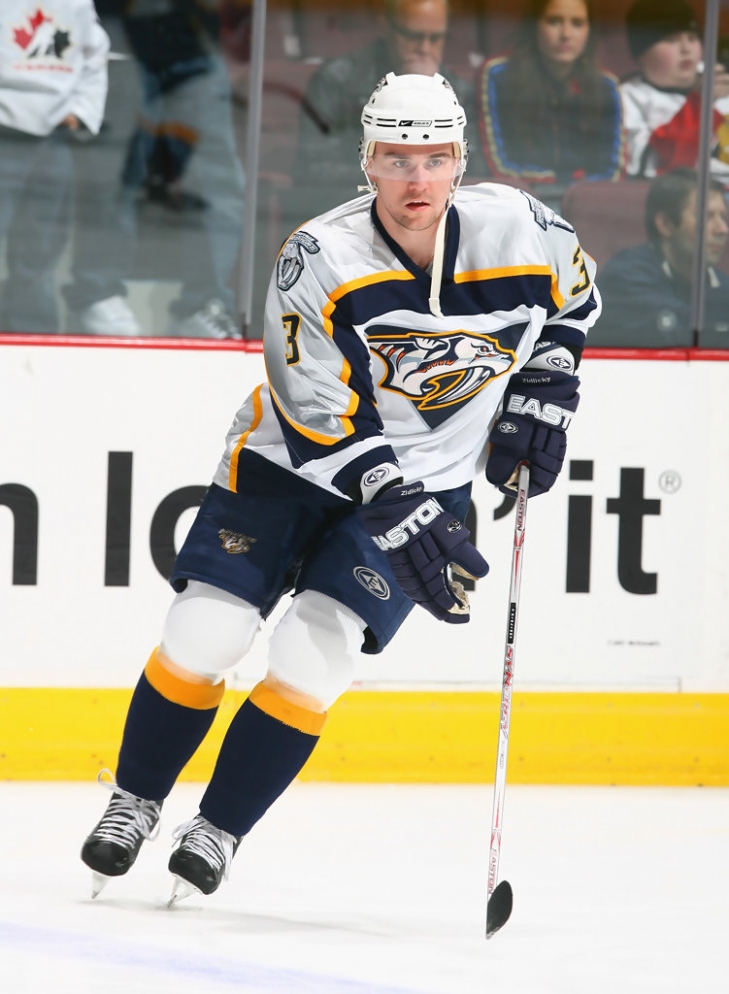
Unable to come to terms with the team that drafted him with the last pick of the Seventh Round of the 2001 Draft, Marek Zidlicky was one of three players that arrived in Nashville from the New York Rangers in exchange for Goalie Mike Dunham. Zidlicky proved to be the steal of the transaction.
The Czechoslovakian Defenseman had his best season as an NHL rookie, but he was already 26 and hardly inexperienced. Zidlicky had 53 Points, which would be his career-high, and he followed that with two more seasons as a Predator, where he cracked 40 Points.
After 2007-08, Zidlicky was traded to Minnesota. With the Predators, Zidlicky scored 175 Points in 307 Games.
33. Greg Johnson
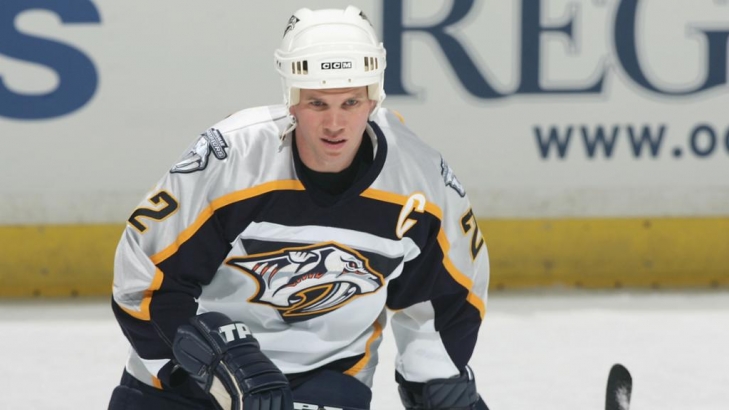
Greg Johnson was an original Nashville Predator, having been chosen from Chicago in the Expansion Draft. The Predators would be the last NHL team he ever played for, and by far, where he had his greatest individual success.
Johnson scored a career-high 50 Points and was a stalwart on the penalty kill. He would have two more 40-Point years for Nashville, collecting 238 in total for the Predators, before signing with Detroit as a Free Agent in 2006, though he would never play for them. Notably, 17 of his Points in Nashville were short-handed.
40. Nick Bonino
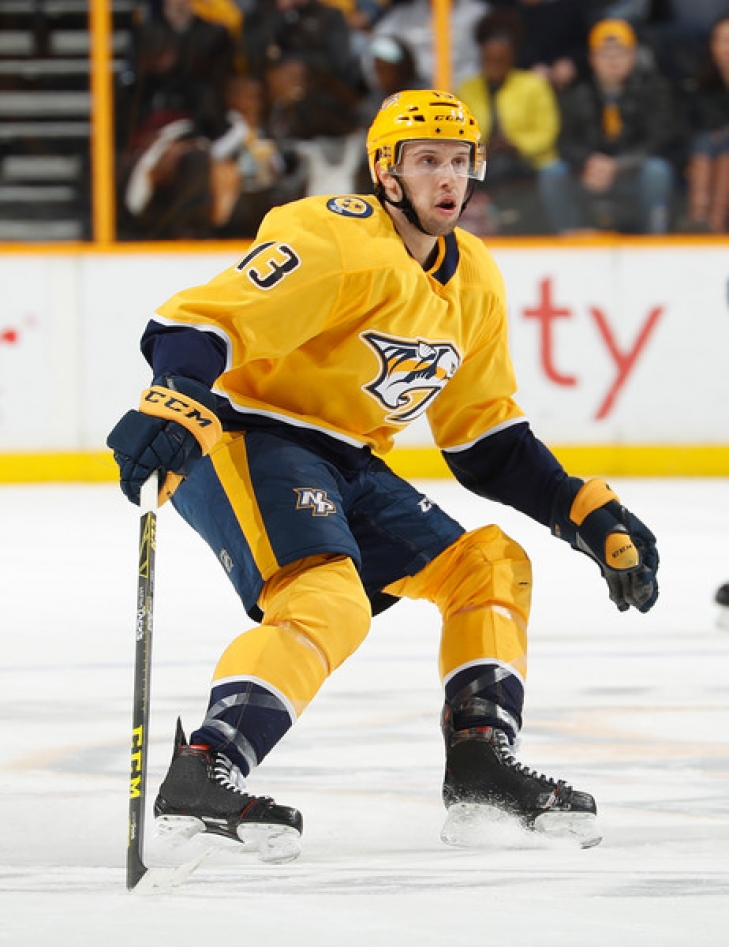
Nick Bonino played for Anaheim, Vancouver, and Pittsburgh, where he was a two-time Stanley Cup Champion. The Center joined the Predators in 2017, months after he was on the winning side that defeated Nashville in the Finals.
Bonino would play for Nashville for three years, playing on the third or fourth line, providing depth at the Center position. Over his three seasons, Bonino scored 95 Points, and he received Selke votes in the last two of those seasons. Bonino left the Predators when he was traded to Minnesota before the 2020/21 Season.
25. Patric Hornqvist

The last man picked in the NFL Draft is called "Mr. Irrelevant," and why they don't refer to that in the NHL, Patric Hornqvist, who was the final pick in 2005, did not have an “irrelevant” career.
The Swedish Right Wing first debuted for Nashville in 2009, but it was the following season that he was a bona fide NHLer. Hornqvist had 51 Points in his first full year, dipping into the 40s the two years after, before falling to only 14 Points in an injury-riddled year. He played one more year in Nashville, his most productive with 53 Points, a career-high. The Predators traded Hornqvist to Pittsburgh in the 2015 off-season. As a Predator, Hornqvist accumulated 264 Points in 363 Games.
Hornqvist would win two Cups with the Pens, including scoring the Cup-winning Goal in 2017, ironically against Nashville.
23. Colin Wilson

Colin Wilson was an incredible player at Boston University, nominated for the Hobey Baker, and a leader on their 2009 National Championship Team.
Wilson, the Seventh Overall Pick in 2008, left the Terriers after the Frozen Four for the NHL. He wasn't the sniper he was at BU, but Wilson provided solid play to the Predators, mainly on the third line. Playing with Nashville until 2017, Wilson had five 30-Point years, and his clean play kept him from costly penalties.
Wilson scored 237 Points in 502 Games for the Preds.
31. Colton Sissons
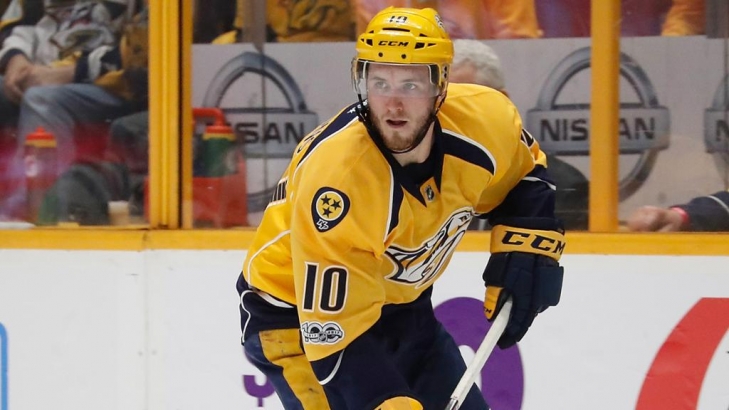
Colton Sissons played the first ten years of his career with the Nashville Predators, a team he debuted for in 2013.
A lower-line center primarily used on the grinding line, Sissons has excelled for Nashville. He demonstrated his scoring prowess with a hat trick that clinched the Predators' decisive victory in the 2017 Western Conference Final and achieved three 30 Point seasons for the Predators.
Sissons was traded to the Vegas Golden Knights in the 2025 off-season, and he accumulated 221 Points in Nashville.
16. Ryan Johansen
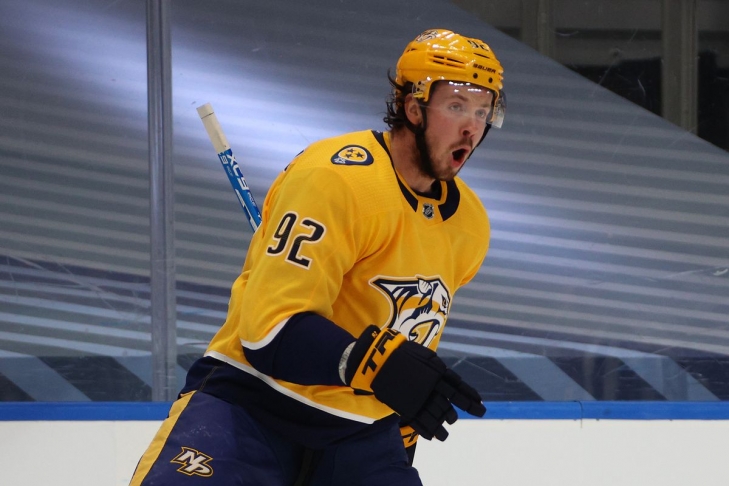
Traded from Columbus during the 2015/16 Season, Center, Ryan Johansen finished the split year with 60 Points, the third straight campaign where he scored at least 60.
Johansen maintained his consistency, scoring 61 Points in 2016-17. Although he was injured in the playoffs, his contributions were part of the reason they reached the Finals that year. After another good year (15-39-54), Johansen had his best year to date with the Predators, netting 64 Points, with a career-high 50 Assists.
In 2019-20 and 2020-21, Johansen's play and ice time dropped off(58 Points in 116 Games), but last season, he was healthy and efficient, scoring 63 Points with his 26 Goals being his highest tally since 2013-13 when he was a Blue Jacket. Johansen played another year with the Predators before he was traded to the Colorado Avalanche, leaving behind 362 Points in Music City.
21. Jason Arnott
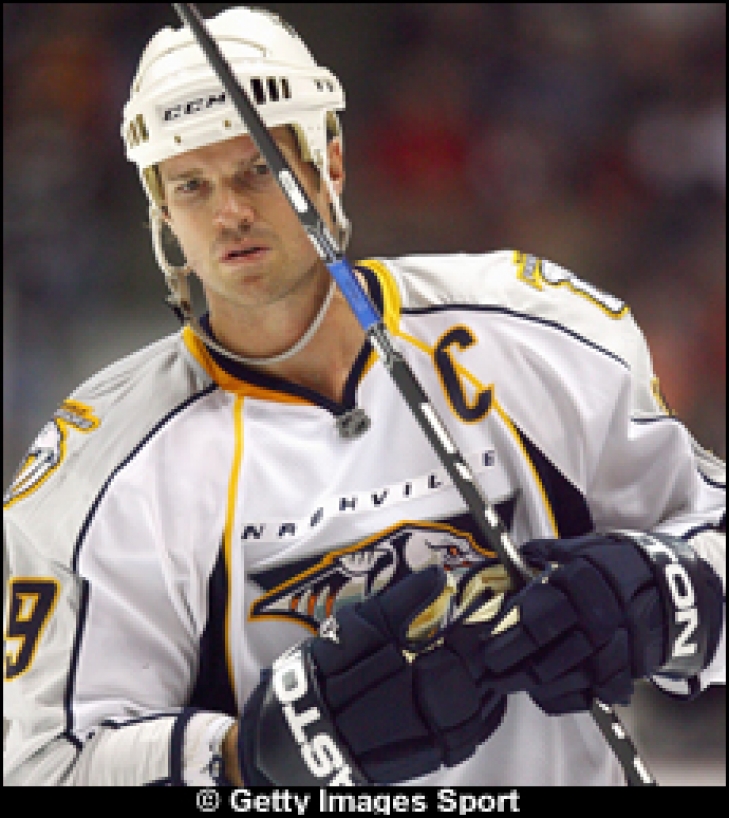
When Jason Arnott arrived in Nashville, he was many years removed from his Calder runner-up year. This is not to say that Arnott was not still a good player, as he most certainly was. In fact, Arnott had a .83 PPG in Nashville, a strong average in any era.
Arnott, a Stanley Cup Champion in 2000 with New Jersey, joined the Predators in 2006. Arnott scored 54 Points in his first year in Nashville and had 76 the year after, the second highest of his career. The Center would not reach that mark again in his career, but he had another 103 Points for Nashville in the next two years.
The Predators would trade Arnott to New Jersey after a solid four-year period of 229 Points in 275 Games.
20. J.P. Dumont
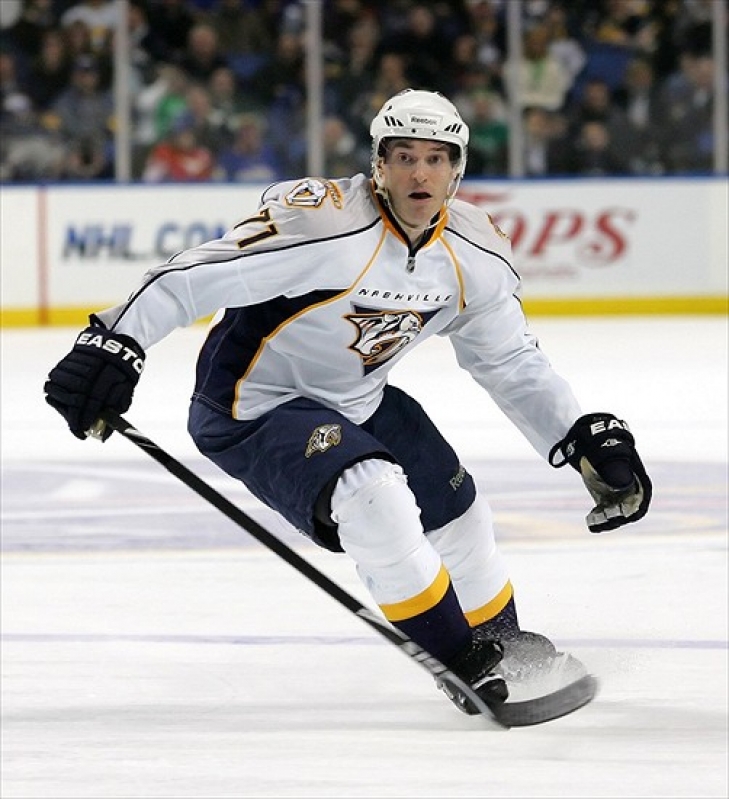
J.P. Dumont played his first two NHL years with Chicago, where he was a youngster and saw minimal ice time. Dumont was then traded to Buffalo, a team he was with for five years, but is arguably the organization he is most commonly associated with. After Buffalo, Dumont signed with Nashville, the team he played his last five years with, and the team, we will argue, was where he was at his NHL best.
Dumont’s first season in Nashville (2006-07) would see the Right Wing score 66 Points, a record for him at the time. He broke that with 72 Points the following year, followed by another impressive season with 65 Points.
His last season with the Predators was disappointing, a 19-Point year that yielded Nashville buying out his contract. Dupont never returned to the NHL, as he finished his career in Europe. He would score 267 Points with Nashville.
15. Viktor Arvidsson
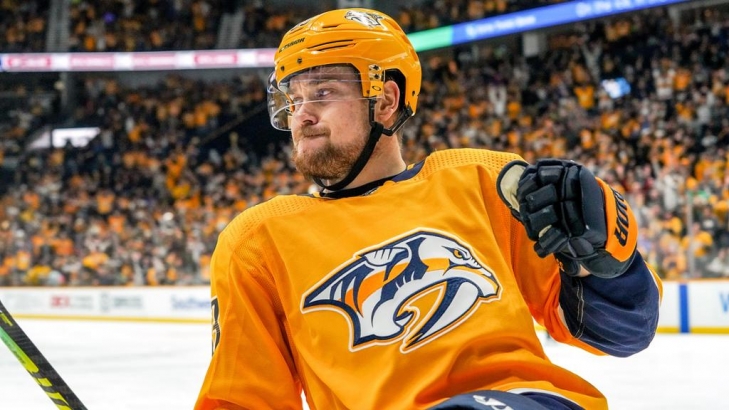
From Sweden, Viktor Arvidsson made it to the Predators for six Games the year he was drafted (2014-15), and the Left Wing would emerge as one of the better penalty killers in club history.
Arvidsson had a mediocre sophomore year but broke out with back-to-back 61 Point seasons in 2016-17 and 2017-18, respectively. Leading the NHL in Short-Handed Goals (5) in the first of those two years, Arvidsson was a large part of Nashville's run to the Finals.
Arvidsson had a 34-Goal year in 2018-19, his best as a Predator, but he slumped afterward, as his next two years saw his Point tallies dip below 30 in both of them.
His career in Nashville ended when he was traded to the Kings in July of 2021.
