

Committee Chairman
Tips for Responsible Online Slot Gambling
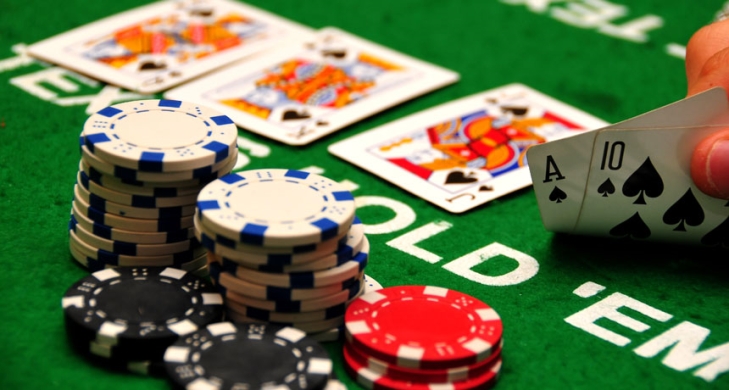
Isn't having slots online so convenient? You can now log in to an online casino and play at any time of the day. But, at what cost? If you aren't careful, you might find yourself spending more time on the online casino and affecting your life. Additionally, you might find spending more money on the platform than you should. However, it shouldn't be that way. Playing online slot games should be fun and with no regrets. It would be best to follow the tips in this article for responsible and fun-filled online slot gambling.
Don't play when stressed
You might find yourself stressed or upset and in need of an outlet to vent out your emotions. It would be best to avoid activities such as the judi slot online. Emotions cloud your judgment and make you prone to mistakes even in games you know well. As a result, you will find yourself losing endlessly. The situation will not only affect your emotions more but also financially.
Set a spending limit
There are chances of wins and losses in online gambling. And like any other person, you like wins, which may tempt you to chase losses. It would be helpful to avoid that. The best way is to set a spending limit on activities like the Judi slot online. Gambling online should be entirely for fun. By chasing losses, you will be going against the essence of these games. By having a limit, you will know when to stop.
Learn before playing
Not knowing how to play online slot games can negatively affect your gambling experience. Luckily, online casinos have an option of playing the demo as you learn. Furthermore, the online gambling platforms give you virtual money to use when playing the demo. You can use virtual money and use yours once you feel confident enough. Gambling with your money before you master the rules and strategy can ruin your gaming experience.
Use what you have and can afford to lose
Once you have gained the confidence to gamble with your money, only use what you can afford to lose. This also goes to spending money meant for other needs, such as food. It would be best if you never borrowed to gamble. Gambling with a lot of money can be detrimental to a loss. And using the money for basic needs will leave you sad and with regrets should you lose.
Take breaks
Man is to error. You will find yourself overspending or playing from time to time. It's understandable since fun activities like the judi slot online are interactive to keep you playing for a long time. However, it would be best if you force yourself to take breaks. You can refresh during the breaks or review if your strategy is working. The breaks can help you clear your mind and know if it's time to log out and do something else. Conventional casinos didn't avail options like Judi slot online. The introduction of slot games to online casinos came with several advantages. Apart from the convenience, it came with several bonuses and enabled access to everyone. However, it came with risks too. It would help to use the tips in this article to avert the risk of overplaying and overspending at online casinos.
The New York Yankees will retire Paul O'Neill's number this year
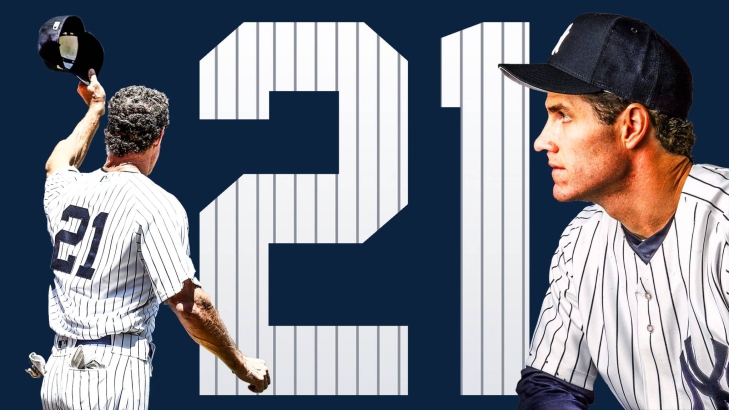
Regular visitors of Notinhalloffame.com know that we are slowly working on the top 50 of every major team in the NHL, NBA, NFL and MLB. Once that is done, we intend to look at how each team honor their past players, coaches and executives. As such, it is news to us that the New York Yankees will be retiring his number 21 this upcoming season.
The event will take place on August 21, during New York’s home game against Toronto.
After playing his first eight seasons with the Cincinnati Reds, O’Neill helped New York win four World Series Titles (1996, 1998, 1999 & 2000) where the Rightfielder smacked 185 Home Runs, 858 RBI, with an OPS of .869. In 1994, O’Neill won the American League Batting Title with a .359 average and he also represented the Yankees in four All-Star Games.
O’Neill becomes the 23rd Yankee to have his numbers retired, joining Billy Martin (#1), Derek Jeter (#2), Babe Ruth (#3), Lou Gehrig (#4), Joe DiMaggio (#5), Mickey Mantle (#7), Yogi Berra (#8), Bill Dickey (#8), Roger Maris (#9), Phil Rizzuto (#10), Thurman Munson (#15), Whitey Ford (#16), Jorge Posada (#20), Don Mattingly (#23), Elston Howard (#32), Casey Stengel (#37), Mariano Rivera (#42), Reggie Jackson (#44), Andy Pettitte (#46), Ron Guidry (#49) and Bernie Williams (#51).
O’Neill had been previously honored by the Yankees with a plaque in Monument Park in 2014.
We here at Notinhalloffame.com would like to congratulate Paul O’Neill for his impending honor.
CM Punk named to the ROH Hall of Fame

Ring of Honor announced that former Champion, CM Punk will join The Briscoe Brothers, Bryan Danielson and Samoa Joe as part of the first Hall of Fame Class.
Making his ROH debut in 2002 won the ROH Tag Team Titles twice with Colt Cabana, and the ROH World Title in 2005 when he defeated Austin Aries. His most famous run was the “Summer of Punk” when he had signed with the WWE, but was still the ROH Champion. He finally lost the title to James Gibson in a four-way match.
We here at Notinhalloffame.com would like to congratulate CM Punk for this impending honor.
Why Online Casino Betting Sites Are Awesome
Introduction
Betting can help you get a lot of money in some instances, but it is not easy; one can lose all their money through online casino betting, but if they use the techniques required, one can have a better chance of winning. So for you to maximize your cash, you need to follow the right tactics for this to avoid losing everything. An essential thing for individuals to note is that many betting sites are available, and knowing how to select a good one should be a top priority. Below are some of the benefits of online casino betting sites.
- Entertainment
Online casino betting has become popular over the years because it brings interest and entertainment to people. Most rich business people use online casino betting to unwind and refresh themselves. It is suitable for everyone to be extra cautious when choosing an online casino betting site since it involves money and sometimes a lot of it, some of which are not genuine. If you want to have maximum enjoyment while playing, choose legit links, like the fun88 link, which will help you know what you're looking for in an online casino.
- Winning cash
Conducting research or getting recommendations on a genuine online casino is a good step; this is great because you'll be sure to get your money every time you win a game. There are also many review sites for casinos on the internet, and one can look for famous ones and ones with the best reviews that are good for your needs. There is nothing better than having fun while playing and getting some good money while at it.
People should avoid betting with a lot of money in online casinos, especially a beginner. Starting low will help you understand the best strategies to use and have more chances of betting and even better chances of winning. It is recommended that one put a fixed budget for online casino betting to avoid going over budget. Proper planning is a necessary tool in online casino betting since it will help you stay more disciplined. It is also good to have a limit and know when the best time to stop is; one can keep going and going and lose even what they had won. In online casino betting, there are always good days and not-so-good days, and one should utilize the good days, but when they get to days when they lose a lot, they should take a break and stop till the next day.
Conclusion
People who love online casino betting should always take it as a way to refresh and unwind after long days of working hard. When you stop taking the game too seriously and play happily, you will get more wins; people should also remember that practice improves your skills significantly. Being ready to learn and try new methods will help you get to the top. It would be good to go through the various online links, such as the fun88 link, for better deals while playing. You will never go wrong with an online casino as long as you follow the rules of the game.
