


Committee Chairman
Dolly Parton asks to be removed from the Rock and Roll HOF ballot

We did not see this coming, nor did we think anyone did.
Dolly Parton was nominated this year for the Rock and Roll Hall of Fame for the first time in her storied career, but in a post on her Instagram, the legend has asked to bow out of consideration.
She had this to say:
“Dolly here! Even though I am extremely flattered and grateful to be nominated for the Rock & Roll Hall of Fame, I don’t feel that I have earned that right. I really do not want votes to be split because of me, so I must respectfully bow out.
I do hope that the Rock & Roll Hall of Fame will understand and be willing to consider me again – if I’m ever worthy. This has, however, inspired me to put out a hopefully great rock’n’roll album at some point in the future, which I have always wanted to do! My husband is a total rock ‘n’ roll freak, and has always encouraged me to do one. I wish all of the nominees good luck and thank you again for the compliment. Rock on!”
This, of course, raises many questions, the first being why say this now?
Her nomination took place months ago, and ballots have already been sent out, with many returned, presumably with many going to Parton. Conceivably, with the votes already being counted, there is a good chance that she would receive the necessary votes to enter this year’s class.
While she is not a rock star by traditional means, we have openly asked what the words “rock and roll” even mean, and there are many other inductees in Cleveland that don’t fit what the layman would define as rock.
So, now what?
There have been instances before where nominated artists have stated that they don’t want any art of the Hall. The Sex Pistols were inducted in 2006, but lead singer, Johnny Rotten, faxed a handwritten note, calling the hall a ‘piss stain” and how they would never come.
We can safely state that no such message would come from Dolly, but would the Hall discount incoming votes, and induct her anyway if she was chosen? Would she show up?
Either way, we will be paying attention, and we know what ever Dolly does, it will be pure class.
Future Hall of Famer Catapults Denver Broncos into Super Bowl Conversation
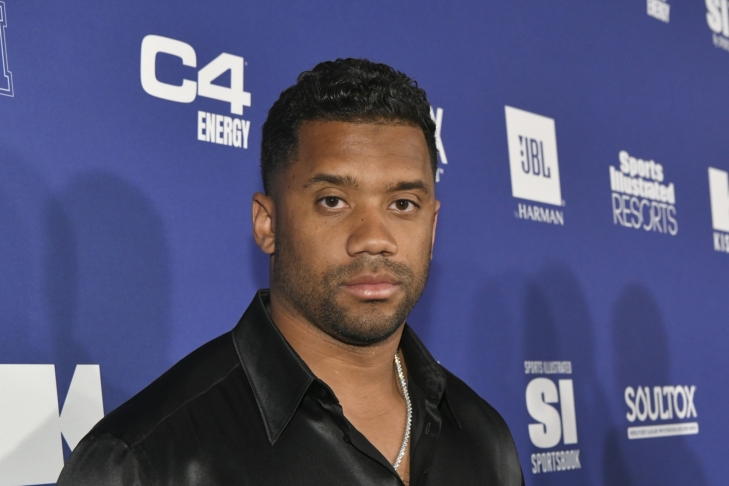
Having won the Super Bowl in 2014 and finished runners-up in 2015, the members of the Seattle Seahawks’ legendary Legion of Boom era have all been earmarked as potential Hall of Famers in the future. Despite not featuring in the legendary defense, Russell Wilson is all but certain to get the nod.
The 2021 season marked the first time that the 33-year-old had missed a game and finished with a losing record. Regardless of this, his incredible arm was often put on a show, even if a porous line held his scrambling feet in check. He’s still an NFL superstar, which is why his move to the Denver Broncos has stirred up the Super Bowl odds.
Broncos surge on the star power of Russell Wilson
Purely because of the arrival of Russell Wilson, the Denver Broncos flew up in the betting on NFL bookmakers' sites. From around +2000 to win the AFC Conference, the Broncos are now the third-favorites at +650, just behind the +400 Kansas City Chiefs and +350 Buffalo Bills.
For the Super Bowl, the Broncos are now joint-fourth with the reigning champions, the Los Angeles Rams, at +10000. It’s a huge leap, but we saw as recently as last season how much of a difference adding some star players can make. The betting tips on NFL earmarked the Rams for a close triumph in the Super Bowl, with their star-studded cast – which added Von Miller and Odell Beckham Jr. late – being key.
Prior to the trade, the power rankings on ESPN had Denver sitting 21st overall, expected to get a 7-10 record with the biggest question mark being around their quarterback. Now, they have one of the best and most reliable in the league, and Wilson will get to play behind an offensive line that was distinctly better than Seattle’s – assuming that Bobby Massie remains or a better replacement is found.
Generating offense atop a stubborn defence
Last season, the Denver Broncos’ defensive unit finished as the third most stubborn in the NFL, conceding a mere 18.9 points per game. Some big names from that unit were set to hit the free agency, with linebacker Josey Jewell and cornerbacks Bryce Callahan and Kyle Fuller among them, but as explained on Sports Illustrated, they have plenty of cap flexibility even after the Wilson trade.
The team has been able to save a good chunk of cash by sending Shelby Harris, Drew Lock, and Noah Fant to Seattle, as well as by releasing DaeSean Hamilton. It’s also not essential for the team to re-sign stud running back Melvin Gordon, given the immense breakout season of Javonte Williams. So, there should be the funds available to solidify the defense – if not improve it – and perhaps even upgrade the offensive line.
Best of all for Wilson, with the middling – but better than Seattle’s – offensive line aside, he already has a glut of offensive weapons ready for service. Courtland Sutton, Tim Patrick, and Jerry Jeudy offer one of the most menacing receiving corps in the NFL, while Williams, and now Wilson, will be a constant threat out of the backfield.
Looking at the strength of the defense, the weapons on offense, and now the prospect of Wilson in command, it’s easy to get excited about Denver’s chances next season. The NFL oddsmakers see the Broncos as a dark horse for the Super Bowl now, and it’s tough to argue against that stance.
How to Get into American Football as a New Fan
Being interested in sports is one of the best ways you can spend your free time. After all, the world of sport is something that never seems to stop. Everyday, all around the world, there are always events taking place. It truly is a great interest to have due to the constant developments and changes. Certainly a hobby that won’t get boring even over long periods of time.
Of course, there is no limit to the amount of sports you follow and are interested in. Although most people have a primary choice, you can still enjoy other games as well. After all, this doesn't have to take away from your interest in another sport, you just get to enjoy it more.
For example, one sport that is massively popular is American football. It is massively exciting and is always worth tuning in for. If you don’t currently consider yourself a fan of the sport, that can change. If you want to improve your knowledge and following of American football, then here are some ways you can get into the sport.
Tune Into Live Games
Making sure that you watch some live sport is essential to becoming a fan. Although you might have tuned in for a couple of Super Bowls, you need to be watching regularly. This is the best way to get familiar with the players and the standings of the team. Although not every game is going to be electrifying in terms of entertainment, they still carry importance. If you don’t want to devote your whole attention to the game then you can multitask. For example, you can have the game on in the background while you relax with another hobby. This way, you can have fun on the likes of the best USA online casino or browsing online while keeping up to date with the game.
Get Friends Involved
Watching sports is always something that can be enjoyed with friends. After all, watching with people you care about can help to improve the atmosphere and really set the scene for gameday. It doesn’t even matter if your friends have an existing interest in American football or not. For example, if they don’t already follow the sport, you can learn about it together. Keep each other up to date with news you have heard and really help to further each other's interest. If they are already a fan of the sport, then they can help to get you interested. They can fill you in on recent history and more insider information about the game. This can also make it easier to follow live games.
Pick a Team to Support
Your passion and interest in the sport is going to improve massively once you choose a team to support. Doing this will give you a team to root for and want to win. When it comes to choosing a team to support, you can base it off where you live, your friends’ favorite team, or whatever your preference is.
The Top 5 Favorites to Dominate the NBA 2022 Championship
As things get heated up on the NBA 2021-22 season, and the championship is only a few months away, you should constantly update yourself with the changing odds. It should be done, especially if you will bet in the 2022 NBA championship finals.
You might want to check out these top five favorite team that is projected to win the NBA 2022 championship and see who amongst them you will wager on for the finals.
Phoenix Suns (+450)
The second team on the top of the list is the Phoenix Suns. The Suns and the Warriors were considered second-tier competitors when this season started. Like the Golden State Warriors, the Phoenix Suns also entered the All-star break as an early favorite to win the NBA title.
Overall, the Phoenix Suns have a 25.3% chance to win the finals this season. They have surpassed the Golden State Warriors, who come in second and only have a 16.6% chance of winning this season.
Therefore, the Phoenix Suns have a 1/4th probability of winning the finals. The Suns are desperate to win this season's title, making them stronger to outdo other top contenders of the NBA.
Golden State Warriors (+450)
When you check the latest odds, you can notice that four teams are tied for the same odds, one of which is the Golden State Warriors. They are amongst the team to beat in the perspective of the oddsmaker. It is why you should also watch out for them throughout the remaining games in this NBA season.
However, you will have to remember that the odds will still change. That is why you must constantly check the NBA live odds to be updated with the happenings in NBA betting. The Golden State Warriors was an early favorite when the 2021-22 season started, and they have always been one of the favorite teams to win the title in almost every season.
The team has been named the best team in the NBA because of their star player Stephen Curry who has been showing great power in his performance during this season and the previous ones. Therefore, it is no surprise that they are still one of the favorite teams for this season.
Brooklyn Nets (+450)
The third team that tied on the +450 odds is the Brooklyn Nets. Despite being at the eighth position in the East, the Nets still managed to land as one of the top three favorite teams to win the NBA title this year.
However, many believe that betting on the Brooklyn Nets, you're not getting much for your bet at +450 given the other options at hand.
But it isn't easy to look at the NBA landscape and assume the Nets won't get close to the Finals this season, especially if their stars play well in the playoffs. You have to consider that the Nets have acquired players Andre Drummond and Seth Curry from the Philadelphia 76ers.
Since the game isn't over yet, you should never lose hope for the Brooklyn Nets. Follow their games and note their performance in every round.
Milwaukee Bucks (+650)
The fourth-best odds this season of the NBA is the Milwaukee Bucks. Even though they are the defending champion, they ended up in the fourth position in the sportsbooks with the odds of +650.
Every team this season has instinctually brought out their best game when facing the Milwaukee Bucks with the anticipation of dethroning the champions. It is why. It's not surprising that they haven't been as dominant this season as the last.
Yet, they are still on top of the Eastern Conference playoff race and made it to our top four best odds overall.
The Bucks have been working too hard in the second half of this season. They have been in a three-team brawl with the Bulls and Cavs for the Central Division during the second have. Milwaukee will have difficulty defending their title, but they are only a few games before they can reach the finals.
Philadelphia 76ers (+650)
Last but not least, the fifth on our list is the Philadelphia 76ers with an odds of +650. The 76ers have shown excellent performance with the New York Knicks last March 3, 2022.
The Eastern Conference showdown occurred at the Wells Fargo Center and concluded with a score of 123-108 on the scoreboard in favor of the Philadephia 76ers.
The 76ers chance of winning this season's NBA title increased when they agreed on a mega-deal with the Nets where Philadelphia acquired James Harden. Harden is one of the NBA's most productive scorers and is also known to be the best shooting guard in the association.
Choose the Best Team for You
Despite the odds in this list, you should also note that each team is a heavy favorite of different sportsbooks. One team might be the number one favorite on one sportsbook but not on the other. So, it is best that aside from considering who got the best odds, you should wager for the team that you think is best and follow your intuition.
