

84. Mickey Lolich
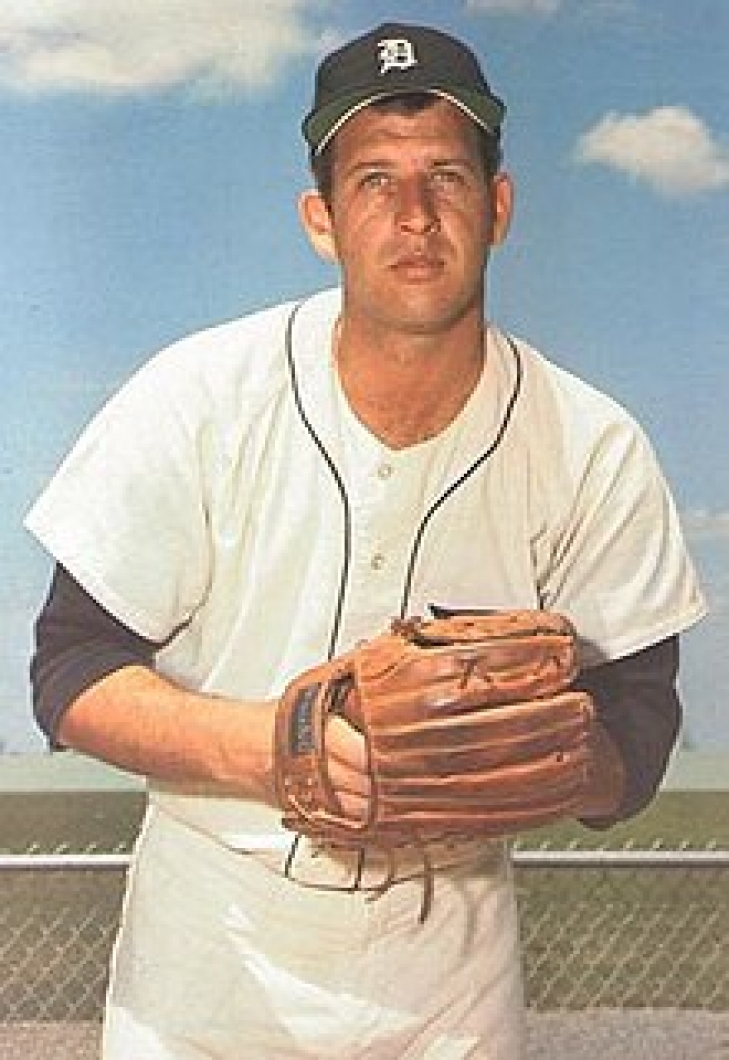
Mickey Lolich spent most of his career with the Detroit Tigers, where he was a proven starter for a dozen seasons in Motown.
From 1964 to 1974, he had at least 14 Wins and 170 Strikeouts each year. After playing in the shadow of Denny McLain in 1968, who had 31 Wins, it was Lolich who was the star of that year’s World Series. The southpaw started three games, going 3-0, completing all games with a 1.67 ERA and 0.963 WHIP over 27 Innings. This performance would be the catalyst for Lolich’s best era as a Pitcher.
Lolich would be named an All-Star in 1969, 1971, and 1972. In his '71 season, he would finish first in the American League in Wins (25), Innings (376), and Strikeouts (308), and was second in Cy Young voting. The year after, he was third in Cy Young voting and helped Detroit make the playoffs, though they lost to Oakland in the ALCS. Notably, he would also throw at least 200 Ks from 1969 to 1974.
Lolich would later be traded to the New York Mets and finished his career with the San Diego Padres, retiring in 1979.
At the time of his retirement, Lolich had the most Strikeouts of any lefthander (2,832), and he left the game with a nice record of 217-191.
Our All-Time Top 50 Detroit Tigers have been revised

Yes, we know that this is taking a while!
As many of you know, we here at Notinhalloffame.com are slowly generating the 50 of each major North American sports team. That being said, we have existing Top 50 lists out and we always consistently look to update them when we can and based on necessity. As such, we are very happy to present the pre-2021 update of our top 50 Detroit Tigers of all-time.
As for all of our top 50 players in hockey we look at the following:
1. Advanced Statistics.
2. Traditional statistics and how they finished in the American League.
3. Playoff accomplishments.
4. Their overall impact on the team and other intangibles not reflected in a stat sheet.
The complete list can be found here, but as always we announce our top five in this article. They are:
1. Ty Cobb
2. Al Kaline
There are no changes in the entire list, but we did feel it necessary to state that this now reflects the end of the 2020 season. Cabrera is the only active Tiger on the top 50, and while his rank did not change, his 2020 stats have been added to his profile.
We welcome your input and commentsand as always, we thank you for your support.
Our All-Time Top 50 Detroit Tigers have been revised

Yes, we know that this is taking a while!
As many of you know, we here at Notinhalloffame.com are slowly generating the 50 of each major North American sports team. That being said, we have existing Top 50 lists out and we always consistently look to update them when we can and based on necessity. As such, we are very happy to present the second revision of our top 50 Detroit Tigers of all-time.
As for all of our top 50 players in baseball we look at the following:
1. Advanced Statistics.
2. Traditional statistics and how they finished in the American League.
3. Playoff accomplishments.
4. Their overall impact on the team and other intangibles not reflected in a stat sheet.
This is the first time that we have revised this since 2016, and with a tweak in our algorithm and that has altered the rankings somewhat and has added two new players, though none of them are active.
Remember, this is ONLY based on what a player does on that particular team and not what he accomplished elsewhere and also note that we have placed an increased importance on the first two categories, which has altered the rankings considerably.
This list is updated up until the end of the 2019 Season.
The complete list can be found here, but as always we announce our top five in this article. They are:
1. Ty Cobb
2. Al Kaline
5. MiguelCabrera
There are multiple changes on this list, including the top five.
Newhowser moved from #7 to #3 based on the new algorithm, which moved Harry Heilman from the top five. A notable drop was Sam Crawford from #4 to #11.
There are existing Detroit Tigers, but only two that debuted, both of whom are now current. Again, they debut based on the change of our Baseball algorithm.
The two new Tigers on the all-time franchise list are Al Benton (#44) and Jim Northrup (#50).
As always, we thank you for your support.
43. Al Benton
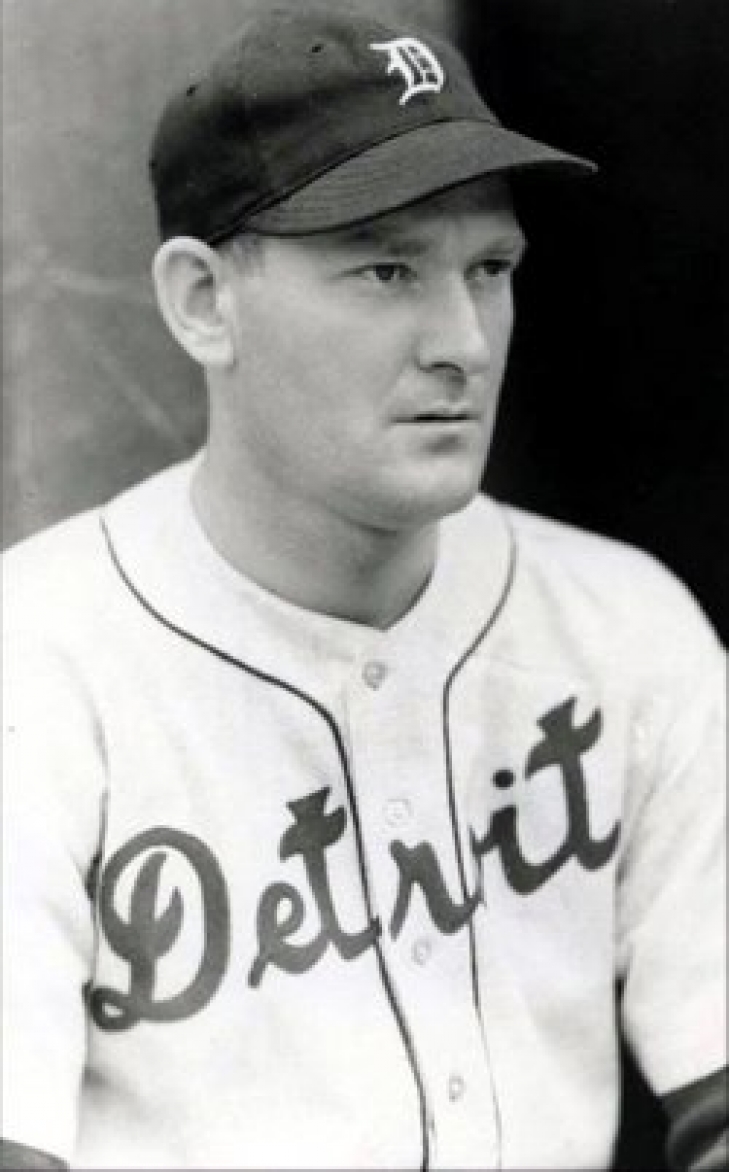
Al Benton arrived in Detroit as a reclamation project, a high-velocity right-hander who had struggled to find his footing with the Philadelphia Athletics in the mid-1930s. After a two-year hiatus in the minor leagues, the Tigers purchased his contract in 1938, a move that proved to be one of the most astute acquisitions in the history of the franchise.
During the 1940 and 1941 campaigns, he demonstrated a focused intensity that redefined the value of a flexible arm, leading the American League with 17 saves in 1940 while simultaneously transitioning into a reliable starter. By 1941, he reached the peak of his individual dominance, posting a 15-6 record with a 2.90 ERA. He showed the organization that he was a premier American League arm, finishing third among all pitchers with 5.5 bWAR and providing the production required to keep Detroit at the top of the standings. He possessed a rare ability to miss bats and limit damage, earning an All-Star selection in 1942 while finishing second in the league with a 5.6 bWAR despite a losing record that failed to reflect his sub-3.00 ERA.
After missing two full seasons to serve in World War II, Benton rejoined the Tigers in 1945 and immediately helped lead the club to a world championship. He reached a career-best for offensive prevention that summer, posting a 13-8 record and a 2.02 ERA, a mark that ranked second in the American League. He showed the baseball world that he had maintained his sharp command and big-game temperament, proving to be the essential stabilizer for a staff that navigated the return of its biggest stars. Even as he moved into his mid-thirties, he remained a model of reliability, winning 11 games in 1946 and serving as a veteran-like presence for the next generation of Detroit hurlers.
Benton was released after the 1948 season. With the Tigers, Benton compiled 71 wins, 510 strikeouts, and 45 saves.
46. Jim Northrup
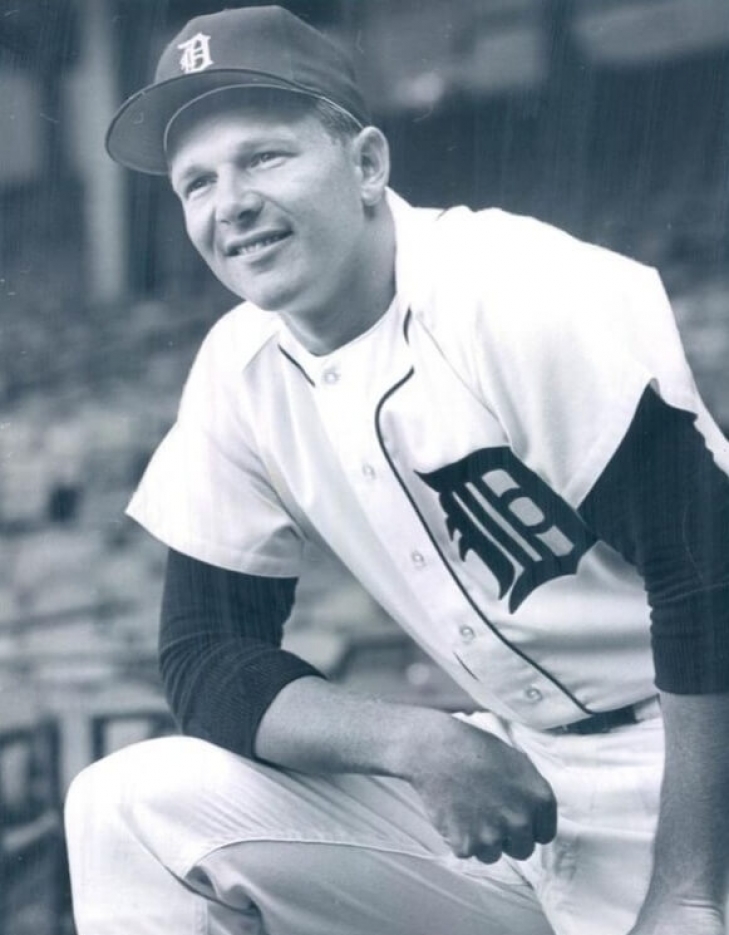
Jim Northrup joined the Detroit organization in 1960 as an amateur free agent, a standout multi-sport athlete out of Alma College who chose the diamond over the gridiron. After a rapid ascent through the farm system, he debuted in 1964 and eventually seized the starting right field job two years later.
During the legendary 1968 campaign, Northrup transitioned into a primary catalyst for the "Bless You Boys" squad, demonstrating a specialized ability to deliver in the highest-leverage moments. He famously clouted five grand slams during the regular season, including two in a single game against Cleveland—before punctuating the year with the signature hit of the 1968 World Series. His two-run triple over the head of Curt Flood in Game 7 broke a scoreless tie and secured the franchise’s third World Series title.
Between 1968 and 1970, he recorded three consecutive seasons with at least 21 home runs while he switched seamlessly between all three outfield positions to accommodate the team’s rotating stars, all while maintaining a steady-state offensive output. He provided the lineup balance needed to keep the Tigers competitive throughout the early 1970s, routinely reaching double digits in home runs and providing a reliable glove in the gaps at Tiger Stadium, but he ended up in a 1974 mid-season trade to the Montreal Expos.
With the Tigers, Northrup compiled 1,184 hits, 145 home runs, and the 1968 World Series title.
RIP: Al Kaline
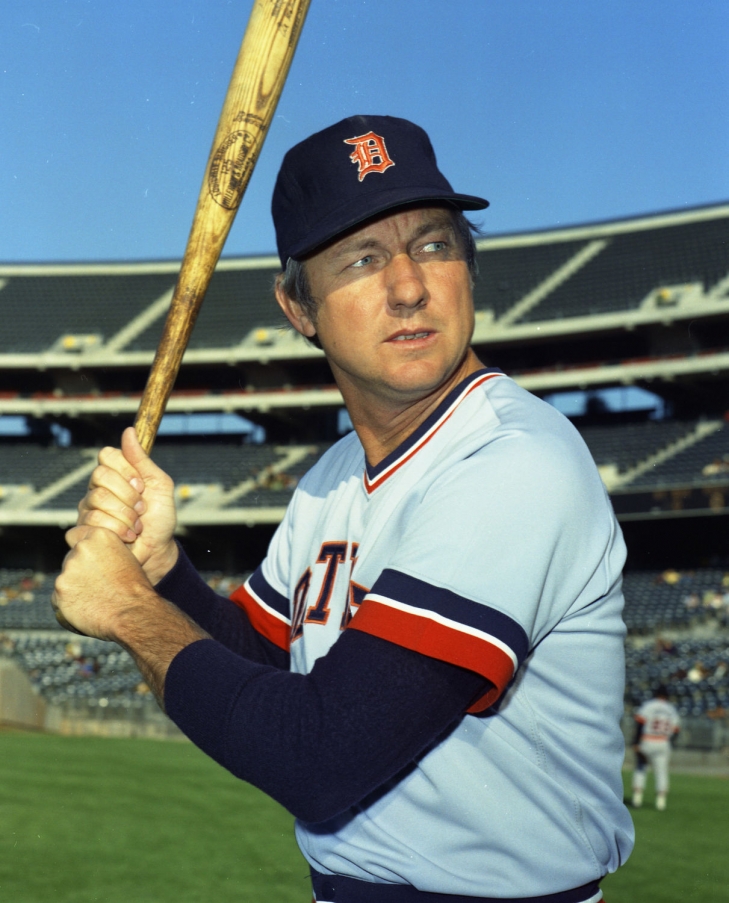
The world of Baseball lost a legend today as it was announced that Al Kaline passed away today at the age of 85. The cause of death was not disclosed.
The Outfielder debuted in 1953 as a teenager, and he would play a total of 22 seasons in the Majors, all of which were with the Detroit Tigers. Kaline would become a star quickly, going to the All-Star Game in 15 of his seasons, and finishing in the top ten in MVP voting nine times. His other accolades included winning the 1955 Batting Titles, ten Gold Gloves, and he would help Detroit win the 1968 World Series.
He retired after the 1974 season, one Home Run shy of 400. While he could have likely played another season, he had reached the 3,000 Hit mark late that year, finishing with 3,007 total.
After his career was over, he remained with the Tigers in some capacity until he died. He served as their color commentator from 1975 to 2002, and he would be a Special Assistant to the President afterward. With an over six-decade association with the club, could there be anyone else could possibly be called “Mr. Tiger”?
Kaline was inducted into the Baseball Hall of Fame in 1980, which was his first year of eligibility.
We here at Notinhalloffame.com would like to extend our condolences to the friends and family of Al Kaline.
The Detroit Tigers will retire Lou Whitaker's number
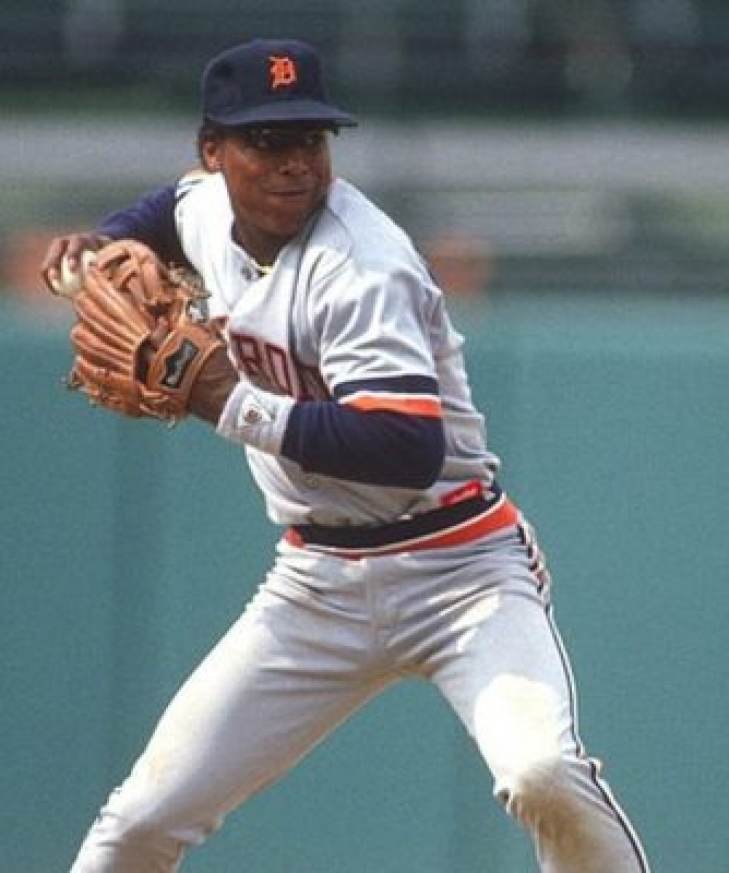
Regular visitors of Notinhalloffame.com know that we are slowly working on the top 50 of every major team in the NHL, NBA, NFL and MLB. Once that is done, we intend to look at how each team honor their past players, coaches and executives. As such it is huge news that the Detroit Tigers will be retiring the number 1 of former Second Baseman, Lou Whitaker.
Playing at Second Base, Whitaker played his entire career with the Tigers. The five-time All-Star won the 1978 Rookie of the Year Award, where he also won three Gold Gloves and four Silver Sluggers. He was an integral part of Detroit’s last World Series Championship in 1984. He would overall accumulate 2,369 Hits with 244 Home Runs and 1,084 Runs Batted In.
The official retirement will take place on August 29, during Detroit’s home game against the Boston Red Sox.
Whitaker becomes the 10thplayer to have his number retired. He joins Charlie Gehringer (#2), Alan Trammell (#3), Hank Greenberg (#5), Al Kaline (#6), Sparky Anderson (#11), Hal Newhouser (#16), Willie Horton (#23), Jackie Robinson (#42) and Jack Morris (#47).
Along with Anderson, Trammell & Morris, he is the fourth member of the 1984 World Series winning team to have his number retired.
We here at Notinhalloffame.com would like to congratulate Lou Whitaker for earning this prestigious honor, and thank the Detroit Tigers for honoring their former star.
Our Top 50 Detroit Tigers have been revised

In this particular case, we did not just adjust everything based on what transpired in 2015. The way in which we determine our baseball lists are as follows:
- Sabremetric tallies while with that team, mostly WAR.
- Traditional metrics and how they finished in their respective league overall.
- Playoff accomplishment.
- Their overall impact on the team and other intangibles not reflected in a stat sheet.
This has resulted in a significant shift in the overall Top 50 of the Tigers and many new entries that had not been listed previously.
The revised list can be found here.
33. George Kell
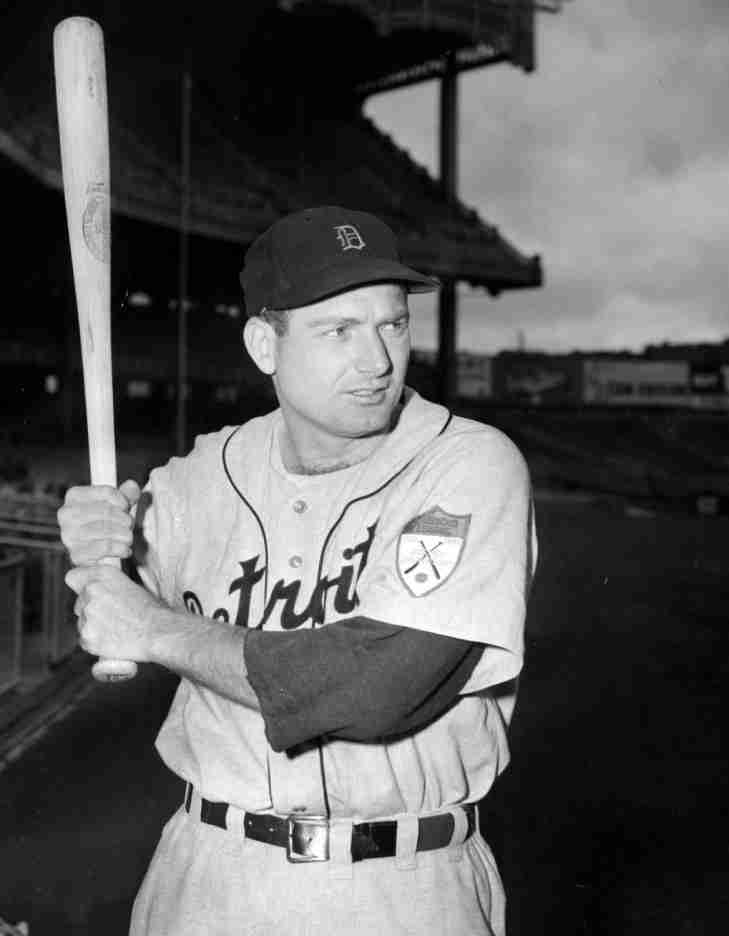
George Kell found his footing in Detroit after a mid-season swap with the Philadelphia Athletics in 1946, a move that immediately solidified the Tigers' infield. For seven seasons, he personified the pure contact hitter, utilizing a short, level swing to spray line drives across the grass of Briggs Stadium. While the era was often defined by the long ball, Kell carved out a Hall of Fame trajectory by mastering the strike zone.
during the 1949 season. In a race that came down to the final afternoon, he edged out Ted Williams to capture the American League batting title with a .343 average. This achievement marked his transition into the upper tier of the game’s elite, as he paired his offensive efficiency with a glove that earned him a reputation as one of the premier defenders of his generation. He showed the organization that a third baseman could be a primary engine for winning, leading the league in hits and doubles for the first of several times during his tenure.
The middle of his run in Detroit was characterized by a relentless ability to put the ball in play. Between 1947 and 1951, he was a perennial fixture in the All-Star starting lineup, earning five consecutive nods while wearing the iconic Old English "D." He surpassed 200 hits in back-to-back seasons and routinely finished among the leaders in on-base percentage, providing a steady-state offensive threat that made him a nightmare for opposing pitching staffs. Despite a lack of over-the-fence power, he eventually recorded 1,075 hits and a .325 batting average in just over 800 games with the club.
During the 1952 season, the Tigers traded their star infielder to the Boston Red Sox in a multi-player blockbuster. While he continued to produce elsewhere, his impact on the Detroit community never wavered. He was inducted into the National Baseball Hall of Fame in 1983.
The Top 50 Detroit Tigers of All-Time are now up

We have told you that we are looking to do for each major North American Franchise in professional sports their top 50 players. There have been quite a few that we have done, but as you know there are a lot more left to do!
As such, we have another team whose top 50 players we are ready to announce, in our opinion of course.
It is a return to Motown, with multi-time World Series Champion, the Detroit Tigers.
As one of the more successful and tenured franchises in Major League Baseball, this is quite a list, and you can see the complete 50 here.
We encourage you all to take a look and let us know your thoughts on this group and we thank you for your support.
48. Bobby Higginson
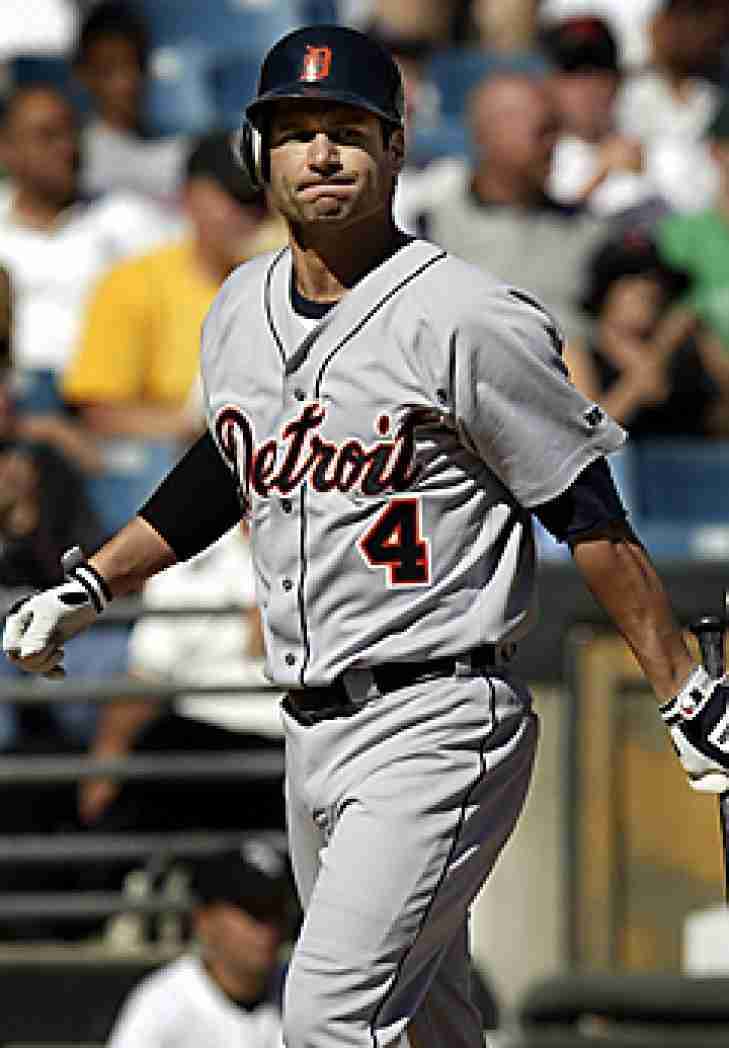
Bobby Higginson entered the Detroit system as an unheralded 12th-round pick in 1992 out of Temple University, a hard-nosed outfielder who defied the odds to become the face of the franchise during its most challenging decade. After a rapid three-year climb through the minors, he made his debut in 1995 and immediately established himself as a gritty left-handed bat with a cannon for an arm.
In 1997, he clouted 27 home runs and drove in 101 runs, following it up three years later with a career-high .300 batting average and 30 home runs. He showed the organization that he was a foundational leader, providing the steady-state production required to anchor a lineup in transition. Despite playing in a pitcher-friendly park and on rosters that struggled in the standings, he possessed a specialized ability to drive the ball into the gaps, twice earning the "Mr. Tiger" award as the team's most valuable player.
Between 1996 and 2003, Higginson was a statistical standout in right field, routinely leading the league in outfield assists and providing a specialized deterrent for baserunners. He possessed a high-velocity arm that became his calling card, famously recording 20 assists in 1996 and another 18 in 1997. Despite the lack of All-Star or Gold Glove hardware, he remained a model of durability and loyalty, eventually amassing 1,336 hits and 187 home runs.
30. Harvey Kuenn
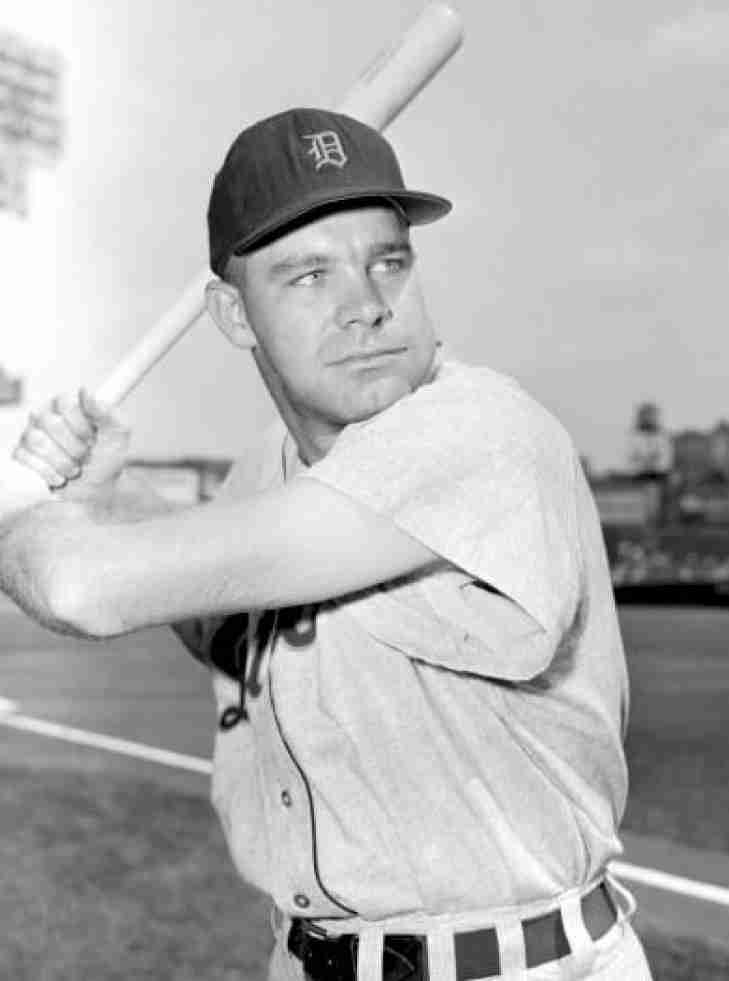
Harvey Kuenn emerged in Detroit as a natural hitting machine, a player whose bat was so advanced that he bypassed the minor leagues entirely. For eight seasons, he anchored the top of the Tigers' lineup with a specialized ability to spray line drives to all fields, becoming the most consistent contact hitter of the 1950s. While his defensive range in the outfield and at shortstop remained a liability, Kuenn provided the Motor City with a level of offensive consistency that made him a perennial fixture in the American League All-Star starting lineup.
He secured his place as a premier offensive threat by leading the American League with 209 hits, a high-frequency display of contact that earned him the Rookie of the Year award. This performance signaled a transition from a collegiate prospect to a frontline superstar who specialized in the art of the base hit. He showed the organization that he was a foundational piece of the roster, leading the league in hits for the first of four times during his Detroit tenure and providing the dependable, day-to-day production that made him the most feared leadoff man in the game.
Between 1953 and 1959, Kuenn was a statistical force who earned seven consecutive All-Star selections in a Tigers uniform. He reached a career peak during the 1959 season, when he captured the American League batting title with a .353 average and led the league in hits and doubles simultaneously. Despite his offensive dominance, his overall value was hindered by a lack of defensive polish, a factor that often overshadowed his brilliance at the plate. He remained a model of resilience, eventually recording 1,372 hits in just eight seasons with the club.
The shifting needs of the roster led to one of the most famous trades in baseball history following his batting title season. In 1960, the Tigers traded their reigning batting champion to the Cleveland Indians for Rocky Colavito, an exit that shocked the Detroit faithful.
44. Ed Killian
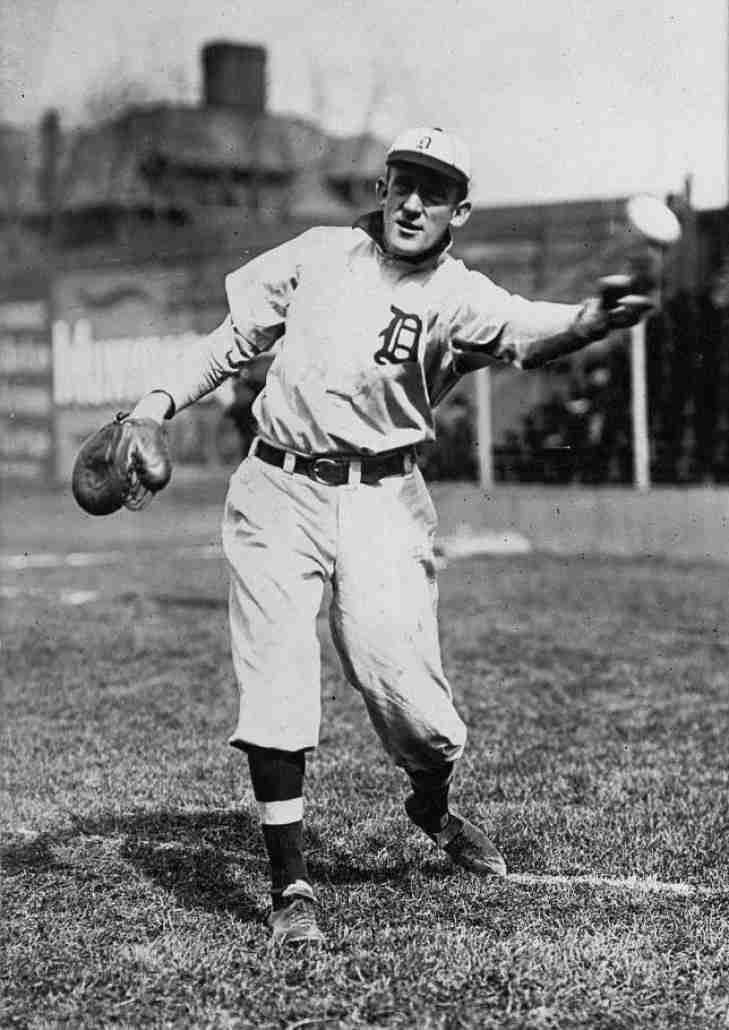
Ed Killian debuted in Detroit in 1904 as a high-velocity left-hander who had already shown flashes of brilliance with the Cleveland Naps. He quickly transitioned into the definitive anchor of the Tigers' rotation during the dead-ball era, providing a specialized brand of ground-ball induction that few hitters could solve.
In the 1905 campaign, he transitioned into the most dominant left-hander in the league, recording a career-high 23 wins and leading the American League with eight shutouts. He demonstrated a specialized ability to minimize damage, posting a 2.27 ERA across a staggering 313 innings of work. He showed the organization that he was a foundational ace, providing the steady-state production needed to stabilize a young roster beginning to find its championship pulse. This performance signaled his transition into a premier workhorse, earning a reputation as a pitcher who simply refused to yield a home run, famously going nearly 300 consecutive innings without allowing a ball to leave the yard.
The heart of his time in Michigan was characterized by elite efficiency and a relentless ability to pitch the Tigers into the World Series. Between 1907 and 1909, Killian was a statistical standout, serving as a primary engine for three consecutive American League pennant winners. He reached a peak for individual dominance in 1907, winning 25 games and maintaining a 1.78 ERA to help secure Detroit’s first-ever trip to the Fall Classic. He possessed a focused intensity on the mound, recording four separate seasons with at least 20 wins.
Killian’s career ended after the 1910 season, and he compiled 103 wins, a 2.38 ERA, with three consecutive American League pennants.
38. Cecil Fielder
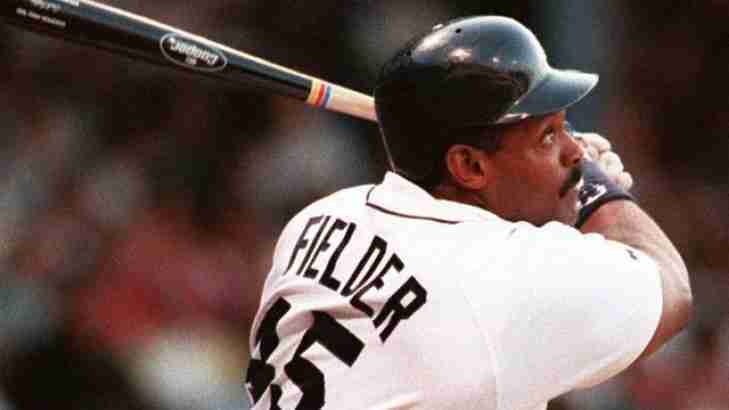
Cecil Fielder arrived in Detroit as the greatest mystery in baseball, a former part-time prospect who had vanished into the Japanese Central League only to return as a completely transformed offensive powerhouse. Signed by the Tigers in early 1990 after a year with the Hanshin Tigers, he immediately shattered the expectations of a league that had largely written him off, and in his first three years back, he was the most feared power hitter in the AL.
Fielder’s impact in a Detroit uniform reached a historic peak the moment he stepped back onto American soil in 1990. In a season that sent shockwaves through the sport, he became the first player in thirteen years to eclipse the 50-home run mark, finishing with 51 round-trippers and 132 RBIs. He demonstrated a specialized ability to drive the ball out of any part of Tiger Stadium, including a legendary blast over the left-field roof, leading the league in home runs, RBIs, and slugging percentage. He earned his first All-Star nod and a Silver Slugger while finishing as the narrow runner-up in the MVP voting.
Between 1990 and 1992, Fielder was at the absolute forefront of the league's offensive leaderboards, becoming the first player since Babe Ruth to lead the majors in RBIs for three consecutive seasons. He maintained a focused intensity in the middle of the order, clouting another 44 home runs in 1991 to repeat as the league's home run champion and secure his second straight second-place finish in the MVP race.
Following that untouchable 1990–1992 peak, Fielder’s game entered a phase of high-volume production that lacked the same league-altering efficiency. While he remained a 30-homer threat and earned another All-Star nod in 1993, his slugging percentage began to dip as he transitioned into a more patient, walk-heavy approach. By 1994 and 1995, he continued to be a statistical force in the middle of the order, but the physical toll of his frame and a high-frequency strikeout rate became more glaring as the roster struggled around him.
Everything culminated in a 1996 mid-season trade to the New York Yankees, where he eventually secured the World Series title that had eluded him in Detroit. With the Tigers, Fielder compiled 245 home runs and 758 RBIs.
37. Max Scherzer
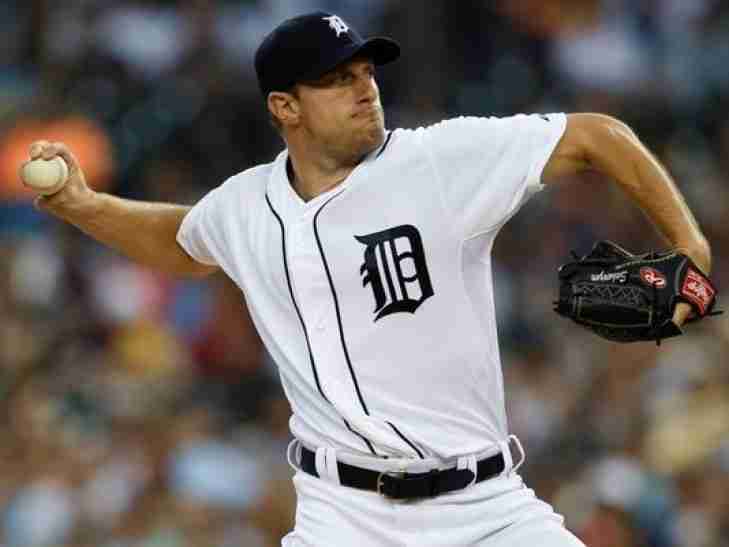
Max Scherzer arrived in Detroit as part of a blockbuster three-team trade in 2010, a young right-hander with an electric arm and a distinctive three-quarters delivery that many scouts feared would lead to the bullpen. Instead, he transformed into a cornerstone of a rotation that dominated the American League Central for half a decade.
When he first arrived in 2010, the "stuff" was undeniable, but the consistency was elusive; he even spent a brief stint in Triple-A Toledo that May to iron out his mechanics and find a more repeatable rhythm. He returned with a vengeance, flashing his potential with a 12-win debut in Detroit, but he remained a diamond in the rough—a pitcher who could dominate for five innings but often struggled to finish what he started.
By 2011 and 2012, the transformation was well underway. Scherzer began to harness his maximum-effort delivery, transitioning from a thrower into a true pitcher. He recorded a career-high 15 wins in 2011, helping the club reach the ALCS, and followed it up with a 231-strikeout campaign in 2012 that signaled he was ready for a larger share of the spotlight. This period of growth served as the essential lead-in to his historic 2013 run, proving that when an elite arm finally aligns with elite command, the result is a trophy-winning season that alters a franchise's course.
Scherzer’s journey in a Detroit uniform reached a historic peak during the 2013 campaign. That summer, he transitioned into the most unhittable presence in the league, capturing the American League Cy Young Award with a staggering 21-3 record. He demonstrated a specialized ability to dismantle lineups with a high-velocity heater and a devastating slider, posting an American League-best 0.97 WHIP. He showed the organization that he was a foundational ace in his own right, earning the starting nod for the All-Star Game and providing the strikeout production that anchored a championship-contending staff.
The 2014 season served as a thunderous encore, proving that his previous dominance was no statistical fluke. Betting on himself in a contract year, Scherzer became the first pitcher in Tigers history to start a season with seven or more strikeouts in each of his first seven starts. He reached a career peak for workload and durability, leading the American League with 18 wins and racking up a then-career-high 252 strikeouts. That June, he finally ended a drought of 178 starts without a complete game by tossing a three-hit shutout against Chicago.
Scherzer eventually moved on to Washington as a free agent, leaving behind a legacy as one of the greatest power pitchers to ever take the mound in Detroit. With the Tigers, Scherzer compiled 82 wins and 1,081 strikeouts over five seasons.
47. Tony Phillips
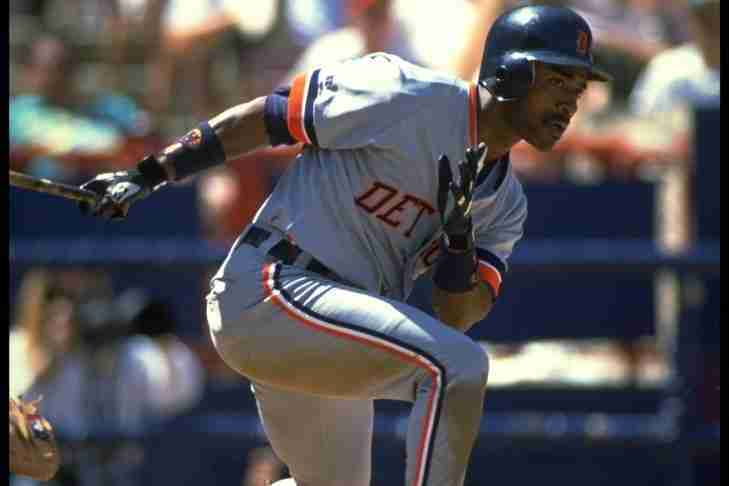
Tony Phillips joined the Detroit Tigers as a free agent in late 1989, a veteran utility man who had spent eight seasons in Oakland as a valuable but often overlooked role player. The move to the Motor City transformed his career, as he transitioned from a part-time contributor to a tactical powerhouse at the top of the lineup.
During the 1992 and 1993 campaigns, he demonstrated a focused intensity on the strike zone that redefined the role of a leadoff hitter, leading the American League with 114 runs scored in 1992. By 1993, he evolved into the most patient presence in the sport, leading the league with 132 walks while recording a career-high .313 batting average and a .443 on-base percentage. He showed the organization that he was a foundational spark plug, finishing 16th in the MVP voting.
Phillips was traded to the California Angels in 1995 after five seasons, and he left behind 763 hits and 492 walks.
49. Curtis Granderson
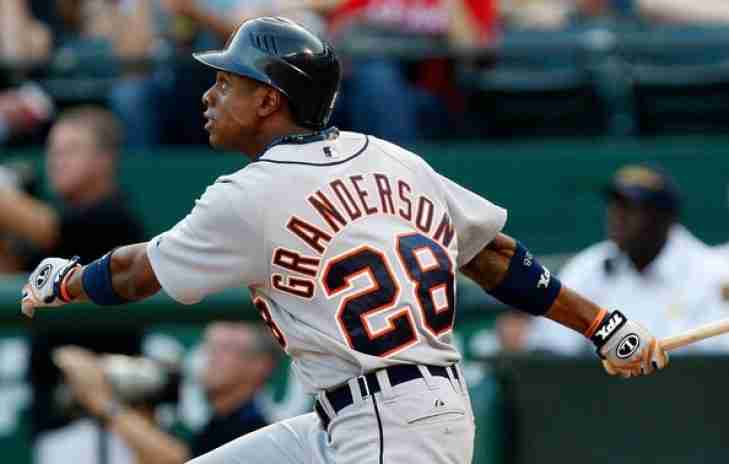
Curtis Granderson joined the Detroit Tigers as a third-round selection in the 2002 draft out of the University of Illinois Chicago, a high-velocity athlete who possessed a rare blend of speed and power. He made his debut in late 2004 and quickly transitioned into the definitive spark plug of the Tigers' mid-2000s resurgence. By 2006, he had officially seized the starting center field job, clouting 19 home runs and leading the American League with nine triples as a rookie.
In the 2007 campaign, he became the third player in Major League history to join the "20-20-20-20 Club." He demonstrated a specialized ability to spray the ball across the vast gaps of Comerica Park, recording 38 doubles, 23 triples, and 23 home runs while adding 26 stolen bases. He showed the organization that he was a foundational cornerstone, finishing 10th in the MVP voting.
Between 2006 and 2009, Granderson was a constant presence at the top of the order, averaging nearly 100 runs scored per season and maintaining a focused intensity that made him a perennial threat. He reached a peak for offensive versatility in 2007, recording a career-high .302 batting average and proving he was far more than just a speed specialist.
Following the 2009 season, the Tigers sent their franchise centerpiece to the New York Yankees in a deal that brought back Max Scherzer and Austin Jackson. With the Tigers, Granderson compiled 102 home runs, twice led the AL in triples, and achieved the rare 20-20-20-20 season in 2007.
45. Earl Whitehill
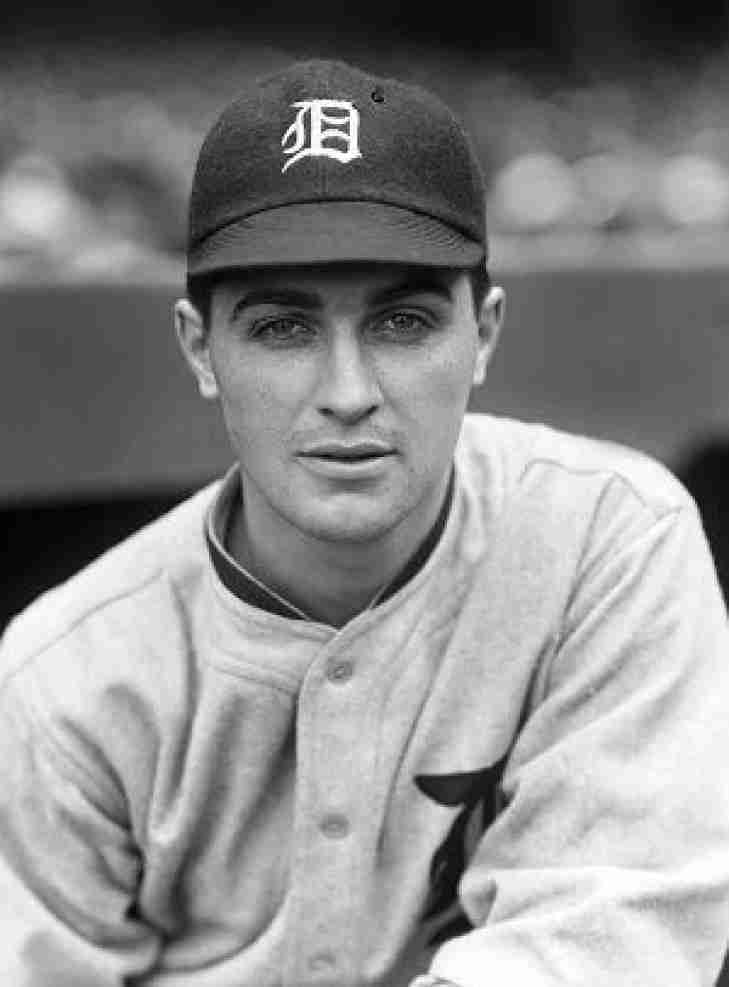
Earl Whitehill joined the Detroit staff in late 1923 after the club purchased his contract from Birmingham in the Southern Association, where he had been honing a devastating curveball. A high-velocity left-hander with a reputation that preceded him, his aggressive, uncompromising demeanor on the mound was just as potent as his arsenal. He quickly transitioned into the definitive workhorse of the Tigers' rotation during a high-scoring era that chewed up and spit out lesser arms.
During the mid-to-late 1920s, he demonstrated a focused intensity that made him a perennial fixture at the top of the American League leaderboard for innings pitched and games started. He reached a career peak for individual dominance in 1924, winning 17 games as a rookie to lead all American League newcomers, but it was his steady-state production over the next several years that solidified his place in the rotation. Recording five separate campaigns in the Motor City with at least 16 victories, Whitehill possessed a rare ability to navigate the hitter-friendly confines of the era,
Between 1923 and 1932, Whitehill was a statistical standout for the Tigers, amassing 133 wins and over 2,200 innings of work. The run in the Motor City ended in a 1932 trade to the Washington Senators, a move that saw him eventually secure a 22-win season and a World Series victory elsewhere.
42. Billy Rogell
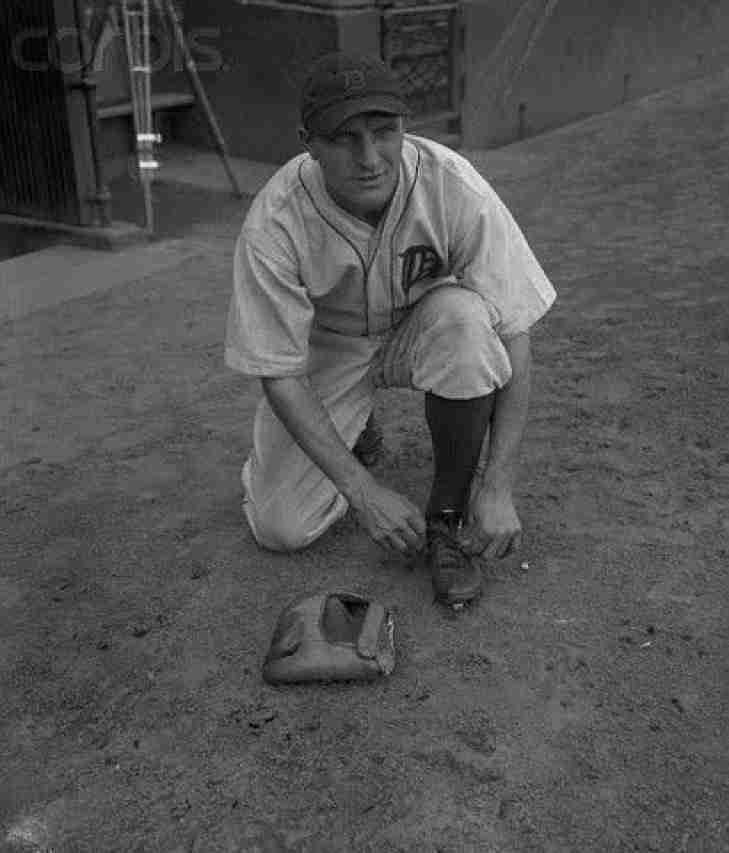
While many of the 1930s Tigers legends were homegrown, Billy Rogell’s arrival in Detroit was the result of a calculated gamble by the front office to fix a glaring hole in the middle of the diamond. He didn't start his career Detrotit; instead, he broke in with the Boston Red Sox in the late 1920s.
By 1930, however, Rogell found himself at a career crossroads. Boston had traded him to the St. Louis Salukis of the minor leagues, where he began to truly master the shortstop position. It was there that the Tigers’ scouts noticed his elite defensive range and high-velocity arm. Seeking a steady hand to anchor their infield, Detroit purchased his contract from St. Louis in 1930.
He didn't become the everyday starter immediately, but by 1932, he had completely seized the job. His arrival proved to be the final defensive piece the Tigers needed to transition from a middle-of-the-pack team into a powerhouse. By pairing Rogell’s vacuum-like glove with Charlie Gehringer’s precision at second base, the Tigers built a defensive wall that would eventually lead them to the 1935 World Series title.
By the late 1930s, the physical toll of his high-velocity style of play, specifically, a lingering arm injury sustained during the 1938 season, began to affect his legendary range. Despite the pain, he remained a model of durability, continuing to anchor the middle of the diamond and providing the steady-state leadership required as the 1935 championship core began to age.
Following the 1939 season, the Tigers traded their long-time defensive anchor to the Chicago Cubs for shortstop Dick Bartell. With the Tigers, Rogell compiled 1,332 hits, led the AL in defensive bWAR three times, and won the 1935 World Series.
29. Schoolboy Rowe
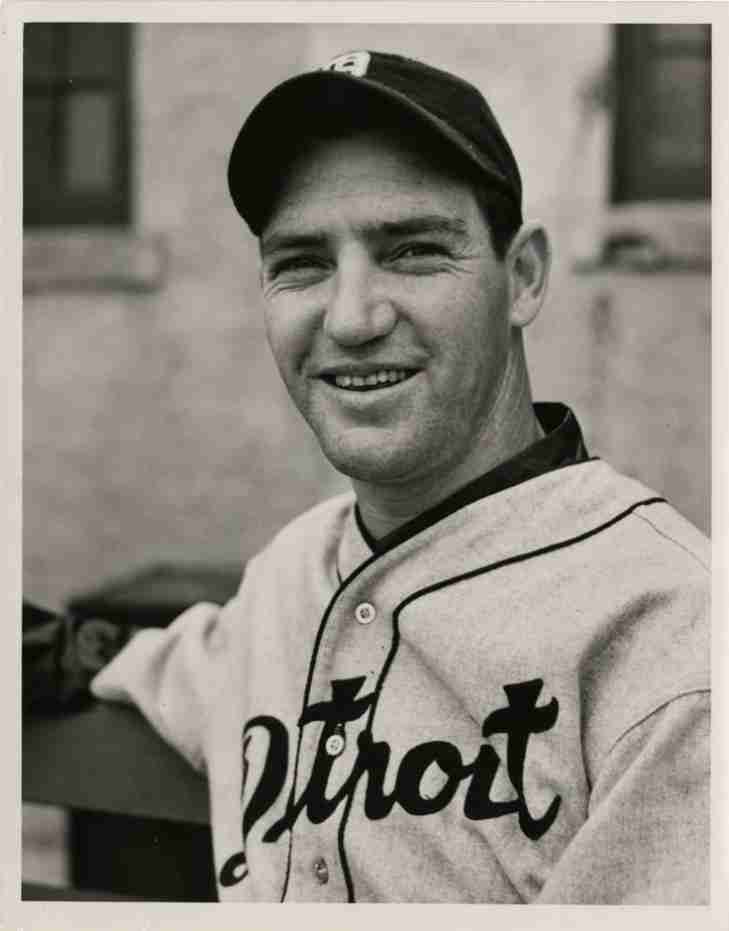
Lynwood "Schoolboy" Rowe arrived in Detroit as a towering right-hander with a high-velocity fastball and a persona that captivated the Motor City. Standing 6'4" and possessing a specialized blend of southern charm and competitive fire, he became a national sensation during the heart of the Great Depression.
Rowe’s emergence in Detroit reached a definitive breakout during the historic 1934 campaign. After showing promise as a rookie, he secured his place as a frontline starter by winning 16 consecutive games, an American League record at the time. This performance signaled a transition from a young prospect to a premier outlier who specialized in dominating the strike zone. He showed the organization that he was a foundational piece of the staff, finishing fourth in the MVP voting and leading the Tigers to their first pennant in a quarter-century. He possessed a focused intensity that allowed him to thrive under pressure, famously asking his fiancée over the radio, "How’m I doin', Edna?"—a line that became a catchphrase for a generation of fans.
The core of his time in Detroit was defined by elite efficiency and a reputation for big-game production. In 1935, he reached a career peak for all-around value, winning 19 games and leading the American League in strikeouts-to-walks ratio for the second consecutive season. He provided the dependable, day-to-day production that helped the Tigers secure their first-ever World Series title that fall. He was a statistical force during this stretch, earning two All-Star selections and routinely surpassing 200 innings pitched. Despite a heavy physical toll on his arm that led to a mid-career plateau, he remained a model of resilience, eventually recording 105 wins and over 600 strikeouts in a Detroit uniform.
During the 1942 season. The Tigers eventually sold their veteran ace to the Brooklyn Dodgers.
