

36. Fred Hutchinson
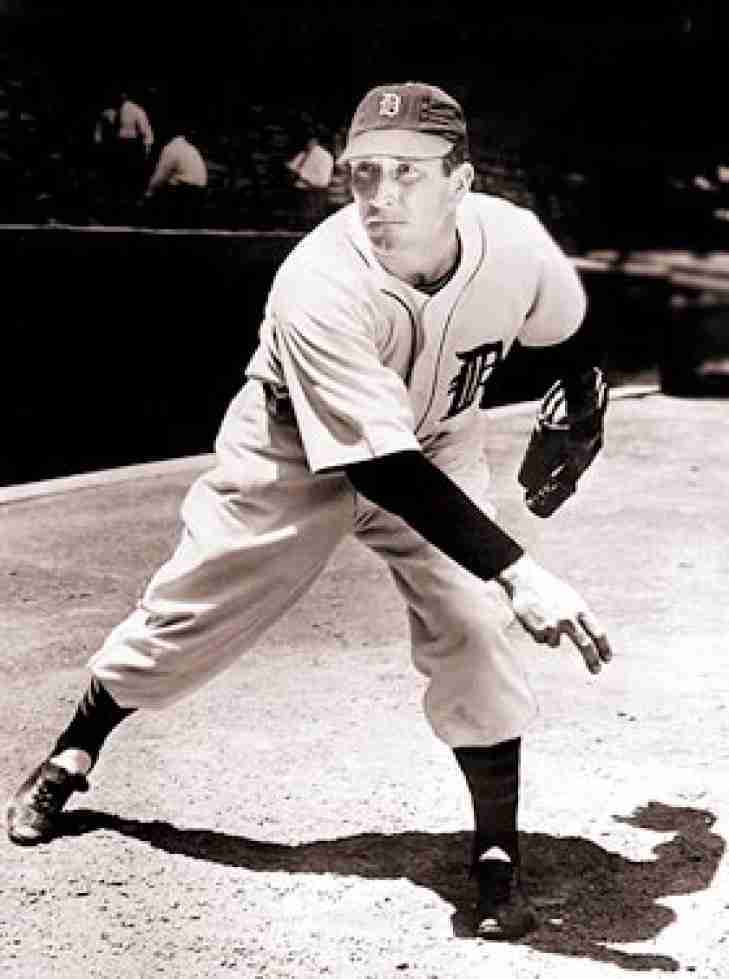
Fred Hutchinson arrived in Detroit with a reputation as a phenom, a 19-year-old right-hander from the Pacific Northwest who had already dominated the minor leagues. While his initial transition to the American League was a difficult stretch defined by inconsistent results, he quickly evolved into the Tigers’ most reliable tactician on the mound. For ten seasons in a Detroit uniform, he provided a specialized brand of control that was decades ahead of its time.
Hutchinson’s journey in a Tigers jersey reached a historic breakout following his return from World War II. After losing four prime years of his career to military service, he rejoined a defending World Series champion roster in 1946 and immediately secured a place in the rotation. He demonstrated a focused intensity that saw him win 14 games in his first year back, followed by a career-high 18 victories in 1947. He showed the organization that he was a foundational piece of the pitching staff, combining his surgical command with a rare athletic ability that made him one of the premier hitting pitchers in the game, frequently contributing with a .263 career average.
Hutchinson reached a peak of individual dominance during a stretch in which he led the American League in both strikeout-to-walk ratio and fewest walks per nine innings four separate times. He possessed a specialized skill set that the baseball world of the late forties barely understood, earning an All-Star selection in 1951 for his ability to out-think the league’s most dangerous hitters. Despite the physical toll of a decade on the mound, he remained a model of offensive prevention, recording three different seasons with at least 15 wins and consistently surpassing the 200-inning mark.
Everything culminated in a change in direction during the 1952 season, when the Tigers named him their player-manager. While his role on the diamond began to decrease as he shifted toward the dugout, he remained a statistical force for a decade, amassing 95 wins and 591 strikeouts in his Tigers career.
40. Travis Fryman
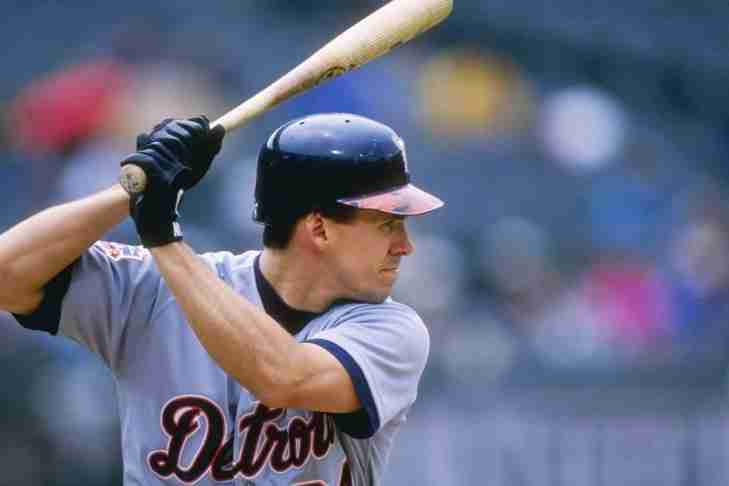
Travis Fryman arrived in Detroit during the summer of 1990 as the heir apparent to a lineage of legendary infielders, stepping into the void left by aging icons. For eight seasons in the Motor City, he served as the most consistent and reliable offensive threat on the team,
During the 1993 campaign, he evolved into one of the premier offensive infielders in the American League, recording a career-high .300 batting average while clubbing 22 home runs and driving in 97 runs. He demonstrated a specialized ability to drive the ball into the gaps of Tiger Stadium, earning his second of four All-Star selections with the club.
Between 1992 and 1997, Fryman was a statistical standout, averaging nearly 20 home runs a year and serving as a perennial fixture at the mid-summer classic. He possessed a focused intensity that allowed him to transition seamlessly from shortstop to third base, providing the defensive stability required of a veteran leader. Despite the Tigers' struggles in the standings during the mid-nineties, he remained a model of consistency, eventually amassing 1,176 hits and 149 home runs while wearing the Old English “D."
In November 1997, the Tigers sent Fryman to the Arizona Diamondbacks as part of a deal for Joe Randa and Gabe Alvarez. However, Arizona was an expansion team at the time, and they were essentially using Fryman as a high-value chip to build their roster.
25. Denny McLain
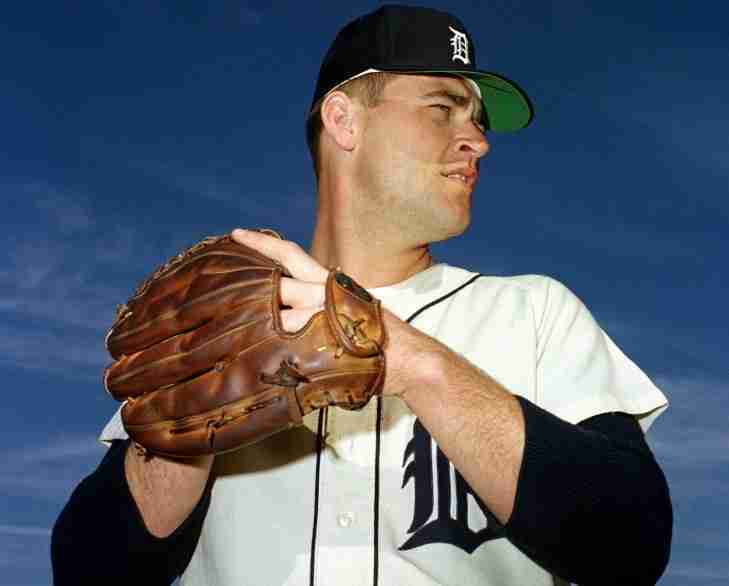
For a brief, white-hot stretch in the late sixties, Denny McLain wasn't just the best pitcher in the American League; he was a cultural phenomenon who lived life at a breakneck speed that mirrored his fastball. While his time at the summit was fleeting, McLain provided the Motor City with a statistical explosion that remains one of the most singular achievements in the history of the sport.
McLain’s rise in Detroit began with a glimpse of his massive ceiling in the mid-sixties. He broke out in 1966, winning 20 games for the first time and signaling a transition from a young arm with potential to a frontline starter. He possessed a focused intensity and a disregard for the game’s established norms, a style that culminated in the historic 1968 campaign. That summer, McLain reached a peak that no pitcher has touched since, winning 31 games and becoming the last man to cross the thirty-victory threshold. It was a statistical outlier of a season where he captured both the Cy Young and the MVP, leading the Tigers to a World Series title and cementing his legacy as the premier outlier of his era.
The core of his tenure was defined by a three-year run of unrivaled dominance and high-frequency workloads. In 1969, he proved his arm hadn't lost its bite, winning 24 games and securing a second consecutive Cy Young Award. He showed the organization that a pitcher could lead the league in starts, innings, and complete games simultaneously, providing the steady-state reliability that made the Tigers a perennial threat. However, the distractions of a high-profile life off the diamond soon caught up with him. In 1970, the commissioner handed down a series of suspensions, initially sparked by his involvement in a bookmaking operation and later compounded by a clubhouse prank involving a bucket of water, which effectively derailed his momentum and cost him a significant portion of the season.
Everything culminated in a rapid shift in direction following that tumultuous 1970 campaign. Between the disciplinary issues and a sudden loss of efficiency on the mound, the Tigers traded the two-time Cy Young winner to the Washington Senators. He left Detroit with 117 wins and 1,150 strikeouts, a statistical footprint that felt like a meteor strike, brilliant, devastating, and gone far too soon.
41. Kirk Gibson
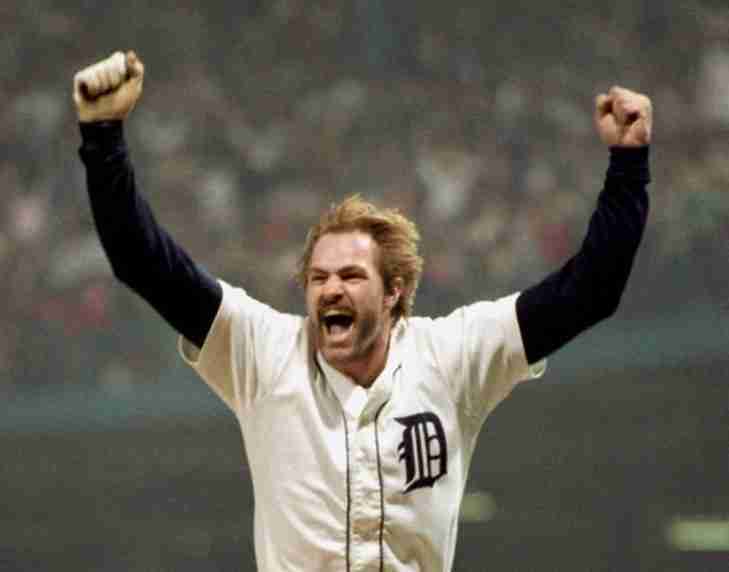
Kirk Gibson arrived in Detroit as a blue-chip dual-sport phenomenon from Michigan State, a player whose high-velocity intensity and raw physical tools made him the ultimate high-upside gamble for the hometown Tigers. While he initially struggled to harness his aggressive approach at the plate, he quickly evolved into the emotional and physical engine of the most dominant era in modern Detroit history.
Gibson’s journey in a Detroit uniform reached a historic peak during the legendary 1984 campaign. As the club sprinted to a world championship, he transitioned into the definitive big-game performer of his generation, capturing the MVP award for the ALCS. He demonstrated a specialized ability to deliver when the lights were brightest, famously punctuating the World Series with a three-run blast off Goose Gossage that remains the signature image of the decade in Michigan.
Between 1983 and 1987, Gibson was a statistical standout, routinely flirting with 30-30 seasons and maintaining a focused intensity that made him a nightmare for opposing pitchers. Everything culminated in a career that saw him leave as a free agent following the 1987 season, only to return for a sentimental final act from 1993 to 1995. While his physical tools had naturally slowed during his second stint, he provided the veteran-like poise and leadership needed for a roster in transition.
With the Tigers, Gibson compiled 195 home runs, 194 stolen bases, and was the 1984 ALCS MVP.
39. Chet Lemon
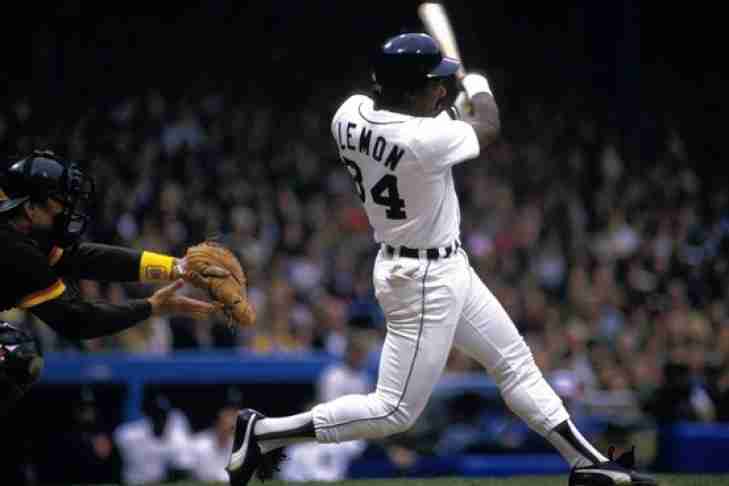
Chet Lemon arrived in Detroit through a 1981 trade with the White Sox, a seasoned outfielder known for an aggressive, nose-to-the-grindstone approach that immediately meshed with the Tigers' blue-collar identity. Rather than slowing down as he entered his thirties, he became a central fixture in a lineup that was building toward a historic peak.
Lemon’s tenure in a Detroit uniform reached a historic high during the legendary 1984 campaign. As the club sprinted to a 35-5 start and eventually secured the World Series title, he was an integral part of the roster, earning an All-Star selection and providing the steady production required of a championship starter. He demonstrated a specialized ability to drive the ball with authority, recording 20 home runs and 76 RBIs while covering the gaps in center field with a reckless abandon that often saw him diving for liners or colliding with the wall. He showed the organization that he was a foundational winner, delivering the veteran-like poise needed on the game's biggest stage.
The bulk of his Detroit years were defined by elite consistency and a knack for getting on base by any means necessary. Between 1982 and 1987, Lemon was a constant presence in the heart of the order, recording three separate seasons with at least 20 home runs.
He retired after the 1990 season, having compiled 1,071 hits and 141 taters.
34. Virgil Trucks
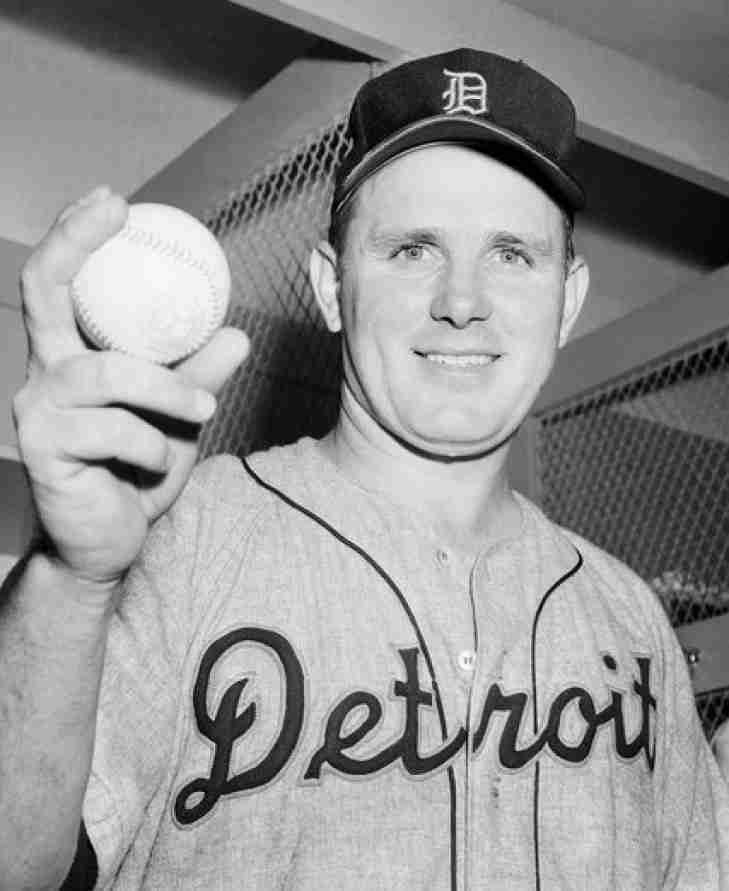
Virgil Trucks earned his "Fire" nickname in Detroit by overwhelming hitters with a high-velocity fastball that anchored the Tigers' rotation for over a decade. After debuting in 1941, he quickly became a centerpiece of the pitching staff, providing a gritty, power-pitching presence that helped define the post-war era in the Motor City. For 12 seasons, he served as a reliable cog in the Detroit rotation.
Trucks’ journey in a Detroit uniform reached an immediate championship high in 1945. After returning from military service late in the year, he was thrust into the heat of a pennant race and responded by helping the Tigers secure the World Series title. He demonstrated a focused intensity on the game's biggest stage, earning a crucial victory in Game 2 against the Cubs. This performance signaled his transition into a premier American League arm, showing the organization that he possessed the big-game temperament required to lead a staff toward a world championship.
In 1949, Trucks reached a career peak for individual dominance, leading the league with 153 strikeouts and earning an All-Star selection. However, it was the 1952 season that cemented his place in baseball lore; despite a low win total for a struggling team, he became only the third pitcher in history to hurl two no-hitters in a single campaign. He silenced the Washington Senators in May and repeated the feat against the New York Yankees in August.
Despite these historic individual achievements, the 1952 Tigers suffered through a miserable season, finishing in the cellar of the American League. Seeking to shake up the roster, the front office orchestrated a major multi-player trade in December of 1952, sending their no-hit specialist to the St. Louis Browns. After a few years spent pitching for the Browns and White Sox, the veteran hurler made a sentimental return to the Tigers for the 1956 season. While his high-velocity days were winding down, this final stint allowed him to conclude his Detroit journey where it began, though he did play afterward briefly with the Kansas City Athletics and New York Yankees.
As a Tiger, Trucks had a record of 114-96 and 1,046 strikeouts over 1,800.2 innings of work.
31. Lance Parrish
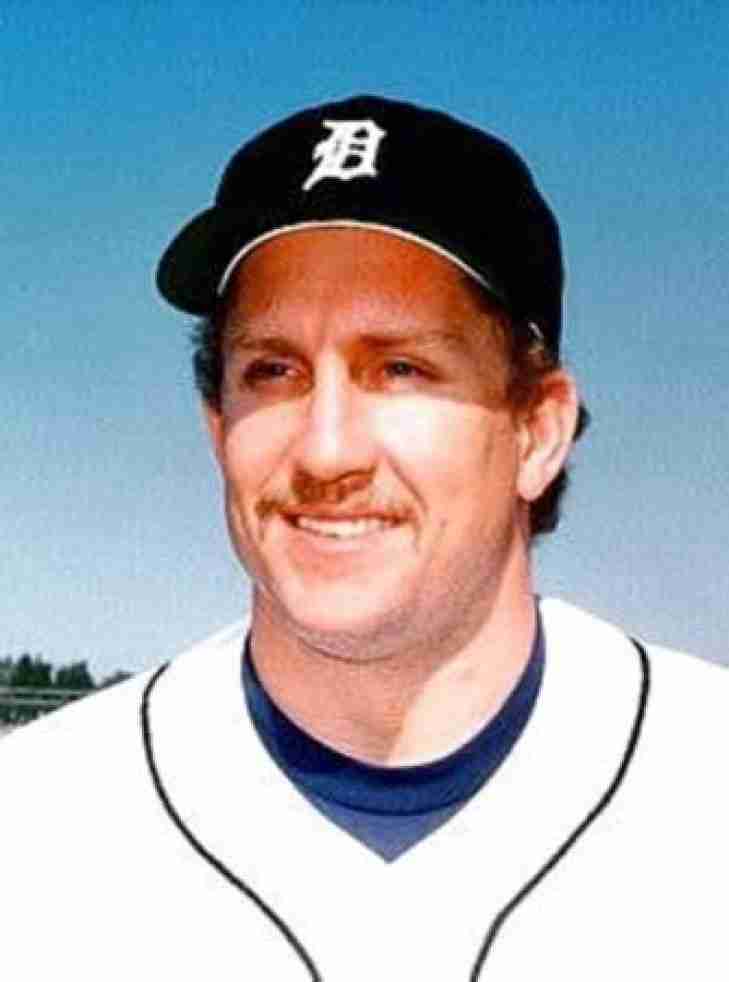
A physical marvel behind the plate, Lance Parrish was a catcher whose sheer strength and defensive prowess earned him the moniker "Big Wheel." During an era when the position was defined by grit and durability, Parrish provided a specialized combination of elite power and a cannon-like arm that anchored the Tigers' defense for a decade.
Parrish during the 1980 campaign. After establishing himself as the everyday starter, he secured his place as a premier offensive threat by hitting 24 home runs and earning his first All-Star selection.
Between 1982 and 1984, Parrish reached a career peak for all-around value, winning three consecutive Gold Gloves and three Silver Sluggers. He was a statistical force during the historic 1984 championship season, belting 33 home runs and driving in 98 runs as the centerpiece of a world-title offense. Despite the heavy physical toll of squatting for over 130 games a year, he remained a model of resilience, eventually recording 212 home runs in a Tigers uniform. He possessed a focused intensity that allowed him to thrive under the bright lights of the postseason, famously hitting a home run in the final game of the 1984 World Series to help secure the crown.
Parrish earned six All-Star nods and five Silver Slugger awards as a Tiger, but he departed in 1986 as a free agent to Philadelphia.
27. Willie Horton
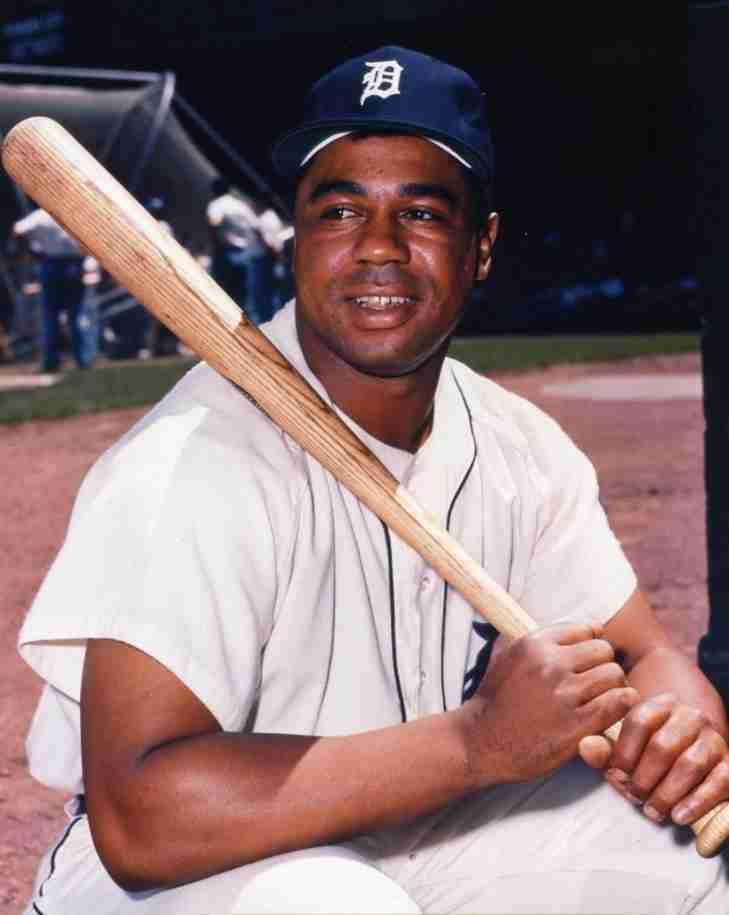
Willie Horton arrived in Detroit as a local hero, a graduate of Northwestern High School who signed with his hometown team at age 18. For parts of fifteen seasons, he served as the powerful left-field engine of the Tigers, a man whose strength was legendary and whose connection to the city went far beyond the box score. While he was a perennial threat in the heart of the order, it was his presence as a community pillar that cemented his status as one of the most significant figures in the history of the franchise.
Horton’s rise in Detroit reached a definitive peak during his first full season in 1965. After a few brief appearances in the early sixties, he seized the starting left-field job and responded with 29 home runs and 104 RBIs. This performance earned him the first of four All-Star selections and an eighth-place finish in the MVP race, signaling his transition from a local prospect to a premier power threat in the American League. He possessed a focused intensity at the plate, specialized in driving the ball into the Tiger Stadium seats with a frequency that few in the league could match.
The heart of his time in Detroit was defined by his role in the historic 1968 championship season. In a year where pitchers dominated the league, Horton was a statistical outlier, batting .285 and finishing second in the American League with 36 home runs. He finished fourth in the MVP voting that year, but his most iconic contribution occurred in Game 5 of the World Series. His perfect throw from left field to nab Lou Brock at the plate preserved a crucial lead and shifted the momentum of the series. He showed the organization that he was more than just a slugger; he was a championship-caliber competitor who delivered when the stakes were at their highest.
Everything culminated in a career total of 262 home runs for the Tigers, a mark of consistency that saw him reach the 20-homer milestone six times in a Detroit uniform. However, as the team transitioned into a rebuilding phase in the late seventies, the front office looked toward the future. In April 1977, the Tigers traded their long-time star to the Texas Rangers, an exit that marked the end of an era for the Detroit faithful. He spent the final years of his journey moving through several American League clubs, but his identity remained firmly rooted in Michigan.
The story in Detroit reached a final chapter in 2000, when the Tigers bestowed upon him their highest individual honor. Despite not having a plaque in Cooperstown, Horton saw his number 23 retired and a statue erected at Comerica Park, joining a select group of franchise legends.
28. Frank Lary
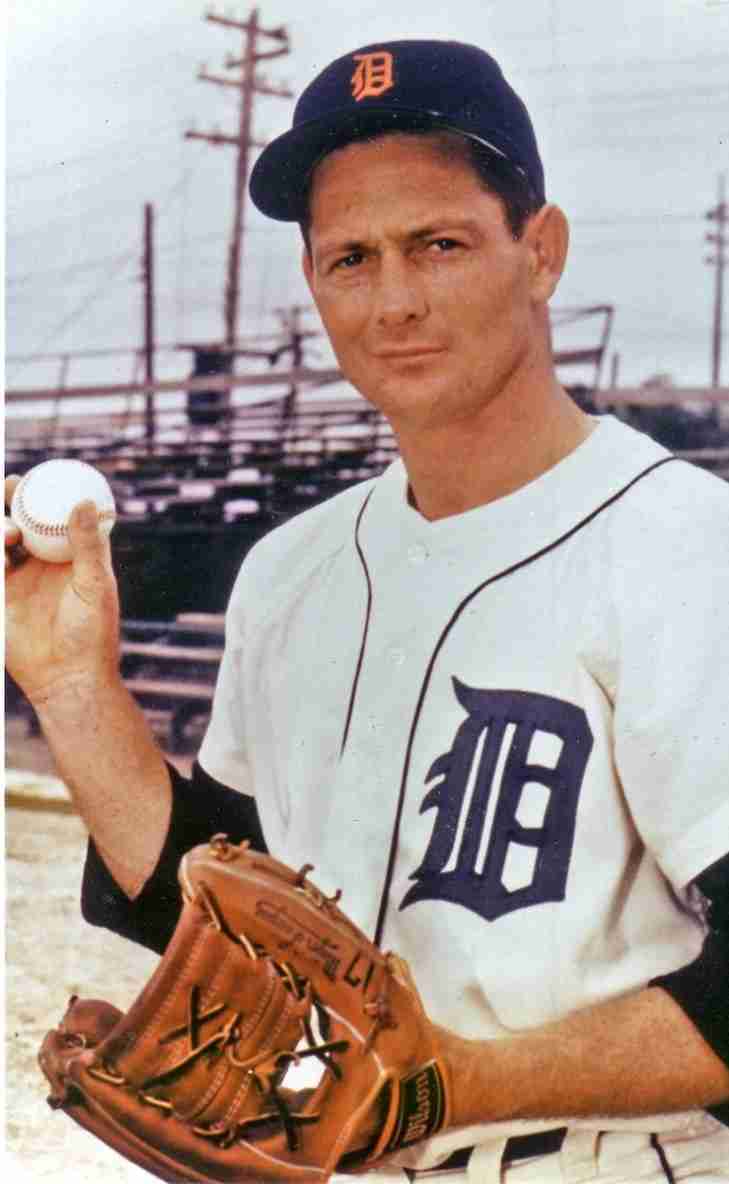
Frank Lary arrived in Detroit as a workhorse right-hander who possessed a unique psychological edge over the most dominant dynasty in the sport. While he was a reliable presence against the entire American League, he earned his place in Tigers folklore as the "Yankee Killer," a pitcher who seemed to reach a different level of intensity whenever the pinstripes were in the opposing dugout.
Lary’s emergence in Detroit reached a definitive peak during the 1956 campaign. After showing promise in his initial seasons, he secured his place as a premier starter by leading the American League with 21 wins. This performance signaled a transition from a young arm to a frontline leader who specialized in high-frequency workloads. He showed the organization that he was a foundational piece of the staff, leading the league in innings pitched for the first of three times and providing the dependable, day-to-day production that kept the Tigers competitive during a rugged era of baseball.
The core of his time in Detroit was defined by elite efficiency and a reputation for durability. Between 1955 and 1961, Lary was a statistical force who routinely surpassed 250 innings and 20 complete games. He reached a career peak during the 1961 season, where he won 23 games, earned his second All-Star selection, and finished third in the Cy Young voting. Despite the heavy physical toll of his delivery, he remained a model of resilience, eventually recording 123 wins in a Detroit uniform. His legacy, however, was anchored by his mastery of the New York Yankees; his 27-10 career record against the Bronx Bombers made him a folk hero in the Motor City.
During the 1964 season. The Tigers eventually traded their veteran ace to the New York Mets, marking the end of an era for the Detroit rotation. With the Tigers, Lary compiled 123 wins, 1,031 strikeouts, and three American League innings titles.
32. John Hiller
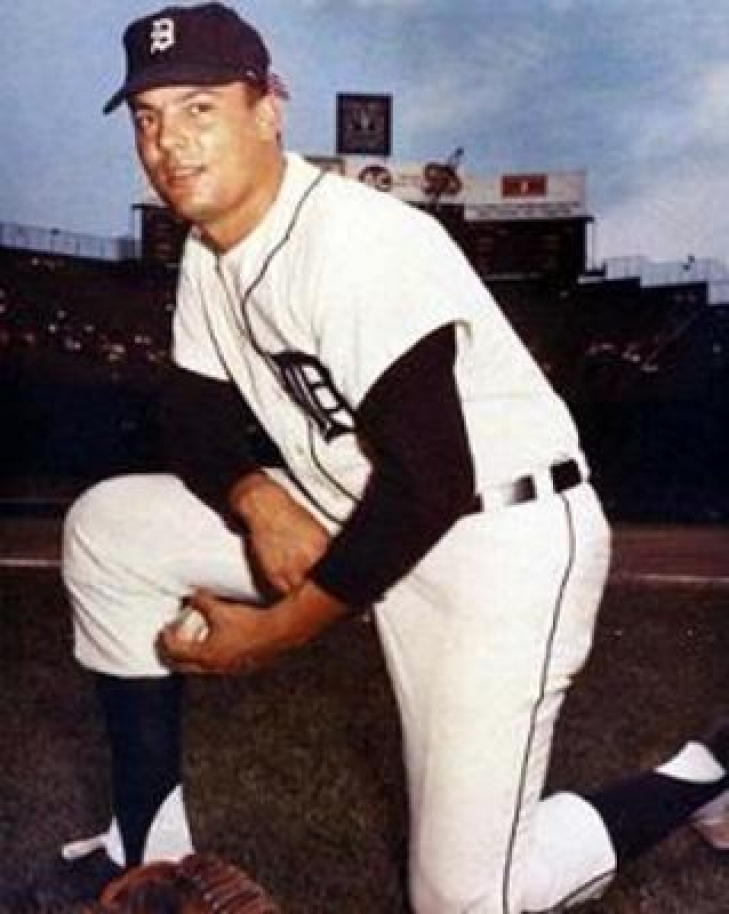
John Hiller carved out a unique place in Detroit history as a left-handed reliever whose career defined the very concept of resilience. While he first established himself as a versatile arm for the 1968 championship squad, his path to becoming a franchise icon was nearly derailed by a massive physical setback. For fifteen seasons, he anchored the Tigers' bullpen, proving that a player could become a premier pillar of the organization by mastering the specialized role of the late-inning stopper long before the modern closer was a standard fixture of the game.
During the 1968 season, he provided the dependable production required of a young arm on a pennant-winning team. However, his journey faced a life-threatening plateau in 1971 when he suffered a major heart attack at the age of 28. Most assumed his playing days were over, but he showed a focused intensity in his recovery that signaled a transition from a sidelined veteran to a premier American League force. He returned to the mound in 1972, setting the stage for a statistical explosion that would redefine the value of a relief pitcher in the Motor City.
The core of his time in Detroit was defined by elite efficiency during the historic 1973 campaign. That summer, Hiller reached a career peak for all-around value, recording 38 saves, a staggering high-frequency mark for an era when relievers often pitched multiple innings per appearance. He finished the season with a 1.44 ERA over 125 innings, earning fourth-place finishes in both the Cy Young and MVP voting. He showed the organization that a reliever could be a primary engine for winning, following that performance with an All-Star selection in 1974. He remained a model of resilience throughout the seventies, eventually recording 125 saves and over 1,000 strikeouts in a Detroit uniform.
26. Dick McAuliffe
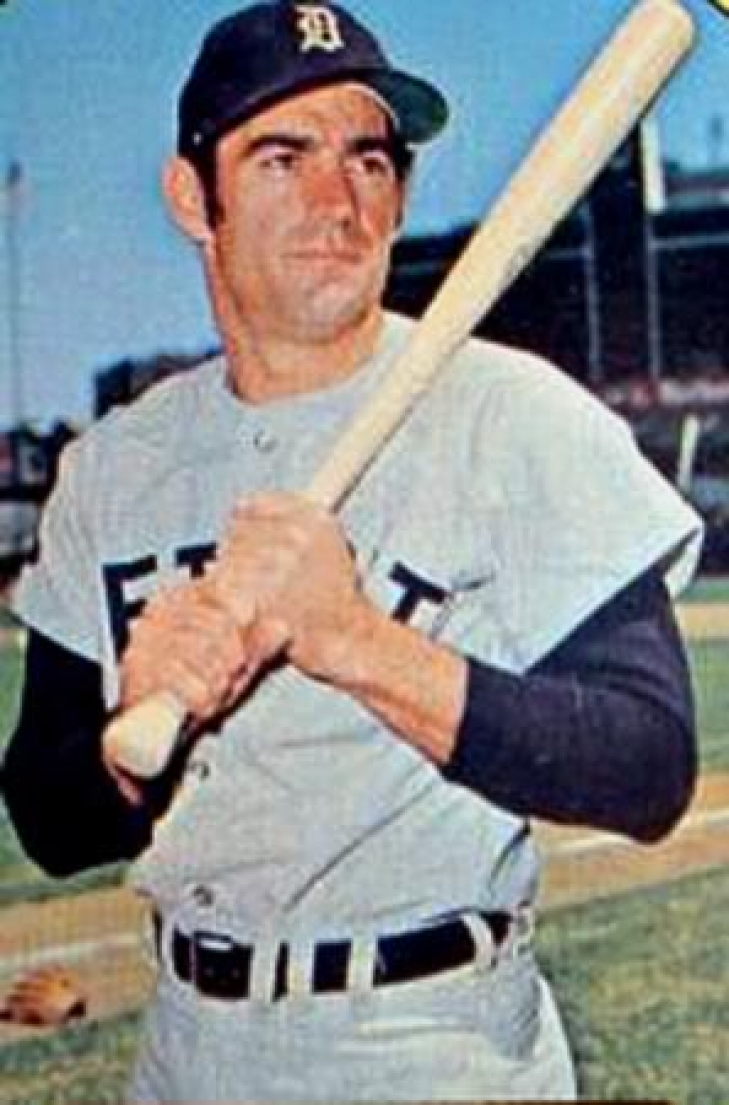
Dick McAuliffe arrived in Detroit as a gritty infielder who defied every conventional rule of the batter's box. With a wide-open, leg-kicking stance that looked more like a challenge than a technique, he became the high-energy spark plug for the most beloved era of Tigers baseball.
Dick McAuliffe arrived in Detroit as a gritty infielder who defied every conventional rule of the batter's box. With a wide-open, leg-kicking stance that looked more like a challenge than a technique, he became the high-energy spark plug for the most beloved era of Tigers baseball. For fourteen seasons, he anchored the middle of the diamond, proving that a player could become a franchise pillar through a relentless pursuit of the plate and a specialized ability to turn a walk or a hit into a run.
McAuliffe’s rise in Detroit began with a transition from a utility prospect to a frontline starter in the early sixties. He reached a career-defining breakout in 1964, hitting 24 home runs and signaling a transition from a defensive replacement to a premier offensive threat at shortstop. He possessed a focused intensity that made him a nightmare for American League pitchers, as his strange batting stance allowed him to generate surprising power from his small frame. By 1965, he had reached a new gear of consistency, earning the first of three consecutive All-Star selections and providing the dependable, day-to-day production that kept the Tigers in the hunt for a pennant.
The heart of his time in Detroit was defined by a decade of defensive versatility and a disciplined eye. While he spent time at shortstop, his move to second base solidified the Tigers' infield defense during their most successful run. He reached a career peak during the historic 1968 campaign, where he led the American League in runs scored (95) and didn't ground into a single double play the entire season.
Everything culminated in the 1968 World Series title, where McAuliffe served as the emotional lead-off man for a championship squad. However, the natural evolution of the roster and the team’s shifting needs led to a change in direction following the 1973 season. The Tigers traded their veteran infielder to the Boston Red Sox, leaving the Motor City as one of the most productive middle infielders to ever play at the corner of Michigan and Trumbull. He left behind 1,391 hits and nearly 200 homers.
19. Jim Bunning
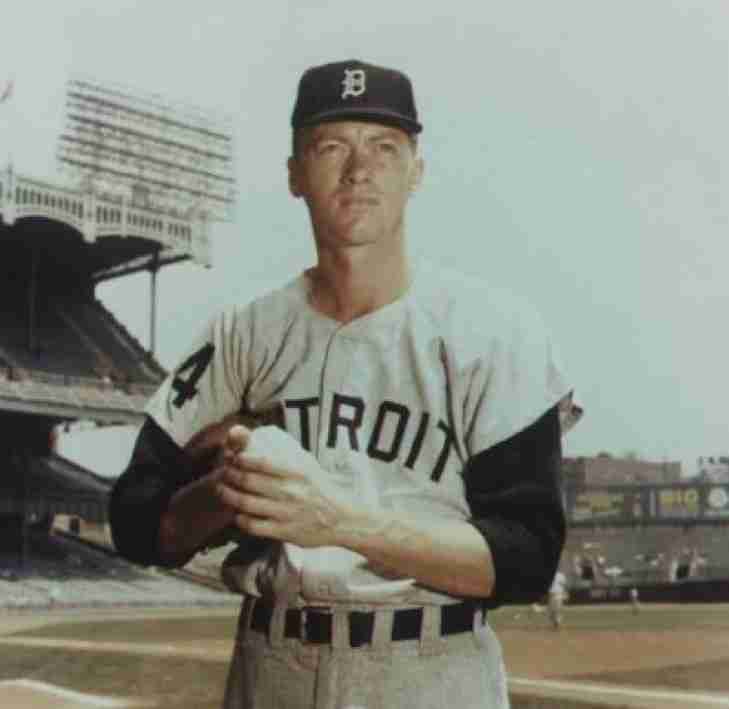
The trajectory of Jim Bunning in Detroit is a study of a specialized technician who arrived as a project and left as an elite hurler. While he is often associated with the perfect game he later threw in Philadelphia, Bunning’s professional foundation was built in the Motor City. For nine seasons, he served as the high-frequency engine of the Tigers' rotation, a sidearm-throwing right-hander whose deceptive delivery and focused intensity made him one of the most difficult matchups in the American League during the late 1950s.
Bunning’s ascent in Detroit began in earnest in 1957, a season that served as his arrival. After a few inconsistent years of seasoning, he reached a definitive level of efficiency by leading the American League with 20 wins and a 2.60 FIP. He possessed a specialized, cross-fire delivery that hid the ball until the last possible second, a style that allowed him to strike out 182 batters and earn the first of five All-Star selections with the club. He proved that a pitcher could become a franchise pillar by mastering the tactical demands of the "inner half," a steady-state approach that kept him at the top of the league's leaderboards for years.
The hallmark of his time in Detroit was a relentless run of high-frequency strikeout totals. In 1959 and 1960, he led the American League in strikeouts both seasons. During this window, he was a model of specialized durability, routinely throwing over 250 innings and maintaining a professional poise even as the Tigers struggled to find a consistent supporting cast. He famously threw a no-hitter against the Red Sox in 1958, signaling his transition into the upper echelon of the game's starters. He wasn't just a "solid contributor"; he was the arm the Tigers relied on to stop every losing streak, eventually amassing 118 wins in a Detroit uniform.
Despite the high-leverage workload, he finished his tenure with 1,406 strikeouts and a winning record in seven of his nine seasons with the club. However, the organization decided to pivot toward youth, trading Bunning to the Phillies following the 1963 season in a move that remains one of the most lopsided in franchise history. He departed as a five-time All-Star and a no-hit hero, a man who arrived as an unheralded prospect and left as a statistical titan of the mound.
The story in Detroit reached its final punctuation in 1996 when Bunning was inducted into the Baseball Hall of Fame. While he chose to wear a Phillies cap on his plaque, his legacy remains deeply rooted in the Motor City as one of the most dominant right-handers in club history.
20. George Mullin
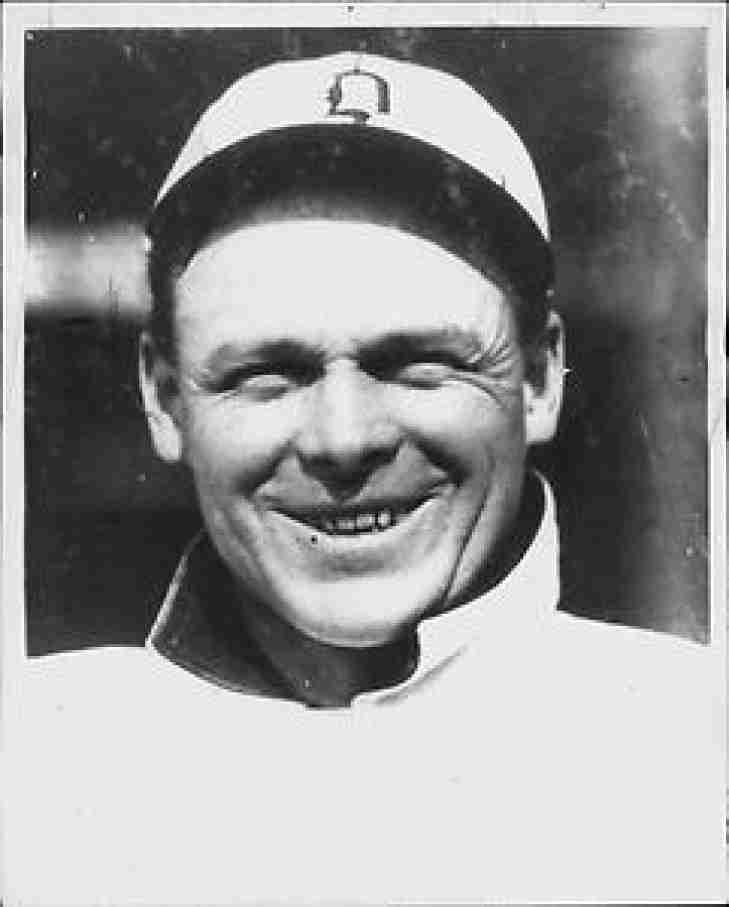
George Mullin was the immovable object at the center of the first great Detroit Tigers dynasty. A thick-set right-hander with a legendary appetite and an even greater capacity for work, Mullin was the engine that allowed Ty Cobb and Sam Crawford to chase pennants. While he was often a statistical outlier for his lack of control, frequently leading the league in walks, he compensated with a specialized durability that has never been matched in franchise history.
Mullin’s ascent in Detroit began in 1902, and he immediately showed his ability as a workhorse. In just his third season, he reached a staggering level of volume, pitching 403.1 innings, a single-season Tigers record that will likely never be challenged. He was a model of specialized resilience, frequently exceeding 20 wins and 300 innings as he anchored the rotation through the turn of the century. He wasn't a tactical artist; he was a power-pitching workhorse who dared hitters to beat him, a style that saw him lead the American League in walks four times but also kept him at the top of the leaderboards for complete games.
Everything culminated in a three-year run of American League dominance from 1907 to 1909. During this window, Mullin reached a definitive professional zenith, serving as the primary starter for three consecutive pennant-winning squads. In 1909, he led the league with 29 wins and a .784 winning percentage, providing the steady-state reliability required to fend off the rest of the AL. While the Tigers famously failed to secure a World Series title during this era, Mullin reached a professional high point in October; over six starts in the Fall Classic, he maintained a microscopic 1.86 ERA and a 3-3 record, proving his focused intensity could survive the highest stakes.
The final chapters of his Detroit residency showcased a rare, multi-dimensional athleticism. Mullin wasn't just a specialized arm; he was one of the most dangerous hitting pitchers in the game’s history. He finished his Tigers tenure with 372 hits and a .261 batting average, often being called upon to pinch-hit in high-leverage moments. He possessed a specialized power at the plate that complemented his 209 career wins, and he eventually left the organization in 1913 as the franchise leader in both wins and innings pitched.
22. Bill Donovan
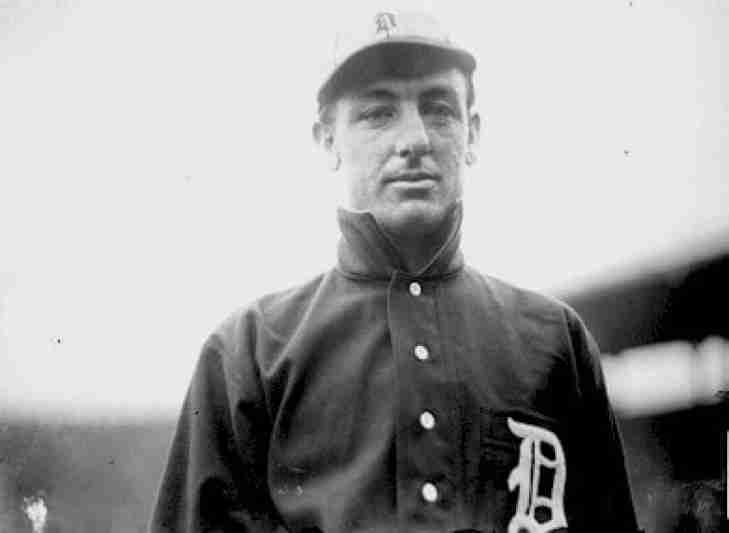
Bill Donovan didn’t just change teams when he arrived in Detroit in 1903; he changed the trajectory of the franchise. Having "jumped" from the National League’s Brooklyn Superbas to the upstart Tigers, he brought a specialized, high-velocity heater that earned him the nickname "Wild Bill." His early years in the Motor City were defined by a high-frequency workload, as he routinely threw over 250 innings while battling the control issues that came with his raw power. He wasn't a finished product yet, but he was a model of physical resilience, providing a steady presence in the rotation as the Tigers built a contender around Ty Cobb.
Everything clicked into a historic gear during the 1907 campaign. That summer, Donovan moved past his "wild" reputation and reached a career high-water mark for efficiency. He finished the season with a 25-4 record, setting a franchise-record .862 winning percentage that remains untouched over a century later. He wasn't just a volume thrower; he was a model of high-leverage dominance, maintaining a 2.19 ERA and leading the American League to its first pennant of the era. This season signaled his transition from a talented arm to a true franchise pillar.
The middle of his tenure saw him serve as the engine for two more pennant-winning rotations in 1908 and 1909. During this stretch, Donovan was a specialized big-game performer. He reached a new level of reliability, winning 18 games in 1908 and proving his 25-win breakout was no fluke. He possessed a focused intensity that allowed him to thrive as a "horse" in the rotation, and his craftsmanship extended to the batter's box. As an above-average hitter for a pitcher, he finished his Detroit run with 230 hits and a .207 average, often providing the specialized offense needed to keep a rally alive.
The final chapters of his Detroit story reached a natural crescendo as the heavy workloads of the Deadball Era began to catch up with him. While his efficiency dipped in the early 1910s, he maintained a veteran-like poise, mentoring the younger arms before moving on to a career in managing. He left the organization with 140 wins and a legacy as the most electric pitcher of the team's first golden age.
21. Hooks Dauss
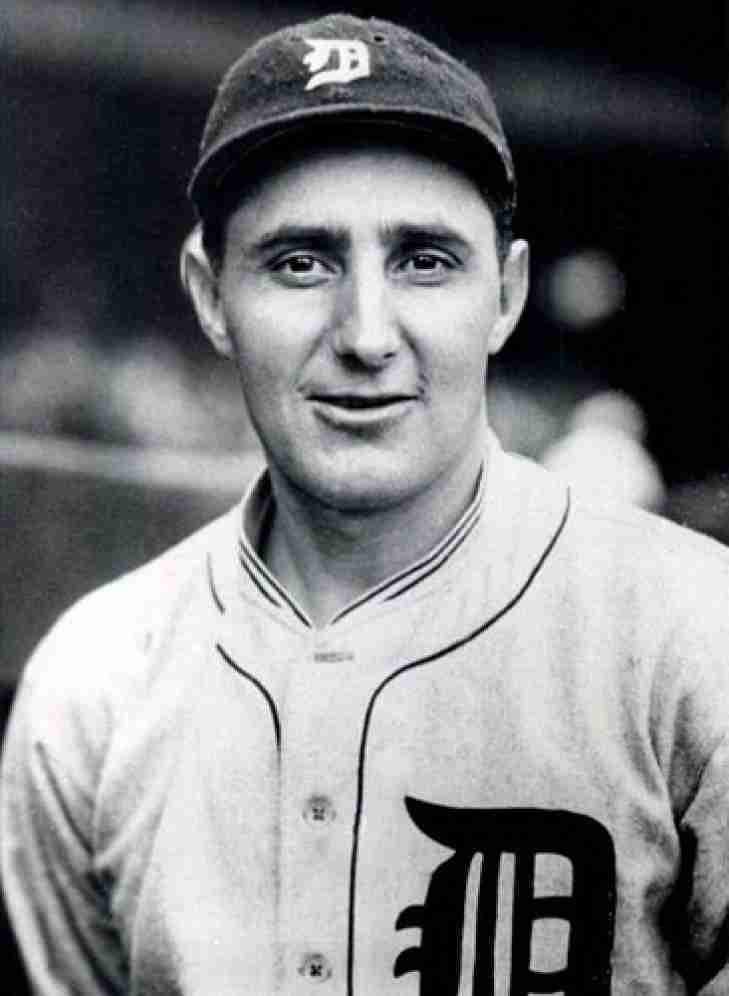
The story of "Hooks" Dauss is one of quiet, unwavering longevity in a city that usually preferred its stars loud and aggressive. Arriving in Detroit just as the first great Tigers dynasty was beginning to pivot, Dauss didn't rely on the raw velocity of his predecessors. Instead, he possessed a specialized curveball so devastating that it earned him a nickname that followed him for fifteen seasons. While he spent much of his prime pitching behind the shadow of Ty Cobb’s offensive fireworks, Dauss became the steady rock of the Detroit rotation.
Dauss began to establish his foothold in 1913, his first full year in the big leagues. At just 24 years old, he reached a high-water mark for efficiency, winning 13 games with a 2.48 ERA and proving he could maintain his composure against the best of the American League. He wasn't a tactical experiment; he was a model of specialized movement, using that patented curve to navigate a Deadball Era where hitters lived on contact. By 1915, he hit a new gear, recording the first of his three 20-win seasons and establishing himself as the primary outlier in the Tigers' staff.
The middle of his tenure was defined by a relentless presence on the mound. Between 1913 and 1923, Dauss was a model of physical resilience, exceeding 200 innings in ten different seasons. He reached a career peak in 1919 and again in 1923, crossing the 20-win plateau both times and proving that his poise could survive the transition into the high-scoring "Live Ball" era. He possessed a focused intensity that allowed him to adapt as the game around him changed, finishing in the league’s top ten in wins on five separate occasions. He showed the organization that a pitcher could become a franchise pillar by simply being the most reliable man in the clubhouse.
The final chapters of his Detroit story reached a historic crescendo in the mid-1920s. While his physical stuff began to show the natural wear of a decade-plus workload, Dauss continued to pile up the wins required to rewrite the record books. He eventually surpassed George Mullin for the most victories in Tigers history, a statistical footprint that has remained untouched for nearly a century.
With the Tigers, Dauss compiled a franchise-record 223 wins, 1,201 strikeouts, and a 3.30 ERA across fifteen seasons.
23. Rudy York
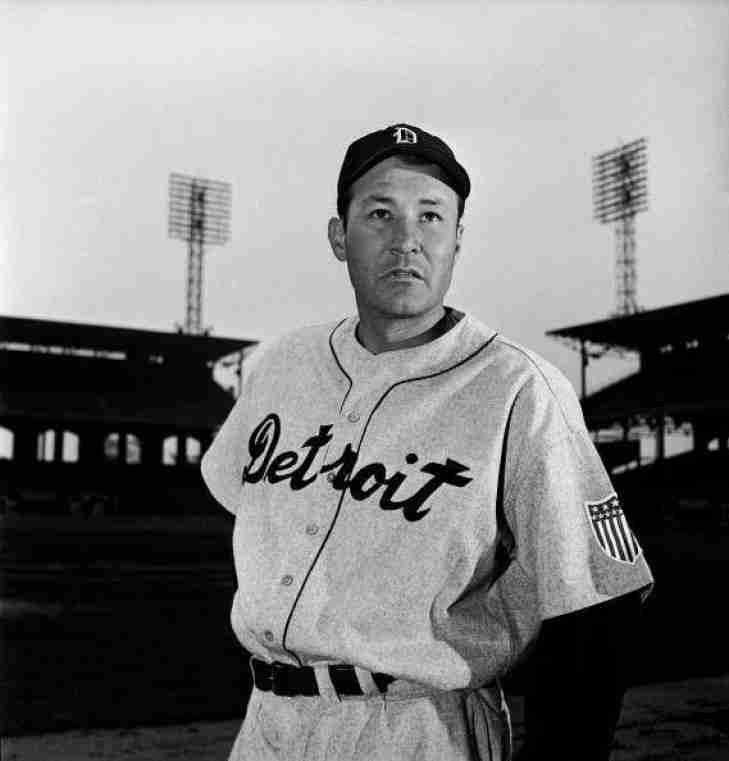
Rudy York arrived in Detroit as a defensive puzzle but an offensive powerhouse, a man whose specialized power was so undeniable the Tigers had to find a place for him on the diamond. Whether he was behind the plate or at first base, York provided a high-frequency home run threat that bridged the gap between the era of Mickey Cochrane and the post-war stars. For a decade in the Motor City, he was the middle-order muscle that kept the Tigers in the hunt, proving he could produce elite numbers regardless of whether the league's best were on the field or serving overseas.
York’s ascent in Detroit began with a historic explosion in 1937. As a rookie, he reached an unprecedented gear in August, hitting 18 home runs in a single month—a major league record that stood for eight decades. He finished his debut season with 35 homers and 101 RBIs, signaling a transition from a prospect to a franchise pillar almost instantly. He possessed a focused intensity at the plate that made him a nightmare for American League pitchers, a style that allowed him to smack at least 20 home runs in seven consecutive seasons. He wasn't just a "solid contributor"; he was a model of pure slugging who provided the run-scoring volume the Tigers built their lineup around.
In 1943, while the war had thinned some rosters, York proved his hitting was elite by leading the American League in home runs (34), RBIs (118), and slugging percentage (.527). He finished third in the MVP voting that season, an outlier who anchored a Detroit squad that remained a perennial contender. He was a seven-time All-Star, an honor that reflected how his peers regarded him as one of the era’s premier offensive forces. He showed the organization that a player could become a legend by simply being the most dangerous man in the batter's box every afternoon.
Everything culminated in the 1945 championship run. York provided a veteran-like poise for the Tigers as they chased the pennant, contributing 18 home runs and 87 RBIs during the regular season. While his individual numbers in the World Series were modest, his presence in the cleanup spot was a deterrent that helped Detroit secure the title over the Cubs. Following the 1945 season, with the war over and stars like Hank Greenberg returning to full-time action, the Tigers viewed the 32-year-old York as a trade chip whose defensive limitations outweighed his power. In January 1946, Detroit dealt him to the Boston Red Sox for shortstop Eddie Lake, a move that prioritized infield defense over York’s aging bat.
He left the club as one of the most prolific right-handed hitters to ever wear the uniform, having amassed 239 home runs and 1,317 hits.
14. Mickey Lolich
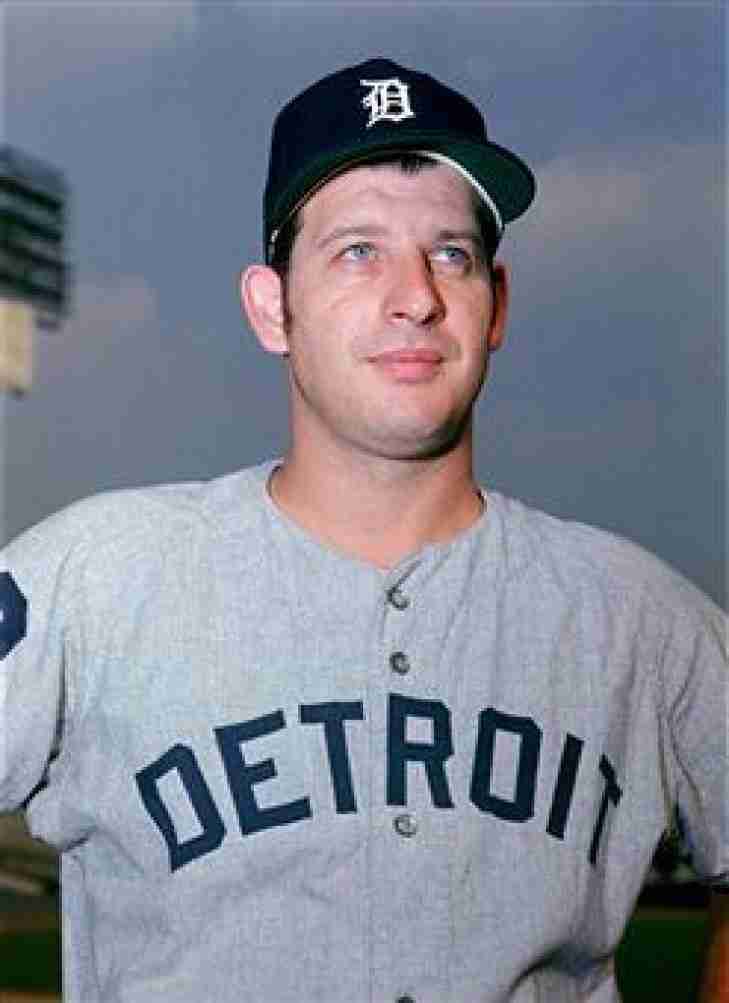
For much of his tenure in Detroit, Mickey Lolich operated as the persistent, left-handed shadow to more flamboyant headlines. While others captured the national imagination with historic win totals or fiery personalities, Lolich simply went to work, building a resume defined by a relentless, rubber-armed durability. He wasn't just a cog in the rotation; he was the primary engine of the Tigers' pitching staff for over a decade.
Lolich’s time in the Motor City was a study in high-volume excellence. He established himself as a model of specialized endurance, eventually setting franchise records for starts (436), innings pitched (3,361.1), and strikeouts (2,679). While the 1968 regular season belonged to Denny McLain’s historic 31 victories, the postseason narrative was authored entirely by Lolich. In one of the most legendary displays of professional resilience in the history of the sport, he started and won three games during the 1968 World Series. His career is best known for his historic performance in Game 7, where he outdueled the great Bob Gibson on just two days' rest to secure Detroit's first title in over twenty years.
The hallmark of his game was a unique ability to maintain his velocity and command deep into games and seasons. In 1971, Lolich reached a statistical outlier status by leading the American League in wins (25), strikeouts (308), and innings pitched (376). He finished second in the Cy Young voting that year, a season of such profound individual value that he famously completed 29 of his 45 starts. He possessed a specialized stamina that allowed him to remain the most efficient run-preventer on the roster long after his contemporaries had faded, proving that a player could become a franchise pillar through sheer, unyielding reliability.
His presence on the mound was defined by a focused intensity and a workmanlike approach that endeared him to the blue-collar Detroit fan base. Whether he was famously striking out over 200 batters in seven different seasons or providing the veteran-like poise needed to guide the Tigers to the 1972 division title, he competed with an energy that solidified his status as a local icon.
In 1975, he was traded to the New York Mets, marking the end of a thirteen-year journey. He departed as a three-time All-Star and a World Series MVP, benchmarks that reflect a career built on technical mastery and physical toughness. With the Tigers, Lolich compiled 207 wins and 2,679 strikeouts.
18. Jack Morris
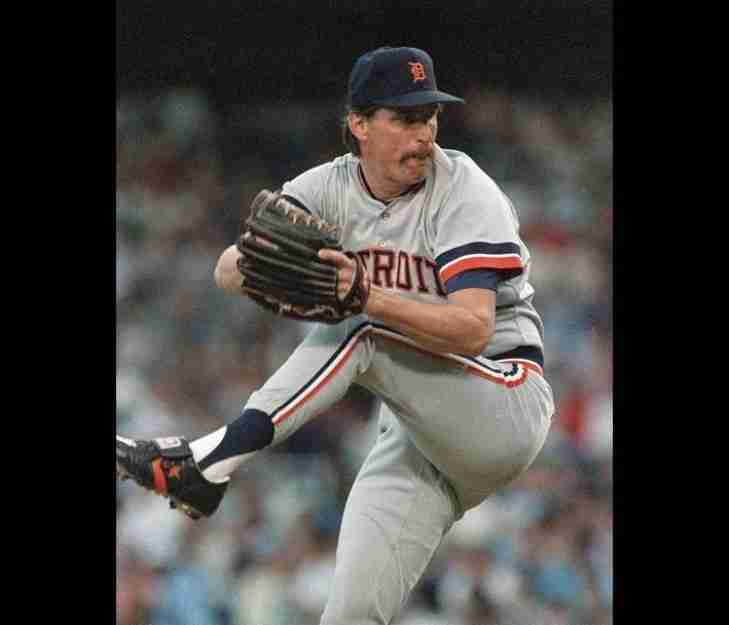
Jack Morris was the definitive workhorse of his era, a pitcher who didn't just inhabit the rotation; he owned it. For fourteen seasons in Detroit, he was the embodiment of the "big game" starter, a man whose competitiveness was as legendary as the split-fingered fastball that eventually made him the winningest pitcher of the 1980s. While he wasn't always a darling of the scouts who favored efficiency over grit, Morris possessed a specialized durability that allowed him to finish what he started, leading the league in innings and complete games while anchoring a championship staff.
Morris’ ascent in Detroit began in the late 1970s, but he arrived in 1979 when he won 17 games and established himself as the rotation’s primary outlier. By 1981, he had matured into a tactical ace, leading the American League with 14 wins in a strike-shortened season and earning his first All-Star nod. He was a model of high-frequency excellence, often categorized by his "bent-back" delivery and a focused intensity that made him a nightmare for opposing hitters. He proved that he could maintain professional poise even under the heaviest workloads, throwing over 240 innings across five seasons for the club.
Everything culminated in the historic 1984 campaign. Morris signaled his transition into a franchise pillar early that year by throwing a no-hitter against the White Sox in just his second start of the season. In the postseason, going 3-0 across the ALCS and World Series. In the Fall Classic against the Padres, he threw two complete-game victories, including the clincher in Game 5, proving to the world that he was a specialized big-game performer. He finished his Detroit residency with 198 wins, including a league-leading 20-win season in 1983 and three other seasons where he finished in the top five of the Cy Young voting.
The final chapters of his Tigers tenure saw him maintain a steady-state reliability as the veteran-like leader of the staff. While he eventually moved on to win three more rings with Minnesota and Toronto, his identity remained deeply rooted in the Motor City, where he amassed 1,980 strikeouts and 154 complete games. He was a horse who thrived on the psychological edge of the mound, a style that eventually carried him to the Hall of Fame via the Veterans Committee in 2018.
The story in Detroit reached its final punctuation later that summer when the Tigers retired his number 47, placing him forever among the icons of the franchise.
24. Donie Bush
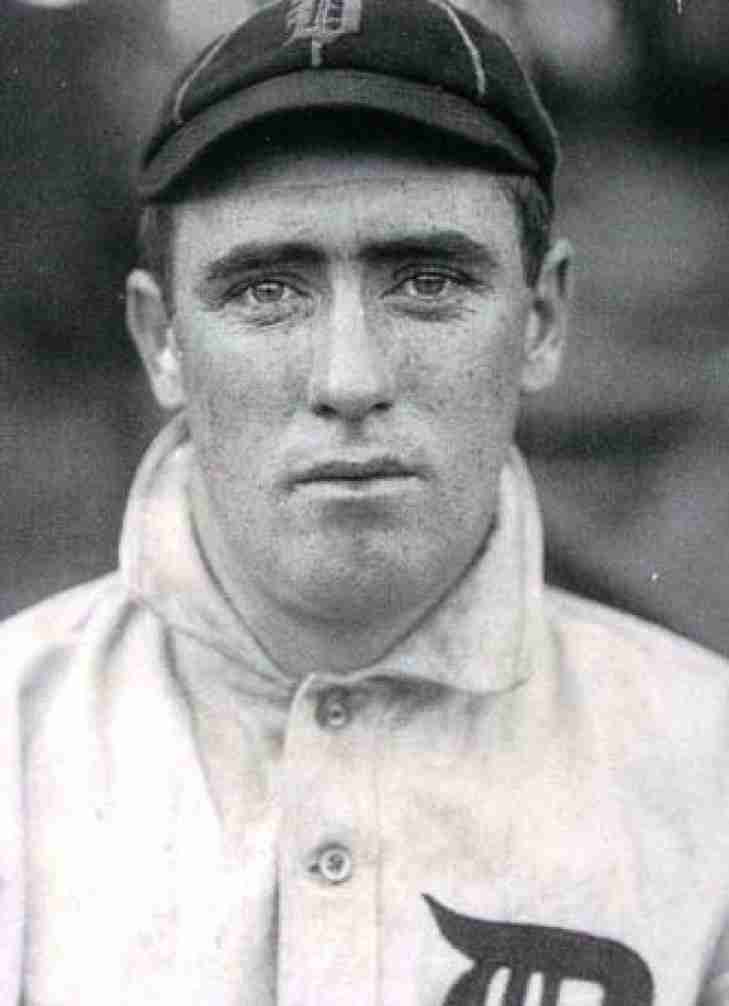
Donie Bush arrived in Detroit as a defensive specialist whose glove was as quick as his name was short. In an era where the Tigers' lineup featured the thunder of Ty Cobb and Sam Crawford, Bush provided the quiet, tactical foundation that allowed the offense to function. For fourteen seasons, he anchored the middle of the infield, proving that a player could become a franchise pillar not by overpowering the ball, but by mastering the art of the walk and the precision of the shortstop position.
Bush’s rise in Detroit began with an immediate impact on the grass in 1908. By 1909, he had secured his place as the everyday shortstop for a pennant-winning squad, proving he could handle the defensive rigors of the dead-ball era. He reached a career-defining breakout during that first full season, where he led the American League in walks with 88, a high-frequency achievement he would repeat four more times in his career. He possessed a focused intensity at the top of the order, signaling a transition from a young prospect to a premier table-setter who prioritized getting on base for the Hall of Fame bats behind him.
The core of his tenure was defined by a decade of defensive excellence and a disciplined eye. Between 1909 and 1915, Bush reached a peak for all-around value, finishing in the top ten in defensive bWAR nearly every season. While his .250 batting average was modest even for his day, his ability to draw walks made him an outlier in efficiency. He showed the organization that a player could be a primary engine for run scoring without a massive slugging percentage, routinely scoring 90 or more runs as the Tigers remained a perennial threat in the American League. He was a model of physical resilience, often playing over 150 games a year in a time when the diamond was a rugged environment.
Everything culminated in a sustained run of consistency that saw him amass 1,745 hits in a Detroit uniform. However, the game’s natural evolution and the shifting needs of the roster led to a change in direction following the 1921 season. Bush was placed on waivers and claimed by the Washington Senators, leaving the Motor City as the club's all-time leader in walks and one of its most durable infielders. He left behind a defensive bWAR of 9.9, a statistical footprint that reflected his status as the most reliable glove the Tigers had ever seen at the position.
15. Dizzy Trout
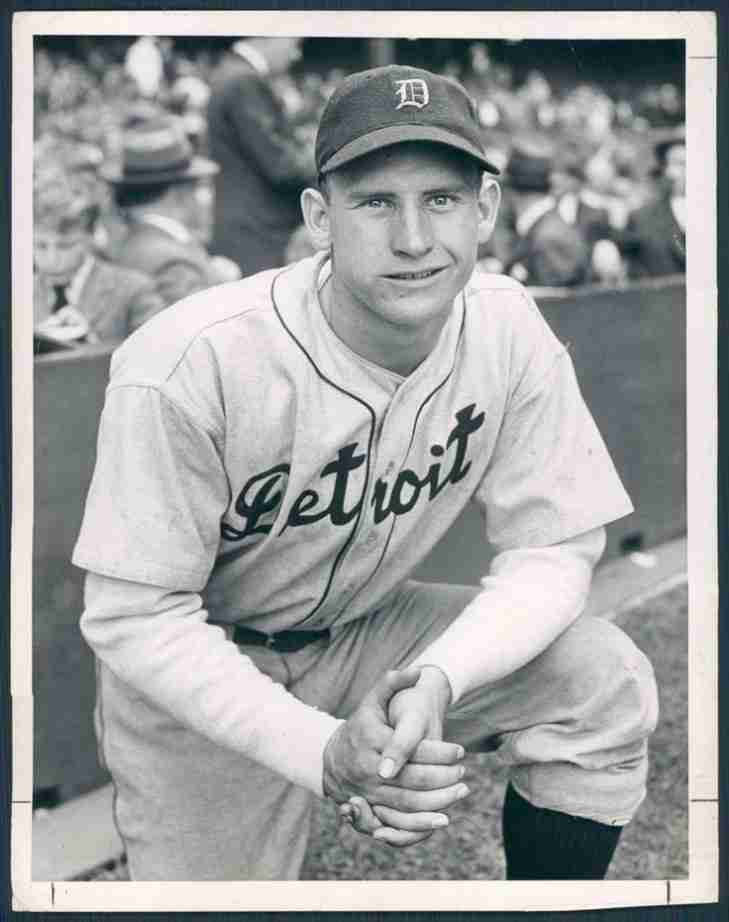
The story of "Dizzy" Trout is a fascinating narrative of a pitcher who became a titan of the American League during one of baseball's most unique eras. For fourteen seasons, Trout was a mainstay of the Detroit Tigers' rotation, evolving from a struggling young arm into one-half of the most feared pitching duo in the game. While he thrived during the depleted years of World War II, his longevity and professional resilience allowed him to remain a tactical asset for Detroit long after the stars returned from overseas.
When he debuted in 1939, he arrived with a "Dizzy Dean" persona, a loud-talking, colorful character who spent more time "clowning" than dominating. His first four seasons were defined by a losing record (33-44) and a lack of focus, even as he struggled during the Tigers' 1940 pennant run, when he was largely relegated to the bullpen and lost his only World Series start. It wasn't until 1943 that Trout finally abandoned the antics and matured into a professional, anchoring the staff with 20 wins and five shutouts, signaling his transition into a premier AL ace.
His career reached a definitive zenith in 1944, a season in which he and teammate Hal Newhouser nearly carried Detroit to the pennant by themselves. That summer, Trout led the major leagues with a 2.12 ERA and won 27 games, finishing as the runner-up for the AL MVP. He possessed a specialized durability that saw him lead the league in innings pitched (352.1), complete games (33), and shutouts (7). He was a model of specialized efficiency during this run, dominating as both a high-frequency starter and an occasional high-leverage reliever when the team needed a save.
The hallmark of his time in Detroit was his focused intensity during the 1945 World Series run. While his regular-season win total dropped to 18, he reached a professional high point in the postseason against the Chicago Cubs. Trout was a primary engine of the championship, recording a critical five-hit, complete-game victory in Game 4. He finished the Series with a 1.72 ERA and a sub-0.9 WHIP, showing that his tactical poise could survive the highest stakes. He eventually amassed 161 wins in a Detroit uniform, maintaining a steady-state effectiveness that saw him finish in the top ten in ERA as late as 1950.
His tenure with the organization ended during the 1952 season, when he was included in a massive nine-player trade to the Boston Red Sox. He departed as a World Series champion and a two-time All-Star, a man who arrived as a "clown" and left as one of the most decorated and durable arms in Tigers history.
As a Tiger, Trout compiled a 161-153 record with a 3.20 ERA and 1,199 strikeouts across fourteen seasons.
