


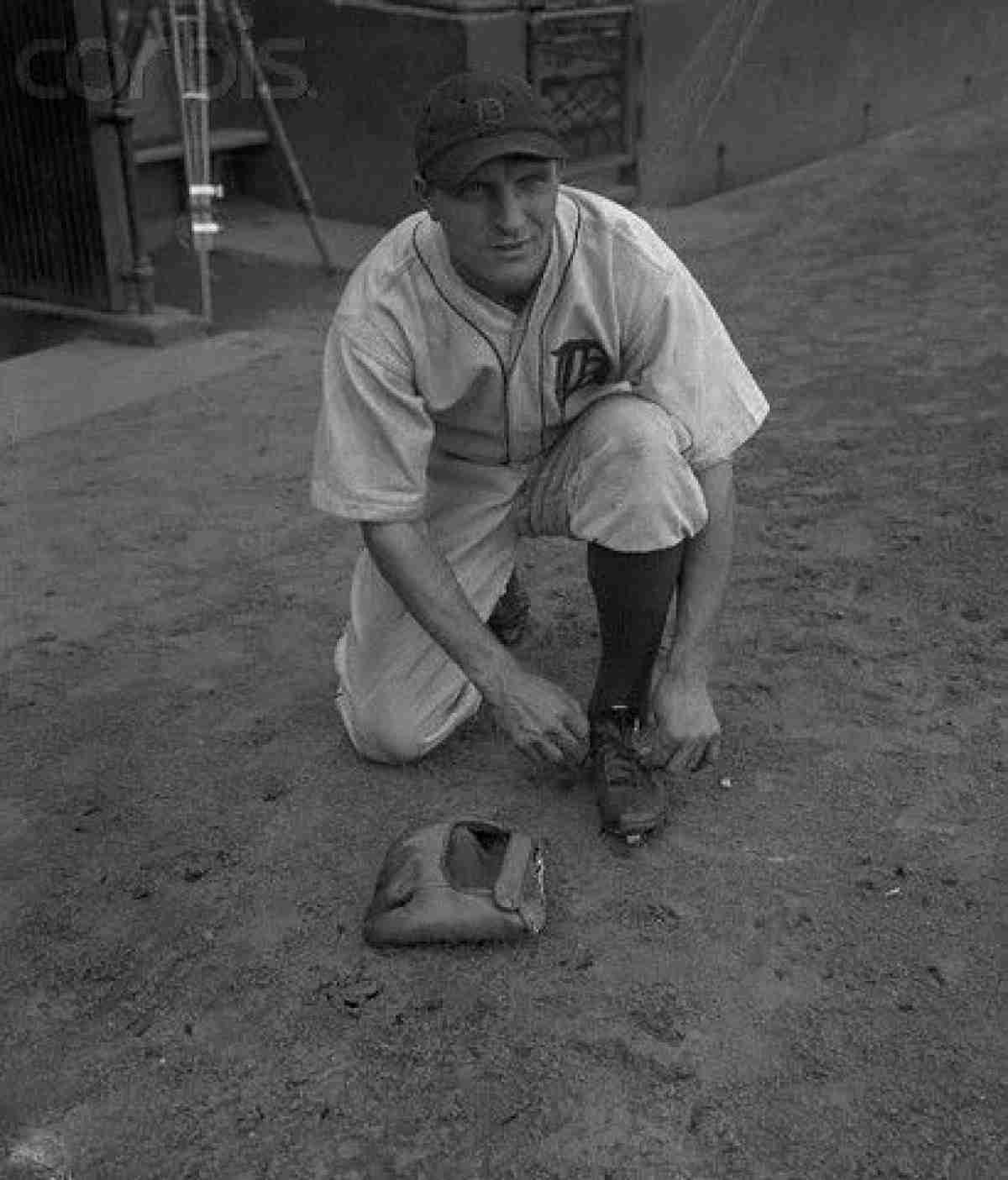
While many of the 1930s Tigers legends were homegrown, Billy Rogell’s arrival in Detroit was the result of a calculated gamble by the front office to fix a glaring hole in the middle of the diamond. He didn't start his career Detrotit; instead, he broke in with the Boston Red Sox in the late 1920s.
By 1930, however, Rogell found himself at a career crossroads. Boston had traded him to the St. Louis Salukis of the minor leagues, where he began to truly master the shortstop position. It was there that the Tigers’ scouts noticed his elite defensive range and high-velocity arm. Seeking a steady hand to anchor their infield, Detroit purchased his contract from St. Louis in 1930.
He didn't become the everyday starter immediately, but by 1932, he had completely seized the job. His arrival proved to be the final defensive piece the Tigers needed to transition from a middle-of-the-pack team into a powerhouse. By pairing Rogell’s vacuum-like glove with Charlie Gehringer’s precision at second base, the Tigers built a defensive wall that would eventually lead them to the 1935 World Series title.
By the late 1930s, the physical toll of his high-velocity style of play, specifically, a lingering arm injury sustained during the 1938 season, began to affect his legendary range. Despite the pain, he remained a model of durability, continuing to anchor the middle of the diamond and providing the steady-state leadership required as the 1935 championship core began to age.
Following the 1939 season, the Tigers traded their long-time defensive anchor to the Chicago Cubs for shortstop Dick Bartell. With the Tigers, Rogell compiled 1,332 hits, led the AL in defensive bWAR three times, and won the 1935 World Series.






Comments powered by CComment