


Committee Chairman
Notinhalloffame NHL Cup Standings Update (130)

If you are a regular visitor at Notinhalloffame.com, you know that we created the Notinhalloffame NHL Cup, where in every regular season game, we award points (5-4-3-2-1) to the top five performers. This is the second year that we have done this, and Edmonton’s Connor McDavid won the first one.
To keep everyone regularly in the loop this time, we have decided to give regular updates, starting at when the first player cracked 40 Points, and tell all of you the top ten. We will this going forward with every update as the first player breaches the elevated ten-point threshold afterward.
Here is the current top ten, based on the first player to breach 130 Notinhalloffame Cup Points:
1. Connor McDavid, Edmonton Oilers. 132 Cup Points: 62 Games, 52 G, 66 A, 118 P, +11, 14.0 PS. (#1 on last update)
What more can we say about McDavid’s 2022/23 Season. He is running away with every major statistical category, and has a commanding lead in Cup Points. Last year’s Notinhalloffame NHL Cup winner is extending his lead and he is currently the league-leader in Goals (52), Assists (66), Points (118) and Point Shares (11.9). The Hart, Pearson, Richard and Art Ross are his to lose.
2. Mikko Rantanen, Colorado Avalanche. 97 Cup Points: 59 Games, 41 G, 31 A, 72 P, +7, 8.9 PS. (#4 on last update)
Rantanen climbs back up to the runner-up spot, but the gap between #1 and #2 has never been larger. He is also third in Goals (34) and fifth in Points (66).
3. (TIE) David Pastrnak, Boston Bruins. 96 Cup Points: 60 Games, 42 G, 38 A, 80 P, +27, 10.6 PS. (#2 on last update)
Pastrnak drops a spot, but is still having one of his best years to date. He currently is leading the NHL in Shots (285), is second in Goals (42) and fourth in Points (80).
3. (TIE) Nathan MacKinnon, Colorado Avalanche, 96 Cup Points: 48 Games, 24 G, 49 A, 73 P, +23, 8.4 PS. (#5 on last update)
MacKinnon is playing phenomenal hockey, and is the Avs are now the first team (taking over from Boston) to rank two players on a descending list. He is second in Points per Game (1.05).
5. Jack Hughes, New Jersey Devils. 92 Cup Points, 56 Games, 36 G, 38 A, 74 P, +13, 9.1 PS. (#3 on last update)
Hughes fell two spots to number #5, but the two-time All-Star is sixth in Goals (36), tenth in Points (74), and is the offensive leader of what has been a surprisingly good New Jersey squad.
6. Linus Ullmark, Boston Bruins. 91 Cup Points: 38 Games, 31-4-1, 1.88 GAA, .938 Save Percentage, 10.2 PS. (#5 on last update)
Ullmark is the odds-on favorite for the Vezina and is currently the league leader in Wins, GAA and Save Percentage.
7. Brayden Point, Tampa Bay Lightning. 88 Cup Points: 60 Games, 37 G, 33 A, 70 P, +3, 8.2 PS. (#9 on last update)
Point is having a good year, and is a point-per-game player, there are still quite a few players with higher point tallies than the Tampa Center. Saying that, Point has been the most clutch player for the Lightning, and a reason we love this process! He is currently fifth in Goals (37).
8. Brady Tkachuk, Ottawa Senators, 86 Cup Points: 60 Games, 26 G, 37 A, 63 P, -6, 7.0 PS. (#8 on last update)
The Senators continue to load up for the playoffs, despite being currently out of a spot. Tkachuk’s play is the main reason they are going for it, and he is only four Points away from matching last year’s total.
9. Jake Oettinger, Dallas Stars. 85 Cup Points: 46 Games, 25-8-10, 2.29 GAA, .923 Save Percentage, 9.8 PS. (#9 on last update)
In his third season, Oettinger is playing the best hockey of his life and is third in GAA and fourth in the NHL in Save Percentage.
10. Kirill Kaprizov, Minnesota Wild, 84 Cup Points: 61 Games, 37 G, 34 A, 71 P, +3, 8.8 PS. (Not on last update)
The Russian star returns to the top ten and is fifth in Goals (37)
Florida’s Matthew Tkachuk, fell off the top ten.
Our next update will occur when the first player breaks 140 Cup Points.
Proud to be Canadian: NFL Hall of Famers
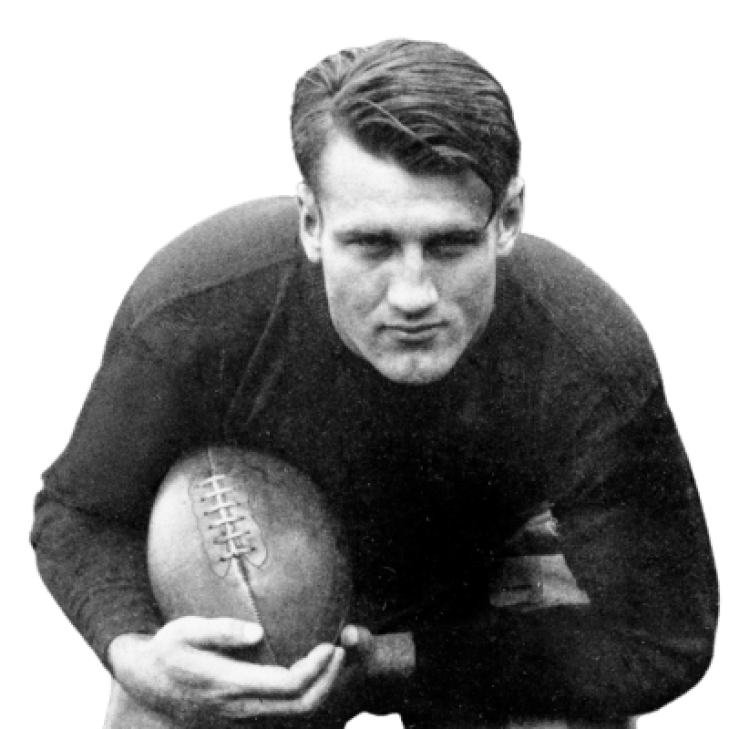
There is a considerable history of Canadian players who have moved south to play in the world’s largest pigskin league, and these players have made waves at some of the top teams in the league. Even right now in the NFL, there are 25 players who have hailed from Canada and show up regularly in the league playing as nose tackles, cornerbacks, receivers and a number of other positions. As we look towards the biggest game of the American football season, and Canadian fans check out Bet99’s Super Bowl bet selection, we’re taking a look back into NFL history for some of the most prestigious Canadian NFL names.
Two Canadian players have achieved the biggest possible single-player accolade in the sport - entry into the NFL’s Hall of Fame. It seems certain that others will follow - maybe some of those currently playing in the league will make it once they have retired - but for now, we’re going to look at the two men who have climbed the ladder to the Valhalla of American gridiron achievement, and get an idea for why they have been recognised among the best to pull on a pair of cleats.
Bronco Nagurski
In recent years, outside of the occasional trick play, football stars have tended to specialise in a specific position, or at least limited their involvement to offensive or defensive play. Back in the day, when squads were smaller, it was not uncommon for players to do their thing on offense and then, when the ball went over to the other team, turn around and play defense. Nagurski was one such player. As a fullback for the Chicago Bears, he racked up more than 4000 yards total offense, threw seven touchdown passes, and then switched around to play as a defensive lineman. In that role, he was pretty much unblockable.
One story about Nagurski goes that he once carried for a touchdown against the Washington Redskins, shaking off two linebackers and watching two defensive backs bouncing off him on his way. He then bounced off the goalposts into a brick wall behind the endzone, and as he joined the huddle for the following PAT told his teammates “That last guy hit me awfully hard”. Maybe true, maybe not, but entirely believable about Nagurski.
Arnie Weinmeister
Saksatchewan native Weinmeister entered the American game in 1945, two years after Nagurski’s retirement. He played exclusively as a defensive tackle, first for the Brooklyn/NY Yankees of the All-America Football Conference, and then for the New York Giants before returning to Canada to play for the BC Lions for a couple of seasons. Across 71 NFL games, he recovered eight fumbles, and gained a fearsome reputation as a hand-in-the-dirt defensive lineman. Although his career span was a relatively short eight years, his impact on the game was enough to elect him to the HoF in 1984.
Standing at 6’ 4 in his playing days and weighing 235lb, Weinmeister was one of the biggest tackles playing the game at the time. This, allied to his incredible pace for a lineman and his ethos of always hitting the other guy first (and hardest) made him a force to be reckoned with at the highest level of the game.
Songs from the Greats of Rock and Roll About the Love for Mature Women
Mature women have always been popular with men of all ages. Whether a hundred years ago or today, no man can resist the charm of a lady over 40. They know how to pick the right words and make any man dedicate poems to them at one glance. In fact, that’s exactly what many rock ‘n’ roll stars have done, and it was their love for mature women that gave birth to songs like Stacy’s Mom or Hot for Teacher.
How Music Connects Lonely Hearts
Music can work miracles; everyone knows that. It heals souls and connects lonely hearts worldwide, no matter what language you speak or what color your skin is. Even just opening any dating site to find MILFs, all you have to do is specify your musical preferences, and within minutes your DM will be stuffed with mature women who share your tastes.
Finding someone who likes the same songs as you is like finding a soulmate with whom you’ll always have something in common, no matter where fate takes you. That’s why many men who want to meet mature women but don’t know how to approach them use the topic of music as an icebreaker on MILF dating sites. And it works because who doesn’t love good old smash hits?
And what about you? Do you consider yourself a fan of classic rock ‘n’ roll? Maybe you share Van Halen and The Police’s love of gorgeous older women and want to get some inspiration before you approach the MILF of your dreams? If so, here are the most famous five songs from big rock artists that celebrate the beauty of older ladies!
- Fountains of Wayne – Stacy’s Mom
If there’s a perfect song dedicated to MILFs, it’s Stacy’s Mom. Fountains of Wayne’s mischievous ode to teenage fantasies was a success. “Stacy’s Mom” reached No. 21 on the Billboard Hot 100 (it was their first song to make the chart) and number 11 in the UK. This song gave the band Grammy nominations for Best Pop Vocal Performance and Best New Artist in 2004.
It is dedicated to gorgeous moms who drive young guys crazy with their stunning sexuality. It’s about how mature women can turn a young guy on in seconds with their small tricks. “Your mom came out with just a towel on / I could tell she liked me from the way she stared / And the way she said, you missed a spot over there.” “Stacy’s Mom” proves that MILFs have always been and always will be popular with men of all ages and all generations!
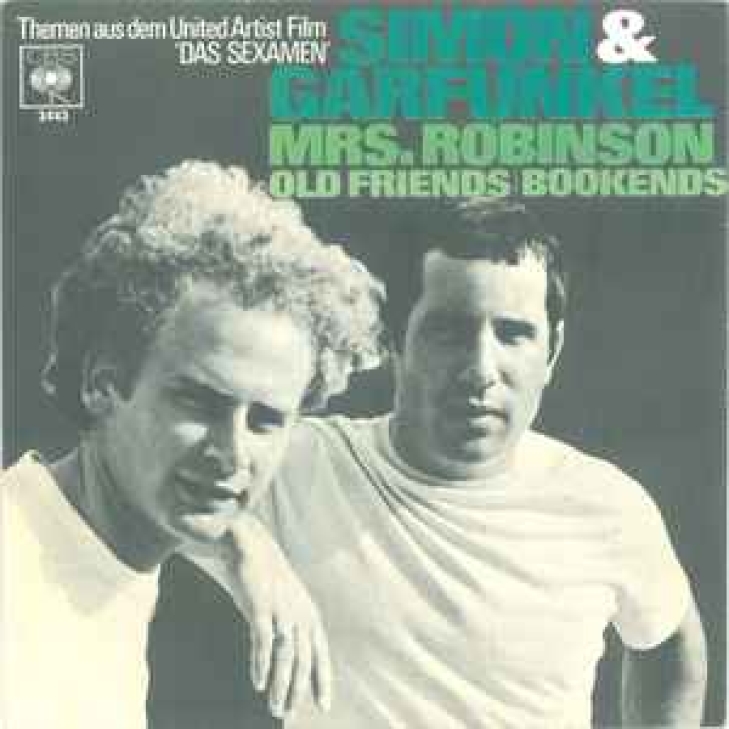
- Simon & Garfunkel – Mrs. Robinson
The song became popular primarily because it was included on the soundtrack of the movie Absolwent with Dustin Hoffman. Mrs. Robinson is played by Anne Bancroft, a middle-aged woman who seduces young Benjamin Braddock (Hoffman). However, the song was originally to be called “Mrs. Roosevelt,” referring (probably) to Eleanor Roosevelt, wife of Franklin Delano Roosevelt.
Because of becoming the soundtrack to a movie that tells the story of a mature woman who seduces a younger man, “Mrs. Robinson” became tightly associated with this kind of relationship. For many years, it was the anthem of men who were crazy about older women.
- Van Halen – Hot for Teacher
It is a typical fantasy of many young students worldwide that doesn’t lose relevance no matter how much time passes. There is something about educated and experienced women that makes guys fall in love with them over and over again. A gorgeous, mature teacher who drives young guys crazy. In the clip, a mature teacher in a bikini, dances on stage in front of her students, and they applaud her. “I got it bad, so bad, I’m hot for teacher,” the band sings, and we couldn’t agree more!
- The Police – Wrapped Around Your Finger
This song can be interpreted in many different ways. If we judge from the words of Sting, who is the author of the song, it is a story from his life. It is about getting revenge on someone by turning the situation 180 degrees; it has mythological and literary references, including the monsters Scylla and Charybdis from Greek mythology and the German legend of Faust.
But the underlying meaning aside, the text is perceived quite differently. “Hypnotized by you if I should linger / Staring at the ring around your finger.” It seems as if the song is about a young guy who falls under the spell of a married, mature woman. “I’ll be wrapped around your finger,” the chorus lines keep saying, as if alluding to a powerful, cunning woman who lures young men into her net. Which interpretation do you prefer?
- Queen – Fat Bottom Girls
The song, which later reached No. 24 on the Billboard Hot 100, was written by Queen guitarist Brian May and released in 1978. It is not hard to guess that it is dedicated to his love for mature women with big bottoms, and judging by the popularity of the song at the time, so many men worldwide could not agree more. The lyrics of the song are about a guy who goes crazy over the beauty of curvy mature women and considers them his greatest treasure; it’s about how curvy women make his world go round.
Love for mature women is a phenomenon that has existed for decades. They fascinate men with their natural attractiveness and rich life experience, so it is not surprising that songs were and are dedicated to them. And as a true fan of classic rock ‘n’ roll, which of the songs do you like best?
Notinhalloffame NBA Cup Standings Update (210)
If you are a regular visitor at Notinhalloffame.com, you know that we created the Notinhalloffame NBA Cup, where in every regular season game, we award points (5-4-3-2-1) to the top five performers. This is the third year that we have done this, and Denver’s Nikola Jokic won the first two.
To keep everyone regularly in the loop this time, we have decided to give regular updates, starting at when the first player cracked 100 Points, and tell all of you the top ten. We will this going forward with every update as the first player breaches the elevated ten-point threshold afterward.
Here is the current top ten, based on the first player to breach 210 Notinhalloffame Cup Points:
1. Jayson Tatum, Boston Celtics, 211 Cup Points: 57 Games, 30.4 PPG, 8.7 RPG, 4.6 APG, 1.0 SPG, 0.8 BPG, 23.8 PER, 8.0 WS. (#1 on last ranking)
Tatum remains at #1 and while there are other players who can make a statistical claim as this year’s MVP, Tatum is the best player on the NBA’s best team, and that often translates into an MVP. This looks to be his first year where he will finish with a PPG over 30.
2. Nikola Jokic, Denver Nuggets, 208 Cup Points: 53 Games, 24.5 PPG, 11.6 RPG, 10.0 APG, 1.3 SPG, 0.7 BPG, 31.7 PER, 11.7 WS. (#4 on last ranking)
Jokic again climbs up two spots and the two-time and defending MVP winner (and NIHOF Cup Champion) is leading the league in PER (31.7), Win Shares (11.7), VORP (6.8) and Box Plus/Minus (13.2). He is also averaging a triple-double, and is probably the biggest threat to Tatum for the MVP.
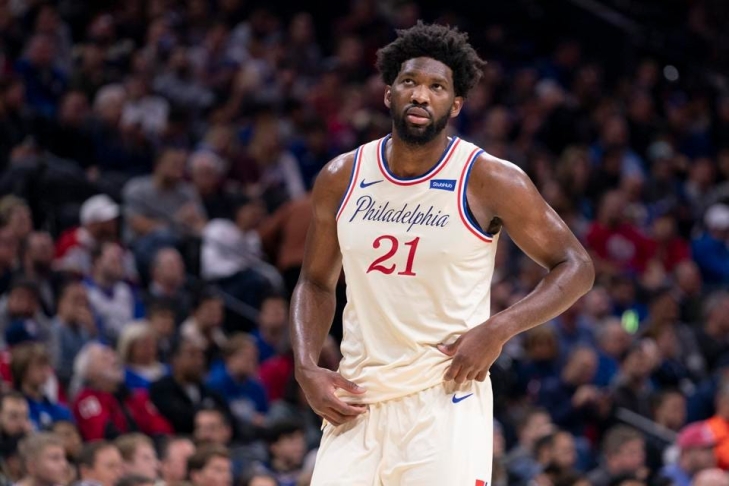
3. Joel Embiid, Philadelphia 76ers, 206 Cup Points: 47 Games, 33.1 PPG, 10.4 RPG, 4.1 APG, 1.1 SPG, 1.6 BPG, 30.6 PER, 8.4 WS. (#5 on last ranking)
Embiid rockets into number three, and is a bona fide MVP contender. He is currently second in PPG (33.1) and is second in PER (30.9).
4. Luka Doncic, Dallas Mavericks, 204 Cup Points: 51 Games, 33.2 PPG, 8.8 RPG, 8.2 APG, 1.5 SPG, 0.5 BPG, 30.4 PER, 8.9 WS. (#3 on last ranking)
Doncic drops again, and is now at number 4. The now four-time All-Star reclaimed the scoring lead from Joel Embiid His PER of 30.4 also ranks him third. He now has Kyrie Irving as a teammate, which will prove intriguing.
5. Giannis Antetokounmpo, Milwaukee Bucks, 203 Cup Points: 48 Games, 31.3 PPG, 12.0 RPG, 5.4 APG, 0.8 SPG, 0.8 BPG, 28.4 PER, 6.5 WS. (#2 on last ranking)
The two-time MVP would have probably been on the top had he not missed a series of Games earlier in the season, but has also been a little hurt lately, dropping him three spots. He is now a six-time All-star.
6. Shai Gilgeous-Alexander, Oklahoma City Thunder, 200 Cup Points: 54 Games, 31.0 PPG, 4.7 RPG, 5.7 APG, 1.6 SPG, 1.1 BPG, 27.3 PER, 9.1 WS. (#5 on last ranking)
Gilgeous-Alexander went to his first All-Star Game, and is shattering last year’s averages, which were already good. He is currently fifth in PPG and SPG, and is second in Win Shares (8.7). How great will this Canadian be?
7 (Tie). Julius Randle, New York Knicks, 196 Cup Points: 62 Games, 25.1 PPG, 10.6 RPG, 4.2 APG, 0.7 SPG, 0.3 BPG, 21.2 PER, 7.3 WS. (#8 on last ranking)
Randle continues to climb the list, and currently has a higher PPG (24.9), than his All-Star year two years ago.
8. Ja Morant, Memphis Grizzlies, 191 Cup Points: 50 Games, 27.0 PPG, 5.9 RPG, 8.1 APG, 1.0 SPG, 0.3 BPG, 23.4 PER, 5.2 WS. (#7 on last ranking)
Morant is the face of the Grizzles, and he is posting similar numbers from last year, when he took Memphis to the next level.
9. Trae Young, Atlanta Hawks, 179 Cup Points: 53 Games, 26.9 PPG, 2.9 RPG, 10.2 APG, 1.0 SPG, 0.2 BPG, 22.1 PER, 4.9 WS. (#9 on last ranking)
Young is the face of an intriguing Hawks squad, but was unable to make the NBA All-Star Team.
10. Lauri Markkanen, Utah Jazz, 174 Cup Points: 56 Games, 25.2 PPG, 8.5 RPG, 1.8 APG, 0.6 SPG, 0.6 BPG, 22.7 PER, 7.6 WS. (Not on last ranking)
Markkanen is now the first player from Finland to be an All-Star and after two months, he returns to the top ten in Cup Points. This the year of his life.
LeBron James, of the Los Angeles Lakers, has fallen off the top ten
Our next update will happen after the first player breaches 220 Cup Points.
