


Committee Chairman
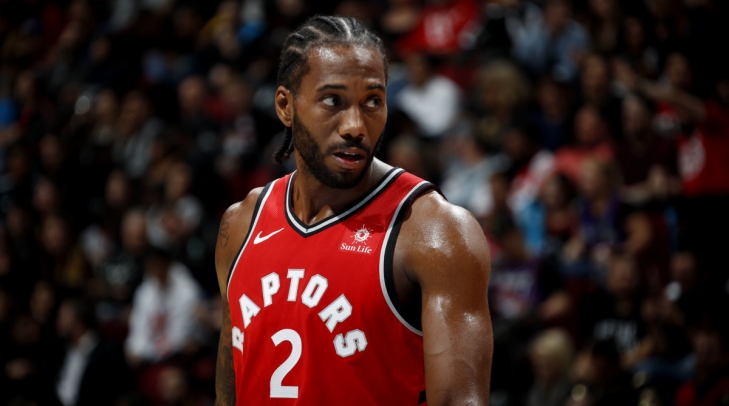
13. Kawhi Leonard
Including playoffs, only 84 Games.
That is all that Kawhi Leonard played for the Toronto Raptors, and if you want to place him at number one and build a 50-foot statue outside the Air Canada Center, we get it. After all, the Raptors don't win the 2019 NBA Championship without him.
Raptors General Manager Masai Ujiri rolled the dice in what has to be considered one of the biggest gambles in sports transactions. He traded his top player, DeMar DeRozan, an All-Star who wanted to stay in Toronto, for a bigger name, Leonard, but one who had become miserable and longed to play in his hometown of Los Angeles once his contract was up. It was a short-term play to go for it, and it worked.
Leonard arrived as the top player he had already proved to be, and he meshed well with his new teammates. His tenacious play on both ends set the team’s ethos, and he would be a Second Team All-Star, Second Team All-Defensive Player with a 26.6 PPG and a PER over 25.
Leonard was an absolute beast in the 2019 Playoffs. Not only was the overwhelming choice as the Finals MVP, his heart-stopping buzzer-beater that bounced four times off the rim before falling through was the shot that put won them Game 7 against Philadelphia in the Eastern Conference Semi-Final. The “Claw” did what was thought of as impossible, bring a title to a city where many NBA players did not want to go to.
As expected, Leonard left for L.A., joining the Clippers, but the Raptors fans were not upset. Leonard never promised to stay, and he delivered what was once thought of as impossible.
5. Pascal Siakam
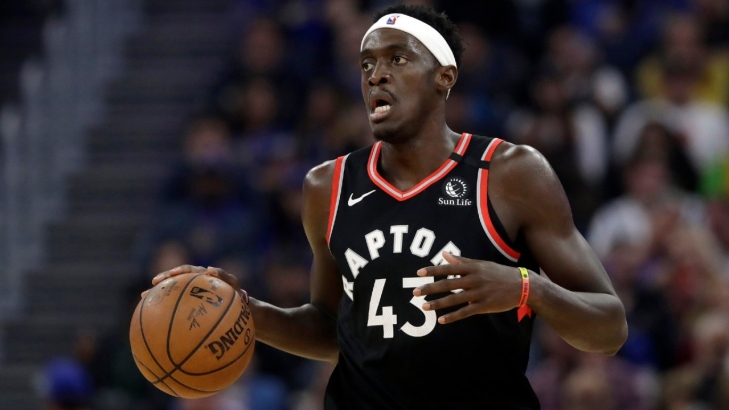
Pascal Siakam was a late starter in basketball, as the Cameroonian did not play until his early teens. He was a natural and moved to the U.S. at age sixteen to develop his skills, which would land him at New Mexico State. Siakam won the WAC Player of the Year, but he was not expected to do that much as a pro. The Raptors took him late (27th) in the 2016 Draft, and the project that was Pascal Siakam began.
Siakam played a good amount of his rookie season in the G-League, winning a title and Finals MVP there, after which the Power Forward stayed with the Raptors for good. A backup for most of 2017-18, Siakam became a starter in 2018-19, in a season where it felt like he improved with every game played. Siakam was electric in the playoffs, playing a large part in their first NBA Championship. For his regular season efforts, Siakam won the NBA Most Improved Player of the Year Award.
Siakam was no longer going to sneak up on anyone, but he got even better in 2019-20, went to his first All-Star Game, and collected a Second Team All-NBA nod, and averaging 22.9 Points per Game. Emerging as the Raptors top player, he averaged over 20 Points per Game for the rest of his Raptors career, adding a Third-Team All-NBA in 2021-22, and a second All-Star the year after. He also was a certified workhorse for the club, leading the NBA in Minutes per Game in both 2021-22 and 2022-23.
Emtering 2023-24, the Raptors were in clear rebuilding mode, and Siakam was traded to the surging Indiana Pacers. When it was all said and done, Siakam left Jurrasic Park as one of the most important players in franchise history.
RIP: Dusty Hill
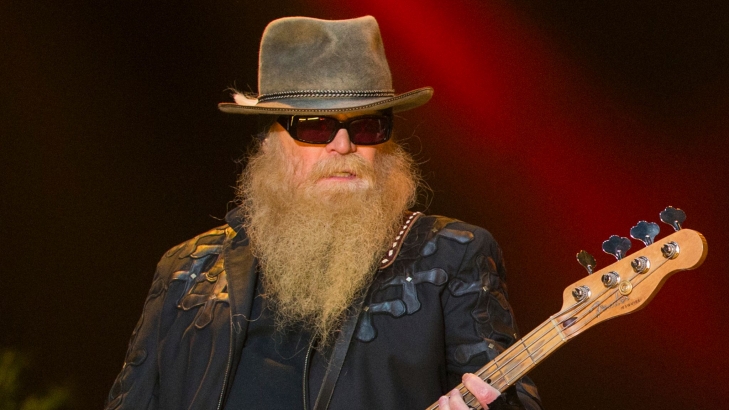
Rock and Roll lost a great one today as Dusty Hill, of the Texas band, ZZ Top, died today at the age of 72.
An original member of the band, ZZ Top was formed with Billy Gibbons and Frank Beard, with the tri0 producing 15 albums, yielding many hits, most notably 1984’s “Legs.” The group, who had already been rock staples for a decade, broke out to the mainstream with that song, and the corresponding album, Eliminator.
ZZ Top was inducted to the Rock and Roll Hall of Fame in 2004.
We here at Notinhalloffame.com would like to extend our condolences to the fans, friends and family of Dusty Hill.
Adios amigo.
The Colorado State Athletic Hall of Fame Announces their 2021 Class

Regular visitors of Notinhalloffame.com know that we are slowly working on the top 50 of every major team in the NHL, NBA, NFL and MLB. Once that is done, we intend to look at how each team honor their past players, coaches and executives. As such, it is news to us that the Colorado State Athletic Hall of Fame has announced their Class of 2021.
This group comprises the 30th ever Class, and it consists of six people.
The induction will take place on September 10, with the group being unveiled at their home game the day after against Vanderbilt.
The Class of 2021 are:
Breann Bohnen, Women’s Swimming and Diving, 2008-13: Bohnen was a four-time conference champion, specializing in the 200m backstroke. She was named a three-time team MVP.
Joel Dressen, Football, 2001-04: Dressen played at Tight End and helped the Rams win the 2002 MWC Championship. He would later play in the NFL for the New York Jets, Houston and Denver.
Rich Feller, Men’s Volleyball Head Coach, 1983-96: Feller won two conference championships and had a record of 299-167.
Tarry Harrison, Men’s Cross Country, 1966-69: Harrison finished second at the 10,000m in 1968.
Debbie Maass, Women’s Track and Field, 1991-94: Maass was a three-time conference champion in the mile.
Gary Ozzello, Sports Information Director, Senior Associate Athletic Director 1978-2020:
We would like to congratulate the newest members of the Colorado State Athletic Hall of Fame for earning this prestigious honor.
