


Committee Chairman
38. Max Bentley
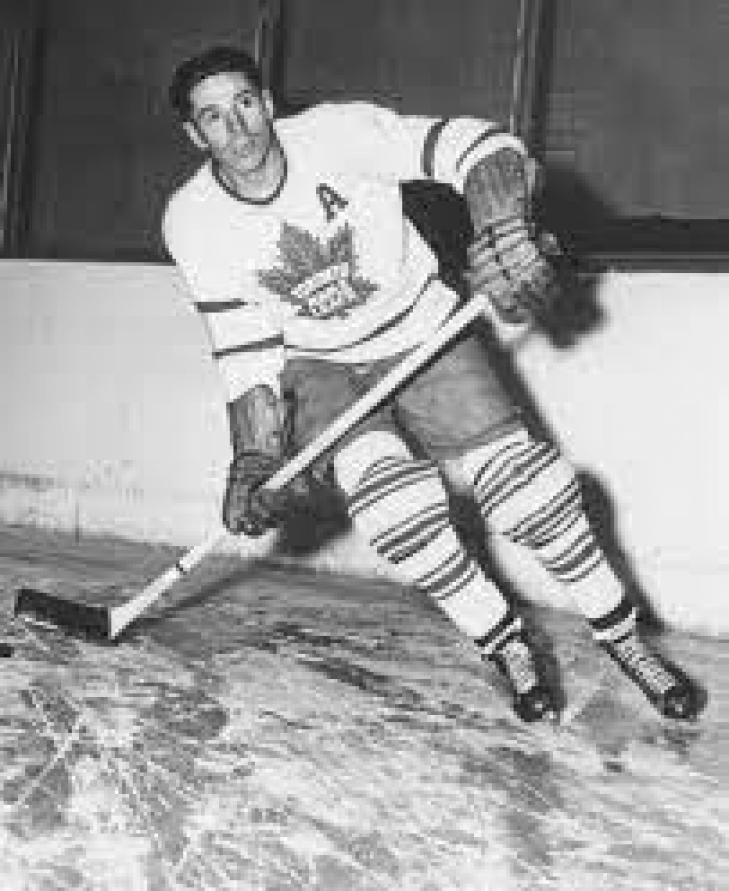
Max Bentley’s best years might have been with Chicago, where he won the Hart Trophy in 1946, but at age 27, he was traded to Toronto, where the two-time scoring champion had a lot left to offer.
The Maple Leafs had a lot more talent than Chicago, but Bentley was still a good scorer, posting five consecutive 40-point years with the Buds. Bentley helped Toronto win three Stanley Cups (1948, 1949 & 1951) and was the leading playoff scorer in 1951.
Bentley was traded to the Rangers before the 1953-54 Season, where he was reunited with his brother Doug, but he only played in half the season and refused to report to New York the following year. His rights were given back to Toronto, but they never agreed on terms, and Bentley never played in the NHL again. As a Maple Leaf, Bentley scored 256 Points, the same amount he did in Chicago.
Bentley was chosen for the Hockey Hall of Fame in 1966.
37. Reg Noble
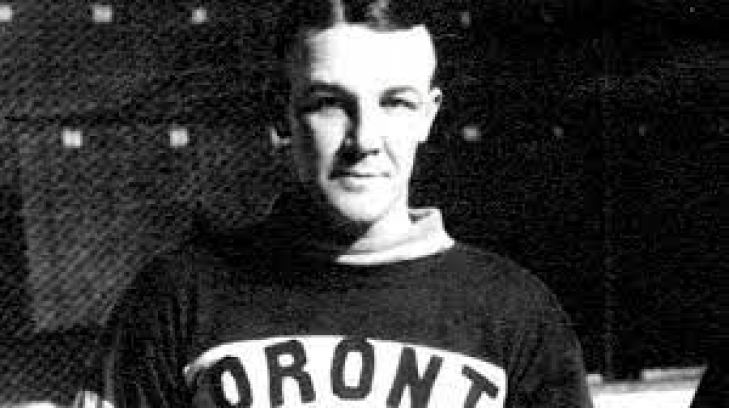
One of the most versatile players in the early days of Hockey, Reg Noble played in the first season of the NHL, where he helped take the Toronto Arenas to the Stanley Cup. Noble was just getting started.
Noble played both at Center and Defense, and was an early star at two-way play. He helped Toronto (now the St. Pats) win the Cup again in 1922, and he averaged 1.13 Points per Game for Toronto before he was sold to the Montreal Maroons in 1924. He played until 1933 and was the last man standing from the NHL's inaugural season.
Noble was elected to the Hockey Hall of Fame in 1962.
35. Harry Cameron

Playing for Toronto in three different stints dating all the way back to when the team was called the Arenas, Harry Cameron was an early prototype of the rushing Defenseman who could play make without sacrificing his end of the ice.
Cameron led the NHL in Assists twice and was a capable goal scorer who was also one of the first players who could curve his shot. A Stanley Cup Champion twice with Toronto, Cameron averaged over a Point per Game with Toronto (1.11), a rare accomplishment for any blueliner.
Cameron entered the Hockey Hall of Fame in 1962.
33. Tomas Kaberle
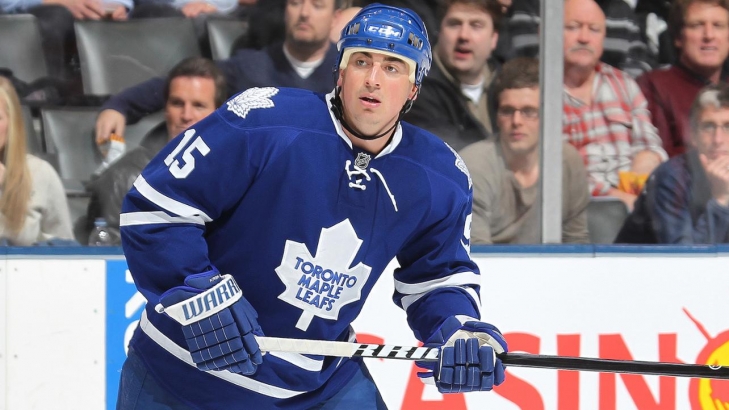
The Toronto Maple Leafs chose Czech Defenseman Tomas Kaberle in the Eighth Round of the 1996 NHL Draft, and it turned out to be a steal.
Kaberle first played for the Maple Leafs in the 1998-99 season, and before long, he was the team's top blueliner. Kaberle scored at least 40 Points seven times for Toronto, peaking at 67 in 2005-06. A four-time All-Star, Kaberle was excellent on the power play and had 520 Points over his tenure with the Maple Leafs.
Kaberle was traded to Boston during the 2010/11 Season and would win a Stanley Cup that year with the Bruins. As a Leaf, Kaberle scored 520 Points.
