

Top 50 Minnesota Twins
In 1901 the Washington Senators were formed as a charter member of the American League. While some excellent players suited up in the Nation’s Capital more often than not the team wasn’t very good and would only win one World Series (1924) in the sixty years they played there.Washington would lose its team to Minneapolis, who christened the team the Minnesota Twins to lure in fans from St. Paul, the eastern city on the Mississippi River from Minneapolis. The fortunes didn’t really change as the Twins were bad more often than they were good. They would finally breakthrough in 1987 winning their first World Series in Minnesota. They would win again in a thrilling series in 1991 against the Atlanta Braves.
While the Twins own the history of the Senators, they don’t celebrate it as anybody from their own franchise Hall of Fame had a celebrated career in Washington. Still, this IS a part of their history and our list reflects as much.
Note: Baseball lists are based on an amalgamation of tenure, traditional statistics, advanced statistics, playoff statistics, and post-season accolades. This is a list up to the end of the 2025 Season.
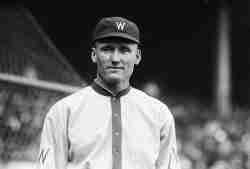
Walter Johnson came to Washington in 1907 as a raw, hard-throwing right-hander from the Idaho semi-pro leagues, possessing a sidearm delivery that produced a velocity the baseball world had never seen. Known as "The Big Train," he remained a loyal mainstay for a franchise that often struggled to provide him with adequate support. Between 1910 and 1919, Johnson demonstrated a historic mastery of the American League, recording ten consecutive 20-win seasons. He reached a historic peak in 1913, authoring a season that many consider the greatest in pitching history; he won 36 games and posted a staggering 1.14 ERA, earning…
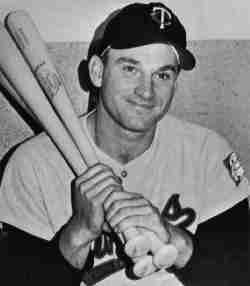
Harmon Killebrew arrived in Washington, D.C. in 1954 as a prized "Bonus Baby," a teenager whose raw strength was so prodigious that MLB rules forced him to stay on the big-league roster before he was technically ready for the assignment. While he spent his first few seasons navigating a slow, deliberate apprenticeship, the Senators' front office's patience eventually yielded one of the most feared power threats in the sport's history. Killebrew had a breakout 1959 season that validated years of patience. After becoming the starting third baseman in Washington, he led the American League with 42 home runs and earned…
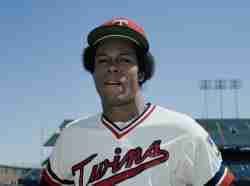
Rod Carew was a Panamanian-born infielder whose crouched stance and elite hand-eye coordination immediately baffled American League pitching. While he debuted as a second baseman, his evolution into a technical master of the strike zone saw him become the most prolific pure hitter of his generation. Debuting in 1967, Carew quickly made a significant impact on MLB. He won the 1967 American League Rookie of the Year Award, showing his immediate influence on the game. He earned his first of twelve straight All-Star selections as a Twin. Carew established himself as a consistent professional, winning his first batting title in…
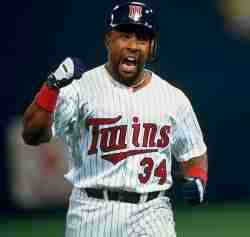
Kirby Puckett arrived in Minnesota in 1984 as a compact, energetic center fielder who famously recorded four hits in his major league debut. While his husky 5'8" frame defied the traditional mold of a speed-first outfielder, he quickly evolved into the most iconic and beloved figure in the history of the Twin Cities. For twelve seasons, all spent in a Twins uniform, he provided a brand of high-volume hitting and Gold Glove defense, standing as the definitive catalyst behind the franchise's two world championships and the undisputed heart of the organization during its most successful era. After showcasing his talent…
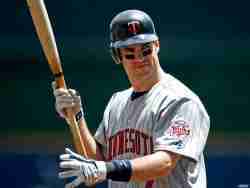
Joe Mauer was the ultimate hometown hero, a St. Paul native selected with the number one overall pick in the 2001 draft who famously chose the diamond over a future as a major college quarterback. While the expectations of a "local boy" can often be a burden, he spent the next fifteen seasons surpassing every metric of success established for the position. Debuting for the Twins in 2004, Mauer demonstrated specialized hitting by becoming the first catcher in American League history to win a batting title (.347). In 2006, Mauer again demonstrated specialized hitting by becoming the first catcher in…
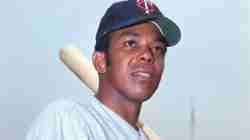
A young outfielder from Cuba, Tony Oliva, came to the Twin Cities, carrying a sweet left-handed swing that would soon become the envy of the American League. While he faced the immense challenge of adapting to a new country and language, he allowed his bat to do the talking, transitioning from a raw prospect into one of the most naturally gifted hitters the sport had ever seen. In 1964, Oliva showcased mastery of the plate to win Rookie of the Year, leading the league in batting average (.323), hits (217), and doubles (43). He quickly became a key player, defending…
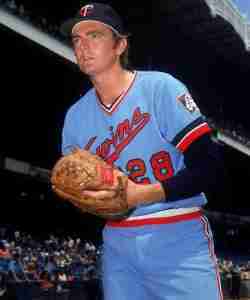
One of the most durable pitchers in baseball history, Bert Blyleven’s MLB career began in 1970 as a 19-year-old phenom, armed with a curveball so sharp it was said to buckle the knees of even the most seasoned veterans. While he spent time in five other cities during his 22-year journey, his heart and his most dominant statistical stretches belonged to the Twin Cities. From the very start, Blyleven proved he had what it takes at the major league level, winning 10 games and earning the Rookie Pitcher of the Year honors. Between 1970 and 1973, he consistently showcased a…
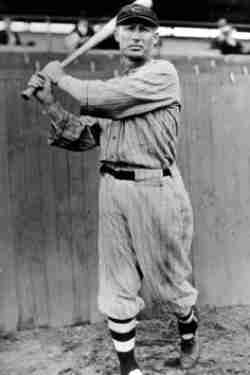
Sam Rice began his MLB career with the Washington Senators in 1915, where he would establish himself as one of the game’s premier table setters, though that took a while to transpire. Rice started his career as a pitcher but achieved greater success as an outfielder. After serving in the Army during World War I, he demonstrated complete mastery of the leadoff role, leading the league in stolen bases in 1920 with a career-high 63 steals. Between 1924 and 1926, he was highly efficient, leading the American League in hits twice and accumulating 216 hits to help the Senators win…
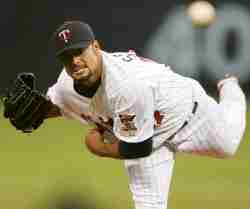
Arriving in Minnesota via the Rule 5 Draft, Johan Santana was a left-hander from Venezuela with a high-velocity fastball and a changeup that many considered the most devastating pitch of the era. Santana spent his first three years as a mainstay in the bullpen and a spot starter, but everything changed dramatically in the second half of 2004. He delivered an incredible stretch, going 13-0 with a 1.21 ERA after the All-Star break, earning his first Cy Young Award by a unanimous vote. He mastered the league, leading the AL in strikeouts (265), ERA (2.61), and WHIP (0.92). This period…
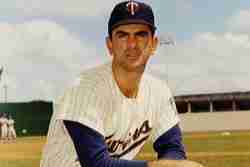
Camilo Pascual reached the Majors with Washington in 1954 at age 20, known for his back-arching windup and a devastating curveball that Ted Williams called the "most feared" in the American League for nearly twenty years. Between 1954 and 1958, Pascual showcased a specialized ceiling as a strikeout threat, although his win-loss record was often affected by the team's poor performance. In 1959, he reached a career peak, leading the American League with 17 complete games and 6 shutouts, earning his first of seven All-Star nominations. After the franchise moved to Minnesota in 1961, Pascual enjoyed a three-year period of…
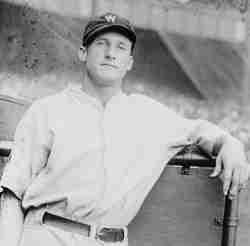
In 1921, Leon Allen "Goose" Goslin began his baseball career as a Washington Senator, a left-handed powerhouse whose stay in the nation's capital transformed the Senators from perennial also-rans into world champions. By 1923, Goslin had become a well-respected figure in professional baseball, leading the American League in triples with 18. His career reached a new high in 1924, when he led the league with 129 RBIs and a batting average of .344. That incredible season helped the Senators win their first and only World Series title in D.C. During that Fall Classic, Goslin showed remarkable efficiency, batting .344 with…
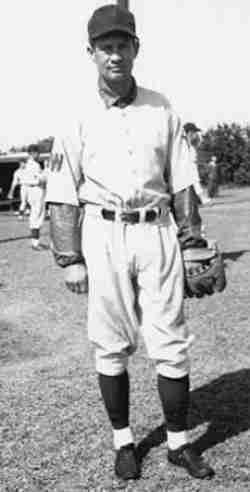
Save for a couple of productive seasons with the Boston Red Sox early in his career, Buddy Myer was a career member of the Washington Senators, the team he began and ended his career with. The slick-fielding Myer was traded to the Boston Red Sox, and in his brief stay in Massachusetts, his stock rose so much so that the Senators traded five players to get him back before the 1929 season. Myer became more consistent, moving from shortstop to second base and dominating the middle infield. He controlled the strike zone, with a career-high 102 walks in 1934, showing…
2026 SEATTLE MARINERS FLEX MEMBERSHIPS
Jan 01, 1970
Buy your Tickets to see 2026 Seattle Mariners Flex Memberships HERE!
BALTIMORE ORIOLES VS. LOS ANGELES ANGELS
Aug 04, 2026
Buy your Tickets to see Baltimore Orioles vs. Los Angeles Angels HERE!
PHILADELPHIA PHILLIES VS. WASHINGTON NATIONALS
Aug 04, 2026
Buy your Tickets to see Philadelphia Phillies vs. Washington Nationals HERE!
CINCINNATI REDS VS. ATHLETICS
Aug 04, 2026
Buy your Tickets to see Cincinnati Reds vs. Athletics HERE!
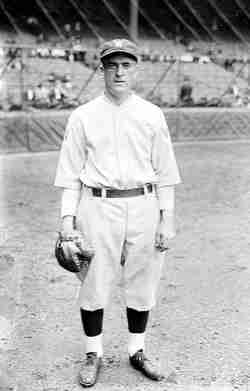
Joe Judge made his debut in Washington in 1915. A 21-year-old left-handed player from Brooklyn, he spent 18 seasons redefining the first baseman role. During a time when the position was often filled by bulky power hitters, he brought a unique mix of speed, precise batting, and defensive skill. Over more than 2,000 games with the Senators, he became a key player, delivering the "freakish consistency" that supported the team's most prosperous decade. While Judge achieved a historic level of efficiency with nine seasons batting over .300, he was perhaps best known for his defensive skills. Standing only 5'8", he…
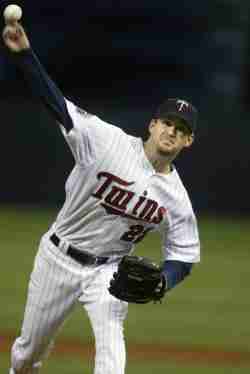
Brad Radke arrived in Minnesota in 1995, a mid-round pick from Tampa who spent 12 years as a model of the "Twin Cities" workhorse. In an era of high-velocity bullpens and rising strikeouts, he relied on pinpoint control, seeming like a throwback. In 378 games, all in a Twins uniform, he was a mainstay, providing stability from the late 90s lean years to the early 2000s division win. In 1997, Radke achieved a career peak with 20 wins, a 3.87 ERA, and 12 consecutive starts, a rare feat. He finished third in Cy Young voting behind Clemens and Johnson, then…
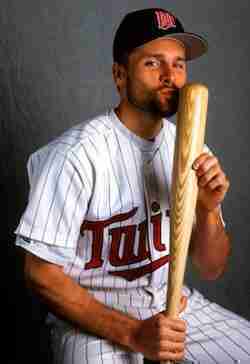
A first-round pick from Texas A&M, Chuck Knoblauch came to Minnesota in 1991, a first-round selection from Texas A&M, who stepped into the Metrodome and immediately acted as the catalyst for the most famous season in franchise history. While his later career in New York would become a case study in the "yips" and defensive decline, his residency in the Twin Cities was a masterpiece of specialized leadoff hitting and gritty, gold-glove caliber defense. In 1991, Knoblauch achieved a peak rookie season, earning the American League Rookie of the Year Award. He was crucial to the Twins' dramatic turnaround from…
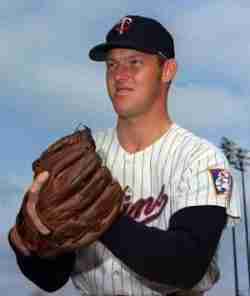
In 1959, Jim Kaat, a 20-year-old left-hander standing 6’4", arrived in the nation's capital with an efficient pitching style that would characterize his career. He was among the original group that moved the team from the Senators to the Minnesota Twins in 1961, serving as the link between the franchise’s Washington, D.C., origins and its future in the Upper Midwest. Kaat reached the pinnacle of leatherwork, earning 12 consecutive Gold Glove Awards with the Twins, a run that eventually extended to 16. He demonstrated complete command of the mound, moving with athletic grace, making him a key asset for a…
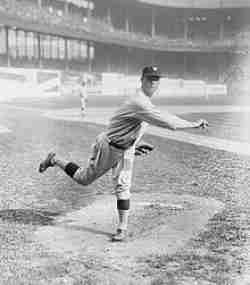
Debuting for the Senators in 1923, a big right-hander from Texas who would become the era’s most revolutionary pitcher. At a time when removing a starter was seen as failure, Marberry's specialized versatility redefined the bullpen’s role. Over ten seasons in Washington, he was the first true "closer" in spirit, offering high-leverage durability that helped the Senators win their only World Series. In 1924, Marberry achieved a remarkable level of statistical impact that was well ahead of its time. He recorded 15 saves—a retroactive major league record, alongside 14 starts. He led in appearances (50) and games finished (31), becoming…
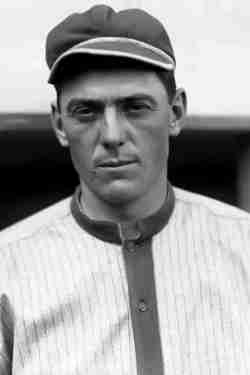
Clyde Milan made his Major League debut in Washington in 1907 as a left-handed outfielder with a quiet demeanor and quick legs, earning the nickname "Deerfoot." Sharing the clubhouse with Walter Johnson, he was the Senators’ offensive spark during the Deadball Era. After several years of developing his rhythm, Milan attained the pinnacle of his career between 1911 and 1913. During the summer of 1912, he demonstrated comprehensive mastery of base running, amassing an impressive 88 stolen bases, an outstanding achievement that established the modern rules record at that time and cemented his reputation as the "Flying Mercury" of the…
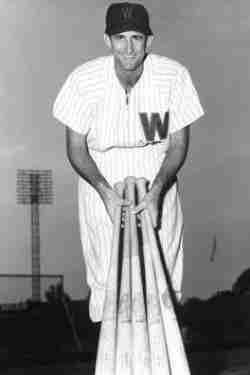
Mickey Vernon debuted in Washington in 1939 as a graceful left-handed first baseman and a key infield presence for nearly two decades. Despite a career partly interrupted by military service and trades, he was the Senators’ top pure hitter in the post-war era. Vernon improved annually, missing two years in WWII. After returning in 1946, he made his first All-Star team and won a Batting Title. The next two years were less successful, and he was traded to Cleveland after 1948. His stay there was brief: after just over a year, the Senators traded to bring him back. In June…
