

48. Bert Blyleven
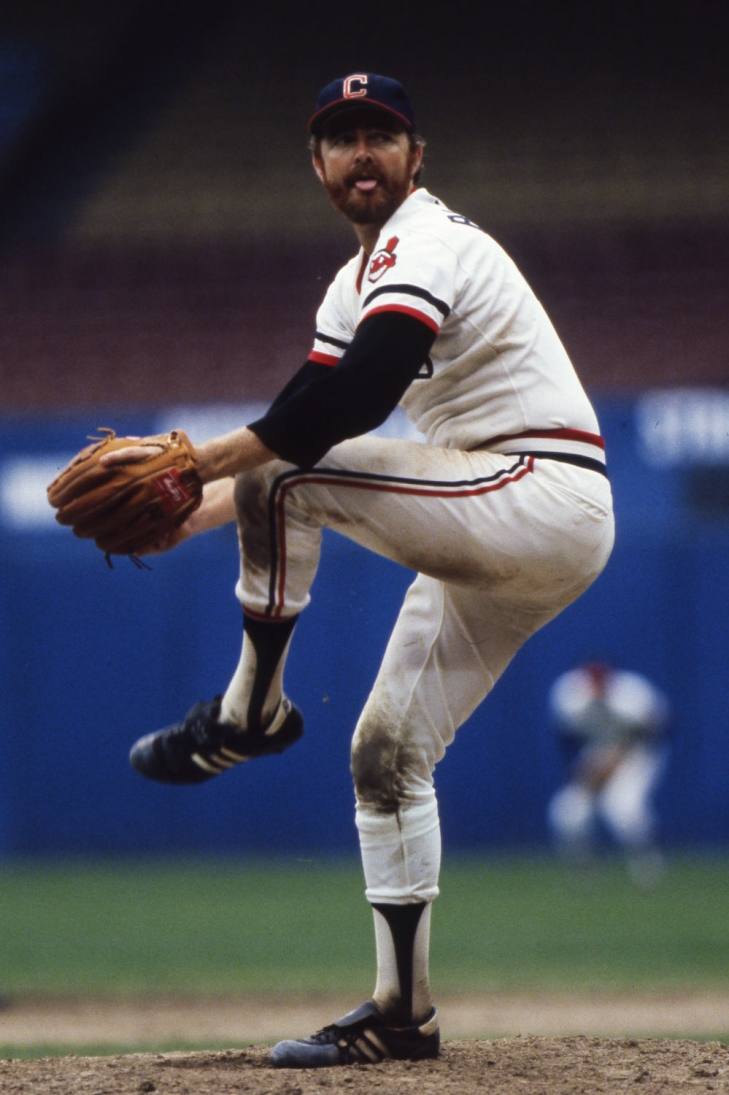
While Bert Blyleven is often draped in the colors of Minnesota or Pittsburgh, his five-season residency in Cleveland provided some of the most statistically dominant pitching of the 1980s. Born in the Netherlands and raised in California, Blyleven arrived in 1981 as a proven champion with a curveball many hitters considered the best in the sport's history.
Blyleven’s arrival in Cleveland was defined by an immediate and relentless efficiency. Despite the strike-shortened nature of the 1981 campaign, he established himself as a model of specialized dominance, finishing the year with an 11-7 record and leading the American League in bWAR for pitchers. He possessed a rare, high-leverage durability that allowed him to navigate a serious elbow injury in 1982 and return with a focused intensity. His approach reached a second era of excellence in 1984, a summer when he orchestrated a masterclass in run prevention. That year, he posted a 19-7 record with a 2.87 ERA, earning a third-place finish in the Cy Young voting and proving he was still the most efficient starter in the league.
Blyleven’s calling card was a high-frequency strikeout ability paired with a "rubber arm" that allowed him to lead the league in shutouts and complete games. Even during a volatile 1985 season, Blyleven remained a model of steady-state production; while the Indians hovered near the bottom of the standings, he earned an All-Star selection on the strength of his individual metrics. He was a tactical engine that kept the club competitive in every start, eventually being traded to Minnesota at the deadline, where he finished the year by leading the league in strikeouts (206) and securing another top-three Cy Young finish.
With Cleveland, Blyleven compiled 48 wins and 548 strikeouts while leading the American League in pitching bWAR in 1981.
The ultimate punctuation on his career arrived in 2011, when he was finally inducted into the Baseball Hall of Fame.
7. Bert Blyleven
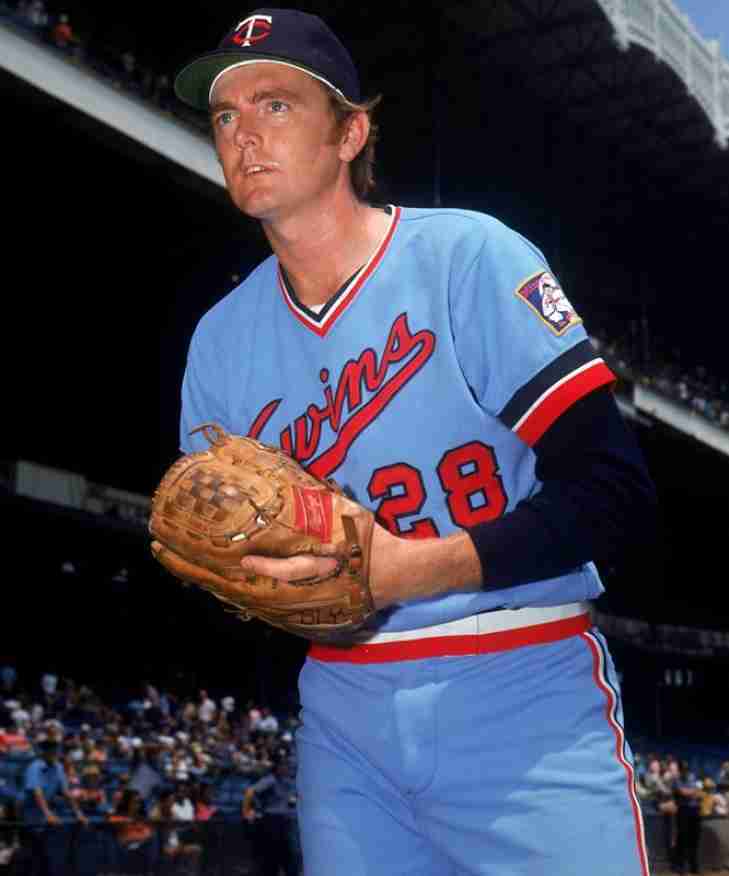
One of the most durable pitchers in baseball history, Bert Blyleven’s MLB career began in 1970 as a 19-year-old phenom, armed with a curveball so sharp it was said to buckle the knees of even the most seasoned veterans. While he spent time in five other cities during his 22-year journey, his heart and his most dominant statistical stretches belonged to the Twin Cities.
From the very start, Blyleven proved he had what it takes at the major league level, winning 10 games and earning the Rookie Pitcher of the Year honors. Between 1970 and 1973, he consistently showcased a strong command of his skills, averaging 16 wins per season. His first Twins career highlight came in 1973 when he delivered an outstanding season: winning 20 games, leading the league with 9 shutouts, pitching 325 innings, and setting a team record with 258 strikeouts. During this time, he was a true workhorse, known for his remarkable efficiency in the American League.
His first exit from the club in 1976 was defined by a clash with ownership. Frustrated by salary negotiations with Calvin Griffith and a perceived lack of run support, Blyleven’s residency became strained. On June 1, 1976, just days after being booed by the home fans during a contract dispute, he was traded to the Texas Rangers in a six-player blockbuster. He famously threw a no-hitter in his final start for Texas before beginning a journey that took him to Pittsburgh and Cleveland, winning a World Series ring along the way, but on the 1985 Trade Deadline, he was back in a Twins uniform, completing a season where he was third in Cy Young voting.
In 1986, Blyleven recorded his 3,000th career strikeout in a Twins uniform. The season after, he served as the specialized anchor for the rotation that delivered the franchise’s first World Series title in Minnesota. While he famously surrendered a high volume of home runs during this stretch, his ability to log nearly 270 innings and strike out nearly 200 batters proved he was still a valuable asset.
After the 1988 season, he was traded to the California Angels, which would be his last stop in the Majors. With the Twins, he had a 149-138 record, a 3.28 ERA, and 2,035 strikeouts. In 2011, he was inducted into the National Baseball Hall of Fame on his 14th ballot and saw his No. 28 retired by the Twins.
42. Bert Blyleven
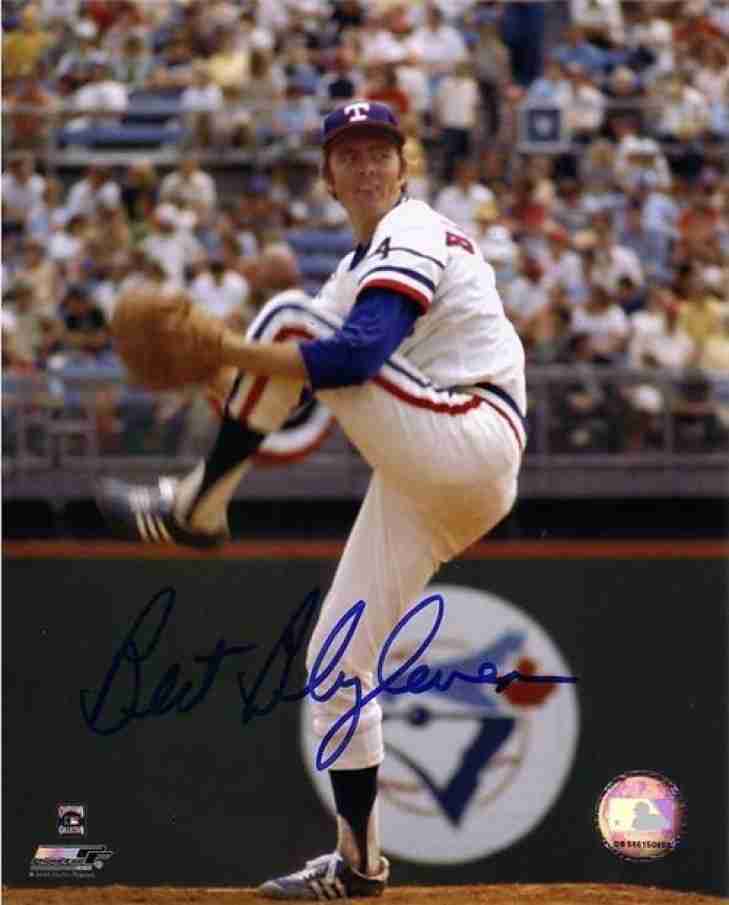
When the Texas Rangers made a big mid-season trade with Minnesota in June 1976 to bring Bert Blyleven to their team, they weren't just acquiring a talented pitcher—they were gaining one of the most graceful and powerful curveballs the sport has ever witnessed. Known as the "Frying Dutchman,” he played with a precision and intensity on the mound that made him a true threat, captivating American League batters despite the scorching Texas heat.
Although Blyleven’s final win-loss record in Arlington was a balanced 23–23, focusing only on wins overlooks how close he was to pitching perfectly. He often suffered from poor run support from a transitioning Rangers lineup, losing close games despite showcasing exceptional skill in preventing runs. During his two seasons in North Texas, he consistently shut down opposing offenses, posting an impressive 2.76 ERA in 1976 and maintaining it with a 2.72 ERA in 1977.
What really set his performance apart in the Lone Star State was his exceptional command of the strike zone and his efficiency on the mound. Blyleven mastered the art of controlling baserunners, earning the American League WHIP title in 1977 with an impressive 1.07. His exacting control led to very few walks; he issued only 50 walks in 234.2 innings that summer and recorded five shutouts.
His spectacular individual peak with the franchise reached its theatrical pinnacle on September 22, 1977. Stepping onto the mound at Anaheim Stadium, Blyleven completely paralyzed the California Angels lineup, spinning a historic 6–0 no-hitter that serves as the ultimate exclamation point on his brief stay.
The cost-conscious Rangers packaged him to Pittsburgh after the 1977 season in the first four-team trade in major league history. While he would go on to win World Series rings with the Pirates and Twins, Blyleven's time in Texas represented a period of pure, unadulterated individual dominance.
In his brief stay in Texas, Blyleven made 54 appearances (all starts). He compiled a 23–23 record, a stellar 2.74 ERA, and a tidy 1.11 WHIP, with 321 strikeouts. In 2011, Blyleven was inducted into the Baseball Hall of Fame.
