
The Baseball Hall of Fame Class of 2018 is announced!
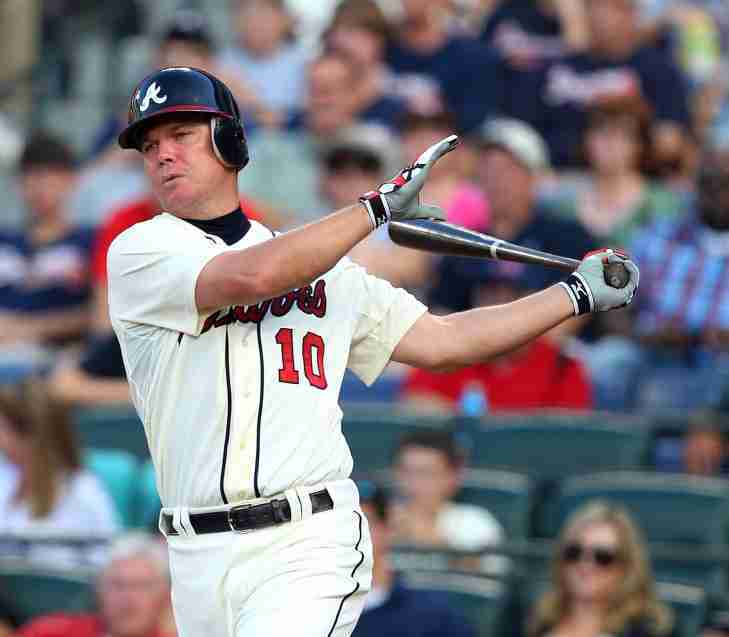
Chipper Jones, Jim Thome, Vladimir Guerrero and Trevor Hoffman have been chosen as all three received the necessary 75% of the vote from the Baseball Hall of Fame voters.
Jones, who played his entire career with the Atlanta Braves, is the highest vote getter this year with 97.2% of the ballot. Jones is one of the greatest hitting Third Basemen in history accumulating 2,726 Hits with a Slash Line of .303/.401/.529. The 1999 National League MVP also belted 468 Home Runs.
Vladimir Guerrero enters the Hall on his second try. The 2004 American League MVP and nine time All Star received 71.4% of the vote last season and easily cruised into the Hall this year with 92.9%.
Jim Thome also enters Cooperstown on his first try. In comparison to Jones, Thome was a vagabond playing for six different Major League teams, but his power prowess had few equals. The five time All Star blasted 612 Home Runs, which ranks him seventh all-time. Thome received 89.8% of the ballot
Trevor Hoffman enters the Baseball Hall of Fame on his third try and becomes the sixth Relief Pitcher to be inducted. Hoffman is second all-time in Saves and is a two time runner up to the National League Cy Young Award. Hoffman finished with 79.9% of the vote.
Now let’s take a look at those who were not chosen.
Edgar Martinez made another significant jump in the votes. He went from 43.4% to 58.6% and this year he went to 70.4%. This is the ninth year that the Designated Hitter was on the ballot and he is considered to be the best ever at that position. Martinez was tracking well and was projected to be inducted this year but he should be able to get in next year.
Mike Mussina saw his total rise from 51.8% to 63.5%. Sabremetrically speaking, Mussina remains one of the biggest snubs on the ballot, but he has only been on the ballot for five years. This increase could see him enter Cooperstown next year but this double digit rise will bring him induction eventually.
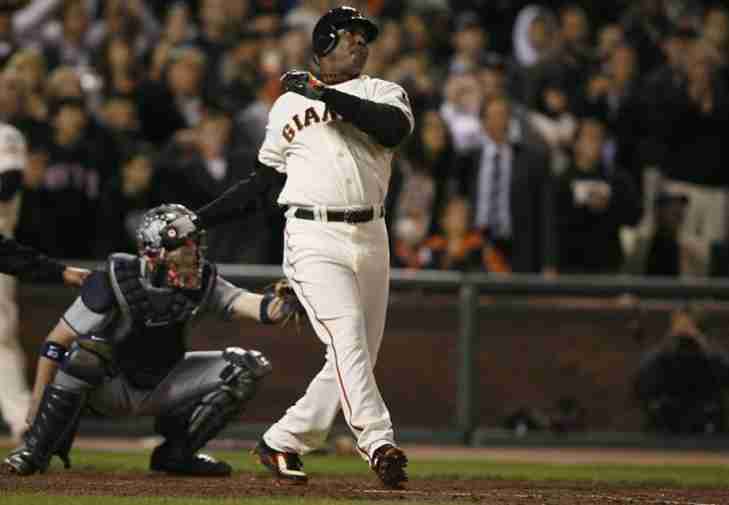
Barry Bonds remains a polarizing figure for the Baseball Hall of Fame, but PEDs or not, this was the best hitter of his era and arguably of all-time. The career Home Run Leader and seven time MVP received 56.4% up from 53.8% from last year.
Roger Clemens is in the exact same boat as Bonds. “The Rocket” was also the best of his generation and is a seven time Cy Young Award winner, though he is a two time World Series winner (unlike Bonds). His numbers increased to 54.1% last year and reached 57.3% this year.
The increase (albeit mild) of both Bonds and Clemens votes shows that the voters are becoming more forgiving of the PED era (with many citing the induction of Bud Selig as a catalyst for their change of heart) and it is also indicative of an influx of younger voters. This is the sixth year on the ballot for Bonds and Clemens and there is certainly hope on the horizon for both; something almost unthinkable three years ago.
Curt Schilling has Hall of Fame numbers but he did not exactly endear himself to voters with his anti-media stance and he was one of the few players to see his total decrease last year. He had 51.2% of the vote, which is up from last year’s 45.0% but down from 2016’s 52.3%. He may still need to grovel to the media for his upswing to resume.
Omar Vizquel is also on his first ballot and he received 37% of the vote. The Shortstop won eleven Gold Gloves and is regarded as one of the best defensive players ever. Vizquel also had 2,877 career Hits. He should be very happy with this debut number.
Larry Walker did see his total rise from to 34.1% but he is running out of time. The former National League MVP is still suffering from the Coors Field market and he has only two more years on the ballot.
Fred McGriff continues to tread water. “The Crime Dog” was only at 23.2% of the vote, which is his ninth year on the ballot. The First Baseman finished with 493 Home Runs but has never finished higher than 25%.
Manny Ramirez continues to struggle in his Hall of Fame voting. Ramirez has incredible career numbers, which are definitely Hall of Fame worthy but he was suspended twice for PEDs, something that did not happen to Bonds and Clemens. His tally was 22%, down slightly from last year.
Jeff Kent received 14.5% of the vote and with this being his sixth year on the ballot it is not looking good for the 2000 National League MVP.
Gary Sheffield received 11.1% in his fourth year of eligibility. “Shef” needs Bonds and Clemens to get in to have any real shot of getting into the Hall of Fame. He is a nine time All Star with 509 career Home Runs.
Billy Wagner received 11.1% in his third year of the ballot, which is enough to keep him on the ballot.
Scott Rolen only finished with10.2 on his first year of eligibility. Rolen’s biggest asset is his 70.0 bWAR but his traditional metrics will still give him a look for years to come. He should see his numbers rise in upcoming years.
Sammy Sosa held on with 7.8% of the vote. He is unlikely to make it to Cooperstown.
Andruw Jones received 7.3% on his first appearance on the ballot. The native of Curacao has over 400 Home Runs and is a four time league leader in Defensive bWAR.
Three notable first timers on ballot did not make it to 5%, that being Johan Santana, Jamie Moyer and Johnny Damon.
The others who did not earn enough votes were Chris Carpenter, Livan Hernandez, Orlando Hudson, Aubrey Huff, Jason Isringhausen, Carlos Lee, Brad Lidge, Hideki Matsui, Kevin Millwood, Kerry Wood and Carlos Zambrano.
These three will join previously chosen Veterans Committee Selections, Alan Trammell and Jack Morris and Ford C. Frick recipient, Bob Costas.
We will be revamping our Notinhallofame.com Baseball list shortly. Look for that in late February.
We here at Notinhalloffame.com would like to congratulate the newest members of the Baseball Hall of Fame. We don’t know about you but this is the most excited that we have been in years about a Hall of Fame Class!
The Minnesota Twins to induct Johan Santana to their Hall of Fame.
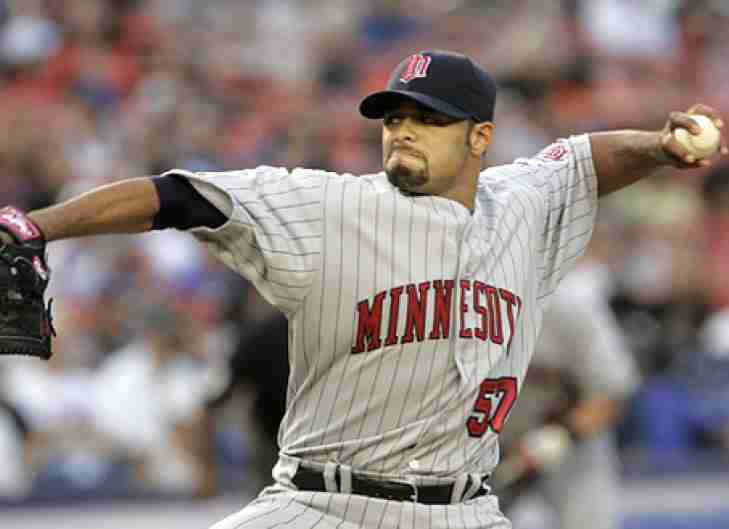
The Venezuelan arrived to Minnesota via trade from the Florida Marlins on a 1999 Rule 5 draft swap for Jared Camp. It is easy to see who won this deal isn’t it? Santana made the Twins roster in 2000 and he bounced back and forth between long relief and spot starting but in 2003 he began to put it altogether and won a permanent spot in the rotation becoming one of the better hurlers in the last half of the season and he helped the team make the playoffs that year.
Johan Santana had arrived and in 2004 and he would begin a four year run as the most dominating pitcher in the American League. The flamethrower would go 20-6 while leading the AL in ERA, Strikeouts, FIP, WHIP and SO/BB and would win the CY Young Award. 2005 would not be a Cy Young winning one, but he was 3rd in voting and finished first in Strikeouts, FIP, WHIP and SO/BB. He would again reclaim the Cy Young in 2006 while again taking the ERA, Strikeouts, FIP, WHIP and SO/BB Title. This would also see Santana finish first in Wins for the first and only time in his career. 2007 was a “down” year where he only finished 5th in Cy Young voting.
Santana was traded to the New York Mets in the off-season.
Johan Santana’s overall numbers with Minnesota are 93 Wins against 44 Losses with 1,381 Strikeouts with a 3.22 Earned Run Average.
We here at Notinhalloffame.com would like to congratulate Johan Santana on earning this prestigious honor.
If I Had a Vote in the 2018 Baseball Hall of Fame Election
Sounds like voting for the Baseball Hall of Fame for the last few years, doesn't it?
The good news is that since the Shutout of 2013, when the eligible members of the Baseball Writers' Association of America (BBWAA) could not muster the 75 percent of the vote necessary to elect any one ballot candidate to the Hall of Fame despite a wealth of candidates from whom to choose (I counted 14), the BBWAA has sent a dozen players to Cooperstown. Based on that trend, and barring any unusual or unforeseen wrinkle, the writers are certain to elect at least one player for 2018.
Baseball Hall of Fame: Upcoming Borderline Candidates, Part 2
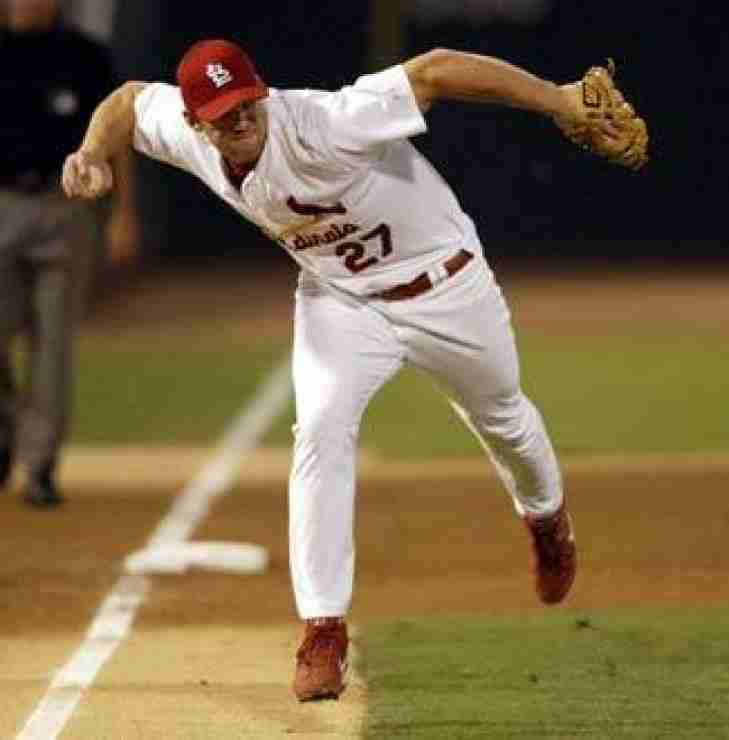
Baseball Hall of Fame voting in the last few years has been fascinating for a number of reasons, particularly the logjam of qualified candidates, which promises to remain an issue for the next few years. That logjam puts additional pressure on the borderline candidates—will they be overlooked, perhaps unfairly, because there are too many candidates from which to choose?
9. Johan Santana
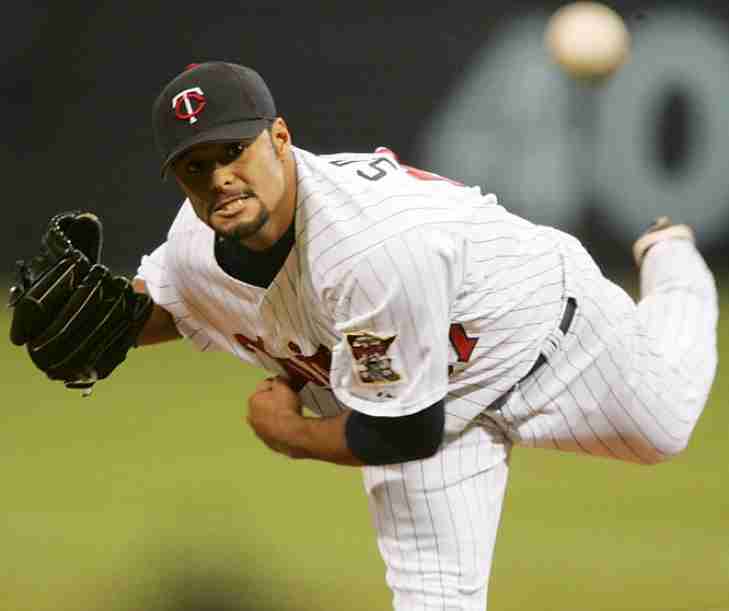
Arriving in Minnesota via the Rule 5 Draft, Johan Santana was a left-hander from Venezuela with a high-velocity fastball and a changeup that many considered the most devastating pitch of the era.
Santana spent his first three years as a mainstay in the bullpen and a spot starter, but everything changed dramatically in the second half of 2004. He delivered an incredible stretch, going 13-0 with a 1.21 ERA after the All-Star break, earning his first Cy Young Award by a unanimous vote. He mastered the league, leading the AL in strikeouts (265), ERA (2.61), and WHIP (0.92). This period proved he was an elite talent capable of shutting down baseball's most dangerous offenses, establishing himself as one of the best in the game.
Santana achieved a historic summit between 2005 and 2006, demonstrating a level of consistency that established him as the most sought-after pitcher in the league. In 2006, he attained the rare Pitching Triple Crown, leading the league in wins (19), ERA (2.77), and strikeouts (245), thus earning his second unanimous Cy Young Award. Although he "only" finished third in the 2005 voting, a result that remains subject to debate among sabermetricians, he demonstrated a relentless capacity to produce swings and misses, leading all Major League Baseball pitchers in strikeouts for three consecutive seasons. During this period of peak performance, he was a master tactician who consistently gave the Minnesota Twins a high probability of victory about every five days.
Before the 2008 season, with free agency looming and the Twins unable to meet his market value, the organization initiated a blockbuster trade, sending him to the New York Mets in exchange for a four-prospect package that included Carlos Gómez. With Minnesota, Santana compiled a 93-44 record, a 3.22 ERA, and 1,381 strikeouts, and in 2018, he took his rightful spot in the Twins Hall of Fame.
33. Johan Santana
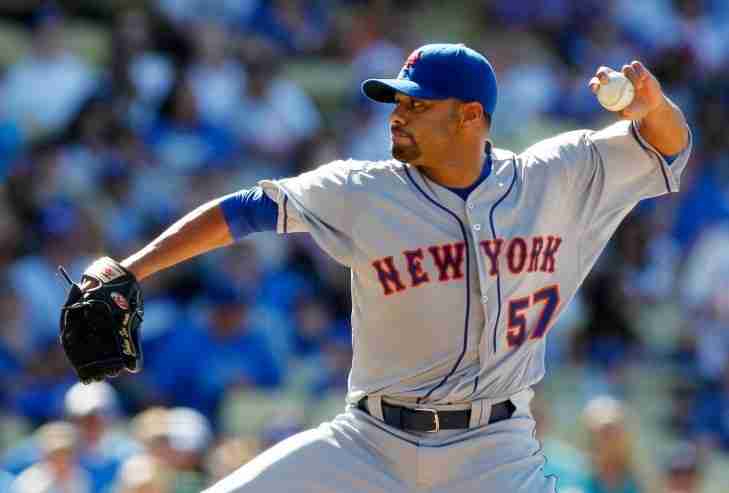
In February 2008, the Mets made a historic, franchise-changing trade with the Minnesota Twins, who sent their star left-hander Johan Santana east in exchange for Carlos Gómez, Philip Humber, Deolis Guerra, and Kevin Mulvey. The Mets quickly signed Santana to a groundbreaking six-year, $137.5 million deal, making him the highest-paid pitcher in baseball at that time. Although many historians associate his peak dominance mainly with his years in Minnesota, it's a significant oversight to ignore the incredible, impactful performances he delivered for New York before his arm injuries.
Santana delivered an outstanding debut in 2008, pitching on short rest at the end of the season and totaling a career-high 234.1 innings. That summer, he reached a peak performance by going 16-7, winning the Major League ERA title with a remarkable 2.53, and setting a franchise record for strikeouts by a left-hander with 206. He finished third in the NL Cy Young voting. Interestingly, his overall 3.18 ERA during his time with the Mets is slightly lower than his legendary years with the Twins, indicating his elite ability to prevent runs.
Severe shoulder injuries and surgeries severely impacted Santana's athletic performance, causing him to miss the entire 2011 and 2013 seasons. Despite these setbacks, he achieved legendary status in franchise history through a remarkable, high-stakes game. On June 1, 2012, after a tough comeback, he took the mound at Citi Field against the St. Louis Cardinals. Ignoring pitch count limits, he dedicated himself completely, throwing 134 intense pitches to secure the first official no-hitter in New York Mets history.
That would be his last great moment in baseball, as the injuries became too much and he retired in 2014 after missing the 2013 campaign. With the Mets, Santana had a 46-34 record.
We are announcing Baseball revisions for the 2018 Vote!
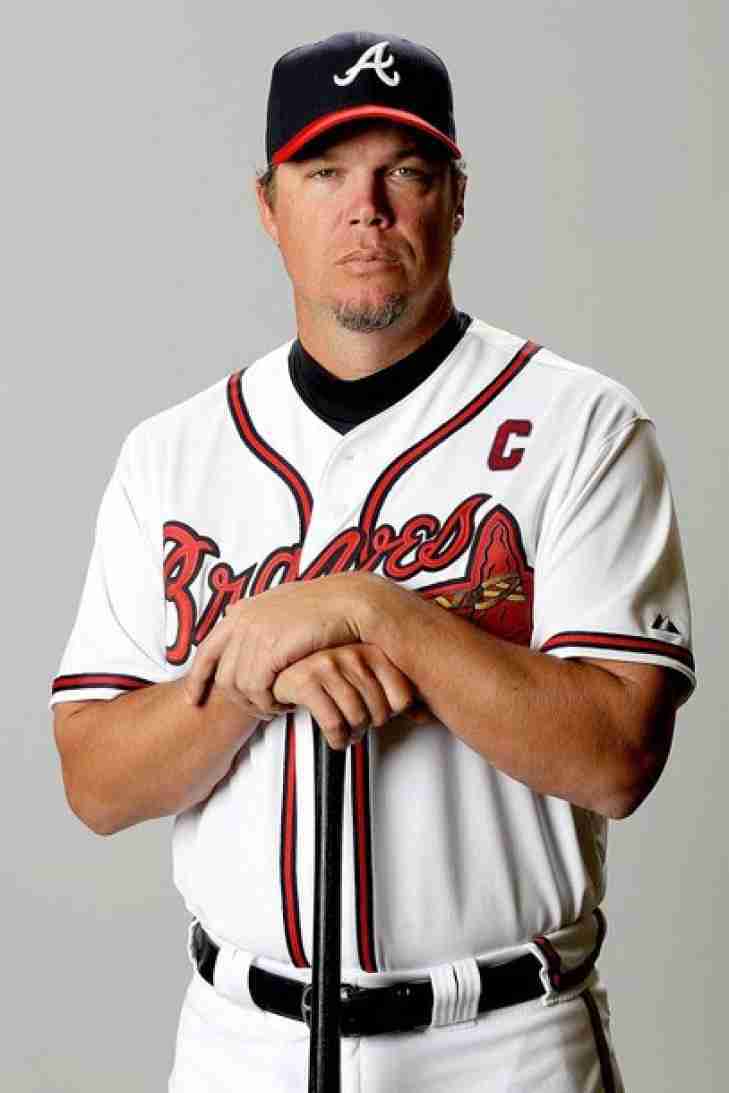
As such, we took into account the following when looking at our Baseball Revisions:
Ranking the now eligible former players. We already have them on our futures sections and your votes and comments have been taken into account.
The votes and opinions that all of you have given based on those who are already on the list.
Remember, we encourage you to keep giving us your opinions and comments as this does alter our rankings as we continue. Also, it is worth noting that we have expanded our 100 to 105.
So, let’s get right to the Top 10!
If you are a regular visitor here, you know that we have a 1A, 1B and 1C on our to accommodate:
1A. Pete Rose: The Hit King remains ineligible for the Hall of Fame due to gambling.
1B. “Shoeless” Joe Jackson: Jackson remains ineligible after nearly a century has passed following the Black Sox Scandal of 1919.
1C. Roger Clemens: It is either Clemens or Bonds in this spot. Rocket gets the duke only because he has a slightly higher vote tally from all of you who voted. Seriously though, can we get off the PED era already?
2. Barry Bonds: The All-Time leader in MLB Home Runs remains #2. While he does not have the vote total that others have who are ranked lower, like Clemens, this is as far as his (and Clemens) basement goes as far as Notinhalloffame.com is concerned, and yes, we know we said that we too take your votes into account! With these two, we re going to hold firm right now.
3. Chipper Jones: The career Atlanta Brave is considered by many to be a first ballot Hall of Fame inductee. Jones has the stats, both traditional and advanced, a World Series Ring and is very well liked. He is the highest rated new entry.
4. Mike Mussina: Mussina may have dropped one spot, but he is still a major snub in our eyes. The former Yankee and Oriole may have played in high profile markets but his profile is relatively low amongst those who think about Cooperstown. Apparently it is low with the Baseball Hall of Fame voters too.
5. Bill Dahlen: “Bad” Bill Dahlen also drops one spot. Dahlen is one of the few legitimate omissions from the game’s early days and was surly as he was good…and he was very good!
6. Jim Thome: Thome statistically should be a first ballot Hall of Famer, and probably will be, but for someone who smacked over 600 Home Runs with an OPS of .956, he is a player that could easily fall below the radars of voters on the first go around. He is the second highest ranked of the new entries.
7. Manny Ramirez. Manny is being Manny in Japan now, but he got a far higher vote in his first year of eligibility than many people thought he would.
8. Curt Schilling. Schilling took a tumble with the voters this year, the biggest drop of anyone who was on the ballot. It might be worth watching to see if he falls again.
9. Vladimir Guerrero. “Vlad, The Impaler” had the biggest jump in our Top 20, moving up from 14 to 9. Guerrero was very close to entering Cooperstown on his first try, and probably should get in on his second try.
10. Lou Whitaker. The sabremetric darling of the Detroit Tigers infield remains in the #10 spot.
Chipper Jones and Jim Thome are not the only new entries on this list.
Scott Rolen debuts at #18. The former infielder and seven time All Star brings a very interesting case to the Baseball Hall of Fame and we are very curious to see how his first vote goes.
Chipper Jones is not the only high profile former Atlanta Brave to make the top 50 as Andruw Jones debuts at #49.
Johan Santana debuts at #67 though we wonder how much higher he would be if he lasted just two more seasons.
Omar Vizquel is another new entry. The defensive star makes his first appearance at #76.
Johnny Damon and Jamie Moyer appear at #99 and #105 respectively.
You know what we want you to do!
If you haven’t cast your vote for these former baseball players on our list, please do so and offer your opinion!
As always, we here at Notinhalloffame.com thank you all for your support!
56. Johan Santana

For a seven-year period, Johan Santana was regarded as one of the top Pitchers in Baseball, where he won the American League Cy Young Award Twice, winning the ERA Title three times and leading his league in WHIP four years in a row.
As great as Santana was, his career was relatively short for a Hall of Fame Pitcher (12 Seasons), and those who look for statistical accumulation (and many voters do), won’t find it with Santana, whose 139 Wins and 1,988 Strikeouts do not measure up to a lot of those already in Cooperstown.
Still, his career bWAR of 50.7 is excellent, and since he led the National League in that category three times, how can he not be at least considered by even those who worship traditional statistics? One thing is for sure: the results of Santana’s votes have been fascinating!
