

Top 50 Minnesota Twins
In 1901 the Washington Senators were formed as a charter member of the American League. While some excellent players suited up in the Nation’s Capital more often than not the team wasn’t very good and would only win one World Series (1924) in the sixty years they played there.Washington would lose its team to Minneapolis, who christened the team the Minnesota Twins to lure in fans from St. Paul, the eastern city on the Mississippi River from Minneapolis. The fortunes didn’t really change as the Twins were bad more often than they were good. They would finally breakthrough in 1987 winning their first World Series in Minnesota. They would win again in a thrilling series in 1991 against the Atlanta Braves.
While the Twins own the history of the Senators, they don’t celebrate it as anybody from their own franchise Hall of Fame had a celebrated career in Washington. Still, this IS a part of their history and our list reflects as much.
Note: Baseball lists are based on an amalgamation of tenure, traditional statistics, advanced statistics, playoff statistics, and post-season accolades. This is a list up to the end of the 2025 Season.
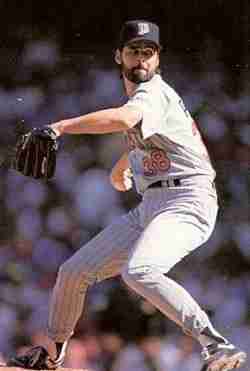
Rick Aguilera arrived in the Twin Cities in July 1989 as a primary piece of the blockbuster trade that sent Frank Viola to the New York Mets. Initially, Aguilera operated as a professional mainstay in the rotation, fulfilling his wish to remain a starter for the final 11 games of that season. However, the organization recognized a high-leverage potential in his electric stuff, transitioning him to the bullpen in 1990—a move that would fundamentally alter the franchise's trajectory and secure his place as a Minnesota legend. After becoming the full-time closer in 1990, he demonstrated exceptional efficiency by recording 32…
Zoilo Versalles first wore the Washington uniform in 1959 at age nineteen. Hailing from Havana, he was a lean, explosive talent who soon became the team's defensive cornerstone as it shifted to the Upper Midwest. Nicknamed "Zorro," he was the infield's high-energy heartbeat, leaving a statistical mark characterized by a remarkable peak that surpassed most shortstops of the 1960s. Let’s look at that 1965 AL MVP, where Zorro might be one of the most unlikely MVPs in league history. That year, Versalles led the American League in bWAR (7.2), runs scored (126), doubles (45), and triples (12). He showcased total…
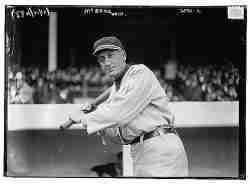
George McBride assumed the shortstop role in Washington in 1908, serving as a reliable player who spent over ten years anchoring the infield behind Walter Johnson. During an era characterized by rugged field conditions and a focus on small-ball, McBride was a top-tier defensive mainstay. McBride's tenure was marked by a defensive run nearly historic in magnitude. Well before modern analytics could quantify it, he excelled on the field, leading the American League in Defensive bWAR four times. He recorded seven seasons with a Defensive bWAR over 2.0, including two outstanding seasons surpassing the 3.0 threshold. His positioning and range…
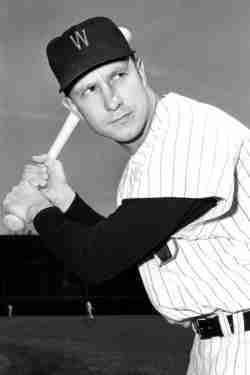
Roy Sievers arrived in Washington in February 1954 via a trade with the Baltimore Orioles, who had recently moved from St. Louis, in exchange for outfielder Gil Coan. The Orioles thought Sievers' arm was worn out after several injury-ridden seasons, but the change of environment turned out to be a pivotal moment in his career. Playing for the consistently struggling Senators during the 1950s, he became the team's main offensive weapon, competing with the league's top sluggers even though he spent half his games in the large Griffith Stadium. Senators manager Bucky Harris inserted Sievers into the lineup despite his…
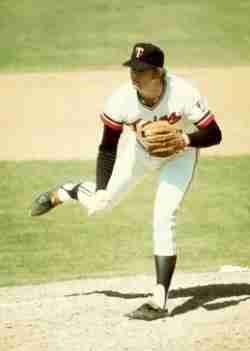
Dave Goltz first joined the Minnesota rotation in 1972, a steady and durable right-hander from Pelican Rapids, Minnesota, who achieved the rare dream of pitching for his hometown team. His defining Minnesota moment was 1977, when Goltz debuted as a durable starter, going 39 games with a 20-11 record and 3.36 ERA. His leadership earned sixth in AL Cy Young voting. Goltz was more than a one-year wonder; his value came from consistently giving the Twins a strong chance to win. He ranked in the top five in bWAR for pitchers in 1977 and 1978, using a sinker and command…
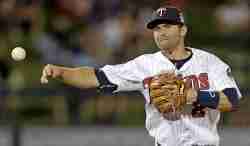
Playing his college ball at Southern Mississippi, Brian Dozier debuted in 2012 as a hard-nosed infielder who would completely redefine the power dynamic at second base for Minnesota. While historically the position was reserved for slap hitters and table-setters, Dozier operated as a true middle-of-the-order threat with an elite pull-side stroke. Dozier broke out during his 2015 All-Star campaign, hitting 28 home runs and establishing himself as a top run-producer. In 2016, he reached a career Peak, hitting 42 home runs that set the American League record for a primary second baseman. He combined power with a sharp eye and…
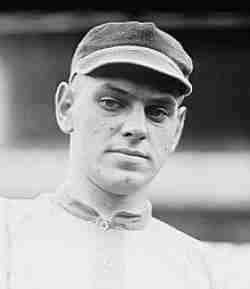
Jim Shaw debuted at National Park in 1913 as a durable right-hander who spent his entire nine-year MLB career with Washington. Playing under Walter Johnson's shadow, Shaw was a key workhorse for the Senators during the late dead-ball era. Although often under-supported, resulting in an 84-98 record, he was a highly effective frontline pitcher known for his heavy workload and intense style, earning respect across the American League. Shaw’s tenure was marked by a max-effort style that gave him a distinctive reputation. He vocalized his exertion on the mound, earning the nickname "Grunting Jim" for groaning with each delivery. This…
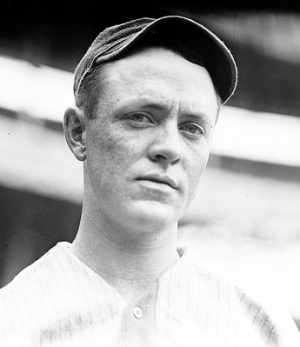
Eddie Foster arrived in Washington in 1912, after debuting briefly with the Yankees in 1910 and playing in the minors in 1911. The Senators acquired him before the 1912 season, boosting their offense. Foster was a high-volume hitter, leading the American League in at-bats four times (1912, 1914, 1915, and 1918) as the team’s main table-setter. He lacked power but had great bat control and speed, stealing at least 20 bases in each of his first four seasons, totaling 1,177 hits with the Senators. Rival managers called him the top hit-and-run artist in the league. Foster was lauded for his…
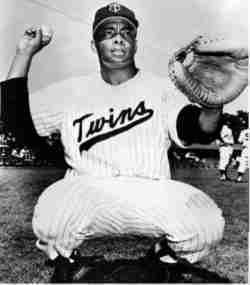
Earl Battey joined the organization in April 1960 through a pivotal, high-leverage trade that sent former home run champion Roy Sievers to the Chicago White Sox in exchange for Battey, Don Mincher, and cash. The Senators’ fans did not see much reason to celebrate Battey's arrival, but that would change soon. Battey won three straight Gold Glove Awards from 1960 to 1962, becoming the top defensive catcher in the American League. He excelled at controlling the running game, leading catchers in runners caught stealing three times and caught stealing percentage twice, including a remarkable 58.6%. From 1960 to 1963, he…
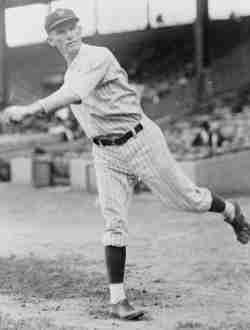
Tom Zachary joined the Washington organization in 1919 after a brief wartime debut with the Philadelphia Athletics under an assumed name to keep his amateur status. The left-handed control artist bypassed the minor leagues and joined the Senators directly. Over two stints, he became a key part of the rotation, facing top hitters with pinpoint accuracy and calm poise that outsmarted opponents. During the early 1920s, he served as a workhorse for the rotation, posting four 15-win seasons (1920, 1921, 1922, 1924) and frequently crossing 200 innings. His control-first style peaked in the 1924 pennant race, going 15-9 and finishing…
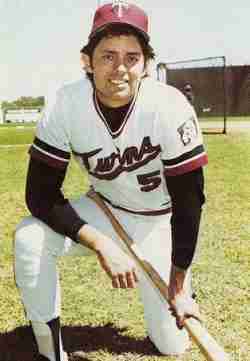
Roy Smalley joined Minnesota in June 1976 as the star signing from a major trade that sent future Hall of Famer Bert Blyleven to the Texas Rangers. The switch-hitting shortstop quickly assumed the starting position, offering a unique combination of power and patience at a role traditionally dominated by pure defenders. During the 1979 season, he had a standout campaign, earning his first All-Star selection and becoming the top offensive shortstop in the American League. Smalley achieved career highs with 168 hits, 24 home runs, 95 RBIs, and 100 runs scored. He demonstrated excellent strike zone control, leading the league…
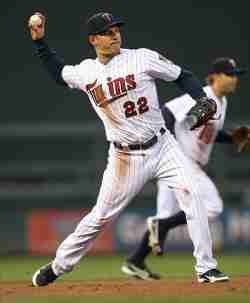
Corey Koskie first broke into the Minnesota lineup in 1998, a versatile and athletic third baseman from Manitoba who quickly established himself as a consistent presence at the hot corner. His Minnesota tenure was marked by offensive reliability from 2000 to 2003. During this period, Koskie had four consecutive seasons with at least 130 hits, displaying command of the strike zone with a .280/.374/463 slash line. He was a key contributor, especially in 2001 with 26 homers, 103 RBI, and 100 runs scored. Koskie was a versatile player for the Twins, blending power, speed, and solid defense. He hit 25…
