

Top 50 Minnesota Twins
In 1901 the Washington Senators were formed as a charter member of the American League. While some excellent players suited up in the Nation’s Capital more often than not the team wasn’t very good and would only win one World Series (1924) in the sixty years they played there.Washington would lose its team to Minneapolis, who christened the team the Minnesota Twins to lure in fans from St. Paul, the eastern city on the Mississippi River from Minneapolis. The fortunes didn’t really change as the Twins were bad more often than they were good. They would finally breakthrough in 1987 winning their first World Series in Minnesota. They would win again in a thrilling series in 1991 against the Atlanta Braves.
While the Twins own the history of the Senators, they don’t celebrate it as anybody from their own franchise Hall of Fame had a celebrated career in Washington. Still, this IS a part of their history and our list reflects as much.
Note: Baseball lists are based on an amalgamation of tenure, traditional statistics, advanced statistics, playoff statistics, and post-season accolades. This is a list up to the end of the 2025 Season.
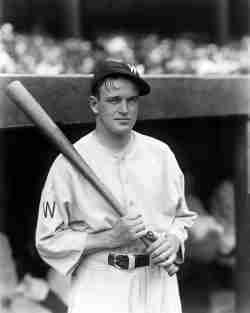
Joe Cronin did not play much for the Pittsburgh Pirates, but he was a star in waiting. So much so, the Senators paid the Pirates $7,500 to acquire his services before the 1928 season. After becoming a regular in 1929, Cronin achieved his peak performance in 1930, hitting .346 with 126 RBIs and earning the Sporting News MVP Award. He owned the field, establishing himself as a key professional for the Senators by reaching 100 RBIs in five straight seasons. Known for his exceptional defensive skills, he led the American League in Defensive WAR three times (1930, 1931, 1933) and…
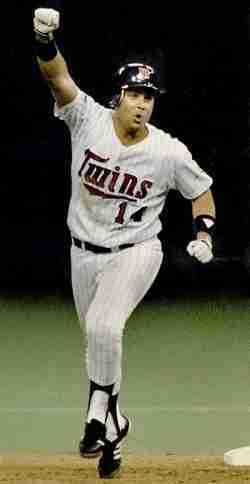
Kent Hrbek first stepped into the Met Stadium spotlight in 1981, a local product from Kennedy High School who became the quintessential "Lifer" for his hometown organization. While other stars of his era chased free-agent riches, he anchored first base for the Twins across 14 seasons, In 1982, Hrbek was runner-up for AL Rookie of the Year, behind Cal Ripken Jr. In 1984, he hit .311 with 27 home runs and 107 RBI, finishing as MVP runner-up to Willie Hernandez. Hrbek truly shined during the franchise's most exciting postseason moments. In the 1987 World Series, he delivered a memorable Grand…
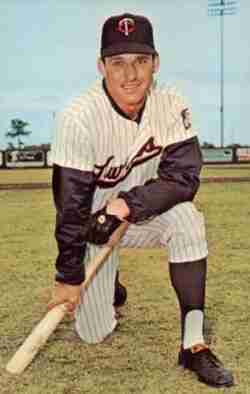
Bob Allison first broke into the American League in 1958 with the Washington Senators, a physical, 6-foot-4 athlete who would remain a fixture for the franchise through its move to Minnesota in 1961. Known for a specialized combination of "pop" and a defensive "cannon," he anchored the lineup alongside Harmon Killebrew for over a decade. Allison quickly made an impact, reaching a rookie peak with a .261 batting average, leading the league with 9 triples, and hitting 30 home runs. He won the American League Rookie of the Year award and earned his first All-Star selection. A key player, he…
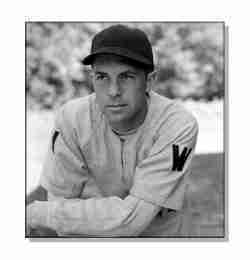
Cecil Travis first stepped onto the Griffith Stadium grass in May 1933, a nineteen-year-old left-handed-hitting shortstop whose pure contact ability suggested a trajectory toward the absolute summit of the game's greats. While he is often cited as one of the most significant "what-ifs" in baseball history because of his military service, he was a premier offensive force for the Senators throughout the 1930s. In his 1933 debut, Travis authored a masterful introduction, recording five hits in his first game, a feat that signaled his status as an elite contact hitter. He remained a professional mainstay throughout the rest of the…
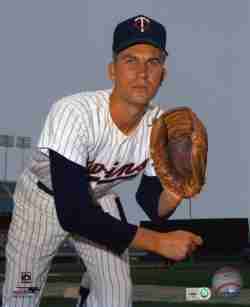
Jim Perry joined the organization in 1963, a right-handed control artist who spent a decade anchoring the Minnesota rotation with fellow stalwarts. While he started in Cleveland, he peaked statistically in the Twin Cities, where he was known for durability and pinpoint accuracy. From 1963 through 1968, Perry served as a versatile and professional mainstay on the staff, often alternating between the rotation and the bullpen. He provided essential depth for the 1965 American League Championship team, recording 12 wins and demonstrating a specialized ability to eat innings whenever called upon. His role expanded as the decade progressed, and by…
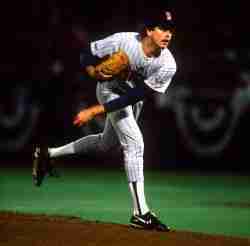
Frank Viola emerged as a left-handed powerhouse for Minnesota in the early 1980s, eventually becoming the rotation's definitive ace. While he earned the nickname "Sweet Music" for his specialized changeup and poise, he served as the high-voltage engine that powered the franchise's first championship run. Viola achieved a historic streak of four 16-win seasons, reaching his peak in 1987 when he helped the Twins secure the division and then was named World Series MVP, cementing his postseason legend and bringing Minnesota its first title. During the 1987 World Series, Viola led with three key starts against the St. Louis Cardinals.…
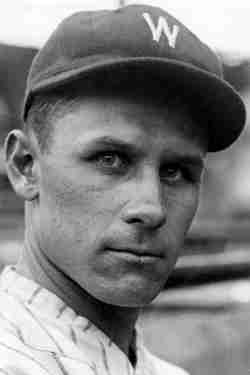
Ossie Bluege first stepped onto the Griffith Stadium diamond in 1922, a defensive wizard who would spend his entire eighteen-season playing career in the nation's capital. While he was never considered an elite offensive force, he provided steady, consistent play that resulted in 1,751 hits over nearly two decades. He was the premier defensive third baseman of his era, establishing a residency at the "hot corner" so dominant that he likely would have captured numerous Gold Gloves had the honor existed during his tenure. Bluege was a key part of the 1924 World Series-winning team, offering strong defense and quiet…
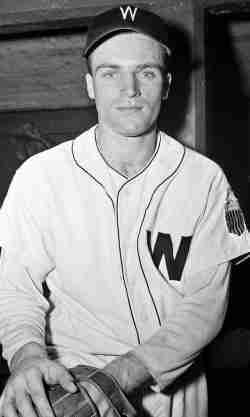
Eddie Yost first appeared in a Washington uniform in 1944 as a seventeen-year-old, a right-handed-hitting third baseman whose patient approach at the plate earned him the enduring title of "The Walking Man." While he lacked the high-voltage power of some of his contemporaries, he operated as one of the most disciplined hitters in the history of the sport. Yost reached peak plate discipline during his Washington residency, leading the American League in walks four times (1950, 1952, 1953, 1956). He demonstrated complete strike zone control, surpassing 100 walks in eight seasons. Though he didn't win an OBP title until his…
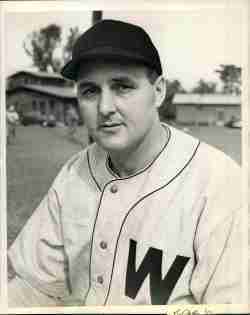
After four nondescript years in Brooklyn, Dutch Leonard arrived in the nation’s capital in 1938, bringing a fluttery, unpredictable knuckleball that haunted the nightmares of the league’s greatest hitters. While many who threw the "knuckler" struggled with its erratic nature, Leonard mastered the pitch with a surgical precision that defied the laws of physics. Leonard’s tenure was marked by exceptional mastery of the strike zone, uncommon for a knuckleballer. He exemplified efficient pitching, leading the American League in BB/9 twice (1939, 1945). His peak was in 1944 when he led in WHIP (1.114). His restraint was best shown in 1945,…
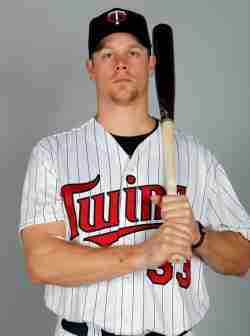
Justin Morneau took his first swings for Minnesota in 2002, a powerful left-handed first baseman from British Columbia who became a central figure in the franchise’s most successful era of the new millennium. Alongside Joe Mauer and Johan Santana, he formed a "Big Three" that kept the Twins at the summit of the American League Central for much of the 2000s. Morneau made his debut for the Twins in 2002 and became their primary First Baseman by 2004. His career was marked by an exceptional offensive performance that peaked in 2006, a season in which he hit .321 with 34…
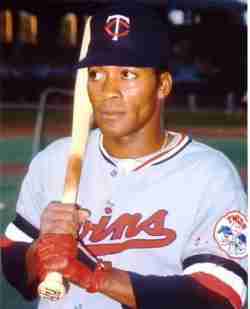
Cesar Tovar emerged as the ultimate Swiss Army knife for Minnesota in 1965, a high-energy talent from Venezuela who redefined positional flexibility. Although he lacked a single defensive home, he served as the spark plug for the great Twins teams of the late 1960s and early 1970s. On September 22, 1968, he became only the second MLB player to play all nine positions in one game, showcasing his versatility. He contributed to the Twins’ division titles in 1969 and 1970. Tovar achieved a historic offensive streak, with at least 150 hits annually from 1967 to 1971. His peak was 1971,…
Gary Gaetti first made his mark in Minnesota in 1981, a high-intensity third baseman who became a cornerstone of the Metrodome era. During the legendary 1987 championship run, he made a lasting impact on franchise history. In the American League Championship Series against Detroit, he hit home runs in his first two at-bats, earning him the ALCS MVP award. This electrifying start helped the Twins secure their first World Series title since relocating to Minnesota. A consistent professional, he achieved 20 home runs in six seasons for the team, demonstrating that his power at bat was as dependable as his…
2026 SEATTLE MARINERS FLEX MEMBERSHIPS
Jan 01, 1970
Buy your Tickets to see 2026 Seattle Mariners Flex Memberships HERE!
BALTIMORE ORIOLES VS. LOS ANGELES ANGELS
Aug 04, 2026
Buy your Tickets to see Baltimore Orioles vs. Los Angeles Angels HERE!
PHILADELPHIA PHILLIES VS. WASHINGTON NATIONALS
Aug 04, 2026
Buy your Tickets to see Philadelphia Phillies vs. Washington Nationals HERE!
CINCINNATI REDS VS. ATHLETICS
Aug 04, 2026
Buy your Tickets to see Cincinnati Reds vs. Athletics HERE!
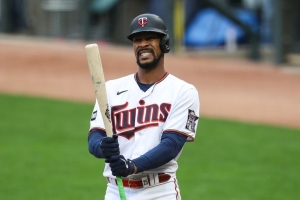
There are not many players like Byron Buxton. Byron Buxton first took the field for Minnesota in 2015, a mere three years after the organization made him the second overall pick in the draft. Entering the league with the heavy expectations of a five-tool phenom, he has spent his decade in the Twin Cities oscillating between historic brilliance and frustrating physical setbacks. In 2017, he established himself as an elite fly-catcher. That season, he reached a significant milestone by leading the American League with 29 Total Zone Runs and ranking second in Defensive bWAR at 2.6. His mastery of center…
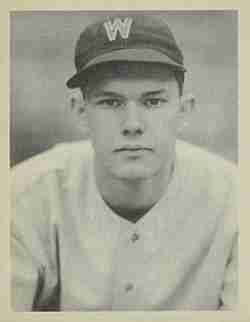
Buddy Lewis first took to the Griffith Stadium field in 1935 as a nineteen-year-old phenom, quickly cementing his reputation as a hitting powerhouse for the Senators. A versatile athlete, he played both the hot corner and the outfield, serving as the main driving force of Washington's offense in the late 1930s. Lewis achieved six consecutive seasons with at least 160 hits at the start of his career, a remarkable streak that placed him second only to Ty Cobb for total hits by a player of that age. He was a consistent performer, participating in two All-Star Games (1938 and 1947),…
Torii Hunter arrived in the Twin Cities in the late 1990s, a charismatic and high-energy center fielder who would eventually become the face of a new era of Minnesota baseball. While he was a dual-threat player with significant "pop" in his bat, he was best known as a defensive dynamo whose acrobatic catches in the outfield gaps defined the "Soul Patrol" of the early 2000s. He proudly earned seven consecutive Gold Glove Awards with the Minnesota Twins from 2001 to 2007, showcasing his mastery in center field. One of his most memorable moments happened during the 2002 All-Star Game, where…
Joe Nathan came to Minnesota in 2004 through a franchise-changing trade with San Francisco, evolving from a dependable setup man into the franchise’s most dominant closer. Although he demonstrated potential in the National League, he truly maximized his abilities in the Twin Cities, where his fastball that topped the radar and sharp slider often sealed Minnesota's wins. Nathan quickly demonstrated his capabilities during his inaugural season as a Twin in 2004, achieving 44 saves and securing a fourth-place position in the Cy Young Award voting. This accomplishment was not merely a one-time achievement; he subsequently maintained a consistent performance over…
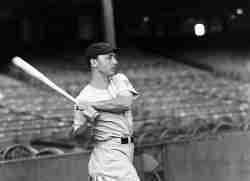
Stan Spence’s Washington tenure began with a December 1941 trade that brought him from the Boston Red Sox, along with pitcher Jack Wilson, in exchange for Ken Chase and Johnny Welaj. Blocked by stars like Ted Williams and Dom DiMaggio in Boston, Spence was viewed as an afterthought in the deal but immediately proved to be a foundational acquisition for the Senators. Between 1942 and 1944, Spence was a key player, earning All-Star honors each season. He peaked in 1942 and 1944, finishing eighth in AL MVP voting. During this time, he excelled in contact hitting, batting over .300, and…
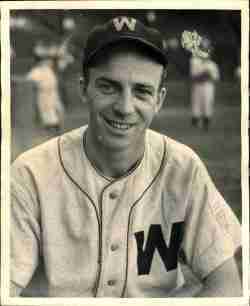
George Case burst into the Washington lineup in 1937, a fleet-footed outfielder who utilized game-breaking speed to become the most disruptive force in the American League. While the era was defined by lumbering power, Case operated as a high-velocity throwback to the "dead ball" style of play, weaponizing his legs to ignite the Senators' offense. From 1939 to 1943, there was no doubt who the game’s best stealer was. During this high-voltage five-year stretch, Case reached a historic plateau by leading the American League in stolen bases five years in a row. Peaking at 61 in 1943, Case was a…
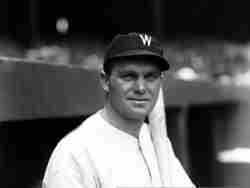
Heinie Manush joined the organization in June 1930 via a rare, high-leverage trade that saw the Senators send future Hall of Famer Goose Goslin to the St. Louis Browns in exchange for Manush and pitcher Alvin "General" Crowder. He arrived in the capital already recognized as one of the game's elite contact hitters, and he promptly occupied the peak of his fame as the offensive engine for the club. Manush was a powerhouse player during the 1932 and 1933 seasons. He placed third in MVP voting for two consecutive years and consistently exploited gaps at Griffith Stadium, notably achieving a…
