

The Baltimore Orioles name their 2026 Hall of Fame Class

Regular visitors of Notinhalloffame.com know that we are slowly working on the top 50 of every major team in the NHL, NBA, NFL, and MLB. Once that is done, we will examine how each team honors its past players, coaches, and executives. As such, it is important to us that the Baltimore Orioles have announced that Chris Davis, Storm Davis, and Jim Russo will enter their franchise Hall of Fame this year.
Chris Davis, 2011-20. First Base & Outfield: Davis won the Home Run Title twice (2013 & 2015), and in that 2013 campaign, Davis was an All-Star, a Silver Slugger, the RBI leader, and finished third in MVP voting. He blasted 253 Home Runs for the club with 941 Hits.
Storm Davis, 1982-86 & 1992. Pitcher: Over two stints with the O’s, Davis had a 61-43 record with 539 Strikeouts and was a member of the 1983 World Series Championship team.
Jim Russo, Executive & Scout: Russo served the organization for 36 years, most notably becoming a special assistant to the general manager in 1966.
The three will be announced at an on-field induction ceremony on August 1 in a game against the Philadelphia Phillies.
We here at Notinhalloffame.com would like to congratulate the incoming members of the Baltimore Orioles Hall of Fame.
Our All Time Top 50 Baltimore Orioles have been revised to reflect the 2025 Season

Yes, we know that this is taking a while!
As many of you know, we at Notinhalloffame.com are slowly generating the top 50 of each major North American sports team. That being said, we maintain and update our existing Top 50 lists annually. As such, we are delighted to present our pre-2026 revision of our top 50 Atlanta Braves.
As for all of our top 50 players in baseball, we look at the following:
1. Duration and Impact.
2. Traditional statistics and how they finished in the Major League Baseball.
3. Advanced Statistics.
4. Playoff performance.
5. Their respective legacy on the team.
6. How successful the team was when he was there.
7. Respecting the era in which they played.
Criteria 1-4 will make up the lion’s share of the algorithm. Please note that we have implemented this for the first time. This has changed the rankings all throughout the board.
Last year, the Orioles had a disappointing record, winning only 75 Games and finishing last in the new division. There were no new entrants, and no active players moved up, but there were some minor changes due to the new algorithm.
As always, we present our top five, which remain unchanged.
1. Cal Ripken Jr.
2. Jim Palmer
3. Brooks Robinson
4. Eddie Murray
5. George Sisler
You can find the entire list here.
We thank you for your continued support of our lists on Notinhalloffame.com.
Our All Time Top 50 Baltimore Orioles have been revised to reflect the 2024 Season
Yes, we know that this is taking a while!
As many of you know, we at Notinhalloffame.com are slowly generating the top 50 of each major North American sports team. That being said, we have existing Top 50 lists and consistently look to update them when necessary and based on necessity. As such, we are delighted to present our post-2024 revision of our top 50 Baltimore Orioles.
As for all of our top 50 players in baseball, we look at the following:
1. Advanced Statistics.
2. Traditional statistics and how they finished in the American League.
3. Playoff accomplishments.
4. Their overall impact on the team and other intangibles that are not reflected in a stat sheet.
Please note that our algorithm has changed, which yielded minor changes throughout the baseball lists.
Last year, the Orioles returned to the playoffs, but were hoping for a deeper run. Should they repeat what they accomplished in 2024 in 2025, there should be new entrants. As such, there was only one new entrant, but it is an older player who benefited from the new algorithm.
As always, we present our top five, which saw two changes based on the new structure:
3. Jim Palmer
4. Eddie Murray
You can find the entire list here.
Under the new system, Robinson moved to #2 by slightly edging out Palmer, and Murray overtook Sisler for #4.
Outfielder Burt Shotten enters the list at #47 with the new algorithm.
We thank you for your continued support of our lists on Notinhalloffame.com.
47. Burt Shotten
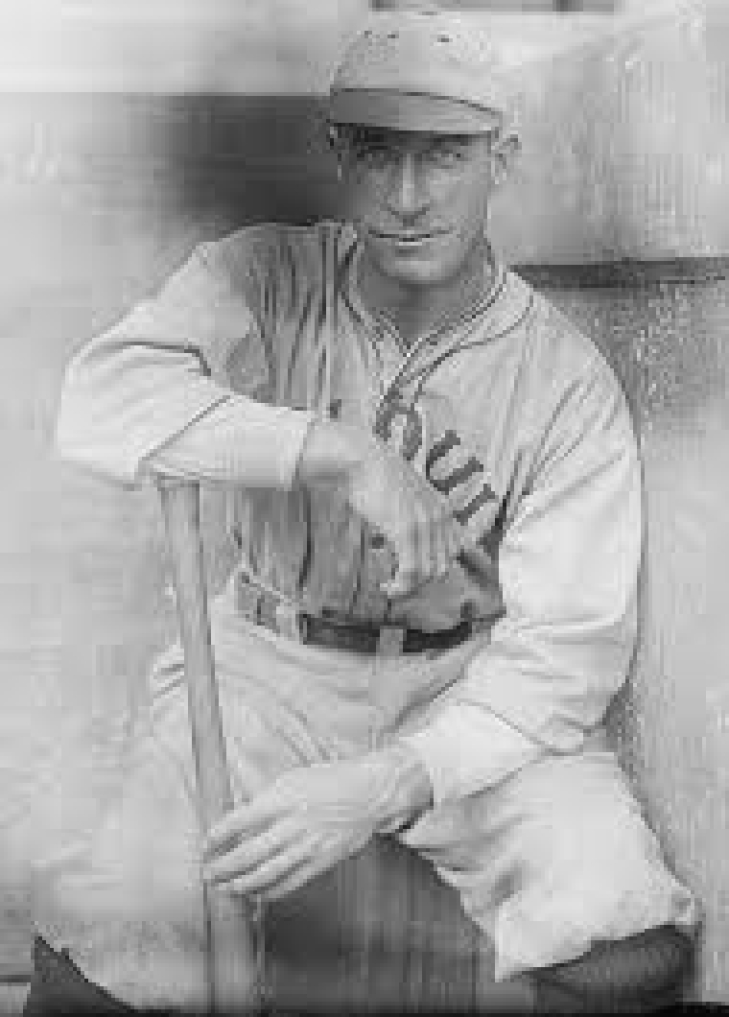
In the gritty, swing-at-everything culture of the 1910s, Burt Shotton was a tactical outlier. Serving as the catalyst for the St. Louis Browns for seven seasons, Shotton weaponized a rare brand of plate discipline that made him one of the most difficult outs in the American League. While he never hit for the high averages of a Ty Cobb, his ability to manipulate the strike zone made him a premier table-setter for the era.
He led the American League in Walks twice and posted an incredible On-Base Percentage over .390 on four separate occasions. At a time when slugging was non-existent, Shotton’s OBP was a massive "Efficiency Outlier," consistently placing him among the league leaders in runs created.
On the basepaths, Shotton was a high-risk, high-reward engine. He reeled off a four-year streak of stealing at least 40 bases (peaking at 52 in 1916), though his aggressive style often led to being caught at a high clip—a byproduct of the Browns' desperate need to manufacture runs. While his defensive metrics were occasionally marred by errors in the outfield, his durability and durability were unquestioned, as he amassed 1,070 hits in a Browns uniform.
Inducted into the lore of the franchise as one of its most cerebral early stars, Shotton’s legacy is defined by his patient eye and relentless speed.
Zack Britton
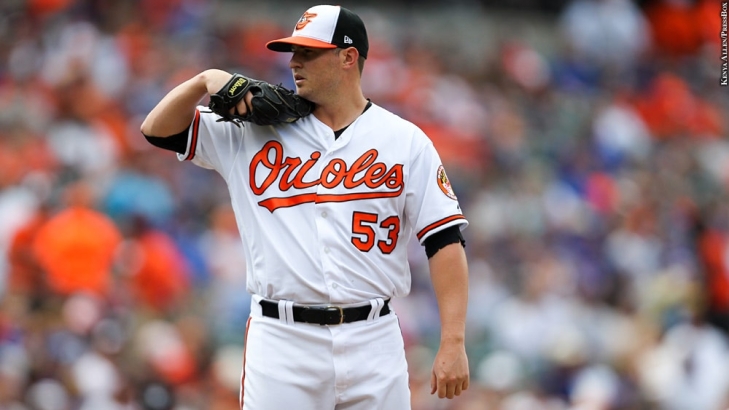
Zack Britton debuted for the Baltimore Orioles in 2011 and began his career as a middle reliever. Although he pitched well, he wasn't particularly outstanding. However, in 2014, he unexpectedly worked his way into the closing role and converted 37 of 41 save opportunities. This helped the O's make the playoffs, and Britton finished the year with a 1.65 ERA and a 0.904 WHIP.
In 2015, Britton continued to improve and made his first All-Star Game appearance. He recorded 36 saves with a 1.92 ERA and a 0.990 WHIP. However, 2016 was the best year of his career. Britton led the AL in saves (47) and games finished (63) and was nearly untouchable with a 0.54 ERA and a WHIP of 0.836. He was an All-Star again and won The Sporting News Pitcher of the Year award, finishing fourth in Cy Young voting.
Although he started strong in 2017, Britton began to deal with injuries, including an Achilles tear that put him on the disabled list to start the 2018 season. By this time, the Orioles were no longer competitive, and Britton was eventually traded to AL East rival, the New York Yankees. While he was no longer the closer, he still performed well in 2019 and 2020 with ERAs under two.
Unfortunately, bone chips and Tommy John surgery in 2021 led to his downfall, and he retired after the 2022 season with 154 career saves. Nonetheless, for a brief time, Zack Britton was the top relief pitcher in the American League, and his outstanding bullpen campaign during his time with the Orioles will be remembered as one of the best in franchise history.
Our All-Time Top 50 Baltimore Orioles have been revised to reflect the 2023 Season
Yes, we know that this is taking a while!
As many of you know, we here at Notinhalloffame.com are slowly generating the 50 of each major North American sports team. That being said, we have existing Top 50 lists out and we always consistently look to update them when we can and based on necessity. As such, we are very happy to present our post 2022/23 revision of our top 50 Baltimore Orioles.
As for all of our top 50 players in hockey we look at the following:
1. Advanced Statistics.
2. Traditional statistics and how they finished in Major League Baseball.
3. Playoff accomplishments.
4. Their overall impact on the team and other intangibles not reflected in a stat sheet.
Last year, the Orioles made it to the playoffs with one of the best young rosters in baseball. However, as this a century-plus old team with only young stars, there were no changes in the Top 50, but we did want to acknowledge that we took 2023 into account.
As always, we present our top five, which obviously did not change.:
2. Jim Palmer
5. Eddie Murray
You can find the entire list here.
We welcome your input and comments and as always, we thank you for your support.
RIP: Brooks Robinson
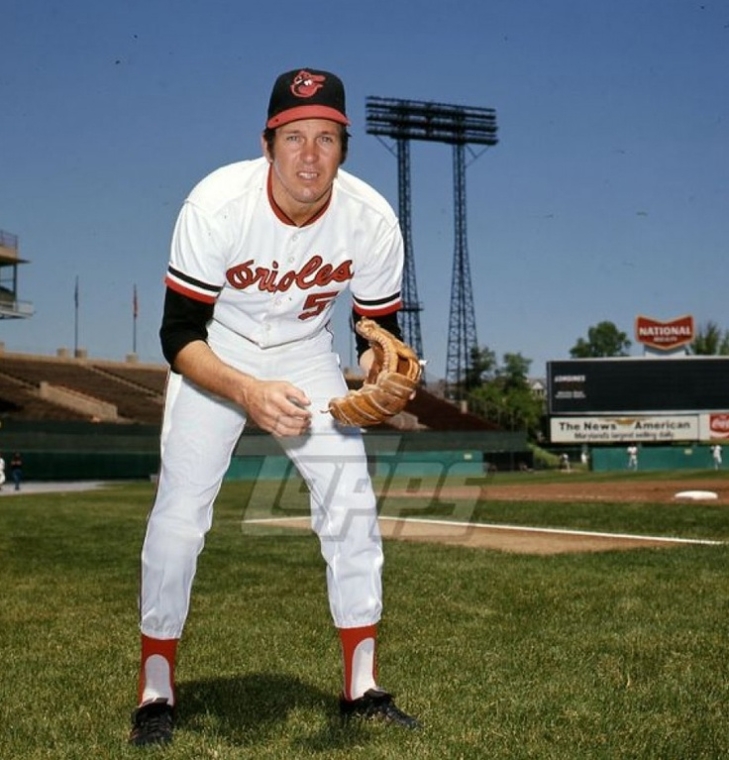
Baseball lost one of its legends today with the passing of Brooks Robinson. He was 86 years old.
Signed in 1955, Robinson played all 18 of his MLB seasons with the Baltimore Orioles. Initially playing at Second Base, Robinson was moved to Third Base, where he would become the finest defensive player at his position, winning 16 Gold Gloves. Robinson was named an All-Star 18 times, and won the National League MVP in 1964. He would also lead the Orioles to World Series Titles in 1966 and 1970.
Although Robinson is mostly known for his glove, Robinson was a very good hitter, collecting 2,848 Hits, with 268 Home Runs and 1,367 Runs Batted In.
We here at Notinhalloffame.com would like to extend our condolences to the fans, friends and family of Brooks Robinson.
Our All-Time Top 50 Baltimore Orioles have been revised to reflect the 2022 Season
Yes, we know that this is taking a while!
As many of you know, we here at Notinhalloffame.com are slowly generating the 50 of each major North American sports team. That being said, we have existing Top 50 lists out and we always consistently look to update them when we can and based on necessity. As such, we are very happy to present our post 2022 revision of our top Baltimore Orioles.
As for all of our top 50 players in baseball we look at the following:
1. Advanced Statistics.
2. Traditional statistics and how they finished in the American League.
3. Playoff accomplishments.
4. Their overall impact on the team and other intangibles not reflected in a stat sheet.
Last year, Baltimore went over .500, and could be a sleeper team in 2023, however none of their players cracked the Top 50, nor were there any changes. We still want to acknowledge that we have counted 2022 into our rankings.
As always, we present our top five, which was not affected by the last season:
2. Jim Palmer
5. Eddie Murray
You can find the entire list here.
We welcome your input and comments and as always, we thank you for your support.
Matt Wieters
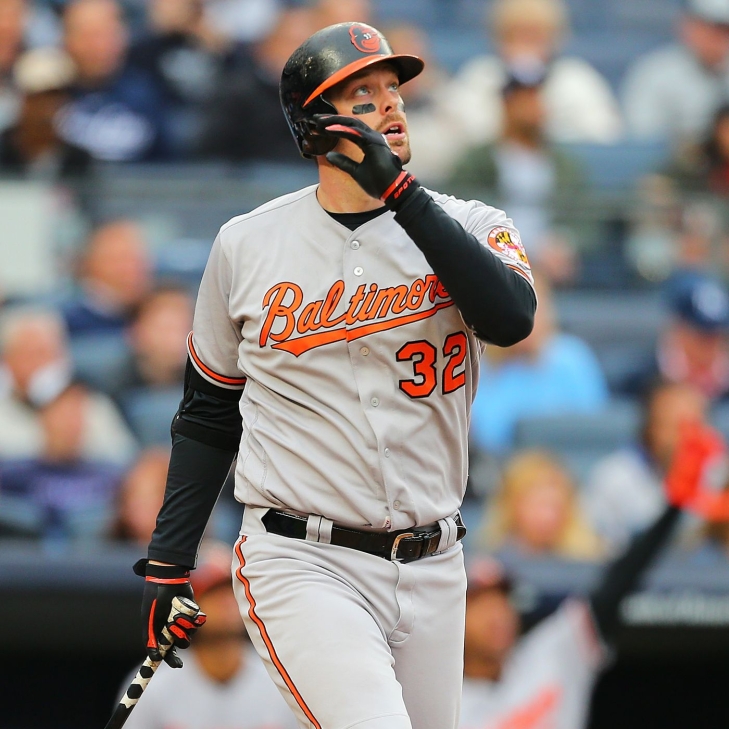
Matt Wieters was one of the better defensive catchers in the early 2010s, leading the American League in Total Zone Runs by a Catcher three times and winning two Gold Gloves. Playing for Baltimore for most of his career, Wieters did not hit for average but had three consecutive 20 Home Run Years and was good enough to make four All-Star Teams.
Chris Davis
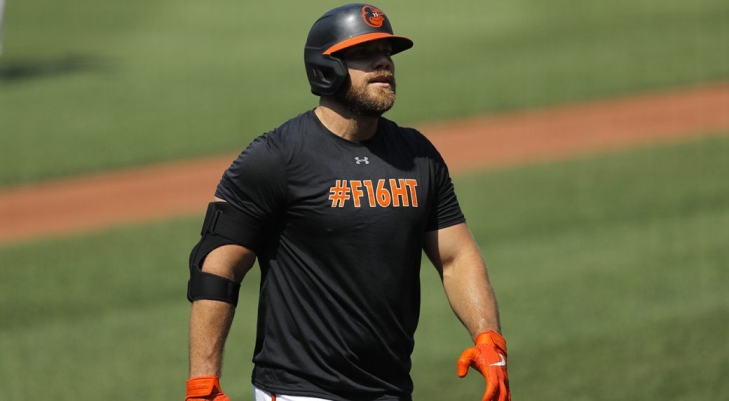
You can't talk about Chris Davis without discussing the spectacularly good and the abysmally bad. Over the last half of his career, no other baseball player may have gone from one extreme to the other quicker than the former First Baseman.
Davis came up through the Texas Rangers system, and the scouting reports about the First Baseman never changed: Low Average, colossal power, lots of Strikeouts, and slow. He made the Rangers roster first in 2008, but he bounced up and down from Texas and Triple-A often in his first three years, though he did prove he could go deep against Major League pitching. He was traded to Baltimore during the 2011 Season, and it was in Maryland where he showed the best and worst of what he could do.
Davis had his first 30 Home Run year in 2012 (33) and did so with a solid .270 Batting Average. He then joined the 50-Home Run Club in 2013, winning the Home Run Title (53) and RBI Title (138), and batting a career-high .286. Davis was third in MVP voting, went to his only All-Star Game, and captured his only Silver Slugger. He was third in MVP voting, but there were still a lot of doubt in his overall game.
Davis belted 26 Home Runs in 2014 but batted less than .200. The following year, he won his second Home Run Title with 47 Home Runs, but he also led the league in Strikeouts (208). He again was the infamous first-place finisher in whiffs in 2016 (219), but his Home Run tally dropped to 38, and he batted .221.
Power and Average dropped afterward, and Davis infamously set the MLB record for the longest streak without a Hit (54 At Bats). He morphed into a chronically hurt player, who could not hit, let alone for power, and he limped into retirement after the 2020 Season.
Davis was much-watch television every time he batted, but two Home Run Titles can not negate a bWAR that is barely over 11. He will get on the ballot but will be fortunate to gain a vote.
Our All-Time Top 50 Baltimore Orioles have been revised to reflect the 2021 Season
Yes, we know that this is taking a while!
As many of you know, we here at Notinhalloffame.com are slowly generating the 50 of each major North American sports team. That being said, we have existing Top 50 lists out and we always consistently look to update them when we can and based on necessity. As such, we are very happy to present our post-2021 revision of our top 50 Baltimore Orioles.
As for all of our top 50 players in baseball we look at the following:
1. Advanced Statistics.
2. Traditional statistics and how they finished in the American League.
3. Playoff accomplishments.
4. Their overall impact on the team and other intangibles not reflected in a stat sheet.
Last year, the Orioles had another abysmal season, and with no active players who are close to making the all-time Top 50, there were no changes, but we can now state that 2021 has been factored in.
As always, we present our top five.
2. Jim Palmer
5. Eddie Murray
You can find the entire list here.
We welcome your input and comments and as always, we thank you for your support.
291. Milt Pappas
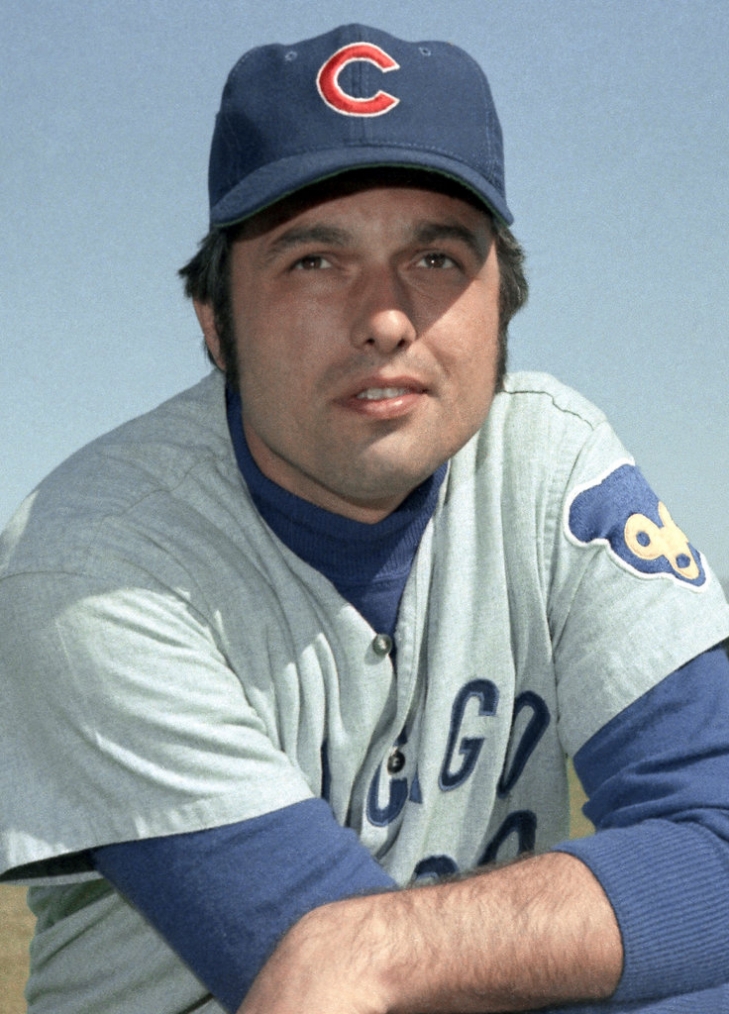
Milt Pappas debuted as a teenager with the Baltimore Orioles in 1957, and he would become a permanent part of the O's rotation the year after. An All-Star in both 1962 and 1965, Pappas was coming off two straight sub-three ERA and two 16-Win years and before he was packaged out to the Cincinnati Reds in exchange for future Hall of Famer, Frank Robinson.
255. Ken Singleton
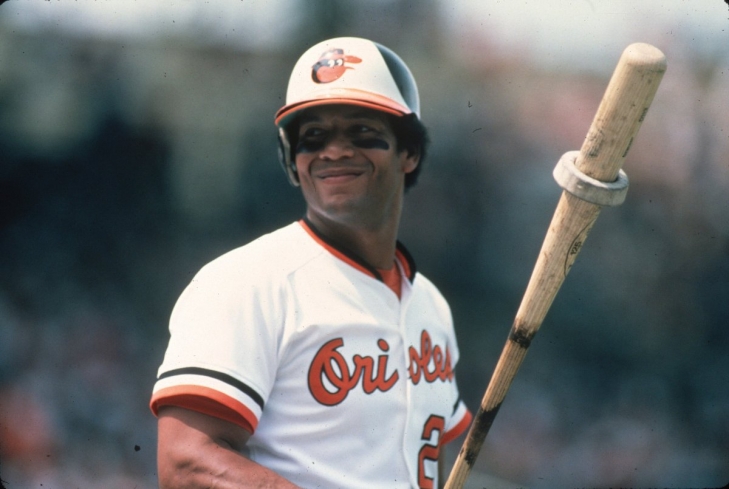
Ken Singleton began his career with the New York Mets in 1970, where he was a backup, but there was something special there. The Montreal Expos saw it, as they traded their most popular player, Rusty Staub, for him.
216. Mark Belanger
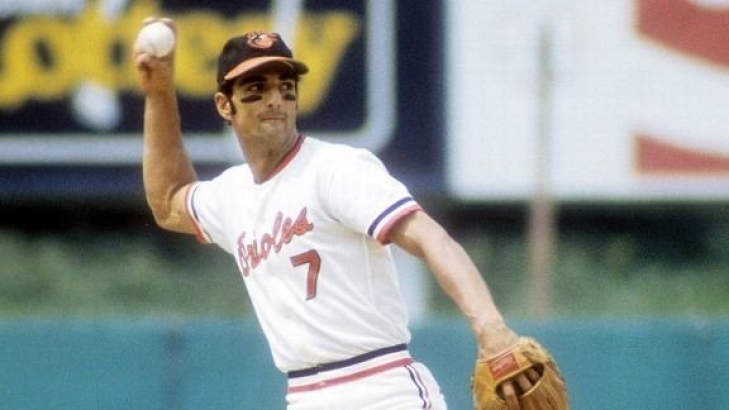
Mark Belanger wasn't a great hitter, but his fans never claimed that he was. What Belanger did well, and perhaps better than anyone other than Ozzie Smith, was play defense, and when you play at Shortstop, you can't ask for much more.
Belanger first cracked the Orioles’ roster in 1965, but it was not until 1968 that he was Baltimore's starting Shortstop. The O's knew they had a really good defensive player, but his hitting could be a liability, though it was not until the 80s that good-hitting Shortstops became a viable possibility for many teams. Still, in the 1970 ALCS, Belanger batted .333 and hit a Home Run, and that season the Orioles won the World Series.
As we said, though, his glove was his calling card: he won eight Gold Gloves and led the American League in Defensive bWAR six seasons in a row (1973-78). He also led the AL in Total Zone Runs three times, was second four times, and led his position in that metric eight times. He was also first amongst American League Shortstops in Fielding Percentage three times and was in the top-four seven other times.
Again, Belanger was only a lifetime .228 hitter with 20 Home Runs, but he was such a defensive legend that he belongs on this list. As of this writing, he is second all-time in Defensive bWAR and third in Total Zone Runs, and we don’t see anyone displacing him in those ranks anytime soon.
Our All-Time Top 50 Baltimore Orioles have been revised
Yes, we know that this is taking a while!
As many of you know, we here at Notinhalloffame.com are slowly generating the 50 of each major North American sports team. That being said, we have existing Top 50 lists out and we always consistently look to update them when we can and based on necessity. As such, we are very happy to present our pre-2021 revision of our top 50 Baltimore Orioles of all-time.
As for all of our top 50 players in baseball we look at the following:
1. Advanced Statistics.
2. Traditional statistics and how they finished in the American League.
3. Playoff accomplishments.
4. Their overall impact on the team and other intangibles not reflected in a stat sheet.
There are no new additions in the Top 50, though there were minor changes through the list, but nothing affecting our top five. As always, we announce them here.
They are:
2. JimPalmer
3. BrooksRobinson
5. Eddie Murray
You can find the entire list here.
We welcome your input and commentsand as always, we thank you for your support.
Our All-Time Top 50 Baltimore Orioles are now up
Yes, we know that this is taking a while!
As many of you know, we here at Notinhalloffame.com are slowly generating the 50 of each major North American sports team. We have a new one to unveil today, that of the Baltimore Orioles.
The Baltimore Orioles were formed as a charter member of the American League in 1901, when they were the Milwaukee Brewers. That only lasted one year, as they relocated to St. louis as the Browns. While in St. Louis, the Browns had limited success, having only won one Pennant (1944), but fortunes changed when they relocated to Baltimore in 1954 and became the Orioles.
With a trade that brought them Frank Robinson, the Orioles won the World Series in 1966, and with a starting rotation based around Jim Palmer, the O’s won it again in 1970. A young Cal Ripken Jr. would lead them to their third World Series in 1983, which is to date their last title.
As for all of our top 50 players in baseball we look at the following:
1. Advanced Statistics.
2. Traditional statistics and how they finished in the American League.
3. Playoff accomplishments.
4. Their overall impact on the team and other intangibles not reflected in a stat sheet.
Remember, this is ONLY based on what a player does on that particular team and not what he accomplished elsewhere and also note that we have placed an increased importance on the first two categories.
This list is updated up until the end of the 2019 Season.
The complete list can be found here, but as always we announce our top five in this article. They are:
2. Jim Palmer
5. Eddie Murray
We will continue our adjustments on our existing lists and will continue developing our new lists.
Look for our more material coming soon!
As always we thank you for your support.
50. Don Buford
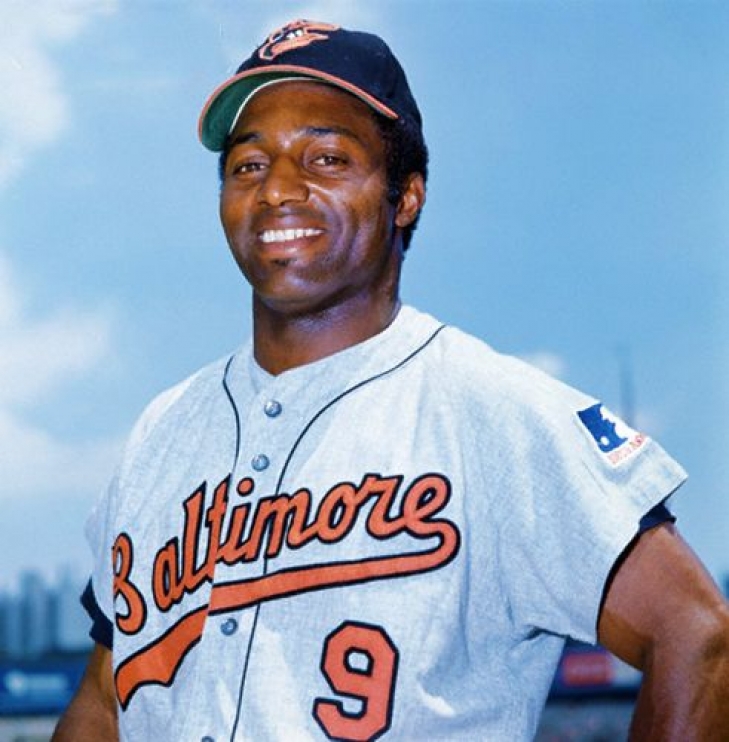
Don Buford arrived in Baltimore in 1968 under the heavy pressure of a blockbuster trade that sent Hall of Famer Luis Aparicio back to Chicago. It didn't take long for Buford to prove he was the missing ingredient for a championship formula. As the leadoff hitter for the greatest era in Orioles history, Buford’s combination of speed, patience, and unexpected power made him the engine that powered three consecutive World Series appearances (1969–1971).
Buford’s 1971 campaign stands as a masterpiece of efficiency. During that All-Star season, he led the American League in Runs Scored (99) and posted a stellar .413 On-Base Percentage, serving as the primary catalyst for the legendary four 20-win pitcher rotation. His ability to work counts and find his way on base created a constant threat for Robinson, Powell, and Murray to drive home.
His impact in October was just as vital. Buford was a key contributor to the 1970 World Series Championship, famously hitting a lead-off home run in Game 1 of the 1969 World Series and continuing to provide high-leverage production throughout the dynasty years. After five seasons in Baltimore, he took his talents to Japan, where he enjoyed a successful second act, but his legacy as the heartbeat of the "Oriole Way" was already set in stone.
Inducted into the Orioles Hall of Fame in 1993, Buford left Baltimore with 632 hits and a reputation as one of the most disciplined hitters of his era.
33. Rafael Palmeiro
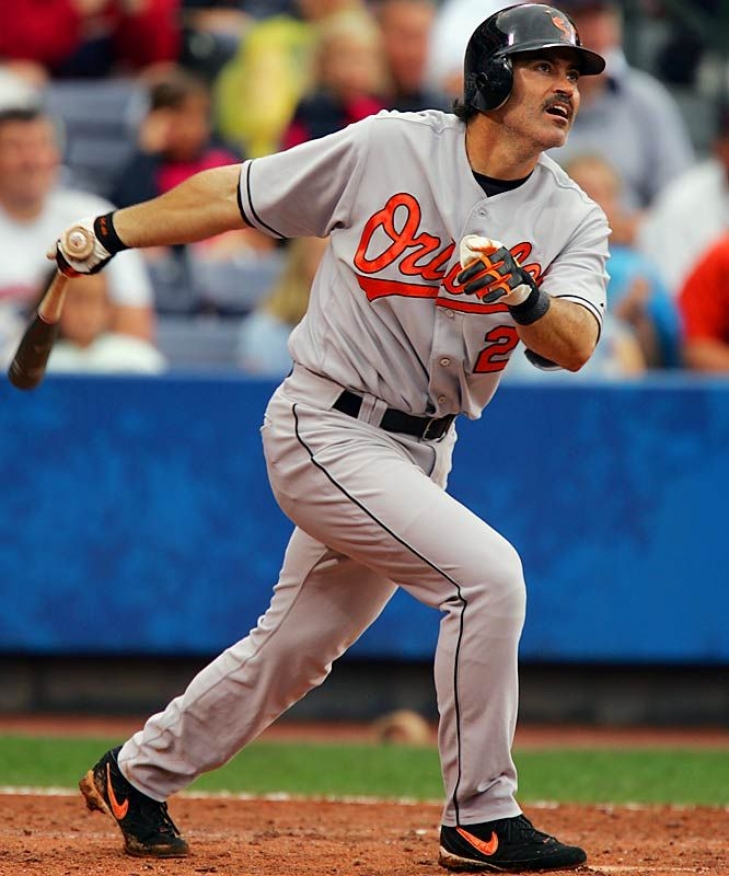
Rafael Palmeiro arrived in Baltimore in 1994 as a finished product—a smooth-swinging first baseman with a surgical approach to the plate. Despite playing in an era crowded with legendary power hitters, Palmeiro’s five-season run in the 1990s stands as one of the most consistently productive offensive stretches in Orioles history.
From 1994 to 1998, Palmeiro was a fixture in the American League leaderboards. He finished in the top ten in home runs every single year of his first Baltimore stint, providing the thunder for the 1996 and 1997 postseason teams. His 1996 campaign was a statistical peak, during which he batted .289 with 39 home runs and 142 RBIs, finishing sixth in the MVP voting. He earned the Silver Slugger in 1998 and received MVP votes in every season of his first run, cementing his status as the premier offensive engine of the lineup.
After a period in Texas, Palmeiro returned to the Orioles in 2004 to chase history. In 2005, he achieved the ultra-rare milestone of joining the 3,000 Hit / 500 Home Run Club in an Orioles uniform. However, the celebration was short-lived. Just ten days after his 3,000th hit, and only months after his infamous congressional testimony, Palmeiro was suspended for PED use.
The fallout from 2005 cast a long shadow over a career that included 1,071 hits, 223 home runs, and a massive .520 slugging percentage in Baltimore
29. Nick Markakis
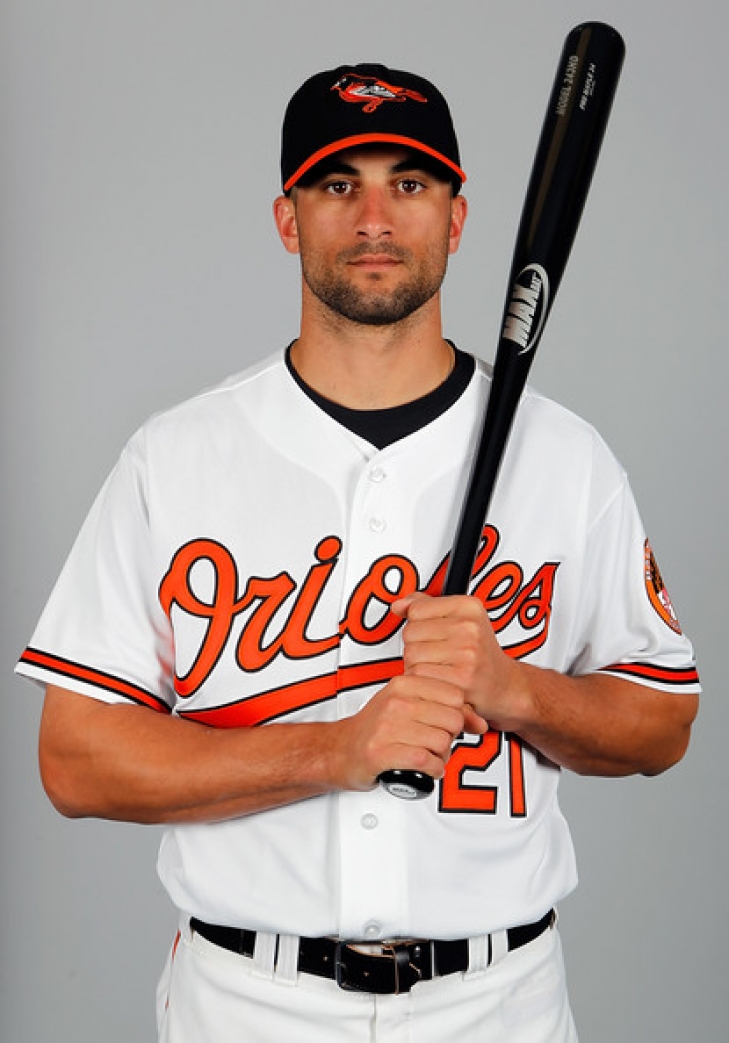
Drafted seventh overall in 2003, Nick Markakis arrived in Baltimore with high expectations and immediately proved he belonged. Debuting in 2006, he authored a stellar rookie campaign, finishing sixth in the AL Rookie of the Year voting after showcasing a rare combination of power, plate discipline, and a high batting average. It was the start of a nine-year tenure defined by quiet, unwavering professionalism.
While Markakis was famously overlooked for All-Star honors during his time in Maryland, his statistical output told the story of an elite everyday outfielder. He reeled off back-to-back 20-home run seasons in 2007 and 2008, batting at least .300 in both campaigns. A master of the "gap," Markakis was a doubles machine, consistently peppering the Camden Yards outfields and maintaining a .290 average over nearly 1,400 games.
Defensively, Markakis was a pillar in right field, possessing one of the most accurate arms in the game. He captured two Gold Gloves (2011 and 2014) as an Oriole, though many scouts and fans argue his defensive peak spanned even more seasons than his hardware suggests. He was a cornerstone of the 2012 and 2014 teams that brought postseason baseball back to Baltimore, providing a veteran presence that anchored a young clubhouse.
Markakis joined the Atlanta Braves in 2015, leaving Baltimore with 1,547 hits, 141 home runs, and a robust .290 batting average.
25. Baby Doll Jacobson
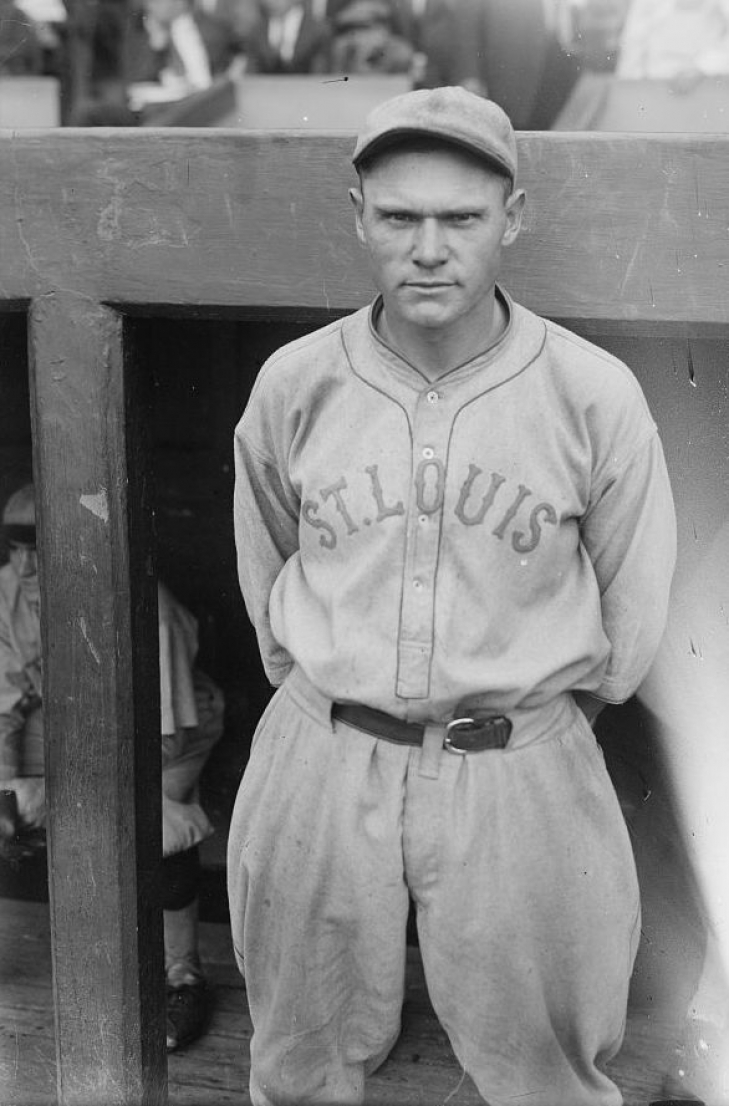
Standing 6' 3" and weighing over 210 pounds, William "Baby Doll" Jacobson was a towering figure in an era of smaller men, casting a long shadow over the St. Louis Browns’ outfield for the better part of a decade. His nickname—legendarily bestowed by a fan in the minors who shouted, "You must be that beautiful doll!" after a leadoff home run—belied a player of immense strength and surprising agility.
Jacobson’s journey was defined by perseverance. After a brief 1915 debut and a return to the minors, he secured a starting role in 1917, only to sacrifice his 1918 season to enlist in the U.S. Navy during World War I. When he returned in 1919, he embarked on one of the most productive offensive stretches in franchise history. From 1919 to 1925, Jacobson reeled off seven consecutive .300 seasons, including a career-high .355 in 1920 and a .352 in 1921. During this peak, he was a fixture on the leaderboards, recording over 210 hits in back-to-back years and driving in 122 runs in 1920—a mark topped only by Babe Ruth that season.
While his bat was his calling card, Jacobson was also a defensive pioneer in center field. Despite his size, he possessed incredible instincts, setting a major league record in 1924 with 488 putouts—a testament to his range that stood for over twenty years. He was the anchor of the legendary "1922 Browns" outfield that nearly toppled the Yankees for the pennant.
Jacobson was eventually traded to the Athletics in 1926, leaving St. Louis with 1,508 hits and a sterling .317 batting average.
