

9. Boog Powell
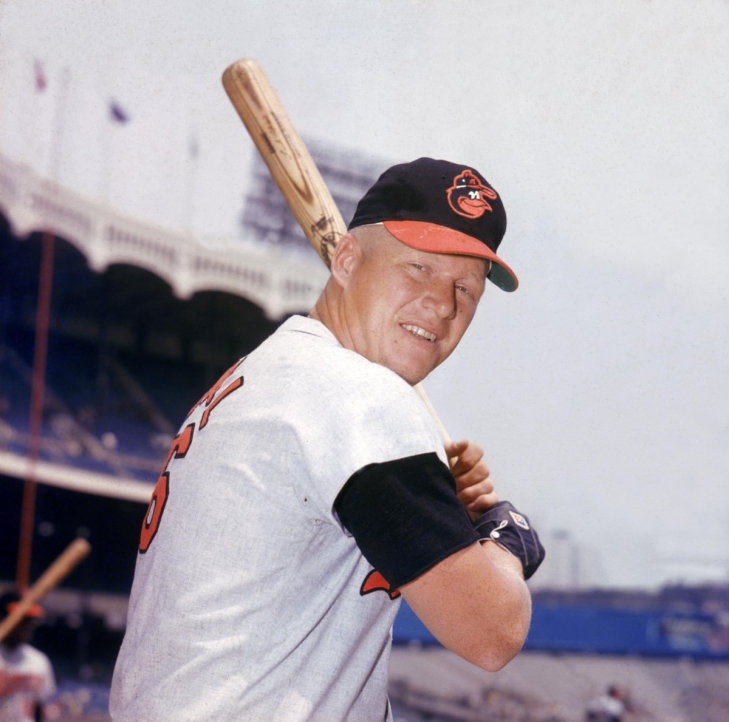
In the golden era of the Baltimore Orioles, few figures loomed as large—physically or culturally—as John Wesley "Boog" Powell. A massive, 6-foot-4 presence at first base, Boog was the primary power engine for the great championship teams of the late 1960s and early 70s. With a nickname born of childhood mischief and a swing that could launch mammoth home runs into the far reaches of Memorial Stadium, he was the definitive fan favorite of a generation.
Signed as an amateur free agent in 1959, Powell debuted for Baltimore just two seasons later and quickly established himself as a premier run-producer. Over the next 14 years, he would record eight seasons with at least 20 home runs, including three campaigns where he cleared the 100-RBI plateau. His peak coincided with the franchise’s most dominant stretch; from 1968 to 1971, Boog reeled off four consecutive All-Star selections. During this run, he authored his finest season in 1969—batting a career-high .304—before following it up with a masterful 1970 campaign that earned him the American League MVP.
Powell’s left-handed bat was the cornerstone of the Orioles' "Big Three" alongside the two Robinsons. He was instrumental in securing the 1966 and 1970 World Series titles, often saving his most clutch performances for October. Over his postseason career, Boog tallied six home runs and 18 RBIs, homering in the first two games of the 1970 Fall Classic to set the tone for the championship.
By the time he was dealt to Cleveland in 1975, Boog had compiled a legendary Orioles resume: 303 home runs, 1,063 RBIs, and a .465 slugging percentage. Inducted into the Baltimore Orioles Hall of Fame in 1979, he remains one of the most beloved icons in franchise history—a "gentle giant" whose power put the Orioles on top of the world
8. Urban Shocker
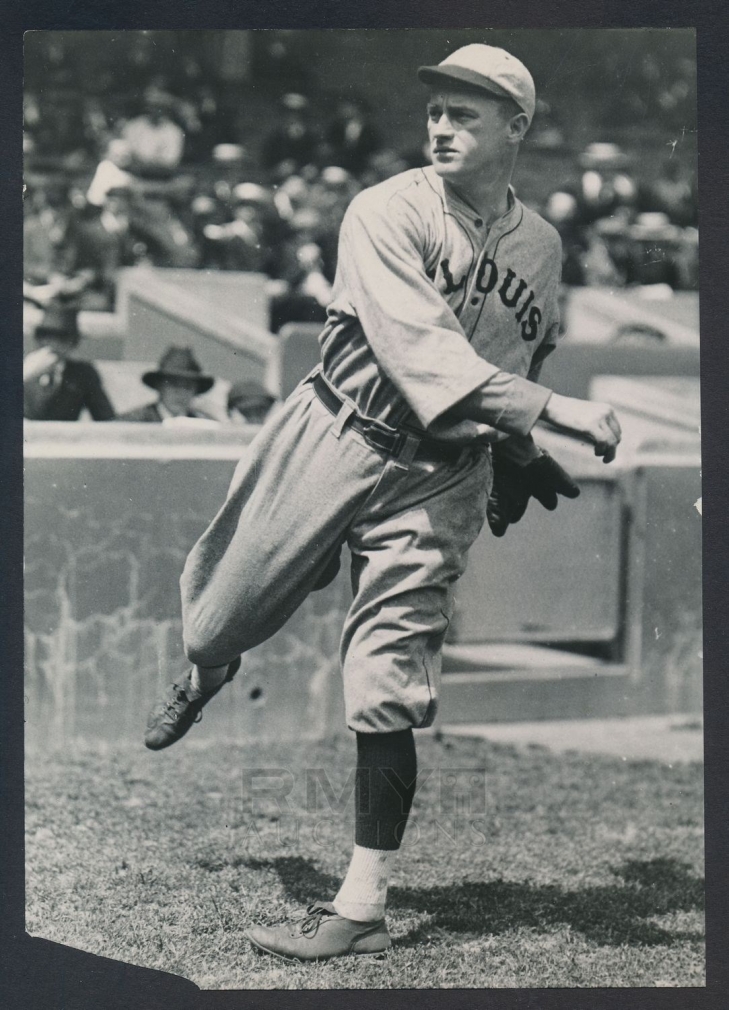
The greatest pitcher in the history of the St. Louis Browns, and arguably the owner of the most memorable name in the sport, is Urban Shocker. Though his career began and ended with the New York Yankees, his seven-year peak in St. Louis (1918–1924) cemented his status as the premier arm of the franchise’s Midwestern era.
After a quiet debut following a 1918 trade from New York, Shocker exploded into the regular rotation in 1919. What followed was a stretch of durability and dominance rarely seen in the "Live-Ball" transition. From 1920 to 1923, Shocker reeled off four consecutive 20-win seasons, headlined by a league-leading 27 victories in 1921.
A master of the "grandfathered" spitball, Shocker was much more than a junk-baller; he was a surgical control artist. He famously prioritized location over velocity, leading the American League in both BB/9 and Strikeout-to-Walk ratio (SO/BB) in 1922 and 1923. His efficiency was so respected by his contemporaries that he received MVP votes in both of those seasons—a rarity for pitchers in that era.
The "Yankee bookend" of his career was completed in December 1924 when he was traded back to New York. He left St. Louis with a 126–80 record and 704 strikeouts, departing as the franchise’s all-time leader in wins and shutouts. While the Browns relocated to Baltimore decades later, Shocker’s four-year run of 20-win excellence remains the gold standard for any pitcher to ever wear the St. Louis uniform.
15. Brady Anderson
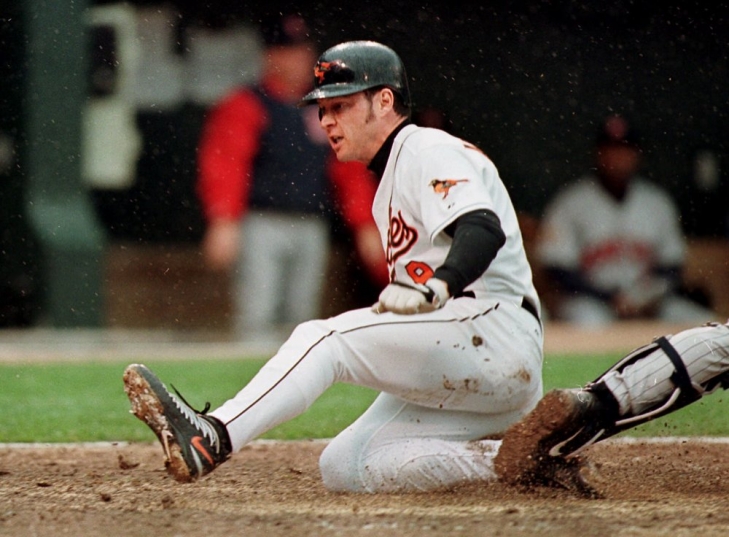
Best known for his sideburns and that inexplicable (actually, many think they can explain it) 50 Home Run Season in 1996, Brady Anderson played 14 seasons for the Orioles.
12. Mark Belanger
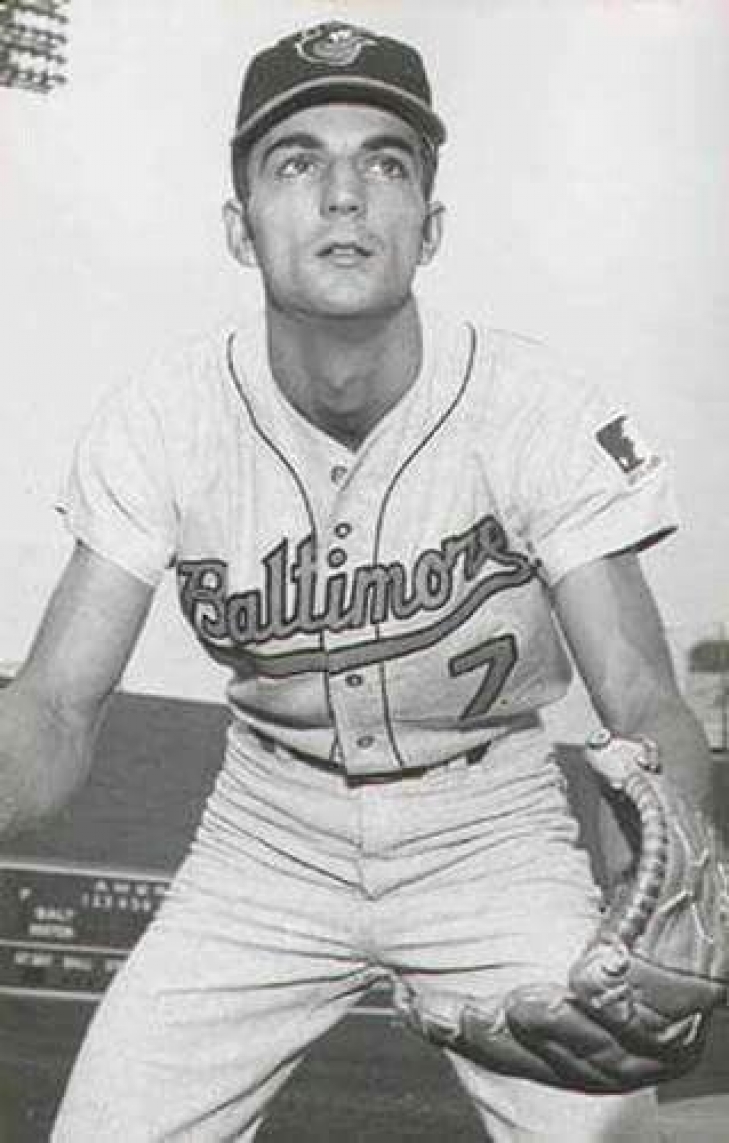
The Baltimore Orioles of the 1960s and 1970s were an impenetrable defensive fortress. While Brooks Robinson famously anchored the hot corner, Mark "The Blade" Belanger proved his equal play-for-play at shortstop. Spending 17 of his 18 seasons in an Orioles uniform (1965–1981), Belanger was the defensive heartbeat of the winningest era in franchise history.
Belanger’s resume is a masterclass in middle-infield excellence. A perennial vacuum at short, he captured eight Gold Gloves and, from 1973 to 1978, reigned as the annual American League leader in Defensive bWAR. He was a three-time overall leader in Total Zone Runs, consistently turning hits into outs with a range and precision that bordered on the supernatural. To this day, Belanger ranks second all-time in career Defensive bWAR (39.5), trailing only Ozzie Smith in the history of the sport.
However, the "Blade" was a one-dimensional specialist. Offensively, he was an undeniable liability, struggling to a career slash line of .227/.300/.280. Yet, even with his limited bat, Belanger found ways to contribute when the lights were brightest. He managed 1,304 career hits and proved his postseason mettle by homering in the 1969 ALCS and batting a robust .333 in the 1970 ALCS—a performance that paved the way for the Orioles' 1970 World Series title.
Belanger’s legacy is a testament to the "Oriole Way": the belief that run prevention is just as valuable as run creation. He was inducted into the Baltimore Orioles Hall of Fame in 1983, immortalized as a player who proved that you don't need to hit like a giant to be a giant on the diamond.
2. Jim Palmer
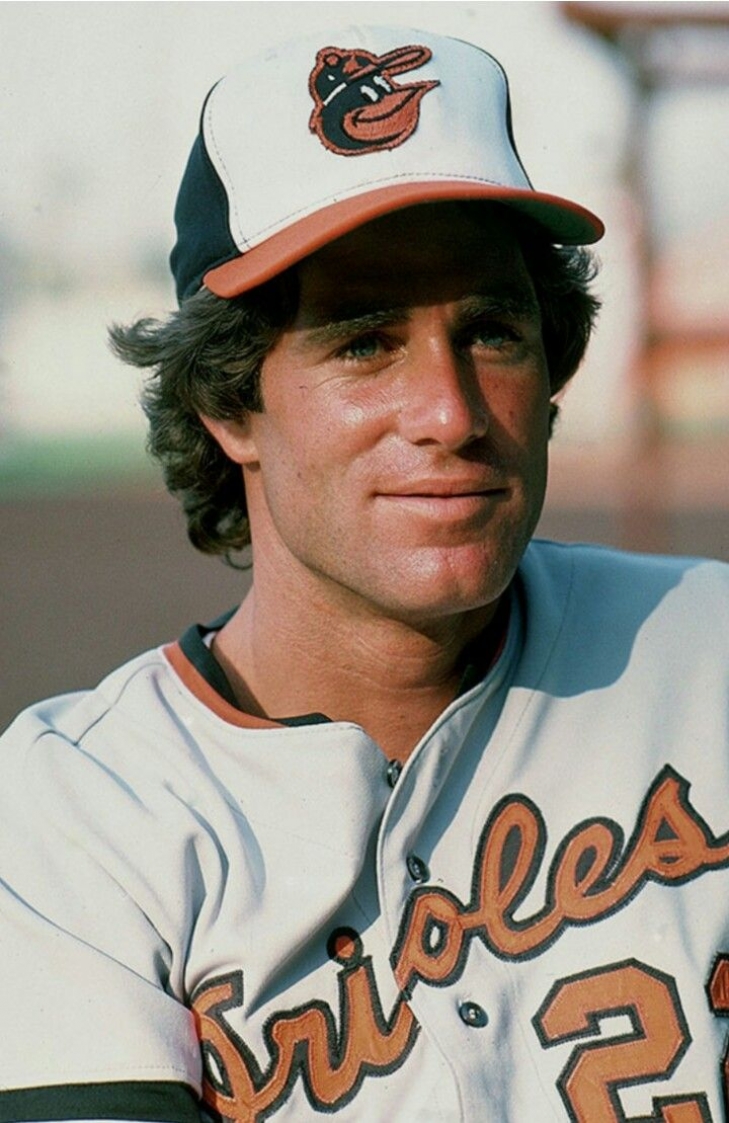
Playing his entire Major League career with the Baltimore Orioles, Jim Palmer overcame a lot of early arm trouble to become one of the best hurlers in the 1970s.
Palmer made his debut in 1965, and he threw for 92 Innings in 27 Games. The year after, he was put in the starting rotation, and he went 15-10 and helped Baltimore win its first-ever World Series. Arm trouble kept him out of most of 1967, and in 1968, he was in rehab for the entire year. It was expected that he would never regain his form, but he returned in 1969, and it was clear that the righthander was healthy. Palmer went 16-4 and threw a no-hitter, and he would become the ace for the decade to come.
From 1970 to 1973, Palmer would win at least 20 Games and be in the top four in ERA in each of them. He would go to the All-Star Game in the first three seasons of those four years, and in the one he didn't, he won the ERA title and his first Cy Young Award. The Orioles also won the 1970 World Series.
Palmer suffered from elbow and nerve issues for much of 1974, but in 1975, he embarked on another four-year run that placed him among the elite of the American League Pitchers. From 1975 to 1978, he again was a perpetual 20 Game winner, with '75 to '77 offering league-leading totals. In 1975, he won his second ERA title and his second Cy Young, with his third Cy Young coming the year after. He was second and third in Cy Young voting the two seasons after, and in those four years, he was not in the top ten in ERA, WHIP, and bWAR. Palmer also began to be recognized for his defense, winning four straight Gold Gloves (1976-79).
He would decline after, though, had a one-year return to glory in 1982, where he was 15-5, third in ERA, and was second in Cy Young voting. In a much-reduced role, he helped the Orioles win their third World Series in 1983.
Palmer was released in 1984 after a 0-3 start, and while it was an unceremonious exit from the team, his legend was secured. He retired with a 268-152 record with a 2.86 ERA, 2,212 Strikeouts, six All-Stars, three Cy Youngs, and three World Series Rings. He also had a history of 8-3 in the playoffs with a 2.61 ERA over 124.1 Innings.
Palmer’s number 22 would be retired in 1985, and he was inducted into the Baseball Hall of Fame in 1990. The Orioles also inducted the Pitcher into their Hall of Fame in 1986.
18. Rafael Palmeiro
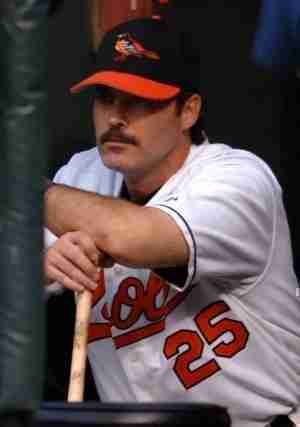
At the time of the infamous steroids trial, Rafael Palmeiro seemed to come off so well. Of course, when you are sitting next to a man who suddenly suffered from amnesia (Mark McGwire), a man who suddenly forgot the English language (Sammy Sosa), and the man who broke the “bro code” (Jose Canseco), a defiant and confident-sounding Rafael Palmeiro could not help but look good. A few months later, Palmeiro was suspended by Major League Baseball for testing positive for steroids.
Ironically, this could hurt Palmeiro’s chances more than anyone else who testified at Congress. At that point, he had reached 500 home runs, quieter than anyone else ever had, and was knocking on the door of 3,000 hits. Seemingly, anyone else with those numbers would be a celebrated figure beset with endorsements and rabid fans. Palmeiro had neither, as he was playing in the shadow of flashier and more successful power hitters. As such, he was not regularly in the hunt for MVPs and only appeared in four All-Star games, which, considering his career numbers, was relatively low. Subsequently, he was rarely with great teams and holds the dubious record of having played the most games without a World Series appearance.
Prior to the steroid stigmatism, Palmeiro had the Hall of Fame locked numbers of 500 Home Runs and 3,000 Hits. Without the allegations, he may not have even been a lock for first-ballot induction. With the PED label, a look at his offence showed a massive upswing at age 34. McGwire may one day be forgiven, as might Sosa. Palmeiro likely won’t. As unfathomable as it seemed a decade ago, he was almost a one-and-done Hall of Fame candidate, and his years on the ballot fell well short of the maximum as he fell off after his fourth year. This could be a sad reality for one of his day's most consistent offensive performers.
Should Rafael Palmeiro be in the Hall of Fame?
94. Boog Powell
History has given the pitching staff much of the credit for the Baltimore Orioles’ World Series runs in 1966 and 1970, but it was the heavy-hitting Boog Powell who was the favorite of Maryland fans.
Boog Powell was built like a bull. The power hitter easily won the hearts of Baltimore with his booming home runs and nice demeanor. He batted cleanup for over a decade and solidified the lineup, providing much-needed offense for the pitching-heavy Orioles. He was a good clutch hitter, and though he committed his share of errors, he was able to prevent many miscues for his infielders by scooping up many a low throw.
Boog Powell got injured a bit and missed a handful of games each season. This prevented him from increasing his career hit and power numbers, which would have made him a better Hall of Fame candidate. Powell did win an MVP and was a runner-up another year, but he was occasionally accused of having his popularity outweigh his ability, which may explain his low Hall vote.
Should Boog Powell be in the Hall of Fame?
112. Miguel Tejada
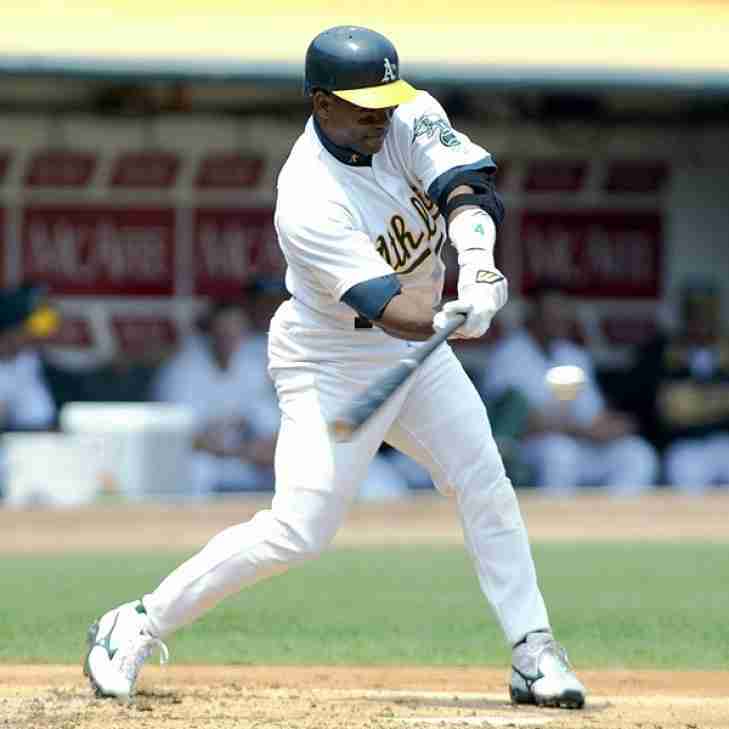
While Miguel Tejada is a former MVP in Major League Baseball, he is also known as a PED user, a label that has kept PED users out of the Hall of Fame.
Forgetting that, Tejada is a man with a 46.9 bWAR and a multi-time Silver Slugger Award winner, and retired with close to 2,500 Hits. The Dominican has numbers that are very good, but realistically were not Hall of Fame level, regardless of his PED use. Still, this is a former MVP, an accolade that can not be taken away.
