

 Not in Hall of Fame News
Yes, we know that this is taking a while! As many of…
 Not in Hall of Fame News
Yes, we know that this is taking a while! As many of…
 Not in Hall of Fame News
2002 SEMI-FINAL RESULTS: Thank you for your participation in the Pro Football…
 Not in Hall of Fame News
Yes, we know that this is taking a while! As many of…
 Not in Hall of Fame News
We are diligently working away at Notinhalloffame on revising our Football lists…
 Not in Hall of Fame News
We are diligently working away at Notinhalloffame on revising our Football lists…
 From the Desk of the Chairman
Unlike in the case of pre-match betting, where you have to pick…
 From the Desk of the Chairman
Kupu178 builds trust with people by using top-end end-to-end encryption. It checks…
 From the Desk of the Chairman
Sports fans thrive on calculating strategy, reading momentum, and maximizing every tactical…
 From the Desk of the Chairman
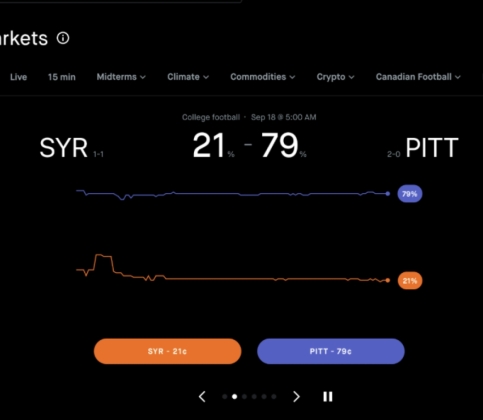
The 2026 NFL season is two weeks old and the division races…
 From the Desk of the Chairman
Sports communities are often built around things that have nothing to do…
 From the Desk of the Chairman
Every hall of fame eventually faces the same problem. The selection process…






100 Active Potential Football Hall of Famers
-
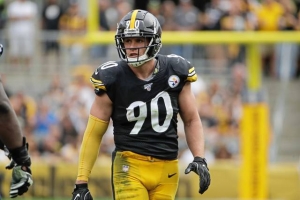 #10 Overall, T.J. Watt, Pittsburgh Steelers, #4 Defensive Lineman/Linebacker Pass Rusher2025 Pre-Season Rank #7, 2024 Pre-Season Rank #11: 2023 Pre-Season Rank #15, 2022 Pre-Season Rank #24, 2021 Pre-Season Rank #68, 2020 Pre-Season Rank…
 -
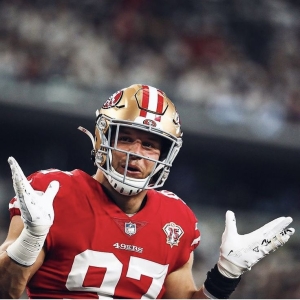 #39 Overall, Nick Bosa, San Francisco 49ers, #12 Defensive End: Defensive Linemen/Linebackers: Pass Rushers2025 Pre-Season Rank #42, 2024 Pre-Season Rank #52, 2023: Pre-Season Rank #83. Peak Period: 2019-23 The explosive Nick Bosa is one of a…
 -
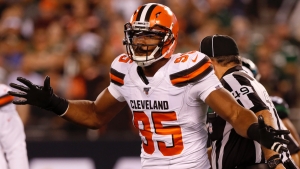 #7 Overall, Myles Garrett, Los Angeles Rams, Defensive End, #2 Defensive Lineman/Linebackers: Pass Rushers2025 Pre-Season Rank #9, 2024 Pre-Season Rank #17, 2023 Pre-Season Rank #34, 2022 Pre-Season Rank #53, 2021 Pre-Season Rank #99, 2020 Pre-Season Rank…
 -
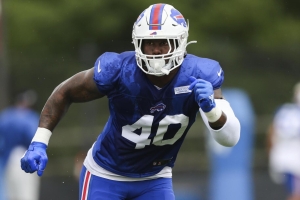 #8 Overall, Von Miller, Dallas Cowboys, #3 Defensive Lineman/Linebackers: Pass Rushers2025 Pre-Season Rank #6, 2024 Pre-Season Rank #7, 2023 Pre-Season Rank #4, 2022 Pre-Season Rank #7, 2021 Pre-Season Rank #8, 2020 Pre-Season Rank…
Visit the Fictitious Halls of Fame!


You May Also Like...
EDITOR’S CHOICE

 DDT's Pop Flies
When the veterans committee (VC), officially convening as the Contemporary Baseball Era…


 Live Music Head
Project/Objectan interview with André Cholmondeleyby Live Music HeadOriginally published at timessquare.com on…

LATEST RANKINGS





MOST POPULAR RANKINGS
















Committee Chairman
37. Jeff Blake
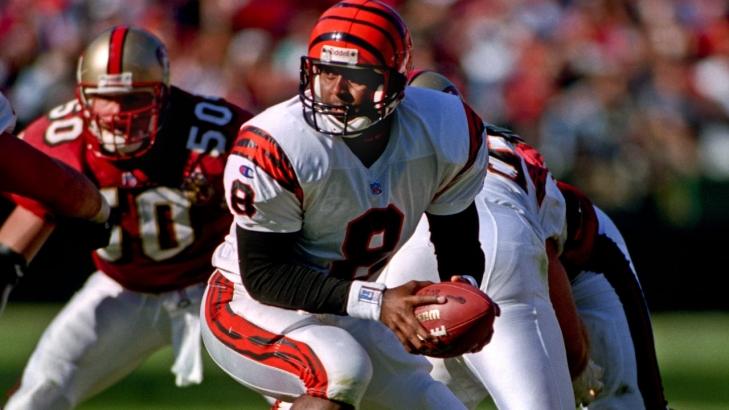
Jeff Blake spent his first two NFL seasons as a third-stringer for the New York Jets, getting little chance to display the deep-ball flair that earned him a sixth-place Heisman finish. That all changed in 1994 when the Cincinnati Bengals claimed him off waivers, setting the stage for one of the most exciting individual turnarounds in franchise history.
Inserted into the starting lineup midway through the 1994 season, Blake provided an instant spark to a dormant offense. Known for his majestic, sky-high deep ball—dubbed the "Shake and Bake" connection with wideouts Carl Pickens and Darnay Scott—Blake started 10 games and led the entire NFL with 13.8 yards per completion. His explosive downfield attack injected life back into the franchise, winning over the fan base with his improvisational style.
In 1995, Blake hit his peak, leading a standout campaign that earned him a Pro Bowl. He achieved career highs with 3,822 passing yards and 28 touchdowns, helping the Bengals stay in wild-card contention. Although Cincinnati didn't break its playoff drought, Blake's strong arm and efficiency kept the team competitive into the mid-1990s.
Although he was the main starter through the 1997 season, Blake was unable to recreate the success of his 1995 season as turnovers and injuries on offense hindered the team's progress. He ultimately lost the starting position to Akili Smith in 1999 and left in free agency to join the New Orleans Saints in 2000.
Across six seasons with Cincinnati (1994–1999), Blake played in 84 regular-season games (66 starts). He threw for 15,134 passing yards and 93 touchdowns while adding another 1,281 yards and five scores on the ground.
35. Eddie Brown
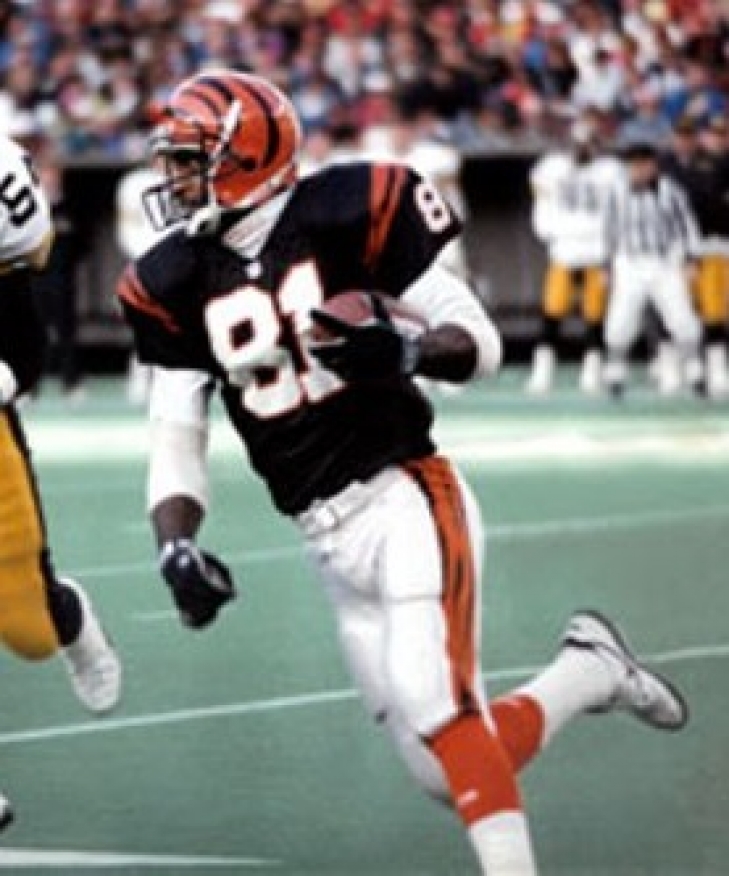
Eddie Brown proved to be worthy of Cincinnati’s 13th Overall Pick. Armed with fluid route-running, explosive top-end speed, and exceptional downfield tracking, Brown stepped in as the immediate vertical focus of the Bengals' aerial attack.
Brown made an impressive start in 1985, achieving a remarkable debut season with 53 receptions for 942 yards and eight touchdowns, earning the AP Offensive Rookie of the Year award. He demonstrated that his early success was not a coincidence as a sophomore in 1986, recording 48 receptions for 964 yards and five touchdowns. After a slight decrease in performance during the strike-shortened 1987 season, Brown delivered a career-best performance in 1988.
During that historic 1988 season, Brown established an exceptional rapport with MVP quarterback Boomer Esiason. He achieved personal bests across various metrics, securing 53 receptions for 1,273 receiving yards and nine touchdowns. His remarkable average of 24.0 yards per reception ranked second in the NFL, providing an explosive, game-changing dimension that propelled Cincinnati's high-powered offense to Super Bowl XXIII. In recognition of his outstanding performance, Brown was named to the Second-Team All-Pro and received his first career selection to the Pro Bowl.
While chronic injuries began to chip away at his longevity over the next three seasons, Brown remained a remarkably steady producer. He reached at least 700 receiving yards in each of his final three campaigns (1989–1991), serving as a reliable starter opposite Tim McGee. Injuries ultimately forced an early end to his career after seven seasons.
Overall, he generated 363 receptions, 6,134 receiving yards, and 41 touchdowns.
27. Domata Peko
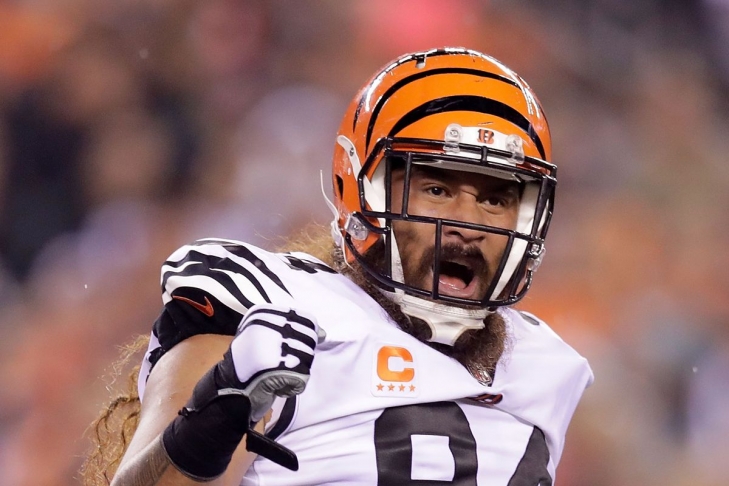
From American Samoa, Domata Peko was selected in the fourth round (123rd overall) of the 2006 NFL Draft out of Michigan State and became a beloved anchor along Cincinnati’s defensive front. Known for his flowing locks, boisterous energy, and immovable presence, Peko evolved from a rotational rookie into the heartbeat of Marvin Lewis’s defense.
After his debut season in 2006, Peko became the full-time nose tackle in 2007. Playing in the interior line, his main tasks were to absorb double-teams, clog A-gaps, and create space for linebackers like Rey Maualuga and Vontaze Burfict to make plays. Besides his primary defensive duties, Peko’s athletic ability made him popular with fans, especially on goal-line plays, where he sometimes lined up as a fullback to block for short-yardage touchdowns.
Over his decade-plus tenure in Queen City, Peko was the picture of durability. From 2007 through 2016, he started 155 of 160 regular-season games, anchoring the defense during five consecutive playoff berths (2011–2015). His finest statistical year arrived in 2015, when he logged a career-high 5.0 sacks to complement his interior run-stuffing.
Following the 2016 season, Peko signed a free-agent deal with the Denver Broncos, ending an 11-year run in Cincinnati. He totaled 517 tackles, 18.5 sacks, 34 tackles for loss, and two forced fumbles in a Cincinnati uniform.
34. Bruce Kozerski
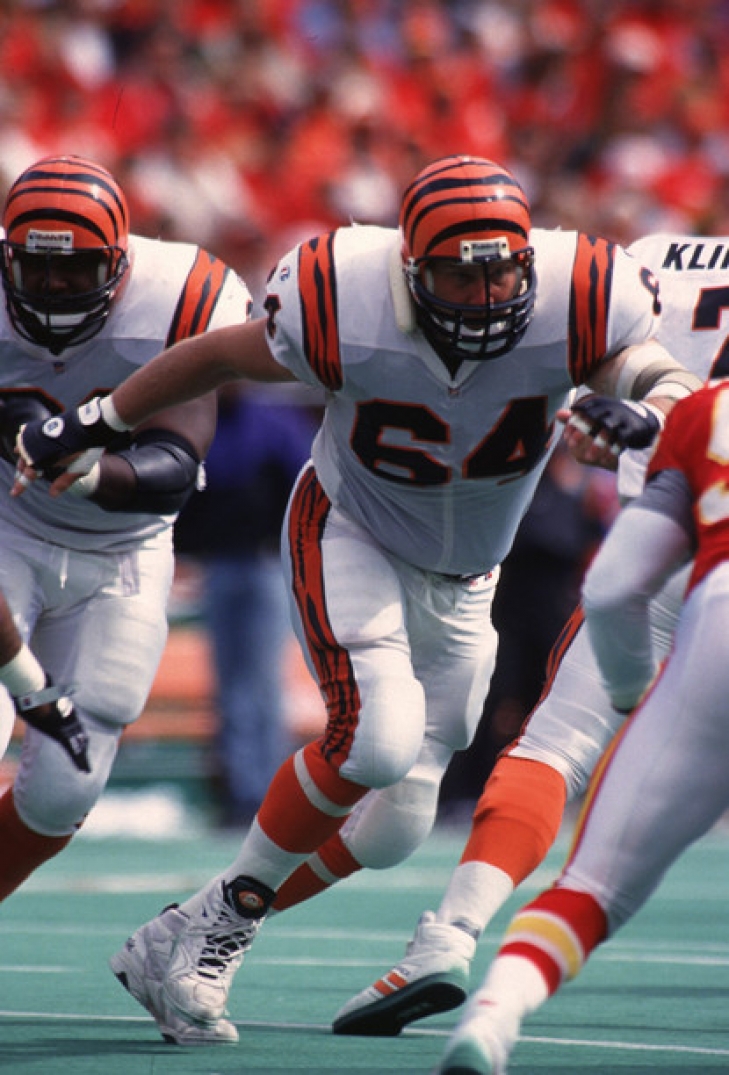
Taken in the ninth round (231st overall) of the 1984 NFL Draft out of Holy Cross, physics major Bruce Kozerski arrived in Cincinnati as a deep-draft longshot. He spent his entire 12-year NFL career with the Bengals (1984–1995), earning the moniker "Mr. Versatile" for his rare ability to start at every position on the offensive line.
Kozerski, standing 6 feet 4 inches and weighing 287 pounds, was known for his exceptional footwork, football IQ, and physical power. Initially serving as a key reserve on the interior line in his first two seasons, he became a full-time starter at guard and center in 1986. His role as a crucial linchpin was marked during Cincinnati's 1988 AFC Championship run, where he started all 16 games at center, snapping to Boomer Esiason and creating openings for Ickey Woods and James Brooks, leading up to Super Bowl XXIII.
Kozerski's legendary status in Queen City stemmed from his exceptional versatility in position flex. Over more than ten years, he regularly stepped into crucial roles at center, left guard, right guard, and right tackle. From 1988 to 1990, he earned Pro Bowl alternate honors three years in a row. Demonstrating his adaptability late in his career, in 1994, he transitioned fully to right tackle, starting all 16 games.
Kozerski remained a steadying veteran presence for the franchise through 1995, finishing his career as one of the longest-tenured interior linemen in franchise history before retiring to enter the teaching and coaching ranks in Greater Cincinnati. Kozerski appeared in 172 regular-season games (137 starts) and five postseason contests.
