

 Not in Hall of Fame News
Yes, we know that this is taking a while! As many of…
 Not in Hall of Fame News
Yes, we know that this is taking a while! As many of…
 Not in Hall of Fame News
2002 SEMI-FINAL RESULTS: Thank you for your participation in the Pro Football…
 Not in Hall of Fame News
Yes, we know that this is taking a while! As many of…
 Not in Hall of Fame News
We are diligently working away at Notinhalloffame on revising our Football lists…
 Not in Hall of Fame News
We are diligently working away at Notinhalloffame on revising our Football lists…
 From the Desk of the Chairman
Unlike in the case of pre-match betting, where you have to pick…
 From the Desk of the Chairman
Kupu178 builds trust with people by using top-end end-to-end encryption. It checks…
 From the Desk of the Chairman
Sports fans thrive on calculating strategy, reading momentum, and maximizing every tactical…
 From the Desk of the Chairman
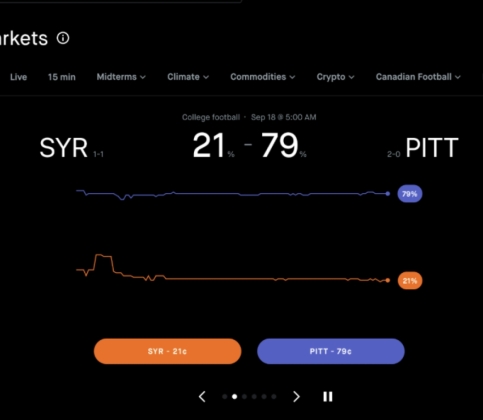
The 2026 NFL season is two weeks old and the division races…
 From the Desk of the Chairman
Sports communities are often built around things that have nothing to do…
 From the Desk of the Chairman
Every hall of fame eventually faces the same problem. The selection process…






100 Active Potential Football Hall of Famers
-
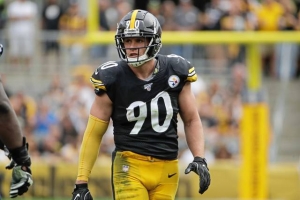 #10 Overall, T.J. Watt, Pittsburgh Steelers, #4 Defensive Lineman/Linebacker Pass Rusher2025 Pre-Season Rank #7, 2024 Pre-Season Rank #11: 2023 Pre-Season Rank #15, 2022 Pre-Season Rank #24, 2021 Pre-Season Rank #68, 2020 Pre-Season Rank…
 -
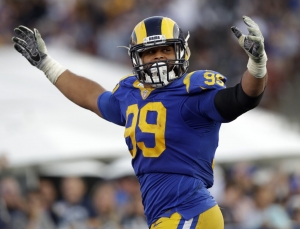 #1 Overall, Aaron Donald: Los Angeles Rams, Defensive End, #1 Defensive Lineman/Linebackers/Pass Rushers2020 Pre-Season Rank #15, 2021 Pre-Season Rank #5, 2022 Pre-Season Rank #3, 2023 Pre-Season Rank #2. PEAK 2017-21 Well, look who’s back! When…
 -
 #40 Overall, Justin Jefferson, Minnesota Vikings, #5 Wide Receiver2025 Pre-Season Rank #38, 2024 Pre-Season Rank #50, 2023 Pre-Season Rank #101, 2022 Pre-Season Rank #130. Peak Period: 2020-24 Since he debuted in…
 -
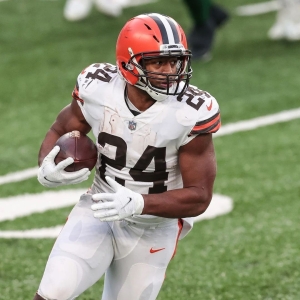
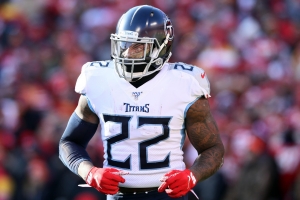 #11 Overall, Derrick Henry, Baltimore Ravens, #1 Running Back2025 Pre-Season Rank #11, 2024 Pre-Season Rank #23, 2023 Pre-Season Rank #39, 2022 Pre-Season Rank #47, 2021 Pre-Season Rank #70, 2020 Pre-Season Rank…
Visit the Fictitious Halls of Fame!


You May Also Like...
EDITOR’S CHOICE

 DDT's Pop Flies
When the veterans committee (VC), officially convening as the Contemporary Baseball Era…


 Live Music Head
Project/Objectan interview with André Cholmondeleyby Live Music HeadOriginally published at timessquare.com on…

LATEST RANKINGS





MOST POPULAR RANKINGS
















Committee Chairman
41. Rudi Johnson
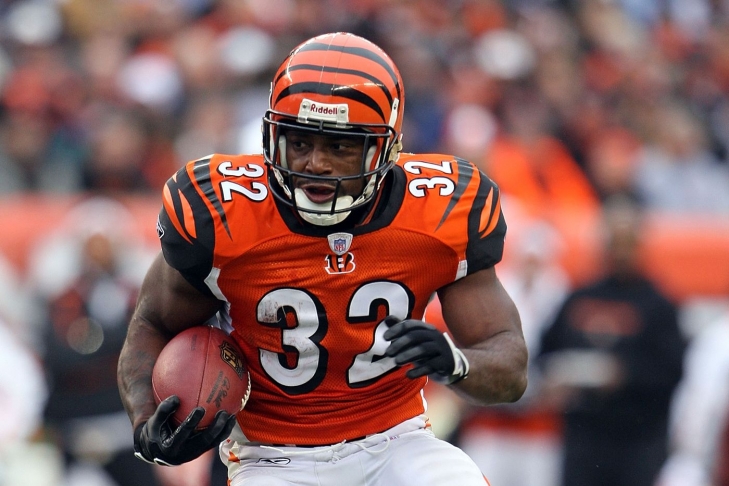
With the fourth-round pick (100th overall), the Bengals selected Rudi Johnson of Auburn. Johnson arrived in Cincinnati as an intense, physical runner. Armed with explosive lower-body power, vision through the tackles, and a punishing finish at the second level, Johnson became the primary backfield anchor during the franchise’s mid-2000s resurgence under Marvin Lewis.
Johnson spent his first two NFL seasons biding his time behind Corey Dillon, contributing primarily as a special teams returner. His opportunity arrived in 2003, when Dillon battled injuries. Johnson stepped into the feature role and seized it, rushing for 957 yards and nine touchdowns in nine starts. When Cincinnati parted ways with Dillon after the season, the backfield belonged to Rudi.
Between 2004 and 2006, Johnson established one of the most prolific multi-year periods in the history of the team by a running back. He received his sole career Pro Bowl selection in 2004, during which he set a then-franchise record with 1,454 rushing yards and 12 touchdowns. In 2005, he accumulated 1,458 rushing yards and an additional 12 touchdowns, significantly contributing to Cincinnati’s first AFC North championship and playoff appearance in fifteen years. In 2006, he achieved his third consecutive season with over 1,300 rushing yards, totaling 1,309 yards, and notably equaled his exact number of 12 rushing touchdowns for the third consecutive season.
Hamstring issues derailed his momentum in 2007, limiting him to 497 yards. Following the emergence of Chris Perry and the arrival of rookie Cedric Benson, the Bengals released Johnson prior to the 2008 season. He spent one final campaign with the Detroit Lions before retiring from the NFL.
With Cincinnati, Johnson compiled 5,742 rushing yards and 48 rushing touchdowns.
40. Dave Lapham
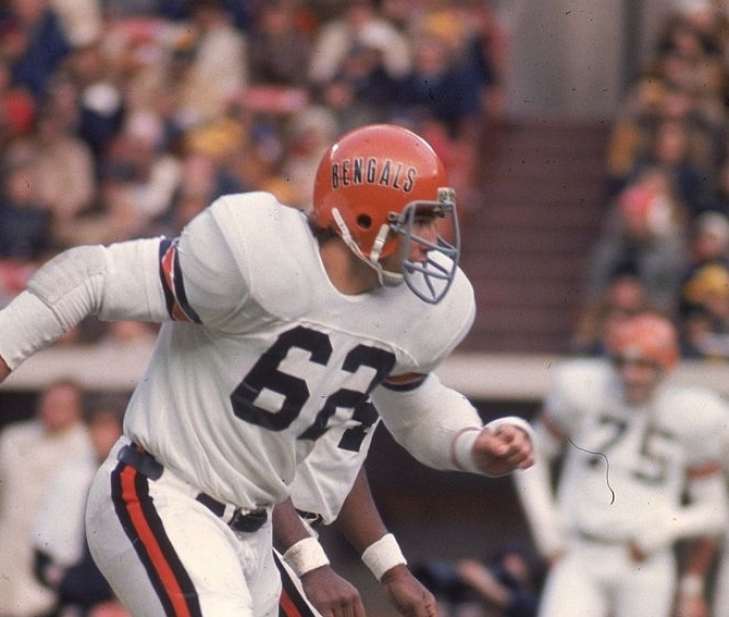
The Bengals from Syracuse selected Dave Lapham in the third round (48th overall), recognizing his versatility and strength as an offensive lineman. During his decade-long career in Queen City, Lapham established himself as a key player in the trenches and later became the iconic media voice of the franchise for fans across generations.
Standing tall at 6 feet 4 inches and weighing 260 pounds, Lapham brought impressive footwork, a sharp football IQ, and an adaptable approach to Paul Brown’s offense. After serving as a key interior backup during his rookie year in 1974, he proudly earned the starting right guard spot in 1975. Lapham held onto this position for five exciting seasons (1975–1979), providing solid protection for quarterbacks Ken Anderson and Virgil Carter, while also creating openings for Pete Johnson. His outstanding performances in the late 1970s led to consecutive seasons with double-digit Approximate Value, according to pro football historians.
After returning to a reserve utility role in 1980, Lapham regained the starting right guard position in 1981 under head coach Forrest Gregg. He was a key member of the "Freezer Bowl" offensive line, contributing to Cincinnati’s first AFC Championship and their appearance in Super Bowl XVI. He stayed a regular starter on the interior line until the 1983 season, after which he left the Bengals to play two final seasons with the USFL's New Jersey Generals.
Following his retirement from the field, Lapham seamlessly stepped into the broadcast booth, becoming the color analyst for the Bengals Radio Network in 1986—a post he held for decades as the soundtrack of Cincinnati football. Over his career, Lapham played in 140 regular-season games (105 starts) and four playoff contests, lining up at guard, tackle, and center whenever duty called.
39. Vontaze Burfict
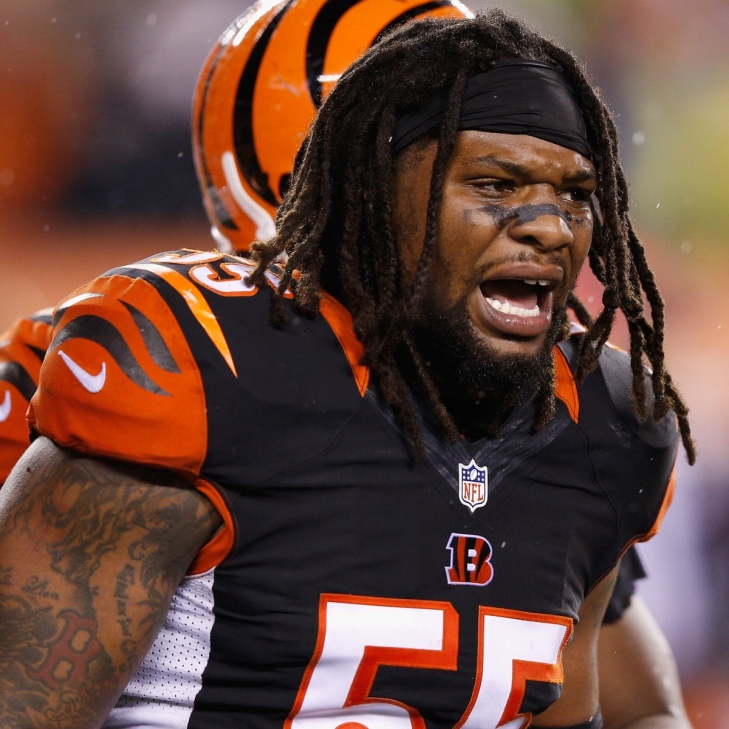
This one should be interesting.
Signed as an undrafted free agent out of Arizona State in 2012, Vontaze Burfict arrived in Cincinnati with a reputation as a volatile, first-round talent whose draft stock plummeted following a disastrous Combine and off-field concerns. In Southern Ohio, Burfict evolved into one of the most brilliant—and deeply controversial—defensive linebackers of his generation, serving as the ferocious center of Marvin Lewis's defense.
At 6 feet 1 inch and 248 pounds, Burfict possessed elite football IQ, rapid-fire processing, and a bone-crushing physical presence over the middle. He cracked the starting lineup at weakside linebacker by Week 3 of his 2012 rookie campaign, compiling 127 combined tackles. He elevated his game to an all-pro level in 2013, leading the entire NFL with 171 combined tackles while adding 3.0 sacks and an interception. His dominant sophomore masterclass earned him First-Team All-Pro honors and his sole career Pro Bowl selection.
However, Burfict’s relentless style routinely crossed the threshold of legal play, resulting in a career defined as much by league discipline as elite instincts. After a severe concussion and knee surgery limited him to five games in 2014, he returned in 2015 to anchor another playoff run. That season ended in infamy during the 2015 AFC Wild Card Game against Pittsburgh, where Burfict delivered a brutal late hit to a defenseless Antonio Brown. The ensuing 15-yard penalty, paired with an unsportsmanlike conduct flag on Adam Jones, gifted the Steelers 30 field position yards to kick the game-winning field goal, cementing one of the most painful postseason collapses in Bengals history.
Suspensions for safety violations and banned substances repeatedly disrupted his availability over his final three seasons in Cincinnati (2016–2018). While his processing and diagnostic skills remained elite whenever he stepped on the field, he was never able to play a full 16-game slate again. Following the 2018 campaign, the Bengals released Burfict, and he spent one final, suspension-shortened season with the Oakland Raiders in 2019 before his NFL career ended.
Burfict played in 75 regular-season games (73 starts) and two playoff contests. He generated 604 combined tackles, 8.5 sacks, 34 tackles for loss, five interceptions, and four forced fumbles.
38. Tommy Casanova
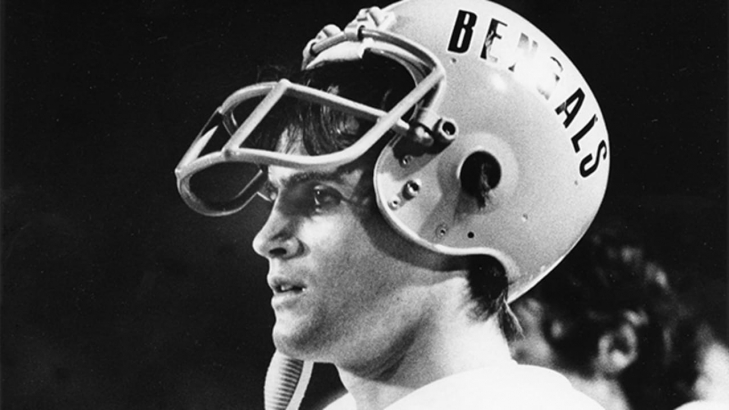
Tommy Casanova was a second-round pick from LSU who had a legendary pedigree as a three-time consensus All-American and future College Football Hall of Famer. A rare multi-dimensional athlete who played both ways in college, Casanova brought fluid range, sharp instincts, and versatility to Paul Brown’s secondary.
Casanova confidently entered the starting lineup as a rookie at free safety, instantly catching attention with five interceptions and two returned for touchdowns. His impressive play earned him his first Pro Bowl honor in 1974, after securing four interceptions and providing vital stability to the Bengals' secondary. When the coaches moved him to strong safety in 1975, his tough physical style in stopping runs flourished, all while maintaining his sharp coverage abilities.
His best individual campaign came in 1976, when he earned a second Pro Bowl selection while serving as the defensive cornerstone of a top-10 Bengals scoring defense. Casanova achieved a third Pro Bowl selection in 1977, thereby solidifying a period of dominance during which he was acknowledged as one of the premier safeties in the AFL/AFC across the middle. In addition to his responsibilities in the secondary, Casanova demonstrated his versatility as a dynamic special teams contributor, returning 90 punts for 784 yards during his tenure with the Cincinnati Bengals.
Casanova made the unexpected decision to retire at the top of his game following the 1977 season at just 27 years old to pursue an ophthalmology degree. Following his medical career, he transitioned into politics, eventually serving as a Republican state senator in the Louisiana State Senate.
During his six seasons with the Bengals (1972–1977), Casanova played 71 regular-season games (62 starts) and two postseason games, recording 17 interceptions, three defensive touchdowns, five fumble recoveries, and 784 punt return yards.
