

 Not in Hall of Fame News
Yes, we know that this is taking a while! As many of…
 Not in Hall of Fame News
Yes, we know that this is taking a while! As many of…
 Not in Hall of Fame News
2002 SEMI-FINAL RESULTS: Thank you for your participation in the Pro Football…
 Not in Hall of Fame News
Yes, we know that this is taking a while! As many of…
 Not in Hall of Fame News
We are diligently working away at Notinhalloffame on revising our Football lists…
 Not in Hall of Fame News
We are diligently working away at Notinhalloffame on revising our Football lists…
 From the Desk of the Chairman
Unlike in the case of pre-match betting, where you have to pick…
 From the Desk of the Chairman
Kupu178 builds trust with people by using top-end end-to-end encryption. It checks…
 From the Desk of the Chairman
Sports fans thrive on calculating strategy, reading momentum, and maximizing every tactical…
 From the Desk of the Chairman
The 2026 NFL season is two weeks old and the division races…
 From the Desk of the Chairman
Sports communities are often built around things that have nothing to do…
 From the Desk of the Chairman
Every hall of fame eventually faces the same problem. The selection process…






100 Active Potential Football Hall of Famers
-
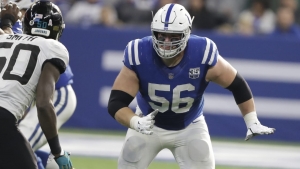 #22 Overall, Quenton Nelson, Indianapolis Colts, Left Guard, #2 Offensive Lineman2025 Pre-Season Rank #2025, 2024 Pre-Season Rank #29, 2023 Pre-Season Rank #42, 2022 Pre-Season Rank #51, 2021 Pre-Season Rank #78, 2020 Pre-Season Rank…
 -
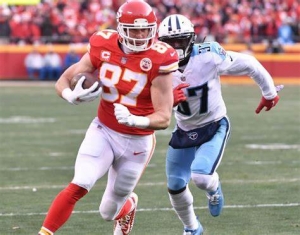 #5 Overall, Travis Kelce: Kansas City Chiefs, #1 Tight End2025 Pre-Season Rank #4, 2024 Pre-Season Rank #5, 2023 Pre-Season Rank #7, 2022 Pre-Season Rank #12, 2021 Pre-Season Rank: #20, 2020 Pre-Season Rank…in Tight Ends
 -
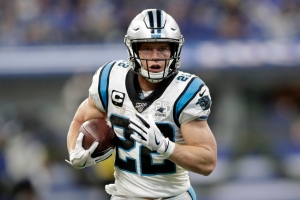 #17 Overall, Christian McCaffrey, San Francisco 49ers, #2 Running Back2025 Pre-Season Rank #21, 2024 Pre-Season Rank #16, 2023 Pre-Season Rank #55 Pre-Season Rank #66, 2021 Pre-Season Rank #76, 2020 Pre-Season Rank #81.…
 -
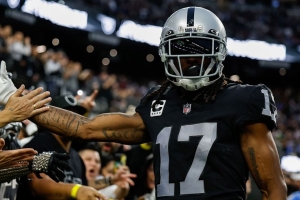 #21 Overall, Davante Adams, Los Angeles Rams, #2 Wide Receiver2025 Pre-Season Rank #23, 2024 Pre-Season Rank #27, 2023 Pre-Season Rank #24, 2022 Pre-Season Rank #43, 2021 Pre-Season Rank #67, 2020 Pre-Season Rank…
Visit the Fictitious Halls of Fame!


You May Also Like...
EDITOR’S CHOICE

 DDT's Pop Flies
When the veterans committee (VC), officially convening as the Contemporary Baseball Era…


 Live Music Head
Project/Objectan interview with André Cholmondeleyby Live Music HeadOriginally published at timessquare.com on…

LATEST RANKINGS





MOST POPULAR RANKINGS
















Committee Chairman
7. Stan Coveleski
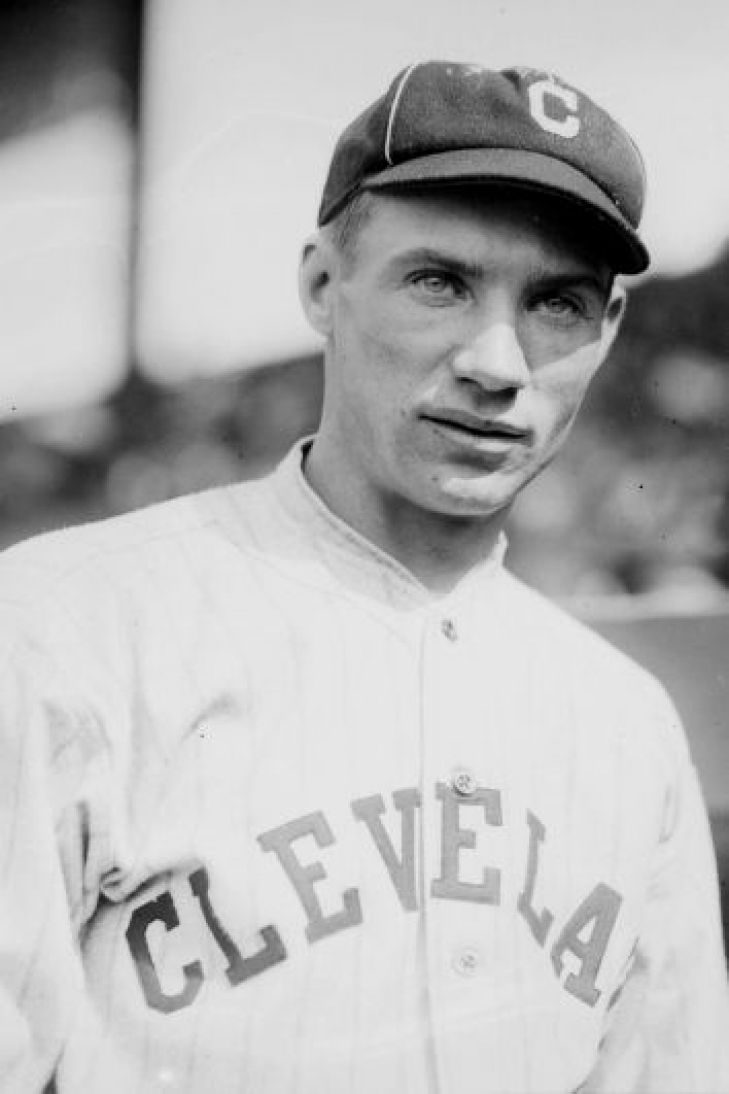
Stan Coveleski joined Cleveland in 1916, bringing a quiet, workmanlike intensity and a devastating "wet" delivery that moved on its own mind. He secured a permanent spot in the rotation with a 15-win rookie campaign, but it was the following season that he truly established himself as the tactical leader of the staff. He matured into a model of earning the W, putting together a staggering stretch from 1918 to 1921 in which he won at least 22 games in four consecutive seasons. During this window, his ERA dipped below 2.00 twice, proving that his control and movement were nearly impossible to solve.
The pinnacle of his career arrived in the 1920 World Series, a performance that remains etched in postseason lore. Coveleski was the undisputed architect of the championship, starting and winning three games while allowing only two runs over 27 innings. In an era before individual postseason awards, he was the consensus hero, navigating the pressure of the Fall Classic with a stoic calm that defined his Northern Ohio run. He wasn't just a volume producer; he was a big-game specialist who thrived when the margin for error was nonexistent.
His value was further validated by his advanced metrics, as he led the American League in Win Probability Added (WPA) four different times. This highlighted his ability to deliver in the most critical moments of a game. In 1923, he captured the ERA title with a 2.76 mark, showing that even as the league transitioned out of the Deadball Era, his tactical approach remained elite. He was a master of efficiency, often finishing games in under two hours by inducing weak contact and letting his defense do the work.
As the organization shifted into a rebuilding phase following the 1924 season, Coveleski was traded to the Washington Senators. He concluded his Cleveland tenure with 172 wins and a reputation as one of the most reliable right-handers to ever toe the rubber in the city. While he found immediate success in Washington, capturing another ERA title, his legacy was forged in the dirt of Dunn Field and League Park.
Stan Coveleski was ushered into Cooperstown in 1969 by the Veterans Committee, a long-overdue recognition of his status as one of the premier hurlers of his generation. Cleveland rightfully honored him by inducting him into the team Hall of Fame in 1966.
5. Lou Boudreau
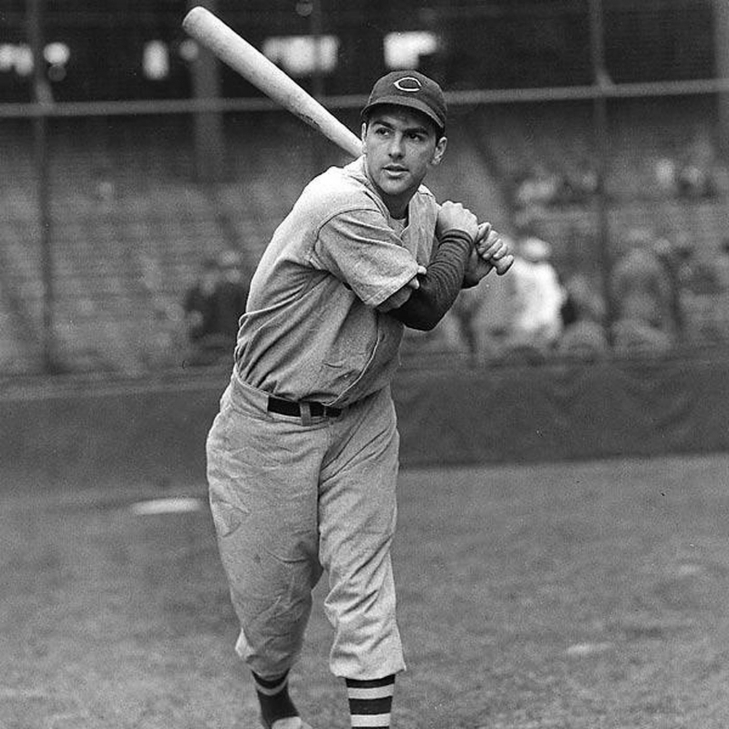
A two-sport star (Basketball and Baseball) at the University of Illinois, Lou Boudreau focused on Baseball, and the Cleveland Indians were blessed by that decision.
3. Tris Speaker
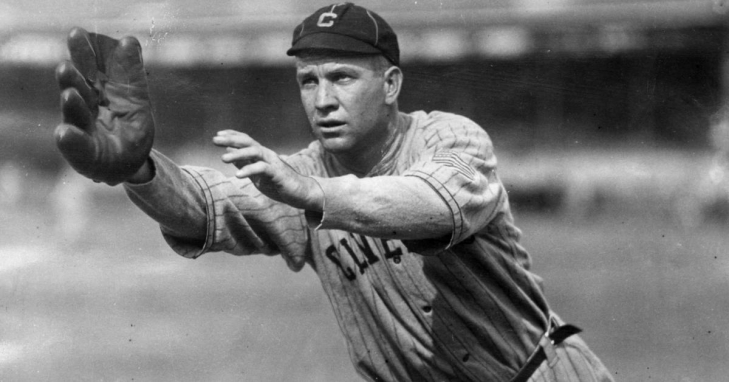
When Tris Speaker was traded to Cleveland in 1916, it was the result of a legendary insult. Despite batting .322, the Red Sox asked their superstar centerfielder to take a pay cut. Speaker’s refusal sent him to Cleveland, where he immediately set about dismantling American League pitching. In his debut season with the Indians, he proved his point with a thunderous campaign, capturing the 1916 Batting Title with a .386 average and leading the league in hits, doubles, and on-base percentage. He arrived as a disgruntled star and instantly became the premier face for a city hungry for a winner.
The peak of his residency saw Speaker revolutionize the way center field was played. Known as "The Gray Eagle," he played a notoriously shallow center field, so shallow that he frequently functioned as a fifth infielder, recording unassisted double plays and picking off runners at second base. He remains the all-time Major League leader in doubles, with 486 of his 792 career two-baggers coming in a Cleveland uniform. From 1916 to 1925, Speaker never batted below .310, serving as the most consistent high-volume producer in the organization's history.
The pinnacle of his leadership came in 1919, when he assumed the title of player-manager. Under the shadow of the tragic on-field death of teammate Ray Chapman in 1920, Speaker displayed a high level of leadership that willed the Indians to their first World Series title. He was a cerebral architect of the game, managing the rotation and the lineup while still batting .388 himself. He was the rare dual-threat who could out-think the opposing manager while simultaneously out-hitting the opposing pitcher.
However, the final walk toward the exit in 1926 was marked by a sudden resignation. While still a productive player, Speaker stepped down from his managerial post and was subsequently released, finishing his journey with brief stints in Washington and Philadelphia. He left Cleveland as a statistical titan, accumulating 1,965 hits and an incredible .354 average for the franchise, a mark that remains nearly untouchable in the record books.
Tris Speaker was a first-ballot immortal in the eyes of the baseball world, entering Cooperstown in 1937. Cleveland rightfully included him in their inaugural Hall of Fame class in 1951, forever cementing the "Gray Eagle" as the man who proved that loyalty is a two-way street, and that Boston’s loss was Cleveland’s eternal gain. He arrived as a man with a point to prove and left as a permanent monument to excellence on the lakefront.
2. Nap Lajoie
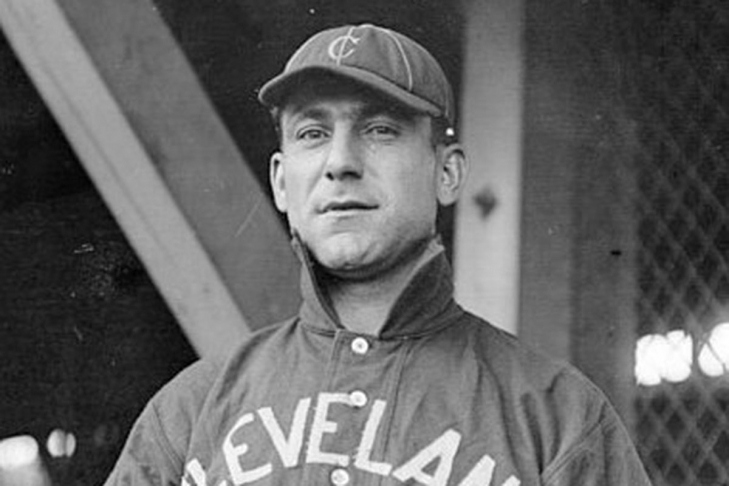
When Nap Lajoie arrived in Cleveland in 1902, he didn't just bring a legendary bat; he brought the validity of an entire league. After a messy legal battle with the Phillies that saw him jump to the Athletics and then flee to Cleveland to avoid a Pennsylvania injunction, Lajoie became the first true titan of the American League. He was so instantly beloved on the Lakefront that by 1903, a fan poll officially changed the team's name from the Bronchos to the "Naps" in his honor. He wasn't just playing for the city; he was the city's identity for over a decade, hitting a blistering .379 in his first partial season and proving that the junior circuit was a force to be reckoned with.
Lajoie was a hitting machine who made the Deadball Era look easy, capturing batting and slugging titles in 1903 and 1904. He was the "Maestro of the Second Base," a fielder so graceful that contemporaries like Cy Young claimed his line drives could take a third baseman’s leg off. His 1910 season remains one of the most controversial chapters in baseball history; while he officially finished second to Ty Cobb in the batting race, the "Chalmers Award" scandal, where the St. Louis Browns intentionally played deep to allow Lajoie to bunt for hits, resulted in both men receiving a brand new car. Modern statistical audits actually suggest Lajoie was the rightful champion with a .384 average, adding a layer of "what-if" to an already decorated career.
Beyond the plate, Lajoie was the ultimate franchise identity figure, serving as player-manager from 1905 to 1909. While the dual role eventually took a toll on his offensive output, his leadership anchored the team through its most formative years. He led the league in hits, doubles, and fielding percentage multiple times, serving as a vacuum at second base who paced the league in Range Factor five times. He played with intensity for thirteen seasons in Cleveland, accumulating 2,047 hits and a .339 average that remains the gold standard for the franchise.
The final walk toward the exit came after the 1914 season, when his contract was sold back to the Athletics. It was the end of an era so significant that the team had to find a new name, eventually settling on the "Indians" to fill the void left by their namesake. Lajoie left Cleveland as a pioneer who had legitimized a league and a city, earning his place in the very first Hall of Fame class in Cleveland history in 1951.
Lajoie arrived as a legal fugitive from Philadelphia and left as a permanent monument of Cleveland baseball. He proved that while players come and go, some names are so powerful they define the jersey itself. Whether he sits at number one or two, he remains the foundation upon which the entire franchise was built.
