

 Not in Hall of Fame News
Yes, we know that this is taking a while! As many of…
 Not in Hall of Fame News
Yes, we know that this is taking a while! As many of…
 Not in Hall of Fame News
2002 SEMI-FINAL RESULTS: Thank you for your participation in the Pro Football…
 Not in Hall of Fame News
Yes, we know that this is taking a while! As many of…
 Not in Hall of Fame News
We are diligently working away at Notinhalloffame on revising our Football lists…
 Not in Hall of Fame News
We are diligently working away at Notinhalloffame on revising our Football lists…
 From the Desk of the Chairman
October baseball often turns individual pitching performances into lasting postseason memories. Strikeout…
 From the Desk of the Chairman
For decades, the sports debate ran on gut feeling. Barstool arguments, call-in…
 From the Desk of the Chairman
Introduction to Private Adult Tennis Camps in Prague Adult club players increasingly…
 From the Desk of the Chairman
Unlike in the case of pre-match betting, where you have to pick…
 From the Desk of the Chairman
Kupu178 builds trust with people by using top-end end-to-end encryption. It checks…
 From the Desk of the Chairman
Sports fans thrive on calculating strategy, reading momentum, and maximizing every tactical…
100 Active Potential Football Hall of Famers
-
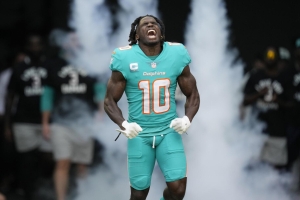 #25 Overall, Tyreek Hill, Free Agent, #3 Wide Receiver2025 Pre-Season Rank #18, 2024 Pre-Season Rank #8, 2023 Pre-Season Rank #28, 2022 Pre-Season Rank #35, 2021 Pre-Season Rank #53. Peak Period: 2019-23…
 -
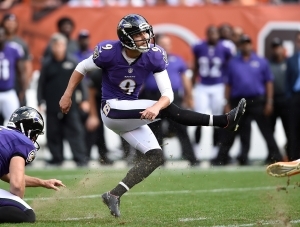 #36 Overall, Justin Tucker: Free Agent, Place Kicker, #1 Kickers & Special Teams2025 Pre-Season Rank #29, 2024 Pre-Season Rank #26, 2023 Pre-Season Rank #22, 2022 Pre-Season Rank #28, 2021 Pre-Season Rank #42, 2020 Pre-Season Rank…
 -
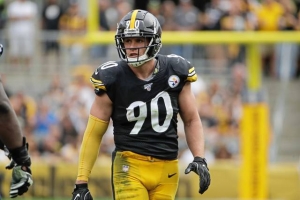 #10 Overall, T.J. Watt, Pittsburgh Steelers, #4 Defensive Lineman/Linebacker Pass Rusher2025 Pre-Season Rank #7, 2024 Pre-Season Rank #11: 2023 Pre-Season Rank #15, 2022 Pre-Season Rank #24, 2021 Pre-Season Rank #68, 2020 Pre-Season Rank…
 -
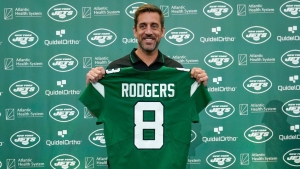 #2 Overall, Aaron Rodgers: Pittsburgh Steelers, #1 Quarterback2025 Pre Season Ranke #1, 2024 Pre-Season Rank #1, 2023 Pre-Season Rank #1, 2022 Pre-Season Rank #2, 2021 Pre-Season Rank #2, 2020 Pre-Season…in Quarterbacks
Visit the Fictitious Halls of Fame!
You May Also Like...
EDITOR’S CHOICE
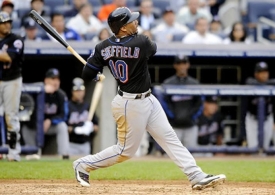 DDT's Pop Flies
When the veterans committee (VC), officially convening as the Contemporary Baseball Era…



 Live Music Head
Project/Objectan interview with André Cholmondeleyby Live Music HeadOriginally published at timessquare.com on…

LATEST RANKINGS
MOST POPULAR RANKINGS



Committee Chairman
6. Maddox Brothers & Rose
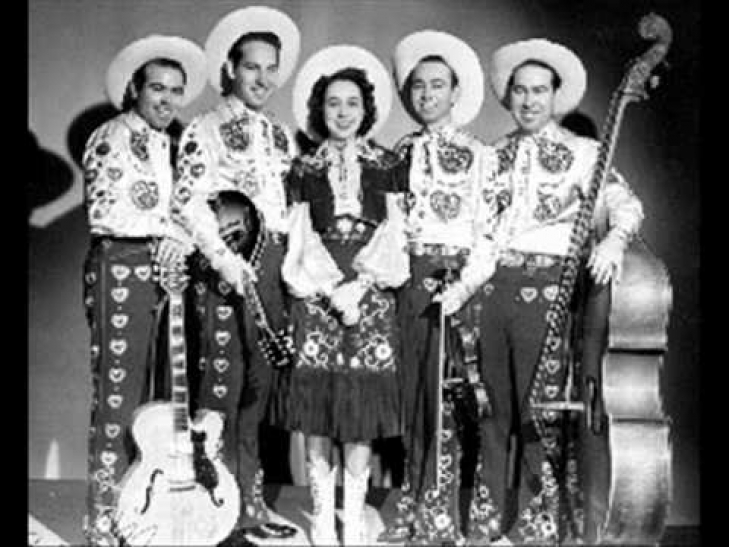
In the mid-1930s, Fred Maddox got tired of picking fruit in the migrant camps and gathered four of his six siblings together (brothers Cliff, Cal, and Don and 11-year-old sister Rose) to form a musical group. After Fred was able to get a radio spot for the group, they began traveling around California’s barns and festivals using the slogan “America’s Most Colorful Hillbilly Band”. The slogan referred to their high-energy shows and sometimes risqué lyrics. Their popularity was beginning to pick up in the California area when a majority of the band got drafted to fight in World War 2. Once the war was completed, the five siblings got back together and things continued to heat up. They made their first record label recordings in 1946. Using electric mandolin and stand-up bass, combined with their high energy performances means that they were possibly the originators of the rockabilly sub-genre. Rose Maddox is also considered the first woman to sing country boogie. Continuing their hot streak, they signed with Columbia records in 1951. They were also a big touring act at that point, hitting up locations like the Louisiana Hayride and the Grand Ole Opry. By 1956, Rose made the decision to go solo and the rest of the group slowly faded away. With them having helped originate a huge sub-genre in country music history on top of their many other accomplishments, it would be a celebrated moment if they were chosen to the Country Music Hall Of Fame.
Our All-Time Top 50 Edmonton Oilers have been revised to reflect the last two seasons

Yes, we know that this is taking a while!
As many of you know, we here at Notinhalloffame.com are slowly generating the 50 of each major North American sports team. That being said, we have existing Top 50 lists out and we always consistently look to update them when we can and based on necessity. As such, we are very happy to present our pre-2021-22 revision of our top 50 Edmonton Oilers.
As for all of our top 50 players in hockey we look at the following:
1. Advanced Statistics.
2. Traditional statistics and how they finished in the NHL.
3. Playoff accomplishments.
4. Their overall impact on the team and other intangibles not reflected in a stat sheet.
Please note, that this is our first revision in in the last two years, and it has generated one new entry, and four elevations.
As always, we present our top five immediately, although there are no changes from our last list:
2. Mark Messier
3. Jari Kurri
4. Paul Coffey
5. Grant Fuhr
You can find the entire list here.
Connor McDavid, who won the Hart Trophy and Art Ross Trophy in 2021, moves from #11 to #6. He will likely overtake Fuhr and enter the top five soon.
Fellow Hart Trophy and Art Ross winner (2020), Leon Draisitl, rocketed from #20 to #9.
Center, Ryan Nugent-Hopkins, moved up from #22 to #19.
Defenseman, Darnell Nurse, debuts at #27.
Defenseman, Oscar Klefbom, climbed to #47 from #50.
We welcome your input and comments and as always, we thank you for your support.
The University of Louisville announces the 2021 HOF Class
Regular visitors of Notinhalloffame.com know that we are slowly working on the top 50 of every major team in the NHL, NBA, NFL and MLB. Once that is done, we intend to look at how each team honor their past players, coaches and executives. As such, it is news to us that the University of Louisville has announced their Athletic Hall of Fame Class of 2021.
There are six new members of the UL HOF Class, who are slated to be inducted on October 22.
Harry Douglas, Football: 2004-07: Playing at Wide Receiver, Douglas is second all-time in Cardinals history in Receiving Yards (2,924). He would later play nine years in the NFL with Atlanta and Tennessee.
Elvis Dumervil, Football: 2002-05: Dumerville is second all-time in school history in Sacks (32), and he won the Bronco Nagurski Award and Ted Hendricks Award in 2005. He would go on to play for the Denver Broncos, where he went to four Pro Bowls.
Bergan Foley, Women’s Lacrosse: 2008-11. Foley holds the Cardinal record for Goals in a single season (78), and her 265 places her second all-time.
Joanna Haig, Women’s Soccer: 2006-07. Haig has a GAA of .48 with 20 Shutouts as the Louisville Goalie.
Logan Johnson, Baseball: 2004-07. Johnson played at Second Base, and he is the school leader in Doubles. He helped bring the Cardinals to their first College World Series.
Melissa Roth. Softball: 2007-10. Roth played at Catcher, and her squad won 157 Games while she played. Roth brought Louisville to four Regional Appearances, and she was the 2009 Big East Player of the Year.
We here at Notinhalloffame.com would like to congratulate the impending members of the University of Louisville Athletic Class of 2021.
23. Kathy Mattea
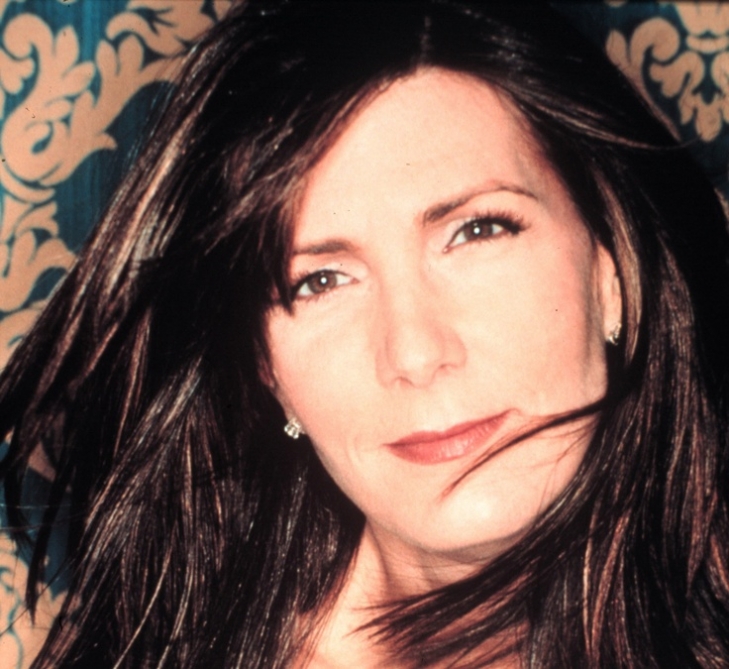
As with a lot of other people on this list, Kathy began singing by being a part of her parents’ church choir. She joined a bluegrass band while in University, which she says helped to shape her sound and roots as an artist. After dropping out of school, she moved to Nashville. She took odd jobs while trying to make her way in the business: waitress, secretary, and tour guide at the Hall Of Fame itself. Signing her record contract in 1983, it took a few years for her radio singles to start taking off. Throughout her song catalogue, she enjoyed trying out some different sounds like honky-tonk, country-pop, bluegrass, and even Celtic ballads. Being loved by fans and critics alike, she was able to have a decade of radio hits, get 15 CMA nominations/8 Grammy nominations, and continues to record music today. After working at the Hall Of Fame, could she eventually get a plaque on the wall someday?
