

 Not in Hall of Fame News
Yes, we know that this is taking a while! As many of…
 Not in Hall of Fame News
Yes, we know that this is taking a while! As many of…
 Not in Hall of Fame News
2002 SEMI-FINAL RESULTS: Thank you for your participation in the Pro Football…
 Not in Hall of Fame News
Yes, we know that this is taking a while! As many of…
 Not in Hall of Fame News
We are diligently working away at Notinhalloffame on revising our Football lists…
 Not in Hall of Fame News
We are diligently working away at Notinhalloffame on revising our Football lists…
 From the Desk of the Chairman
October baseball often turns individual pitching performances into lasting postseason memories. Strikeout…
 From the Desk of the Chairman
For decades, the sports debate ran on gut feeling. Barstool arguments, call-in…
 From the Desk of the Chairman
Introduction to Private Adult Tennis Camps in Prague Adult club players increasingly…
 From the Desk of the Chairman
Unlike in the case of pre-match betting, where you have to pick…
 From the Desk of the Chairman
Kupu178 builds trust with people by using top-end end-to-end encryption. It checks…
 From the Desk of the Chairman
Sports fans thrive on calculating strategy, reading momentum, and maximizing every tactical…
100 Active Potential Football Hall of Famers
-
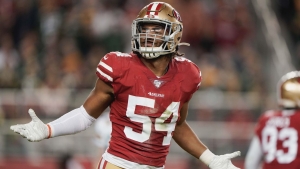 #30 Overall, Fred Warner, San Francisco 49ers Linebacker, #2 Defensive Lineman/Linebacker: Interior Lineman2025 Pre-Season Ranking #22, 2024 Pre-Season Rank #49, 2023 Pre-Season Rank #79, 2022 Pre-Season Rank #118, 2021 Pre-Season Rank #142. Peak Period: 2020-24…
 -
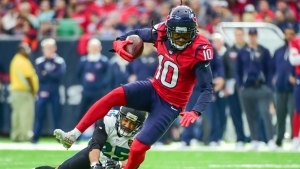 #27 Overall, DeAndre Hopkins, Free Agent, #4 Wide Receiver2025 Pre-Season Rank, #24, 2024 Pre-Season Rank #24, 2023 Pre-Season Rank #20, 2022 Pre-Season Rank #28, 2021 Pre-Season Rank #30, 2020 Pre-Season Rank…
 -
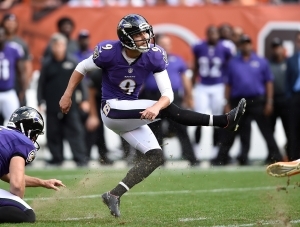 #36 Overall, Justin Tucker: Free Agent, Place Kicker, #1 Kickers & Special Teams2025 Pre-Season Rank #29, 2024 Pre-Season Rank #26, 2023 Pre-Season Rank #22, 2022 Pre-Season Rank #28, 2021 Pre-Season Rank #42, 2020 Pre-Season Rank…
 -
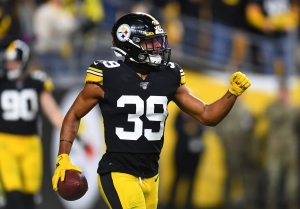 #44 Overall, Minkah Fitzpatrick, New York Jets, Free Safety, #3 Safety2025 Pre-Season Rank #43, 2024 Pre-Season Rank #56, 2023 Pre-Season Rank #63, 2022 Pre-Season Rank #99, 2021 Pre-Season Rank #108, 2020 Pre-Season Rank…in Safeties
Visit the Fictitious Halls of Fame!
You May Also Like...
EDITOR’S CHOICE
 DDT's Pop Flies
When the veterans committee (VC), officially convening as the Contemporary Baseball Era…

 Live Music Head
Project/Objectan interview with André Cholmondeleyby Live Music HeadOriginally published at timessquare.com on…
LATEST RANKINGS

MOST POPULAR RANKINGS

Committee Chairman
49. Tim Anderson
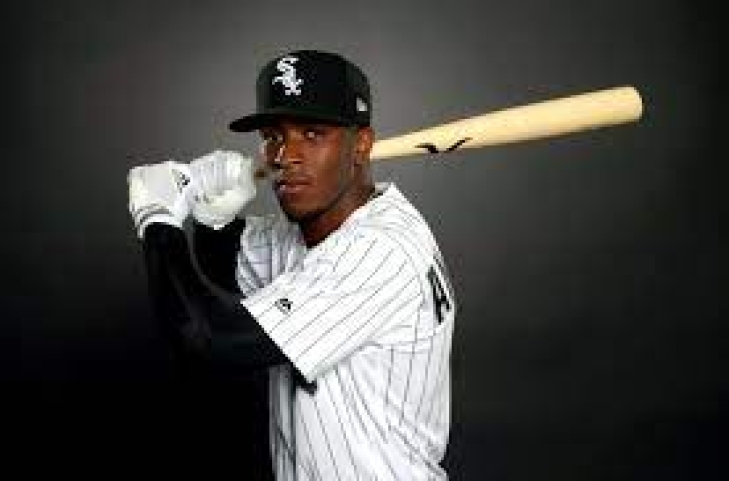
Tim Anderson debuted in the Chicago lineup in 2016 and matured instantly into a dynamic force at the top of the order. He emerged with a specialized, aggressive approach at the plate, utilizing his elite hand-speed to drive the ball to all fields. His breakout reached a massive ceiling in 2019 when he stood as the undisputed batting king of the American League, securing the Batting Title with a .335 average. He was a model of multi-tool production, proving he could pair his contact skills with consistent power, launching double-digit home runs over five consecutive summers between 2017 and 2021.
The most impressive aspect of his tenure was the charismatic energy he brought to the diamond, which translated into back-to-back All-Star selections in 2021 and 2022. Anderson was a master of the "big moment," often serving as the tactical catalyst for a lineup that returned the White Sox to postseason contention. He wasn't just a statistical producer; he was a high-leverage presence whose "bat flip" heard 'round the world came to symbolize a rejuvenated franchise. At his peak, he was a premier offensive shortstop who could dictate the tempo of a game from the very first pitch.
However, the momentum of his career reached a sudden and difficult crossroads in 2023. That season, Anderson struggled through a period of profound regression, marked by a decline in his power and an uncharacteristic drop in his offensive efficiency. It was a challenging final chapter on the South Side, underscored by physical toll and a high-profile on-field altercation with Jose Ramirez that signaled the end of his time in Chicago. Despite the difficult exit, his years of elite production remained a foundational part of the team's modern identity, leaving behind a legacy of a player who, at his best, was as dangerous as anyone in the sport.
The White Sox declined his option after the 2023 Season. In Chicago, Anderson compiled 1,021 hits, 1,021 runs, 98 home runs, and a 2019 American League Batting Title.
The Rules Change for the Veteran Era Baseball Ballots
There is a major change going forward with the Baseball Hall of Fame in regards to their Era Committees.
Eras have been reduced to two, the Contemporary Baseball Era, consisting of the period from 1980 to present day, and the Classic Baseball Era, covering the period before 1980. The Contemporary Baseball Era will be split in two separate ballots, one for players and one for managers, executives and umpires.
These Era Committees will rotate annually, with each ballot consisting of eight candidates. The Contemporary Baseball Players will be up first.
As always, we will be paying attention!
RIP: Guy Lafleur
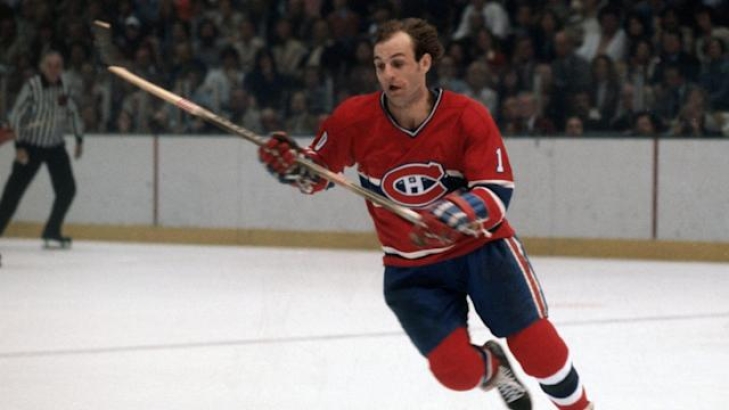
Days after we lost one of the greatest Right Wings in Hockey, another one was taken from us.
Guy Lafleur, one of the best players to ever grace the ice, passed away at the age of 70. While it was not announced how he died, he had contracted lung cancer two years ago.
From Quebec, Lafleur was the number one pick in the 1971 Draft by the Montreal Canadiens, and he was able to stay in his home province, and add to the laundry list of superstars that Montreal boasted. Lafleur helped the Habs win the Cup in 1973, but it was in the 1974/75 campaign where he established himself as one of the game’s top forwards.
From that season until 1979-80, Lafleur was named the First Team All-Star at Right Wing, and won three consecutive Art Ross Trophies (1975-76 to 1977-78), winning the Hart in the latter two year. Lafleur also lit the lamp 50 times in all of those six First Team All-Star years, and also won the Lester B. Pearson Award three times.
Injuries, decreased production, and a changing philosophy in Montreal saw Lafleur retire in 1985, but it would not stick.
Lafleur was inducted into the Hockey Hall of Fame in 1988, but came out of retirement to play three seasons, the first with the New York Rangers, and the latter two with the Quebec Nordiques. While he was not the offensive force he once was, he was still incredibly popular, and added to his impressive stat line.
Retiring for good in 1991, Lafleur amassed 1,246 Points.
We here at Notinhalloffame.com would like to extend our condolences to the friends, family and fans of Guy Lafleur.
RIP: Daryle Lamonica
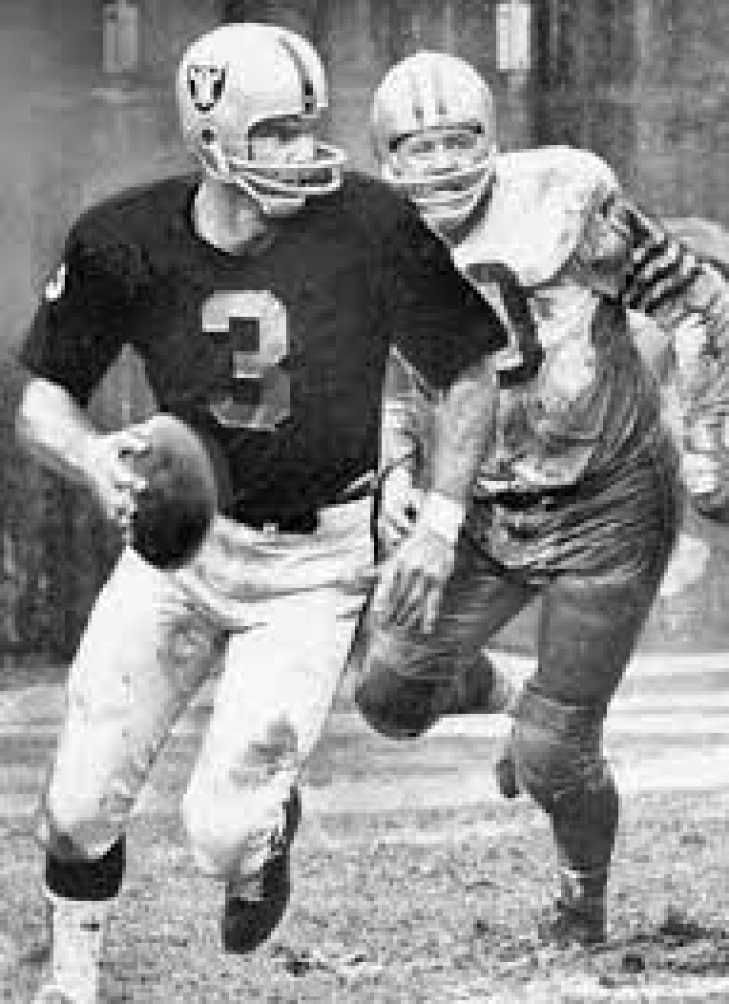
Raider Nation has lost one of their great ones.
Former Quarterback, Daryle Lamonica, passed away at the age of 80 of what is to believed to be natural causes.
Nicknamed the "Mad Bomber," Daryle Lamonica signed with the Buffalo Bills of the AFL, where he saw limited playing time at Quarterback playing behind Jack Kemp. He did get to play, however, and was a part of the Bills' 1964 and 1965 AFL Championship. Lamonica was traded to the Oakland Raiders, and he was finally the starting QB and had the chance to show what he could do, which, as it turned out, would be a lot!
Lamonica would run the Raiders offense, and in his first year there, he would lead the AFL in Touchdown Passes (30), won the AP and UFI MVP and took Oakland to win their first AFL Championship. 1969 was another phenomenal season for Lamonica, as he would win the UPI MVP again while again leading the AFL in Touchdown Passes (34). He also would throw for a league leading 3,302 Yards. Lamonica remained with the Raiders until 1974 and finished his career with a year in the World Football League.
We here at Notinhalloffame.com would like to extend our condolences to the friends, family and fans of Daryle Lamonica.
