

 Not in Hall of Fame News
Yes, we know that this is taking a while! As many of…
 Not in Hall of Fame News
Yes, we know that this is taking a while! As many of…
 Not in Hall of Fame News
2002 SEMI-FINAL RESULTS: Thank you for your participation in the Pro Football…
 Not in Hall of Fame News
Yes, we know that this is taking a while! As many of…
 Not in Hall of Fame News
We are diligently working away at Notinhalloffame on revising our Football lists…
 Not in Hall of Fame News
We are diligently working away at Notinhalloffame on revising our Football lists…
 From the Desk of the Chairman
October baseball often turns individual pitching performances into lasting postseason memories. Strikeout…
 From the Desk of the Chairman
For decades, the sports debate ran on gut feeling. Barstool arguments, call-in…
 From the Desk of the Chairman
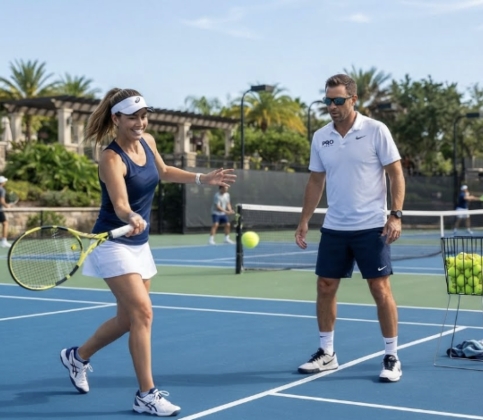
Introduction to Private Adult Tennis Camps in Prague Adult club players increasingly…
 From the Desk of the Chairman
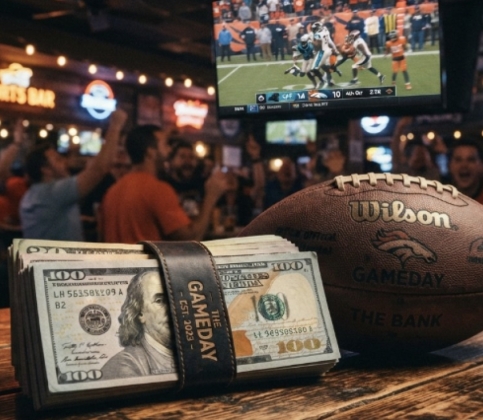
Unlike in the case of pre-match betting, where you have to pick…
 From the Desk of the Chairman
Kupu178 builds trust with people by using top-end end-to-end encryption. It checks…
 From the Desk of the Chairman
Sports fans thrive on calculating strategy, reading momentum, and maximizing every tactical…
100 Active Potential Football Hall of Famers
-
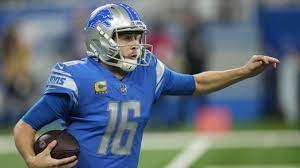 #45 Overall, Jared Goff, Detroit Lions, #8 Quarterback2025 Pre-Season Rank #46, pSeason 2024 Pre-Season Rank #89, 2023 Pre-Season Rank #100, 2022 Pre-Season Rank #112. 2021 Pre-Season Rank #106, 2020 Pre-Season…in Quarterbacks
 -
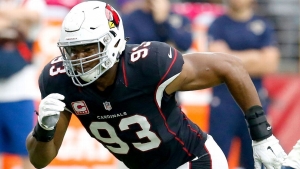 #14 Overall, Calais Campbell, Baltimore Ravens, Defensive End, #6 Defensive Lineman/Linebacker: Pass Rusher2025 Pre-Seasn Rank #14, 2024 Pre-Season Rank #19, 2023 Pre-Season Rank #19, 2022 Pre-Season Rank #26 2021 Pre-Season Rank #28, 2020 Pre-Season Rank…
 -
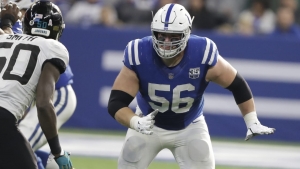 #22 Overall, Quenton Nelson, Indianapolis Colts, Left Guard, #2 Offensive Lineman2025 Pre-Season Rank #2025, 2024 Pre-Season Rank #29, 2023 Pre-Season Rank #42, 2022 Pre-Season Rank #51, 2021 Pre-Season Rank #78, 2020 Pre-Season Rank…
 -
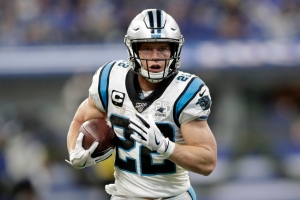 #17 Overall, Christian McCaffrey, San Francisco 49ers, #2 Running Back2025 Pre-Season Rank #21, 2024 Pre-Season Rank #16, 2023 Pre-Season Rank #55 Pre-Season Rank #66, 2021 Pre-Season Rank #76, 2020 Pre-Season Rank #81.…
Visit the Fictitious Halls of Fame!

You May Also Like...
EDITOR’S CHOICE
 DDT's Pop Flies
When the veterans committee (VC), officially convening as the Contemporary Baseball Era…


 Live Music Head
Project/Objectan interview with André Cholmondeleyby Live Music HeadOriginally published at timessquare.com on…

LATEST RANKINGS



MOST POPULAR RANKINGS


Committee Chairman
Our All-Time Top 50 Tampa Bay Rays have been revised to reflect the 2021 Season
Yes, we know that this is taking a while!
As many of you know, we here at Notinhalloffame.com are slowly generating the 50 of each major North American sports team. That being said, we have existing Top 50 lists out and we always consistently look to update them when we can and based on necessity. As such, we are very happy to present our pre-2022 revision of our top 50 Tampa Bay Rays.
As for all of our top 50 players in baseball we look at the following:
1. Advanced Statistics.
2. Traditional statistics and how they finished in the American League.
3. Playoff accomplishments.
4. Their overall impact on the team and other intangibles not reflected in a stat sheet.
Tampa had another excellent season, where they again made the playoffs, but the small market team reloaded again in the off-season, always seeking cheaper and younger talent.
As always, we present our top five, though there were no changes, and only one new addition overall. There were, however, significant elevations on the list.
3. Ben Zobrist
4. David Price
You can find the entire list here.
It is worth noting that Kiermaier was unable to overtake Price for #4, and is at #5 for the second straight year.
Second Baseman, Brandon Lowe, skyrocketed from #40 to #16, a reflection more on the short stays that players have in Tampa, than it does on Lowe’s solid 2021.
The same can be said for Joey Wendle, who also shot up from #36 to #17, but Wendle is now with the Marlins.
Austin Meadows, who was traded to Detroit during Spring Training, also jumped multiple spots, climbing from #49 to #34.
Starting Pitcher, Tyler Glasnow, who begins the year on the DL, is the lone new entry at #46.
We welcome your input and comments and as always, we thank you for your support.
27. Tyler Glasnow
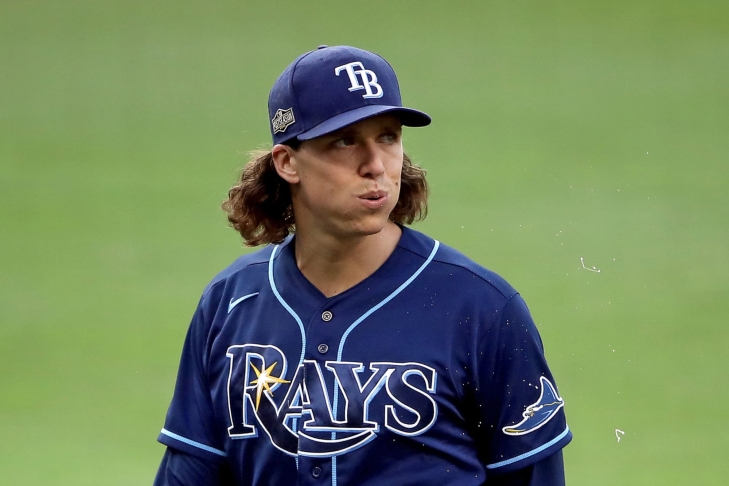
When the Tampa Bay Rays made the high-profile trade to send Chris Archer to Pittsburgh in July 2018, they weren't just rebuilding—they were fundamentally reshaping their pitching future. Austin Meadows and Shane Baz were important parts of the return, but Tyler Glasnow, standing 6-foot-8, had the most exciting potential. Although his first two months in St. Petersburg were challenging, with a 1–5 record and a 4.20 ERA over 11 starts, the front office recognized that his high-velocity, top-tier pitching was a powerful, yet volatile, asset waiting to be unleashed.
That explosion happened the following spring. Glasnow started strong in 2019, earning American League Pitcher of the Month for April. As he was establishing himself as a true ace, a serious forearm strain sidelined him for nearly four months. He came back just in time for the final stretch, ending a shortened regular season with a remarkable 6–1 record and a tiny 1.78 ERA over 12 starts.
The shortened 2020 season was tumultuous for the big right-hander. Despite a 5–1 record and a higher 4.08 ERA in the regular season, his dominant raw stuff continued to be a key asset. He struck out 91 batters in only 57.1 innings and became a key part of the postseason rotation, guiding the franchise to an American League pennant and a World Series appearance.
By 2021, Glasnow appeared unstoppable, boasting a sub-1.00 WHIP, a 5–2 record, and a 2.66 ERA. Sadly, a torn ulnar collateral ligament (UCL) in mid-June abruptly ended his rise. The Tommy John surgery that followed wiped out the rest of that season and nearly all of 2022. Demonstrating his relentless work ethic, he returned in 2023, posting a promising 10–7 record over 21 starts. He also achieved career-highs with 120 innings and 162 strikeouts, reaffirming his status as a top-tier pitcher capable of missing bats.
Facing rising arbitration costs, the Rays traded veteran right-hander Glasnow to the Dodgers before 2024. His time in St. Petersburg is a ‘what-if' due to injuries, but his record of 27–16 and 526 strikeouts over 388.1 innings reflects a peak of high efficiency that contributed to Tampa Bay's golden era.
RIP: Rayfield Wright
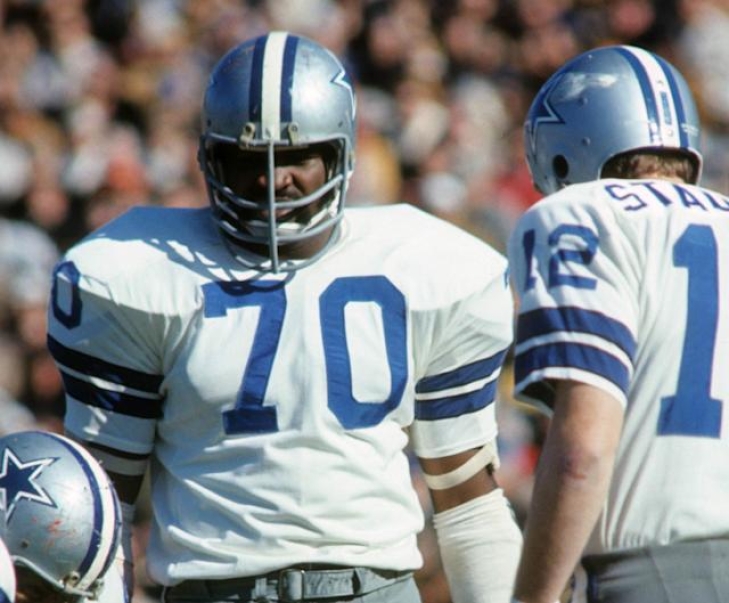
The Football world lost one of the great ones, as it was announced that former Offensive Tackle and former Dallas Cowboy, Rayfield Wright, passed away at the age of 76.
Wright came to Dallas as a seventh round pick in 1967, where in his first three seasons, he was used as an Offensive Tackle, Tight End, and occasional Defensive Tackle. By 1970, he settled in at Right Tackle, and it was there where he became one of the best at that position of all-time.
Wright was named to six consecutive Pro Bowls from 1971 to 1976, and in those first three years, he was a First Team All-Pro. His contributions would help Dallas win Super Bowl VI and Super Bowl XII.
Wright left Dallas after being released for the Philadelphia Eagles in 1980, but he never played a game for them, thus making his entire career in the NFL with the Cowboys. He would enter the Pro Football Hall of Fame in 2006, and he is also a member of the 1970s All-Decade Team. Wright was also honored with a place in the Cowboys Ring of Honor in 2004.
We here at Notinhalloffame.com would like to offer our condolences to the fans, family and friends of Rayfield Wright.
Tips for Hiring the Right Men Sports Shoes Suppliers
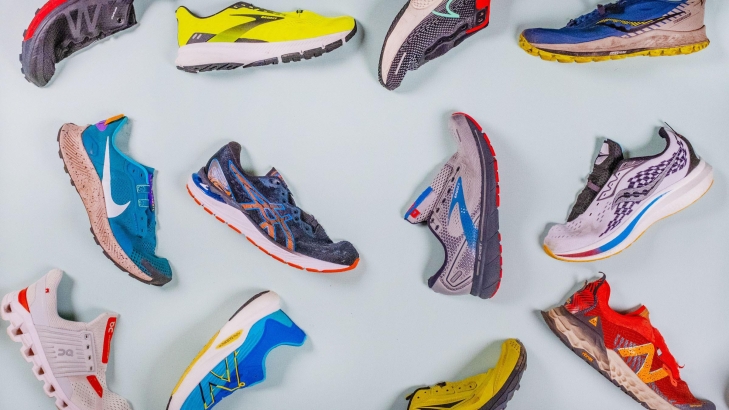
Many young people are in love with sporting activities such as running and soccer. Some take it to earn their living, while some do it for fun. Most of these fanatics desire to succeed, though not all pursue their target goals. This is because of the choice of shoes they take for sports. Always consider the quality of gear to buy and the best legwear to stay fit. Below are tips to guide you in hiring the right men's sports shoes suppliers.
Cost-effective
Sports shoes have become slightly expensive compared to other footwear. This is due to designers, seasons, and the kind of soles used for speed. The men sports shoes suppliers have always given higher price tags, but recently, suppliers like DHgate have come to the rescue of sports fans by offering cost-effective sports shoes for men. So many individuals would instead go for cheaper shoes but stylish.
Durability
Sports shoes are always made for one to withstand bruises and bumps. They are made differently compared to regular wear, which is not strong. Sports shoes for men are also made to withstand a lot of friction during the game. Men sports shoes suppliers should offer long-lasting shoes for wear that are affordable at purchase just like vessi.com.
Multitasking wear
Sports shoe suppliers ought to offer more comfortable shoes for the feet. They should be shoes that, when worn, there's at least a thumbnails length of free space left for support. The shoes can be for running as well as for soccer. The shoes should also be used in both indoor and outdoor sports activities.
Stylish
When you find comfortable shoes that fit well, consider having on other outfits of your choice. Many suppliers offer a wide variety of sports shoes for men, so it's hard to resist having one of your favorites in the wardrobe. Most stylish sports shoes for men are from reliable suppliers like DHgate at a reasonable cost. Even professionals in sports go for fashionable legwear for comfort.
Warranty
Sports shoes are put to hefty usage and therefore are made out of durable materials. These materials are given a warranty so that when they get spoilt, the supplier can repair or replace them for free. The men sports shoes suppliers must be able to provide some security for sports fans to buy sports shoes from their good stores.
Fit
All sports shoes for men need to fit comfortably when bought from the suppliers’ shops. An uncomfortable shoe may cause blisters on the legs and aching heels. Suppliers must ensure selling good fitting shoes to clients. They should also allow clients to fit the shoes and try them on the floor to confirm their comfortability. A supplier would also be happy when the client looks presentable and gives the best fashionable look to the shoe.
To find your best sporting shoes, you will try on different pairs either at your local sporting store or the online shop in your living room. It would be of great importance to read the above tips as a guide for hiring the right men's sports shoes suppliers.
