

 Not in Hall of Fame News
Yes, we know that this is taking a while! As many of…
 Not in Hall of Fame News
Yes, we know that this is taking a while! As many of…
 Not in Hall of Fame News
2002 SEMI-FINAL RESULTS: Thank you for your participation in the Pro Football…
 Not in Hall of Fame News
Yes, we know that this is taking a while! As many of…
 Not in Hall of Fame News
We are diligently working away at Notinhalloffame on revising our Football lists…
 Not in Hall of Fame News
We are diligently working away at Notinhalloffame on revising our Football lists…
 From the Desk of the Chairman
October baseball often turns individual pitching performances into lasting postseason memories. Strikeout…
 From the Desk of the Chairman
For decades, the sports debate ran on gut feeling. Barstool arguments, call-in…
 From the Desk of the Chairman
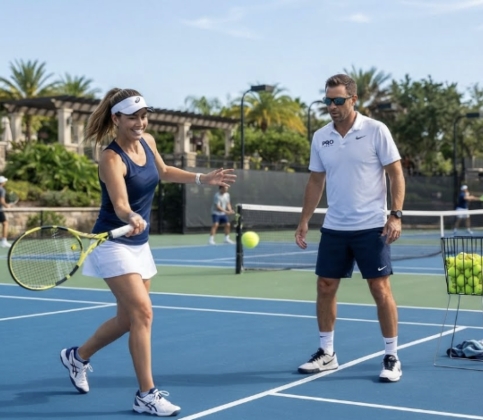
Introduction to Private Adult Tennis Camps in Prague Adult club players increasingly…
 From the Desk of the Chairman
Unlike in the case of pre-match betting, where you have to pick…
 From the Desk of the Chairman
Kupu178 builds trust with people by using top-end end-to-end encryption. It checks…
 From the Desk of the Chairman
Sports fans thrive on calculating strategy, reading momentum, and maximizing every tactical…
100 Active Potential Football Hall of Famers
-
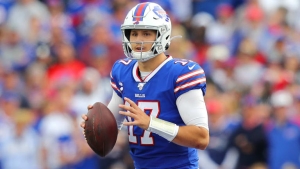 #16 Overall, Josh Allen, Buffalo Bills, #5 Quarterback2025 Pre-Season Rank #17, 2024 Pre-Season Rank #39, 2023 Pre-Season Rank #69, 2022 Pre-Season Rank #98, 2021 Pre-Season Rank #117. Peak Period: 2020-24.…in Quarterbacks
 -
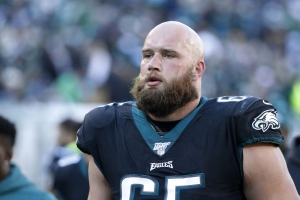 #34 Overall, Lane Johnson, Philadelphia Eagles, Right Tackle, #3 Offensive LinemanPre-Season Rank #27, 2024 Pre-Season Rank #40, 2023 Pre-Season Rank #57, 2022 Pre-Season Rank #107, 2021 Pre-Season Rank #143. Peak Period 2017-18/2022-24 When…
 -
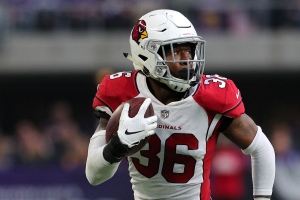 #24 Overall, Budda Baker, Arizona Cardinals, Free Safety, #1 Safety2025 Pre-Season Rank #28, 2024 Pre-Season Rank #43, 2023 Pre-Season Rank #78, 2022 Pre-Season Rank #86, 2021 Pre-Season Rank #113, 2020 Pre-Season Rank…in Safeties
 -
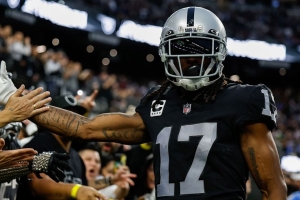 #21 Overall, Davante Adams, Los Angeles Rams, #2 Wide Receiver2025 Pre-Season Rank #23, 2024 Pre-Season Rank #27, 2023 Pre-Season Rank #24, 2022 Pre-Season Rank #43, 2021 Pre-Season Rank #67, 2020 Pre-Season Rank…
Visit the Fictitious Halls of Fame!


You May Also Like...
EDITOR’S CHOICE
 DDT's Pop Flies
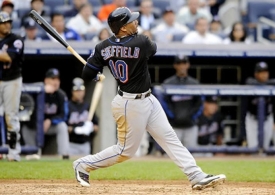
When the veterans committee (VC), officially convening as the Contemporary Baseball Era…

 Live Music Head
Project/Objectan interview with André Cholmondeleyby Live Music HeadOriginally published at timessquare.com on…

LATEST RANKINGS

MOST POPULAR RANKINGS

Committee Chairman
Our All-Time Top 50 Seattle Mariners have been revised to reflect the 2021 Season
Yes, we know that this is taking a while!
As many of you know, we here at Notinhalloffame.com are slowly generating the 50 of each major North American sports team. That being said, we have existing Top 50 lists out and we always consistently look to update them when we can and based on necessity. As such, we are very happy to present our pre-2022 revision of our top 50 Seattle Mariners.
As for all of our top 50 players in baseball we look at the following:
1. Advanced Statistics.
2. Traditional statistics and how they finished in the American League.
3. Playoff accomplishments.
4. Their overall impact on the team and other intangibles not reflected in a stat sheet.
Seattle came close to making the playoffs in 2021, and on our list, we have two significant jumps.
As always, we present our top five, though there were no changes, and only one new addition overall.
You can find the entire list here.
Outfielder, Mitch Haniger, jumped up ten spots to #29 and Pitcher, Marco Gonzales, moved to #34 from #48. Kyle Seager, who just retired, did not move from his spot a #8.
We welcome your input and comments and as always, we thank you for your support.
Frank Gore Retires
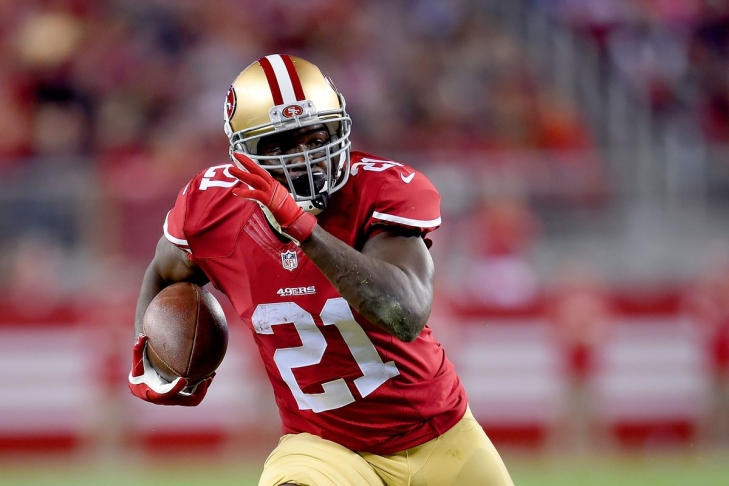
The career of one of the most durable football players of all-time is coming to an end.
Running Back, Frank Gore will be signing a one-day contract with the San Francisco 49ers, the team he had his greatest success with, and is expected to join their front office.
A Third Round Pick from Miami (FL), Gore had his best year early in his career with a sophomore effort seeing Gore post career-highs in Rushing Yards (1,695) and Yards From Scrimmage (2,180). Gore went to his first Pro Bowl that year, and was a Second Team All-Pro. Over the next eight seasons with the Niners, Gore exceeded 1,000 Rushing Yards in seven of them, and earned four more trips to the Pro Bowl.
In 2015, Gore joined the Colts, and had his last 1,000 Yard season in 2016. He would later play for Miami, Buffalo and the New York Jets.
Gore leaves the game with an even 16,000 Rushing Yards, which places him second all-time, and his 19,985 Yards From Scrimmage is fourth all-time.
As Gore did not play last season, he is eligible for the Pro Football Hall of Fame in 2026, and conceivably be a first-year inductee. The stats are there, but a delay could arise, as at no point was, he ever considered the best at his position.
We here at Notinhalloffame.com would like to wish Gore the best in his post-playing career.
The Naismith Basketball Hall of Fame announces the 2022 Class
One of the things we love even more about the NCAA Final Four, is that it is the same day that the Naismith Basketball Hall of Fame announces its new class.
Let’s get right into the newest members:
Swin Cash: Cash was one of the superstars at UConn, where she helped lead the Huskies to two NCAA Championships (2000 & 2002) and was named the Tournament MOP in the latter. The Detroit Shock took her with the second overall pick in the 2002 Draft, where she led them to two WNBA Championships (2003 & 2006). Cash would win a third WNBA Title with the Seattle Storm in 2010, and she also played for the Chicago Sky, Atlanta Dream and New York Liberty. Individually, Cash was a four-time All-Star, and was selected to the WNBA 20th and 25th Anniversary Team. As a representative of the United States National Team, Cash won Gold at the 2004 and 2012 Olympics and 2010 World Championships.
Larry Costello: Costello played at Niagara, where the Philadelphia Warriors selected him in the Second Round of the 1954 Draft. The Point Guard helped Philadelphia win the 1967 NBA Championship, and individually he was a six-time All-Star and was a one-time Second Team All-Star. He would later become a successful Head Coach, most notably with the Milwaukee Bucks, where he helmed them to their first NBA Championship in 1971.
Hugh Evans: Evans is one of the most respected and tenured referees in basketball history, and he officiated over 2,200 Games, which included 35 NBA Finals.
Manu Ginobili: Manu Ginobili might be the greatest “value” pick in the last thirty years, as the San Antonio Spurs nabbed the Argentinian Shooting Guard with the 57th Overall Pick in 1999. Ginobili did not report to the Spurs right away, having honed his skills with Virtus Bologna of the Italian League, where he led them to a EuroLeague Championship in 2001. Joining the Spurs in 2002, Ginobili played with them his entire NBA career, winning four NBA Titles, earning two All-Star Games and securing a pair of Third Team All-NBAs. For Argentina, he led his nation to Gold in the 2004 Olympics, and captured Bronze in the follow-up Games in 2008. He also took Argentina to a World Cup Silver Medal in 2002, and Gold in the 2001 and 2011 AmeriCup Tournament. Ginobili enters Springfield on his first year on the ballot.
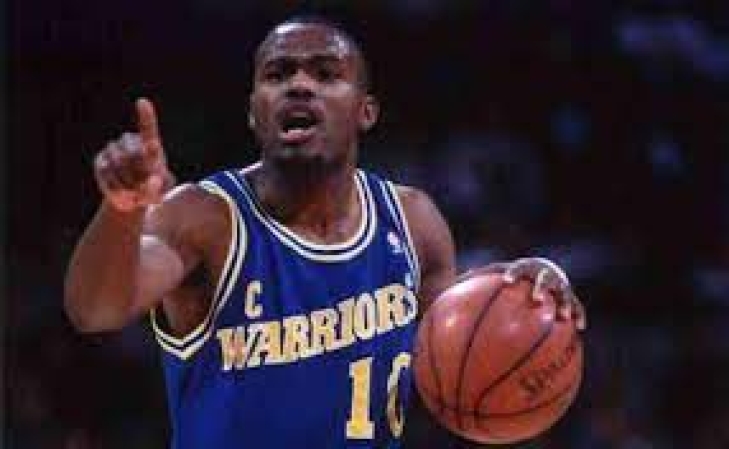
Tim Hardaway: Hardaway was the 1989 WAC Player of the Year at UTEP, where his number 10 would later be retired. The Golden State Warriors chose Hardaway with the 14th Overall Pick, and he would become one-third of the exciting trio, RUN TMC, along with Mitch Richmond and Chris Mullin. He also played for Miami, Dallas, Denver and Indiana, and was a five-time All-Star, and five-time All-NBA Selection. Hardaway also won Gold with the United States in the 2000 Olympics. Hardaway’s induction likely was delayed for years due to homophobic comments he made, but he has since atoned for those comments.
Del Harris: Harris’ long career as a coach began at a small liberal arts college, Earlham, and ten years later, he became an Assistant for the Utah Stars. Harris would become the Head Coach of the Houston Rockets, and later the Milwaukee Bucks. His best known stint as a Head Coach was with the Los Angeles Lakers, where he was named the Coach of the Year in 1995. Internationally, he worked with the United States, Canada, China and the Dominican Republic.
Lou Hudson: Hudson played his college ball at Minnesota where his number 14 was retired by the school, and his work with the Golden Gophers landed him as the number four pick in the 1966 Draft by the St. Louis Hawks. Hudson played for the St.Louis/Atlanta franchise for ten years, earning six straight trips to the All-Star Game (1969-74) and an eventual jersey retirement. He finished his career with two years with the Lakers.
Bob Huggins: Huggins first stint as a Head Coach was at Division II Walsh, and he would later get a chance at Division I with Akron. He did well there, and it landed him the job at Cincinnati, where he brought the Bearcats to the Final Four in 1992, and won four Conference USA Tournaments. After a brief stop at Kansas State, Huggins took over at West Virginia, his alma mater in 2007, where he is still their Head Coach today. He brought the Mountaineers to the Final Four in 2010, and has an overall record of 916-399.
George Karl: Karl played five years with the San Antonio Spurs, but achieved far greater fame as a coach. Over his Head Coaching career, Karl had the reigns in Cleveland, Golden State, Seattle, Milwaukee, Denver and Sacramento, with his highlight being in 1996 when he took the SuperSonics to the NBA Finals. He had an overall record of 1,175 and 824, and is sixth all-time in Wins. Karl also won the NBA Coach of the Year in 2013.
Radivoj Korac: Korac is this year’s International inductee, where he was one of the top players ever to come from the former country of Yugslavia. The EuroBasket MVP in 1961, Korac took his nation to Silver in the 1968 Olympics, and the 1963 and 1967 World Cup. He was named by FIBA and one their 50 Greatest Players. He died prematurely at the age of 30 in 1969 due to a car crash.
Theresa Shank-Grentz: Grentz played her college ball at Immaculata, one of the first dominating Women’s programs, and she would later become a successful Head Coach, compiling a 671-309 record with St. Joseph’s (1974), Rutgers (1976-995), Illinois (1995-07) and Lafayette (2015-17). She is best known as the Head Coach for the United States, where she led them to Gold in the 1990 Goodwill Games and 1990 Worlds.
Marianne Stanley: A teammate of Shank-Grentz at Immaculata, Stanley first became a Head Coach at Old Dominion in 1977, and in 1985, she took them to a National Championship. She would later coach at Penn, USC, Stanford and California, and would join the WNBA as an Assistant Coach in 2000 with the Los Angeles Sparks. She would later become the Washington Mystics Head Coach, where she won the WNBA Coach of the Year in 2002, and currently is the Head Coach of the Indiana Fever. She is already a member of the Women’s Basketball Hall of Fame.
Lindsay Whalen: Whalen was a star at the University of Minnesota, and parlayed that success to a fourth overall draft pick in 2004 by the Connecticut Sun. She was traded to the Minnesota Lynx in 2010, and would be a lynchpin for a team that won four WNBA Championships. In addition to Whalen’s four rings, Whalen was a five-time WNBA All-Star, three-time First Team All-WNBA Selection, and was chosen for the WNBA 20th and 25th Anniversary Team. The Point Guard also won three WNBA three Assists Titles. While representing the United States, she won two Olympic Gold Medals (2012 & 2016) and two World Championships (2010 & 2014). The Lynx have already retired her number #13.
This means that we have to get to work on our revisions for those to consider for the Basketball Hall on our Notinhallofffame.com Basketball list. Look for that at the end of the month.
We here at Notinhalloffame.com would like to congratulate the newest members of the Naismith Basketball Hall of Fame.
Will Twins’ Gamble on Archer Pay Off?
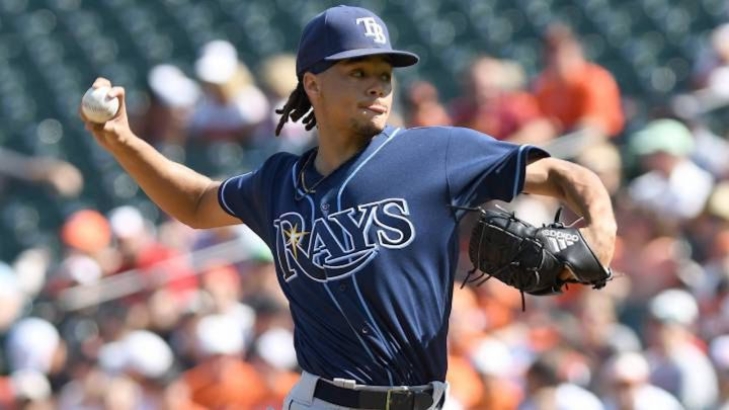
One of the more surprising pieces of MLB news from recent weeks sees veteran pitcher Chris Archer team up with the Minnesota Twins. The 33-year-old has another shot at the biggest division in baseball following a catalog of injuries.
Archer spent 2021 with the Tampa Bay Rays but appearances were restricted. He was eventually placed on the 60-day injured list with forearm tightness - not an ideal condition for a pitcher.
The former Rays and Pirates man now signs up on a one-year deal at Minnesota. The signing must be seen as a gamble but have the Twins actually made a shrewd move?
Chris Archer in Numbers
Chris Archer may not be a member of the Hall of Fame but he has had plenty to say about the accolade in the past.
As for his stats, they certainly stand up to scrutiny. Having made his MLB debut in 2012, Archer’s most successful period in the division came during his first stint with Tampa Bay which lasted from 2012 to 2018. During that time, he was good enough to make two All Star teams - in 2015 and 2017.
His pitching stats are impressive throughout but that career has been in decline since he left for the Pirates in 2018. A year later, he was a free agent and without a franchise for two years until the Rays gave him another chance last season.
Injury brought a premature end to that return so what are the Twins thinking? Is this a step too far for the player or can Chris Archer have a positive impact on his new franchise team?
Twins in Need
Minnesota Twins are certainly in need of a boost to their roster as they prepare for the 2022 MLB season. With the new campaign just days away, there is very little hope of a first World Series title in 31 years.
Betting markets are already in place and those sportsbook and casino operators linked into Asiabet are making the LA Dodgers the clear favorites to win that World Series, The Toronto Blue Jays are next while other teams in the frame include the New York Yankees, the New York Mets, the Houston Astros and the Chicago White Sox.
Way down the list are the Minnesota Twins who are firmly among the underdogs. As the MLB campaign gets underway, those odds will adjust and the Asiabet sports and casino monitoring site will publish any updates to the markets as they come in.
Visitors to that website will also be able to read up on the MLB while considering whether they want to get involved with the markets. There is access to the betting via those sportsbooks and casinos who are all happy to take on new customers.
In the main, players will be able to find some generous welcome offers in return for registration and there should be some ongoing deals moving forward. Other benefits of those websites include a range of other sporting markets plus casino platforms including roulette, blackjack and thousands of slots.
A range of funding methods are available while mobile apps allow customers to bet or play casino games on the move.
It’s a logical site for MLB bettors but have the odds setters got it right in terms of Chris Archer and the Minnesota Twins?
Can Archer get back to his best?
The deal is for one year only so it isn’t much of a gamble in that sense. However, the fees involved are surprising for a man who has endured more than his share of injuries.
Time will tell but this appears to be Chris Archer’s last chance to get back into the big time.
