

 Not in Hall of Fame News
Yes, we know that this is taking a while! As many of…
 Not in Hall of Fame News
Yes, we know that this is taking a while! As many of…
 Not in Hall of Fame News
2002 SEMI-FINAL RESULTS: Thank you for your participation in the Pro Football…
 Not in Hall of Fame News
Yes, we know that this is taking a while! As many of…
 Not in Hall of Fame News
We are diligently working away at Notinhalloffame on revising our Football lists…
 Not in Hall of Fame News
We are diligently working away at Notinhalloffame on revising our Football lists…
 From the Desk of the Chairman
October baseball often turns individual pitching performances into lasting postseason memories. Strikeout…
 From the Desk of the Chairman
For decades, the sports debate ran on gut feeling. Barstool arguments, call-in…
 From the Desk of the Chairman
Introduction to Private Adult Tennis Camps in Prague Adult club players increasingly…
 From the Desk of the Chairman
Unlike in the case of pre-match betting, where you have to pick…
 From the Desk of the Chairman
Kupu178 builds trust with people by using top-end end-to-end encryption. It checks…
 From the Desk of the Chairman
Sports fans thrive on calculating strategy, reading momentum, and maximizing every tactical…
100 Active Potential Football Hall of Famers
-
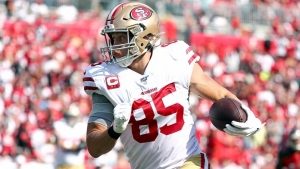 #26 Overall, George Kittle, San Francisco 49ers, #2 Tight End2025 Pre-Season Rank #34, 2024 Pre-Season Rank #42, 2023 Pre-Season Rank #59, 2022 Pre-Season Rank #74, 2021 Pre-Season Rank #86, 2020 Pre-Season Rank…in Tight Ends
 -
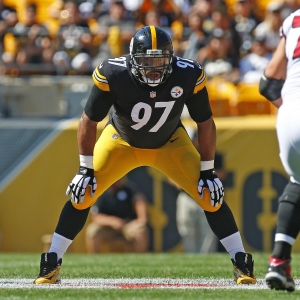 #20 Overall, Cameron Heyward, Pittsburgh Steelers, Defensive End, #9 Defensive Lineman/Linebackers: Pass Rushers2025 Pre-Season Rank #19, 2024 Pre-Season Rank #28, 2023 Pre-Season Rank #33, 2022 Pre-Season Rank #38, 2021 Pre-Season Rank #75, 2020 Pre-Season Rank…
 -
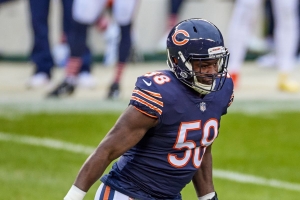 #31 Overall, Roquan Smith, Baltimore Ravens Linebacker, #3 Defensive Lineman/Linebacker: Interior Lineman2025 Pre-Season Rank #39, 2024 Pre-Season Rank #62, 2023 Pre-Season Rank #92, 2022 Pre-Season Rank #133, 2021 Pre-Season Rank #146. Peak Period: 2020-24…
 -
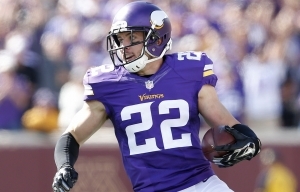 #28 Overall, Harrison Smith, Minnesota Vikings, Strong Safety, #2 Safety2025 Pre-Season Rank #38, 2024 Pre-Season Rank #50, 2023 Pre-Season Rank #72, 2022 Pre-Season Rank #79, 2021 Pre-Season Rank #90, 2020 Pre-Season Rank…in Safeties
Visit the Fictitious Halls of Fame!
You May Also Like...
EDITOR’S CHOICE
 DDT's Pop Flies
When the veterans committee (VC), officially convening as the Contemporary Baseball Era…

 Live Music Head
Project/Objectan interview with André Cholmondeleyby Live Music HeadOriginally published at timessquare.com on…

LATEST RANKINGS

MOST POPULAR RANKINGS

Committee Chairman
Where Can You Play Sports and Be Active in Calgary?

Moving to a new area can be stressful, especially if you're used to keeping an active lifestyle. It can be hard to figure out where to start or how to join a team, especially as an adult.
If you're here and you're ready but not sure where to go: this is how you can play sports and be active in Calgary.
Why Do Sports as an Adult?
Some assume that sports are only for kids, but they'd be wrong. Sports are an awesome way to get your mind and body working together as you problem-solve, work to stay agile, and try to keep your opponents on their toes. Getting to work as a team with other athletes is incredibly rewarding, and by being on a team, you get to share every single success and downfall that happens. Although this isn't always fun, it's better than doing it alone.
Gyms
Although many may think that a gym is a solo experience: you get to connect with countless people every time you go. This sense of camaraderie grows over time as long as you talk to other gym members and get to know people. Look for sign-up sheets for teams or try-outs, and ask around if anyone knows about any local non-professional teams. Although there may not be any yet, if you get enough people interested, you can start one on your own.
Sports Clubs
Sports clubs are a large part of getting to meet other athletes and sports fans! The Calgary Sports and Social Club offers sports leagues that are not only co-ed but are open to try-outs from anyone who wants in! They're not the only sports club in the city, which means you can ask around and figure out which one interests you the most if you can wait until you're accepted by one before you turn any others down. Being polite and friendly will get you far here.
Some require a sign-up fee, and most require set practice hours like any other team, so make sure you have the disposable income and extra time required for this.
Community Sign-Ups
If you buy one of the many amazing Calgary homes for sale: you become part of a community. Some neighborhoods and even streets create teams for hockey or soccer and compete against each other. Ask around in your area, talk to your HOA or your neighbors, and figure out if they know about any local community teams.
If this is especially important to you, ask before you buy the house. This can ensure you have the best chance possible of landing a team.
Some employers Calgary Is Full of Options.
Calgary is one of the best places to live because everyone understands the importance of a work-life balance and gets that it's better to have fun as a team. If you're ready to get back into motion and want to join a team to make this easier, try some of the ideas above! You may find your next awesome friend group!
The Rock and Roll Hall of Fame announce the 2022 Class

We will argue that is days like these that created this website.
Over a decade ago, constant debates of the Rock and Roll Hall of Fame led us to create our own list of who we thought that should be considered. Since we put out our first list in 2009, we can state unequivocally that our criticism of the Rock Hall has shrunk, but it remains the most divisive Hall-based institution and their inconsistent schedule remains an issue, as do the way they arbitrarily induct acts who were not voted in through vague categories.
No matter.
Here are the newest members of the Rock and Roll Hall of Fame:
Usually, the Rock Hall inducts the top five vote getters, but this year they chose the top seven.
Eminem was as close to a lock as you can get, and the rapper enters on his first year on the ballot. Frankly, it felt like he has been a first ballot inductee for over a decade, and while often controversial, his lyrics are often deeply introspective and vulnerable, even when embracing outright misogyny.
Duran Duran entered on their first time on the ballot, though they have been eligible since 2007. Known for their style and image, Duran Duran was an underrated band, who still tour. They ran away with the official fan vote.
Lionel Richie also gets in on his first ballot, and like Duran Duran, he has been eligible for a significant since the 2007 ceremony. Richie’s blend of R&B and soft pop generated a slew of hits in the 1980s, but this has to impact the Commodores, Richie’s original group who had a far more diverse discography than Richie did as a solo.
Dolly Parton enters after asking the voters not to choose her, but come on, of course they voted for the queen! She was first eligible in 1986, but this was her first time on the ballot. We guarantee she will show up and be the classiest person there.
Carly Simon was finally nominated after 25 years of eligibility and the singer/songwriter fills the niche that the Rock Hall loves.
Pat Benatar made the ballot for the second time this year, having been nominated two years ago with her musical collaborator and husband, Neil Giraldo. Nominated on her own this time, the voters responded and one of the most copied looks of the early 80s is now in Cleveland.
Eurythmics (Annie Lennox and Dave Stewart) have been eligible since 2007 (that makes three?), and this was their second nomination. With Lennox, Simon, Benatar and Parton, this marks four woman inducted in four separate acts, the most that have ever been voted in.
The other inductees are:
Judas Priest comes in through the Musical Excellence Award, which is the Hall’s way of inducting people who the Rock Hall wants, but either can’t get voters to select, or worthy inductees (see next entry) that have no viable path to enter. The Rock Hall has a metal problem, so while this is good to see them enter, it is clear that Rock voters are not Metal connoisseurs.
Jimmy Jam and Terry Lewis also were chosen through the Musical Excellence Award, and it is no stretch to say that they are producing geniuses who helped shape popular music over the last forty years.
Harry Belafonte and Elizabeth Cotton will be inducted in the Early Influence category and the Ahmet Ertegun Award went to Attorney Allen Grubman, executive/producer Jimmy Iovine and Sugar Hill Records founder Sylvia Robinson.
Those who were nominated but did not get in:
A Tribe Called Quest, Beck, Devo, Dionne Warwick, Fela Kuti, Kate Bush, MC5, New York Dolls and Rage Against the Machine.
This means it is time for us to get to work, as we will remove those who were inducted, add those eligible for the next vote, and revise those already on based on your votes and comments.
We here at Notinhalloffame.com would like to congratulate the newest members of the Rock and Roll Hall of Fame, and you can believe that will be watching the impending ceremony, scheduled to take place on November 5, at the Microsoft Theatre in Los Angeles.
RIP: Naomi Judd

A day before she was to be inducted with her daughter, Wynonna, to the Country Music Hall of Fame, Naomi Judd passed away. While details remain vague, the official statement was that she died from mental illness, which she has been dealing with for a long time. The Judds were going to do their “Final Tour” on September 30 on a ten-city tour.
First performing as a pair in the early 80s, they broke out quickly, charting their first number one Country Album in 1984, and putting out six albums overall, the first three going number one. They would have 14 number ones, all in the 1980s, and they also won five Grammys.
They disbanded in 1991, following Naomi’s diagnosis with Hepatitis C, and Wynonna went on to have a very successful solo career.
We here at Notinhalloffame.com would like to extend our condolences to the fans, family and friends of Naomi Judd.
Our All-Time Top 50 Baltimore Orioles have been revised to reflect the 2021 Season
Yes, we know that this is taking a while!
As many of you know, we here at Notinhalloffame.com are slowly generating the 50 of each major North American sports team. That being said, we have existing Top 50 lists out and we always consistently look to update them when we can and based on necessity. As such, we are very happy to present our post-2021 revision of our top 50 Baltimore Orioles.
As for all of our top 50 players in baseball we look at the following:
1. Advanced Statistics.
2. Traditional statistics and how they finished in the American League.
3. Playoff accomplishments.
4. Their overall impact on the team and other intangibles not reflected in a stat sheet.
Last year, the Orioles had another abysmal season, and with no active players who are close to making the all-time Top 50, there were no changes, but we can now state that 2021 has been factored in.
As always, we present our top five.
2. Jim Palmer
5. Eddie Murray
You can find the entire list here.
We welcome your input and comments and as always, we thank you for your support.
