

 Not in Hall of Fame News
Yes, we know that this is taking a while! As many of…
 Not in Hall of Fame News
Yes, we know that this is taking a while! As many of…
 Not in Hall of Fame News
2002 SEMI-FINAL RESULTS: Thank you for your participation in the Pro Football…
 Not in Hall of Fame News
Yes, we know that this is taking a while! As many of…
 Not in Hall of Fame News
We are diligently working away at Notinhalloffame on revising our Football lists…
 Not in Hall of Fame News
We are diligently working away at Notinhalloffame on revising our Football lists…
 From the Desk of the Chairman
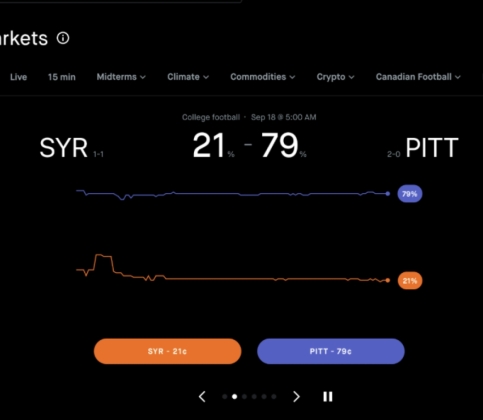
Sports fans thrive on calculating strategy, reading momentum, and maximizing every tactical…
 From the Desk of the Chairman
The 2026 NFL season is two weeks old and the division races…
 From the Desk of the Chairman
Sports communities are often built around things that have nothing to do…
 From the Desk of the Chairman
Every hall of fame eventually faces the same problem. The selection process…
 From the Desk of the Chairman
Pete Rose died in 2024. On May 13, 2025, Commissioner Rob Manfred…
 From the Desk of the Chairman
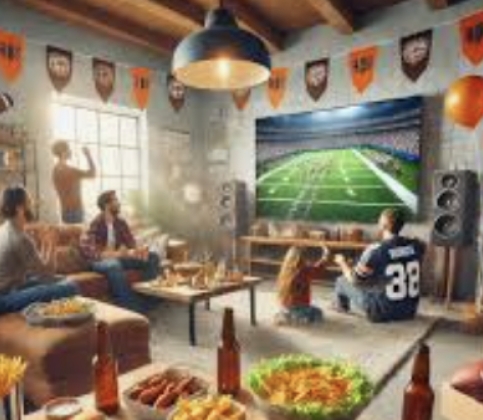
For NFL fans, game day offers much more than three hours of…






100 Active Potential Football Hall of Famers
-
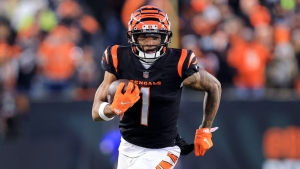 #42 Overall, Ja'Marr Chase, Cincinnati Bengals, #6 Wide Receiver2025 Pre-Season Rank #55, 2024 Pre-Season Rank #111, 2023 Pre-Season Rank #134, 2022 Pre-Season Rank #145. Peak Period: 2021-25* Ja’Marr Chase has been…
 -
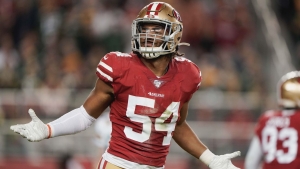 #30 Overall, Fred Warner, San Francisco 49ers Linebacker, #2 Defensive Lineman/Linebacker: Interior Lineman2025 Pre-Season Ranking #22, 2024 Pre-Season Rank #49, 2023 Pre-Season Rank #79, 2022 Pre-Season Rank #118, 2021 Pre-Season Rank #142. Peak Period: 2020-24…
 -
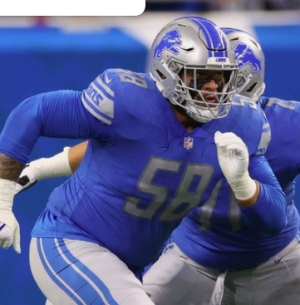 #38 Overall, Penei Sewell, Detroit Lions, Tackle, #4 Offensive Lineman2025 Pre-Season Rank #68, 2024: Pre-Season Rank: #121. Peak Period: 2021-25*Standing at 6'5” and 330 pounds, Penei Sewell can state that going into…
 -
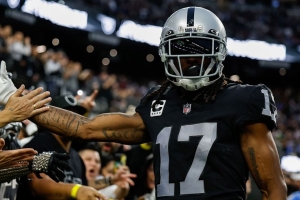 #21 Overall, Davante Adams, Los Angeles Rams, #2 Wide Receiver2025 Pre-Season Rank #23, 2024 Pre-Season Rank #27, 2023 Pre-Season Rank #24, 2022 Pre-Season Rank #43, 2021 Pre-Season Rank #67, 2020 Pre-Season Rank…
Visit the Fictitious Halls of Fame!


You May Also Like...
EDITOR’S CHOICE
 DDT's Pop Flies
When the veterans committee (VC), officially convening as the Contemporary Baseball Era…


 Live Music Head
Project/Objectan interview with André Cholmondeleyby Live Music HeadOriginally published at timessquare.com on…

LATEST RANKINGS



MOST POPULAR RANKINGS











Committee Chairman
31. Larry Centers
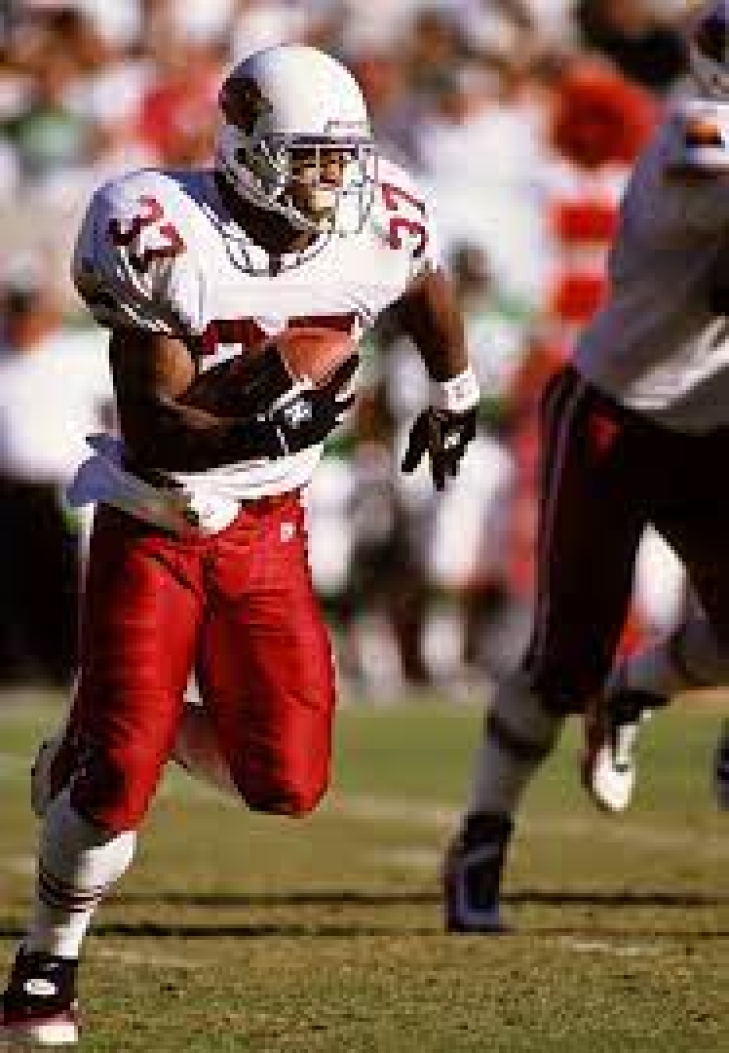
In an era where fullbacks were viewed strictly as lead-blocking battering rams, a fifth-round pick out of Stephen F. Austin fundamentally changed how NFL offenses weaponized the backfield. Selected 115th overall in the 1990 NFL Draft, Larry Centers spent his first two seasons operating in near obscurity. Once the coaching staff recognized his elite hands and open-field route running, Centers transformed into a pass-catching machine who completely revolutionized his position.
Centers lacked the traditional, bone-crushing girth of classic 1990s fullbacks, but he possessed the movement skills and soft hands of a slot receiver. Operating out of the backfield as a primary check-down option, he excelled at finding soft spots in zone coverage, executing quick flat routes, and turning short dump-offs into first downs. His uncanny durability made him a security blanket for every quarterback who suited up for the franchise during his tenure.
After expanding his role with 50 catches in 1992 and 66 in 1993, Centers began posting receiving numbers that rivaled elite wideouts. With Buddy Ryan's arrival in 1994, his usage exploded. His historic peak arrived during the 1995 season, when he hauled in an unbelievable 101 receptions for 962 yards, becoming the first running back or fullback in NFL history to break the 100-catch threshold in a single campaign while earning his first Pro Bowl selection.
Centers followed up that landmark performance with another masterclass during the 1996 campaign, catching 99 passes for 766 yards and a career-high 7 receiving touchdowns while adding 425 yards on the ground to earn First-Team All-Pro honors and his second Pro Bowl invitation. He remained an essential offensive pillar for two more seasons, helping Arizona capture a famous playoff victory in 1998, before salary cap constraints led to his release prior to the 1999 season.
Centers continued his career with successful stops in Washington, Buffalo, and New England—winning Super Bowl XXXVIII with the Patriots in 2003 and retired with 827 career receptions, the most ever by a back at the time of his retirement. In nine seasons with the Cardinals, he accumulated 535 receptions, 4,617 receiving yards, 1,739 rushing yards, and 29 total touchdowns.
28. Calais Campbell
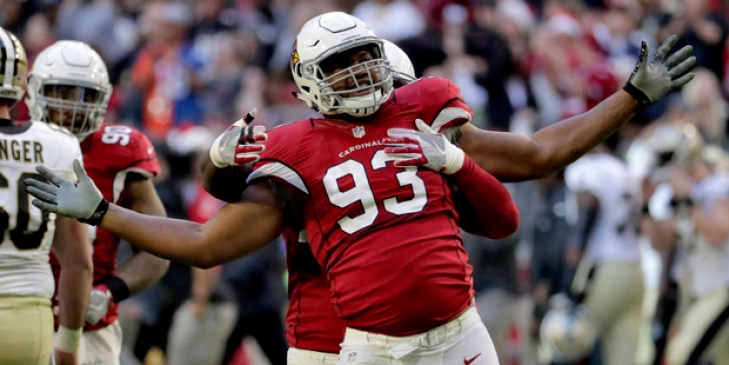
Calais Campbell, standing 6 feet 8 inches and weighing over 300 pounds, entered the league as a second-round draft pick from Miami in 2008. His career post-Arizona earned him major national awards such as the Walter Payton NFL Man of the Year and an All-Decade team selection, but it was his nine-year tenure in Arizona that laid the groundwork for his Hall of Fame-worthy career.
Campbell, with an impressive 85-inch wingspan, combined exceptional size, leverage, and lateral agility for a five-technique defensive end. He posed a formidable challenge for opponents: impossible for single blockers to move in the running game, yet quick and powerful enough to collapse interior pockets or swat passes at the line of scrimmage.
In 2008, as a rookie, Campbell played a crucial role in Arizona's exciting journey to Super Bowl XLIII. He became the full-time left defensive end in 2009, and his performance gradually shifted from a physical interior disruptor to one of the most versatile and complete defensive linemen in the league. His national recognition came in 2014 when he recorded 7.0 sacks and 15 tackles for loss, earning his first Pro Bowl and Second-Team All-Pro honors. He repeated this success in 2015 with a second Pro Bowl appearance, leading the front seven for a division-winning team with 13 wins.
His early years in Arizona peaked during the 2016 campaign, when Campbell recorded 8.0 sacks, 12 tackles for loss, two forced fumbles, and an interception, earning his second Second-Team All-Pro honor. During his first nine seasons in the desert, he accumulated 56.5 sacks and 107 tackles for loss, acting as the defensive leader throughout the franchise's most stable period of success in recent times.
In 2017, Campbell joined Jacksonville, marking a peak in his statistics. He achieved a personal-best 14.5 sacks in his debut season there, received First-Team All-Pro recognition, and was honored as the 2019 Walter Payton NFL Man of the Year for his exceptional charitable efforts. He continued to be productive with Baltimore (2020–2022), Atlanta (2023), and Miami (2024), where he surpassed 100 career sacks.
In a storybook reunion, Campbell returned to the desert for the 2025 season, re-joining the Cardinals to provide veteran leadership and interior push for a young defense. Starting all 17 games, the 39-year-old defensive lineman defied Father Time once again by racking up 6.5 sacks and 26 solo tackles. Following that single-year homecoming, Campbell departed once more in 2026 to rejoin Baltimore for another championship push.
Across his ten total seasons wearing a Cardinals jersey, Campbell accumulated 63.0 sacks, 536 combined tackles, and 119 tackles for loss.
25. Chandler Jones

When New England traded Chandler Jones in March 2016 after his Pro Bowl and Super Bowl victory, Arizona gained a pass rusher near his peak. The Syracuse alum joined the desert team and quickly made the edge his domain, transforming from a solid defender into one of the most disruptive, high-strip-sack players in NFL history.
Jones, standing 6-foot-5 and weighing 265 pounds with an 84-inch wingspan, used his physical advantage to outmatch most edge rushers of his era. His key move—a swift cross-chop combined with a long-arm extension—enabled him to dominate boundary tackles and gain leverage while maintaining speed. What set him apart was his exceptional ball awareness during his rush; instead of just sacking the quarterback, he often targeted the passer's arm, transforming fast rushes into immediate turnovers.
His first season in 2016 in Arizona saw him immediately record 11.0 sacks and 15 tackles for loss. However, his 2017 season set a new standard for individual excellence in franchise history. Transitioning smoothly to outside linebacker, Jones led the entire NFL in both sacks (17.0) and tackles for loss (28). His single-season franchise record for sacks earned him First-Team All-Pro honors, a Pro Bowl invitation, and a third-place finish in NFL Defensive Player of the Year voting.
Even after the franchise switched to a 4-3 defense in 2018, requiring Jones to move to defensive end, he continued to perform at a high level, recording 13.0 sacks. In 2019, he surpassed himself with an outstanding display of edge rush skills. Jones broke his own single-season team record with 19.0 sacks and led the league with 8 forced fumbles, finishing as the runner-up for NFL Defensive Player of the Year and earning his second First-Team All-Pro selection as a Cardinal. His 2019 season included two games with four sacks each, establishing him as a key player during an era in which he forced 23 fumbles in a Cardinals uniform.
After suffering a torn bicep that largely sidelined his 2020 season, Jones made a powerful comeback in 2021. He made a major impact by tying the franchise single-game record with 5.0 sacks in the season opener against Tennessee. He ended the season with 10.5 sacks and earned his fourth career Pro Bowl selection. Before moving to Las Vegas in 2022, Jones established himself as Arizona's top modern-era pass rusher. In just 84 games with the team, he accumulated 71.5 sacks, 81 tackles for loss, 131 quarterback hits, and 23 forced fumbles.
30. Jim Bakken
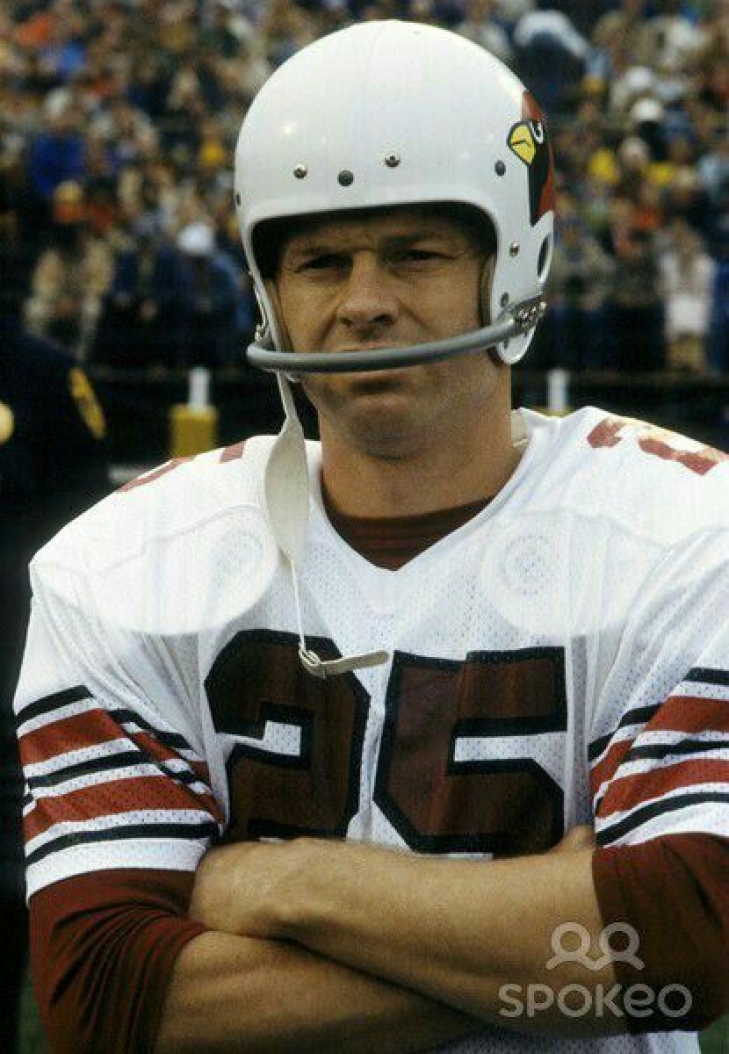
An undrafted free agent pickup after being released by the Los Angeles Rams, Jim Bakken signed with St. Louis in 1962 and proceeded to anchor the franchise's kicking game for 17 seasons. His arrival coincided with a rapid evolution in special teams tactics, turning a former Wisconsin defensive back into one of the sport's pioneering full-time placekicking specialists.
Operating with a traditional, straight-on kicking style, Bakken was renowned for his mental composure, trajectory control, and execution in heavy crosswinds. Beyond his scoring, his endurance was exceptional: between 1963 and 1978, he appeared in 234 consecutive regular-season games for the Cardinals, establishing an ironclad attendance record at the position.
Bakken's early peak included an iconic performance on September 24, 1967, against Pittsburgh. Playing through gusting winds at Pitt Stadium, Bakken converted 7 field goals in a single game, setting an NFL record that stood untouched for four decades. That historic afternoon propelled him to the 1967 NFL scoring title with 117 points while earning his second career Pro Bowl invitation.
He sustained an elite competitive level straight into the mid-1970s as the high-scoring "Air Coryell" offenses provided constant field-position scoring opportunities. Bakken turned in back-to-back dominant years in 1975 and 1976, earning consensus First-Team All-Pro honors and Pro Bowl nods in both campaigns. His consistency across two distinct decades earned him selections to both the NFL 1960s All-Decade Team and the NFL 1970s All-Decade Team.
By the time he hung up his cleats following the 1978 season, Bakken had accumulated 1,380 total points, converting 282 field goals and 534 extra points. That total ranked second in NFL history at the time of his retirement and remains an untouched Cardinals franchise scoring record.
