

The Pro Football Hall of Fame Revisited Project: 1999 Final VOTE
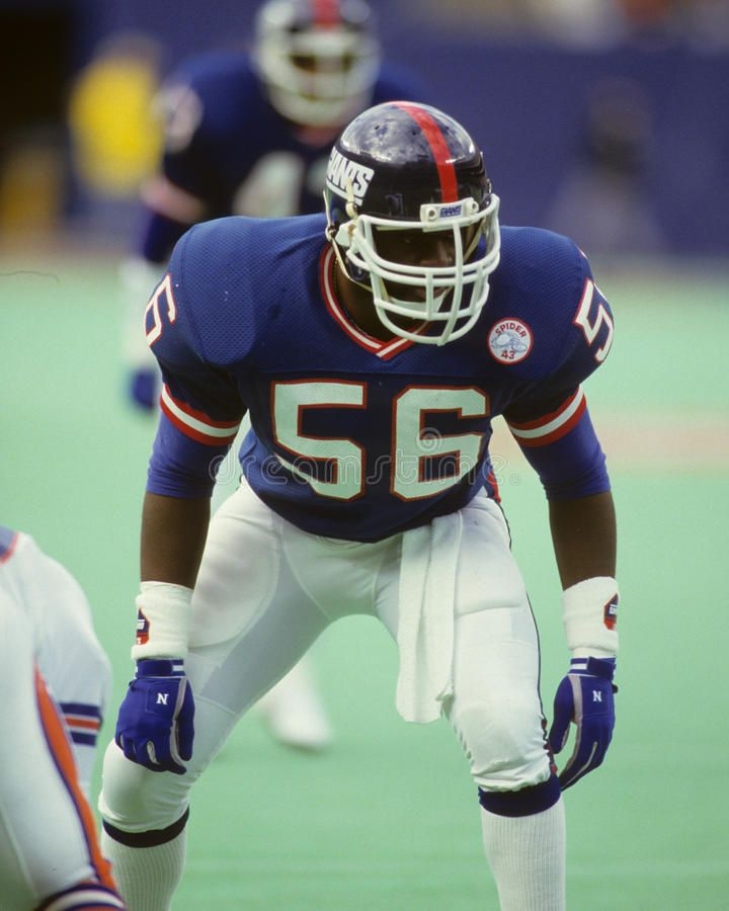
1999 Pro Football Hall of Fame Revisited Project Class.
Here we are! Again!!
If you have been following our Pro Football Hall of Fame Revisited Project, you know we have asked the question: What if the PFHOF had begun in January 1946?
After soliciting and obtaining a passionate group of football fans and historians, we sent out a ballot for a Preliminary Vote, in which each voter selected 25 names as their semi-finalists and five names for the Senior Pool.
We then asked the group to vote for their 15 Finalists in the Modern Era and 3 in the Senior Category. The final stage was to vote for their five Modern Era inductee and one Senior inductee.
This is the result of the 54th official class.
Below are the final results of this project based on 30 votes.
Remember that we have reverted back to the top five candidates entering the Hall in the Modern Era
This is for the “Modern Era”
*Bold indicates they have been elected to the Pro Football Hall of Fame Revisited Class of 1999:
|
Player |
Year of Eligibility |
Vote Total |
|
Lawrence Taylor LB |
1 |
29 |
|
Eric Dickerson RB |
1 |
21 |
|
Howie Long DE-NT |
1 |
17 |
|
Mike Munchak T |
1 |
15 |
|
Louis Wright DB |
8 |
12 |
|
L.C. Greenwood DE |
13 |
8 |
|
Ken Anderson QB |
8 |
6 |
|
Lester Hayes DB |
8 |
6 |
|
Billy “White Shoes” Johnson |
6 |
6 |
|
James Lofton WR |
1 |
6 |
|
Andre Tippett LB |
1 |
6 |
|
Cliff Harris DB |
15 |
5 |
|
Bob Griese QB |
14 |
4 |
|
Ken Stabler QB |
10 |
3 |
|
Drew Pearson WR |
11 |
2 |
|
Joe Klecko DE-NT |
6 |
2 |
This is for the “Senior Era”,
*Bold indicates they have been elected to the Pro Football Hall of Fame Revisited Class of 1999.
|
Dick Schafrath T-F-DE |
3 |
15 |
|
Alan Ameche FB |
14 |
5 |
|
Arch Ward CONTRIBUTOR |
10 |
5 |
|
Charlie Conerly QB |
13 |
2 |
|
None of the Above |
N/A |
3 |
This is for the “Coaches/Contributors”,
*Bold indicates they have been elected to the Pro Football Hall of Fame Revisited Class of 1999.
|
Bill Nunn (Scout) |
6 |
15 |
|
Ron Wolf: (Exec) |
1 |
5 |
|
Eddie Kotal (Scout) |
4 |
4 |
|
None of the Above |
N/A |
6 |
About the 1999 Inductees:
Lawrence Taylor, LB, NYG 1981-93: Inducted in the Pro Football Hall of Fame Revisited Project in 1999 on his 1st Ballot. Inducted into the actual Pro Football Hall of Fame in 1999.
There are a lot of great players who competed in the National Football League, though only a select few can be called legends. Only a few of those legends can be called game-changers. Let's meet Lawrence Taylor, one of the few who fits this description
Taylor played his entire career with the New York Giants, and his pass-rushing from the outside changed how defenses were built and how offenses had to react. He was a pioneer in chopping the ball from opponents' hands, and he became not just the face of the Giants, but defensive football. That is an icon!
L.T. was the second overall pick in 1981, and as a rookie, he won not only Defensive Rookie of the Year but also Defensive Player of the Year. This season began what was the most dominant six-year run by any Linebacker. From 1981 to 1986, Taylor was a perennial First Team All-Pro, a Pro Bowler, and never had an Approximate Value below 16. That last fact was especially incredible, considering he played only nine games in 1982, the year he won his second DPOY.
The climax of his career was 1986, when he led the NFL in Sacks with 20.5, won his third DPOY, and was also named the AP MVP, the PFWA MVP, and the Bert Bell Award. Taylor took his team to the Super Bowl, defeating the Denver Broncos. This sounds like a pretty good season, doesn’t it?
Taylor had two more First Team All-Pros after that and a second Super Bowl. Age and mileage caught up with him, and his last Pro Bowl came in 1990, but he played three more seasons, retiring in 1993. Taylor recorded 141 Sacks (132.5 official, since 1981 it wasn’t a stat yet) over his career, including a seven-year streak of double-digit numbers from 1984 to 1990.
As phenomenal as Taylor was a player, it can be argued that his drug use during his playing days hampered him from being even better. Can you imagine Taylor being even more dominant?
Eric Dickerson, RB, RAM 1983-87, IND 1987-91, RAI 1992 & ATL 1993: Inducted in the Pro Football Hall of Fame Revisited Project in 1999 on his 1st Ballot. Inducted into the actual Pro Football Hall of Fame in 1999.
Eric Dickerson made a spectacular debut in the NFL in 1983 with the Los Angeles Rams, quickly becoming one of the most formidable running backs in football history. As a rookie from SMU, his upright running style, distinctive goggles, and remarkable blend of size and speed captivated the league. He rushed for an incredible 1,808 yards and scored 18 touchdowns in his first season, earning the NFL Rookie of the Year award effortlessly. His immediate influence turned the Rams into playoff contenders instantly and set new standards for what a modern feature back could achieve.
The peak of Dickerson’s legendary career arrived just one year later, during a historic 1984 campaign that etched his name permanently into the NFL record books. Exhibiting a rare blend of fluid stride and explosive power, he terrorized opposing defenses for 16 consecutive weeks. On December 9, 1984, against the Houston Oilers, he broke O.J. Simpson's single-season rushing record. Dickerson finished the season with 2,105 rushing yards, a monumental milestone that has withstood decades of challengers and remains the gold standard for single-season rushing performances.
After a contract dispute, Dickerson was traded to the Indianapolis Colts in 1987 as part of a major three-team deal. The move initially didn't affect his performance, as he quickly energized the Colts and led them to their first playoff appearance since relocating to Indianapolis. In 1988, he became the first Colt since 1978 to win the NFL rushing title, with 1,659 yards. During his time with the Colts, he also became the fastest player in NFL history to reach 10,000 career rushing yards, accomplishing the milestone in just 91 games.
As injuries and heavy workloads took their toll, Dickerson spent his final two professional seasons with the Los Angeles Raiders and the Atlanta Falcons before retiring in 1993. Over his eleven-year career, he amassed 13,259 rushing yards, six Pro Bowl selections, and five First-Team All-Pro honors.
Howie Long, DE-NT, RAI 1981-93. Inducted in the Pro Football Hall of Fame Revisited Project in 1999 on his 1st Ballot. Inducted into the actual Pro Football Hall of Fame in 2000.
Howie Long anchored the Los Angeles Raiders' defensive line for 13 spectacular seasons, becoming one of the most feared and technically proficient defensive linemen of his era. Drafted in the second round of the 1981 NFL Draft out of Villanova, Long possessed a rare combination of explosive strength, relentless motor, and prototypical size. His versatility allowed him to dominate whether lining up as a defensive end in a 3-4 scheme or kicking inside to tackle on passing downs. His signature "rip" move and violent hands quickly made him the focal point of a ferocious Raiders defense that embodied the franchise's tough, renegade identity.
The apex of Long’s team success came in 1983, culminating in a dominant performance in Super Bowl XVIII. Throughout that championship campaign, Long was an unstoppable force, registering a career-high 13.0 sacks and earning the first of his eight Pro Bowl selections. In the Super Bowl against the heavily favored Washington Redskins, Long and the Raiders' defensive front relentlessly harassed quarterback Joe Theismann, holding Washington's high-powered offense to just 9 points in a 38-9 blowout. This definitive victory solidified Long's status as a premier superstar on football's grandest stage.
As the 1980s progressed, Long transitioned from a rising star into the veteran heartbeat of the Raiders organization. His individual brilliance earned consistent recognition from peers and talent evaluators, earning him First-Team All-Pro honors in three consecutive seasons from 1983 to 1985. He was also named the NFL Alumni Defensive Lineman of the Year twice. Long's ability to destroy opposing run games while maintaining a constant rush on the quarterback helped keep the Raiders in the postseason, bridging the gap through the franchise's transition into the early 1990s.
Injuries eventually began to slow his ironman pace, leading Long to retire after the 1993 season with 84.0 career sacks and a spot on the NFL 1980s All-Decade Team.
Mike Munchak, G, HOU, 1982-93. Inducted in the Pro Football Hall of Fame Revisited Project in 1999 on his 1st Ballot. Inducted into the actual Pro Football Hall of Fame in 2001.
Mike Munchak spent 12 seasons establishing himself as one of the most technically excellent and durable guards in NFL history. Drafted eighth overall in 1981 from Penn State, he combined exceptional lower-body strength, quick footwork, and relentless competitiveness. As a rookie, he quickly secured a starting role, providing stability and top-tier pass protection for an evolving Houston offense. His presence transformed the left side of the Oilers' line into an unbreakable barrier, raising the standard for interior blockers across the league.
In the late 1980s and early 1990s, Munchak established himself as the top offensive guard of his era, serving as a key player in Houston's renowned "Run and Shoot" offense. His exceptional agility enabled him to pull on sweep plays and make effective downfield blocks, contributing to quarterback Warren Moon's record-breaking passing game. His excellence was acknowledged through nine Pro Bowl selections and four First-Team All-Pro titles. Together with teammate Bruce Matthews, they formed perhaps the most formidable offensive guard-tackle partnership in history, guiding the Oilers to seven straight playoff berths.
Munchak’s remarkable consistency was characterized by his exceptional durability, overcoming chronic knee issues to participate in 159 regular-season games and start 156 of them. He was a master tactician who infrequently committed penalties or allowed sacks, employing leverage and precise hand placement to neutralize the league's most formidable interior pass rushers. His vigorous leadership and understated professionalism rendered him the unequivocal captain and the vital force of the locker room. Even as injuries increased towards the conclusion of his career, his distinguished performance remained unwavering, enabling him to retire at the zenith of his abilities following the 1993 season.
Louis Wright, CB, DEN 1975-86. Inducted in the Pro Football Hall of Fame Revisited Project in 1999 on his 8th Ballot. Was never inducted into the actual Pro Football Hall of Fame.
Wright anchored Denver’s defensive backfield for 12 years, establishing himself as one of the NFL's pioneering and most formidable "shutdown cornerbacks.’ Drafted 17th overall in the first round of the 1975 NFL Draft from San Jose State, he brought rare size, elite track-star speed, and exceptional toughness against the run. He quickly made a significant impact, earning All-Rookie honors, and rapidly stabilized the secondary to become the cornerstone of Denver’s renowned Orange Crush defense.
His national breakthrough came in 1977, when Wright contributed significantly to the Denver Broncos' 12–2 record and their first Super Bowl XII appearance. Throughout the late 1970s, he became a distinguished defensive player, earning three consecutive Pro Bowl selections from 1977 to 1979 and back-to-back First-Team All-Pro honors. Defensive coordinators from opposing teams routinely devised entire game strategies to circumvent passing to his side of the field, illustrating the formidable coverage capabilities that secured him a place on the NFL’s 1970s All-Decade Team.
Throughout the 1980s, Wright consistently stood out as a top playmaker and turned defensive stops into quick momentum swings. In 1983, he posted a personal best with six interceptions, and in 1984, he allowed just one touchdown pass all season. Besides his coverage skills, Wright made significant contributions on special teams and was a formidable threat when creating turnovers. His career highlights include a notable 27-yard fumble return for a touchdown during a snowstorm against Green Bay in 1984, as well as an exciting 60-yard return of a blocked field goal in overtime against San Diego in 1985.
Wright retired after the 1986 season, having guided the Broncos back to the big stage in Super Bowl XXI. Over his 12-year ironman career in Denver, he started 163 of 166 games, amassing 26 career interceptions and 11 fumble recoveries.
Dick Schafrath, T-DE, CLE 1959-71. Inducted in the Pro Football Hall of Fame Revisited Project in 1999 on his 1st Senior Ballot. Was never inducted into the actual Pro Football Hall of Fame.
Drafted in the second round (23rd overall) of the 1959 NFL Draft from Ohio State—where he served as captain of a national championship team—Dick Schafrath entered the professional arena in Cleveland as a formidable force. Throughout a 13-year career exclusively with the Browns, "The Mule" anchored left tackle with exceptional leverage and mobility, helping fuel one of football's most dominant rushing eras.
After transitioning to left tackle from defensive end in his second season, he quickly became the primary starter in 1960 and established himself as one of the league's premier offensive linemen. Throughout the 1960s, he earned four First-Team All-Pro honors (1963–1965, 1969) and was selected for seven Pro Bowls. In 1963, he was honored by his teammates with the title of Cleveland Browns' Most Valuable Player—a distinguished accolade rarely awarded to an offensive lineman.
His presence on the left side was crucial to Cleveland's historic rushing game; during his tenure, Browns running backs won eight NFL rushing titles, and Schafrath protected three future Hall of Famers: Jim Brown, Bobby Mitchell, and Leroy Kelly. His career peaked in 1964, when he anchored the offensive line in Cleveland's 27–0 victory over the Baltimore Colts to claim the 1964 NFL Championship.
Schafrath remained a dependable starter throughout the 1971 season, retiring with the team that drafted him after playing in 176 regular-season games for Cleveland.
Bill Nunn, Scout, PIT 1970-2014. Inducted in the Pro Football Hall of Fame Revisited Project in 1999 on his 6th Coach/Contributor Ballot. Inducted into the actual Pro Football Hall of Fame in 2021.
Bill Nunn revolutionized NFL personnel evaluation by opening a vital pipeline to Historically Black Colleges and Universities (HBCUs), transforming the Pittsburgh Steelers into a powerhouse. Initially a sports writer and managing editor for The Pittsburgh Courier, he developed deep relationships across southern Black colleges while compiling his annual Black College All-America team starting in 1950. Recognizing his unmatched knowledge of overlooked talent, Steelers owner Dan Rooney hired Nunn in 1968, a move that permanently reshaped professional football scouting.
His uncanny eye for talent became the driving force behind the Steelers' 1970s dynasty, which captured four Super Bowl titles in a six-year span. Nunn discovered legendary franchise cornerstones from HBCUs that other teams largely ignored, including future Hall of Fame defensive back Mel Blount and gems like safety Donnie Shell and defensive lineman L.C. Greenwood, establishing a championship core built on players other teams missed.
Nunn remained a fixture in the Steelers' front office for nearly five decades, serving as a trusted scout, advisor, and mentor until his passing in 2014. His meticulous evaluation methods became a blueprint for modern NFL personnel departments and helped bridge a significant racial gap in sports talent acquisition.
Our All-Time Top 50 New York Giants Have Been Revised (Sort of) to reflect the 2023 Season
Yes, we know that this is taking a while!
As many of you know, we at Notinhalloffame.com are slowly generating the top 50 of each major North American sports team. That being said, we have existing Top 50 lists and consistently look to update them when necessary and based on necessity. As such, we are delighted to present our post-2023 revision of our top 50 New York Giants.
As for all of our top 50 players in football, we look at the following:
1. Advanced Statistics.
2. Traditional statistics and how they finished in the National Football League.
3. Playoff accomplishments.
4. Their overall impact on the team and other intangibles that are not reflected in a stat sheet.
Last year, the Giants had another losing season and failed to make the playoffs. There were no new entrants or elevations, but two players came close to making the Top 50.
As always, we present our top five, which (obviously) saw no changes:
1. Lawrence Taylor
2. Emlen Tunnell
3. Rosey Brown
4. Mel Hein
5. Michael Strahan
You can find the entire list here.
We thank you for your continued support of our lists on Notinhalloffame.com.
Greatest NFL Players of All Time
When it comes to identifying the greatest NFL players of all time, the task is both exhilarating and challenging. The National Football League (NFL), rich with a century’s worth of history, has seen countless exceptional athletes who have pushed the boundaries of what’s possible on the gridiron. From legendary quarterbacks to unstoppable running backs and defensive titans, these players have left indelible marks on the sport and continue to inspire future generations.
Quarterbacks: The Commanders of the Field
Tom Brady is arguably the most iconic quarterback in NFL history. With seven Super Bowl rings to his name, Brady has set records too numerous to count. His leadership, poise under pressure, and longevity—plus the memorable 28-3 Super Bowl comeback against the Atlanta Falcons—cement his status as one of the greatest.
Joe Montana, another legendary name, earned the moniker "Joe Cool" for his ability to remain calm and deliver in clutch situations. Winning four Super Bowls with the San Francisco 49ers, Montana's perfect combination of physical skill and mental toughness make him a beacon of excellence in NFL lore.
For fans interested in exploring other realms of excitement beyond the NFL, the world of online sports betting offers a thrilling alternative. Platforms like 1xbet Chinese provide an opportunity to engage with a variety of sports and events, adding another layer of excitement to the sports-watching experience.
Running Backs: Powerhouses on the Move
Jim Brown, often cited as the greatest running back of all time, dominated defenses during his career with the Cleveland Browns. Brown led the league in rushing yards eight times in nine seasons and retired with an average of 5.2 yards per carry, an impressive feat that speaks to his power, agility, and vision on the field.
Barry Sanders, known for his breathtaking agility and balance, provided endless highlight-reel runs during his tenure with the Detroit Lions. Despite playing behind mediocre offensive lines, Sanders amassed over 15,000 rushing yards in just ten seasons. His decision to retire at the peak of his career remains one of the most surprising in NFL history.
Wide Receivers: Masters of the Air
Jerry Rice is often heralded as the greatest wide receiver ever and, by some accounts, the greatest player in NFL history. Holding records for receptions, yards, and touchdowns, among others, Rice’s work ethic and ability to perform in crucial moments—like his three Super Bowl titles—are unmatched.
Randy Moss also brought a unique combination of size, speed, and hands to the equation. "The Freak," as he was affectionately known, revolutionized the deep pass and recorded some of the most outstanding single-season performances, including 23 touchdown receptions in 2007.
Defensive Giants: The Iron Curtain
Lawrence Taylor, an outside linebacker for the New York Giants, redefined defensive play in the NFL. His speed, strength, and relentless pursuit earned him two Super Bowl rings and an MVP award—a rarity for defensive players. Taylor's ability to disrupt offenses was so profound that he often forced coaches to alter their game plans entirely.
Reggie White, affectionately known as "The Minister of Defense," was a dominant force at the defensive end. White finished his career with 198 sacks, a testament to his extraordinary power and technique. His leadership both on and off the field was instrumental in leading the Green Bay Packers to a Super Bowl victory in 1997.
Fun Facts and Curiosities
Did you know that Jerry Rice once caught a football dropped from a 10-story building? The legendary receiver's impeccable hand-eye coordination and reflexes were evident even in unconventional settings.
Meanwhile, Tom Brady was famously drafted 199th overall in the 2000 NFL Draft. This underdog journey from sixth-round pick to seven-time Super Bowl champion underscores the unpredictable and inspiring nature of sports.
Conclusion
Debating the greatest NFL players of all time is a conversation that blends nostalgia, personal bias, and objective analysis. It’s a testament to how rich and varied the sport's history is. Whether you're a fan of the old-school legends or the modern marvels, the NFL's greatest players have provided endless excitement and inspiration. As long as football is played, new stars will rise, and the debate over the greatest will continue, keeping the spirit of the game alive and thriving.
Our All-Time Top 50 New York Giants have been updated to reflect the 2022 Season
Yes, we know that this is taking a while!
As many of you know, we here at Notinhalloffame.com are slowly generating the 50 of each major North American sports team. That being said, we have existing Top 50 lists out and we always consistently look to update them when we can and based on necessity. As such, we are very happy to present our post 2022 revision of our top 50 New York Giants.
As for all of our top 50 players in football we look at the following:
1. Advanced Statistics.
2. Traditional statistics and how they finished in the National Football League.
3. Playoff accomplishments.
4. Their overall impact on the team and other intangibles not reflected in a stat sheet.
Last year, the Giants finally turned the corner to become a competitive NFL team, but they are young and the franchise is old. This resulted in no changes in the Top 50, but we always acknowledge that the past season was taken into account.
As always, we present our top five, which was not affected by the last season:
3. Rosey Brown
4. Mel Hein
You can find the entire list here.
We welcome your input and comments and as always, we thank you for your support.
Our All-Time Top 50 New York Giants are now up
Yes, we know that this is taking a while!
As many of you know, we here at Notinhalloffame.com are slowly generating the 50 of each major North American sports team. We have a new one to unveil today, that of the New York Giants.
In 1925, the New York Giants were one of five teams that joined the National Football League, and of those five, they are the only ones that are still in existence.
The Giants have been in existence for nearly a century and have won eight Championships. The first four as NFL Champions (1927, 1934, 1938 & 1956) and they were a perpetual contender in the early 1960s. In the Super Bowl Era, they won in 1986 (XXI), 1990 (XXV), 2007 (XLII), and 2011 (XLVI).
Eight Championships is impressive regardless of the league and the sport!
As for all of our top 50 players in football we look at the following:
1. Advanced Statistics.
2. Traditional statistics and how they finished in the NFL.
3. Playoff accomplishments.
4. Their overall impact on the team and other intangibles not reflected in a stat sheet.
Remember, this is ONLY based on what a player does on that particular team and not what he accomplished elsewhere and also note that we have placed an increased importance on the first two categories.
This list is updated up until the end of the 2019 Season.
The complete list can be found here,but as always, we announce our top five in this article. They are:
3. Rosey Brown
4. Mel Hein
5. Michael Strahan
We will continue our adjustments on our existing lists and will continue developing our new lists.
Look for our more material coming soon!
Up next, will be the top 50 Los Angeles Chargers.
As always we thank you for your support.
1. Lawrence Taylor
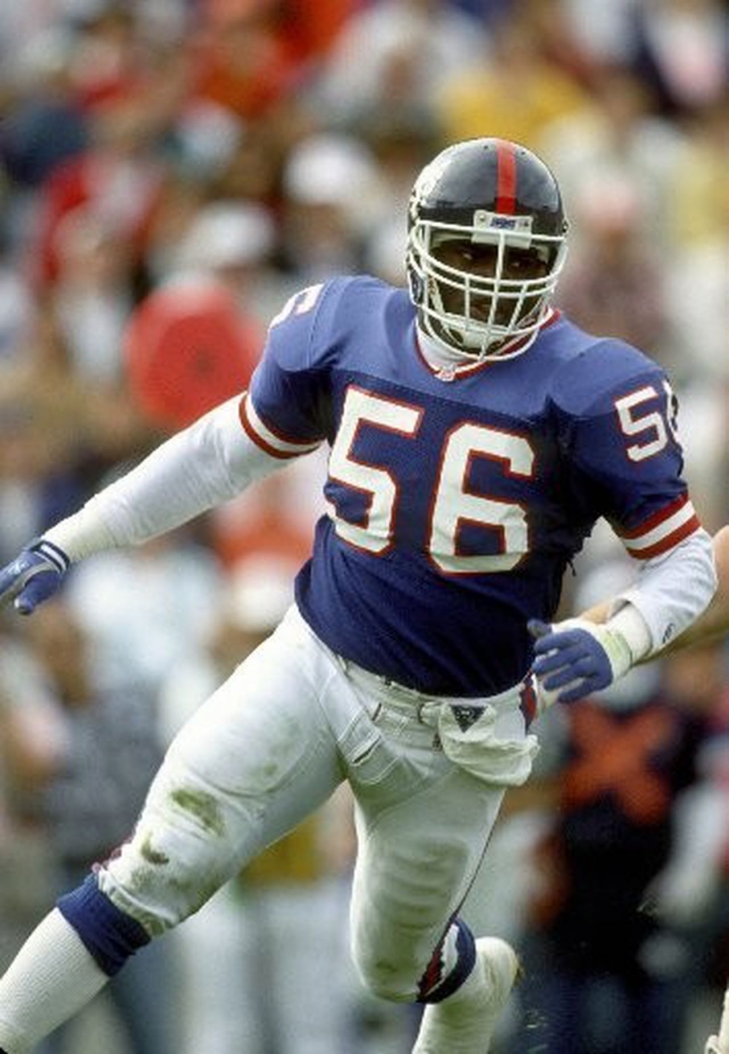
There are a lot of great players who competed in the National Football League, though only a select few can be called legends. Only a few of those legends can be called game-changers. Let's meet Lawrence Taylor, one of the few who fits this description
Awards=HOF? Part Thirty-EIght: The NFL Defensive Player of the Year
We here at Notinhalloffame.com thought it would be fun to take a look at the major awards in North American team sports and see how it translates into Hall of Fame potential.
Needless to say, different awards in different sports yield hall of fame potential. In basketball, the team sport with the least number of players on a roster, the dividend for greatness much higher. In baseball, it is not as much as a great individual season does not have the same impact.
Since we just did the NFL Offensive Player of the Year, the natural for us to look the Defensive Player of the Year Award. Unlike the OPOY, this was created a year earlier in 1971, but it will it generate the same level of Hall of Famers?
Let’s find out!
The following are the past players who have won the AP Defensive Player of the Year in the NFL who are eligible for the Pro Football Hall of Fame and have been enshrined.
Alan Page, Minnesota Vikings, Defensive Tackle(1971)
A great place to start for this award is the “Purple People Eaters”, so this begins with Alan Page. Playing at Defensive Tackle, 1971 was the third of three straight First Team All-Pro Selections and league lead in Approximate Value. As the first AP Defensive Player of the Year, he also became the first to win both the DPOY and the AP MVP Award. Afterwards, Page began another three-year run of First Team All-Pro Selections in 1973. Inducted into the Hall of Fame in 1988.
Joe Greene, Pittsburgh Steelers, Defensive Tackle (1972)
“Mean” Joe Greene was going to his fourth Pro Bowl in 1972 and this year he began his first of three consecutive First Team All-Pros. He had 11 “unofficial” Sacks and this was also the season that the Steelers had truly established themselves as Super Bowl contenders. That doesn’t happen without Greene. Inducted into the Hall of Fame in 1987.
Joe Greene, Pittsburgh Steelers, Defensive Tackle (2) (1974)
Greene becomes the first repeat winner of the Defensive Player of the Year and it was also his third of three consecutive First Team All-Pro Selections. “Mean” Joe and the Steelers dynasty would also win the first of what would be four Super Bowls in the 1970s. Inducted into the Hall of Fame in 1987.
Mel Blount, Pittsburgh Steelers, Cornerback (1975)
A Steeler wins this for the second year in a row, and you can see how the “Steel Curtain” defense was the best in football. This year’s winner was Mel Blount, who at Cornerback had a league leading 11 Interceptions and would be named a First Team All-Pro. He would earn that honor again in 1981. Blount and the Steelers won their second Super Bowl that year. Inducted into the Hall of Fame in 1989.
Jack Lambert, Pittsburgh Steelers, Linebacker (1976)
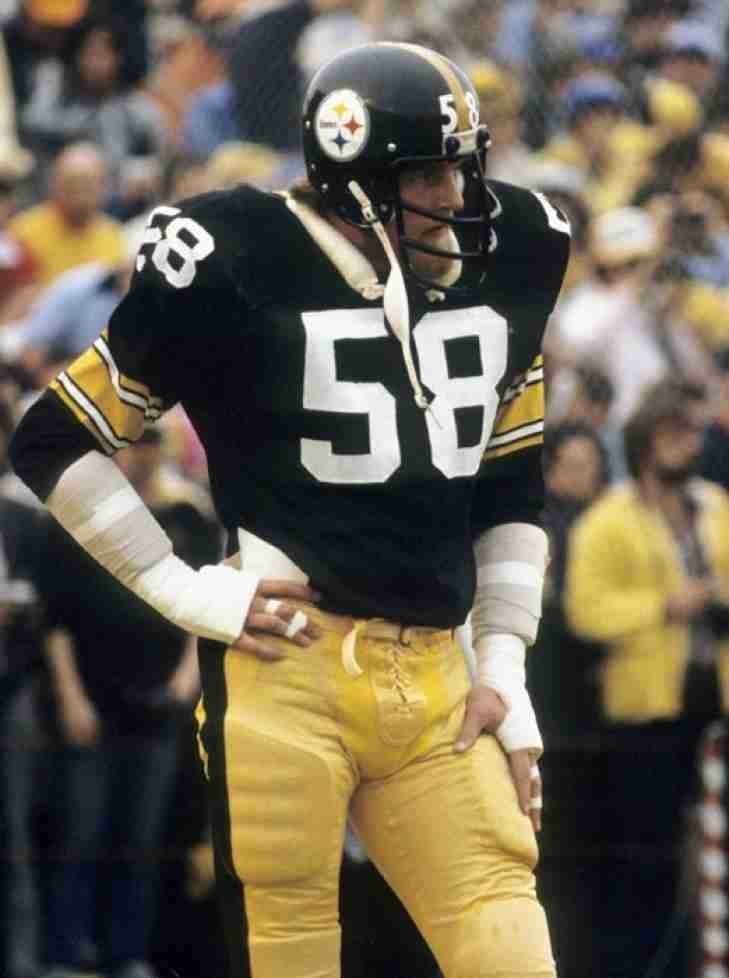
You know that you had one of the greatest defensive corps ever when you win the DPOY in three different seasons with three different players! Oh, and all of them went to the Pro Football Hall of Fame! The third straight Steeler was Jack Lambert, who was a six-time First Team All-Pro and this was his first one. Like Greene and Blount, Lambert would help Pittsburgh win four Super Bowls. Inducted into the Hall of Fame in 1989.
Lee Roy Selmon, Tampa Bay Buccaneers, Defensive End (1979)
Lee Roy Selmon was one of the only things that the Bucs had in their early days. Drafted 1stOverall in 1976, Selmon broke out in 1979 with his DPOY year and would begin a sting of six straight Pro Bowls. Selmon was forced to retire in 1984 due to back issues. Inducted into the Hall of Fame in 1995.
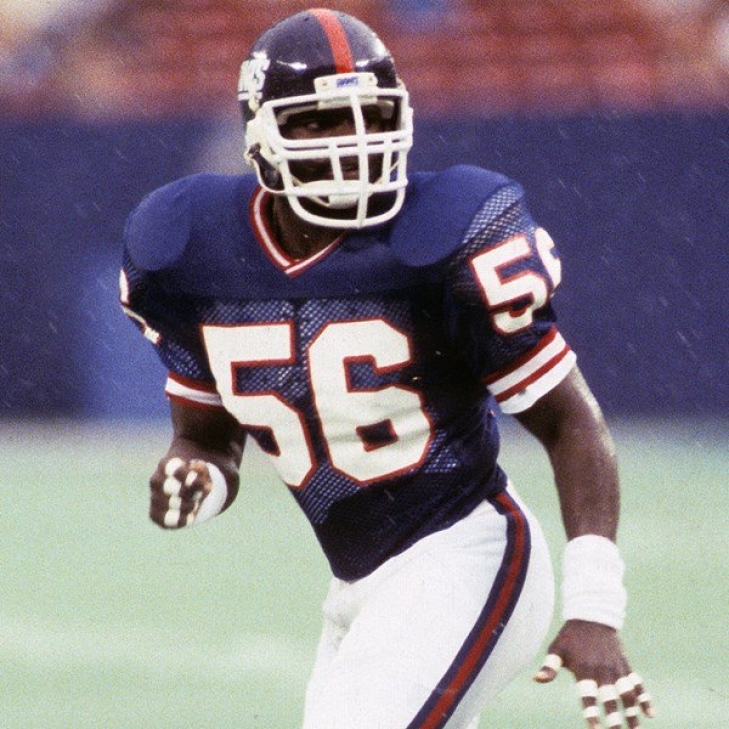
Lawrence Taylor, New York Giants, Linebacker (1981)
Lawrence Taylor changed Linebacking forever and he was by far the most dominating defensive player of the 1980s. L.T. became the first player to win the Defensive Rookie of the Year in the same season as winning the DPOY. He would also begin his streak of 10 straight Pro Bowls. Inducted into the Hall of Fame in 1999.
Lawrence Taylor, New York Giants, Linebacker (2) (1982)
Taylor repeated winning the DPOY, making him the first player to win the award twice in his first two years. The Linebacker was also named a First Team All-Pro for the second of what would be eight times. Inducted into the Hall of Fame in 1999.
Kenny Easley, Seattle Seahawks, Strong Safety (1984)
The career of Kenny Easley spanned only seven seasons and this was right smack dab in the middle of it. Easley was on his second of three straight First Team All-Pros and this was also his third of five Pro Bowls. He would finish first in Interceptions with 10 this year. Inducted into the Hall of Fame in 2017.
Mike Singletary, Chicago Bears, Linebacker (1985)
Mike Singletary was an absolute star on the Bears Defense and this was the year of the “Super Bowl Shuffle”. Singletary was in his third of what would be ten consecutive Pro Bowls and he was also awarded his second of six straight First Team All-Pros. Inducted into the Hall of Fame in 1998.
Lawrence Taylor, New York Giants, Linebacker (3) (1986)
This is arguably the greatest defensive season by any player in the history of the National Football League. Taylor would also win the AP MVP, PFWA MVP and the Bert Bell Award. He would lead the league in Sacks with 20.5 and this was his sixth of eight First Team All-Pro Selections. The Giants would win Super Bowl XXI that year. Taylor would become the first player to win the DPOY three times. Inducted into the Hall of Fame in 1999.
Reggie White, Philadelphia Eagles, Defensive End (1987)
The “Minister of Defense” was on year two of his six-year run as a First Team All-Pro. White was a beast on the pass rush where he would have a career-high of 21.0 Quarterback Sacks, which led the NFL. White’s 21 Sacks were especially impressive considering he did that in 12 Games. Inducted into the Hall of Fame in 2006.
Mike Singletary, Chicago Bears, Linebacker (2)(1988)
Singletary’s run of dominance continues with his fifth of seven First Team All-Pros, and his sixth of ten straight Pro Bowls. He would equal his career-high of 18 in Approximate Value. Inducted into the Hall of Fame in 1998.
Bruce Smith, Buffalo Bills, Defensive End (1990)
This was Smith’s third First Team All-Pro Selection and he was also coming off of his fourth Pro Bowl. Smith secured 19.0 Sacks for the Bills and this was the year that began four consecutive trips to the Super Bowl. Inducted into the Hall of Fame in 2009.
Cortez Kennedy, Seattle Seahawks, Defensive Tackle (1992)
Kennedy’s DPOY win came early in his career and it began a three-year streak of First Team All-Pro Selections. The Defensive Tackle would spend his entire career with the Seattle Seahawks and would go to eight Pro Bowls, this being his second. He would have a career-high 14.0 Sacks this year. Inducted into the Hall of Fame in 2012.
Rod Woodson, Pittsburgh Steelers, Cornerback (1993)
Woodson was on year five of a six-year stretch of consecutive Pro Bowls and he would go to 11 in total. The Cornerback was also chosen for his fourth of what turned out to be six First Team All Pros. Eight of his 71 Interceptions would happen in 1993. Woodson would later win a Super Bowl with the Baltimore Ravens. Inducted into the Hall of Fame in 2009.
Deion Sanders, San Francisco 49ers, Cornerback(1994)
After five years with the Atlanta Falcons, Deion Sanders signed with the San Francisco 49ers and would play there for only one season, and what a year it was! Sanders secured his third straight First Team All-Pro, fourth consecutive Pro Bowls and would lead the NFL in Interception Return Yards (303). He also helped San Francisco win the Super Bowl. Following this, Sanders won another Super Bowl with Dallas and went to another four Pro Bowls and as chosen for three more First Team All-Pros. Inducted into the Hall of Fame in 2011.
Bruce Smith, Buffalo Bills, Defensive End (2) (1996)
The Bills were no longer the AFC kings, but were still a playoff team, much of which could be attributed to Bruce Smith. The Defensive End would be named to his fourth of five straight First Team All-Pros and this was his eighth of none. He would have 13.5 Sacks and would lead the NFL in Forced Fumbles with five. Smith also went to 10 Pro Bowls over his career. Inducted into the Hall of Fame in 2009.
Reggie White, Green Bay Packers, Defensive End (2) (1998)
Reggie White won his second Defensive of Player of the Year 11 years after he won his first one making this the largest gap for this award. White was a great player in between those two wins. White won his Super Bowl with Green Bay two years prior and 1998 was the end of an era as this ended his run of 13 straight Pro Bowls and this was his eighth and final First Team All-Pro. White retired after but returned for one more year with the Carolina Panthers. Inducted into the Hall of Fame in 2006.
Warren Sapp, Tampa Bay Buccaneers, Defensive Tackle (1999)
1999 would usher in a four-year run of First Team All-Pros and this was year three of seven consecutive Pro Bowls. He would record 12.5 Quarterback Sacks this year. Sapp would later anchor the Bucs to a win at Super Bowl XXXVII. Inducted into the Hall of Fame in 2013.
Ray Lewis, Baltimore Ravens, Defensive Tackle (2000)
This was an incredible year for Ray Lewis who would lead the NFL in Approximate Value (23) and led the potent Ravens defense to their Super Bowl win. Lewis was untouchable this year. Inducted into the Hall of Fame in 2018.
Michael Strahan, New York Giants, Defensive End (2001)
Michael Strahan would set the single season Sack record of 22.5 and he also led the NFL in Forced Fumbles (6). This was his third of four First Team All-Pros for Strahan who would play his entire career with the Giants. He would later win the Super Bowl in the 2007 season. Inducted into the Hall of Fame in 2014.
Derrick Brooks, Tampa Bay Buccaneers, Linebacker(2002)
Derrick Brooks went to 11 Pro Bowls and this year was his sixth. In terms of First Team All-Pro Selections, this was number three of five. The powerful Linebacker led the Bucs to a Super Bowl this year. Inducted into the Hall of Fame in 2014.
Ray Lewis, Baltimore Ravens, Defensive Tackle (2) (2003)
This was the second and last DPOY win for Ray Lewis but he had a lot left to accomplish in a career spent exclusively with Baltimore. 2003 would see Lewis go to his fourth of seven First Team All-Pros and it was also his sixth of 13 Pro Bowls. He would win another Super Bowl with the Ravens in his final year in 2012. Inducted into the Hall of Fame in 2018.
Ed Reed, Baltimore Ravens, Free Safety (2004)
For the second straight year, the Baltimore Ravens had a Defensive Player of the Year winner, and following Ray Lewis we have Ed Reed. Reed would lead the NFL in Interceptions three times, this being the first one and he would also finish first in Interception Return Yards. This was Reed’s first of what would be five First Team All-Pros and he would also go to nine Pro Bowls over his career. Inducted into the Hall of Fame in 2019.
Brian Urlacher, Chicago Bears, Linebacker (2005)
Brian Urlacher was selected for four First Team All-Pros with 2005 being his third. The Linebacker had 6.0 Sacks and 121 Tackles and was a Pro Bowler for the fifth time. He would be chosen for three more after in a career that remained in Chicago. Inducted into the Hall of Fame in 2018.
Jason Taylor, Miami Dolphins, Defensive End (2006)
Jason Taylor went to three First Team All-Pros and this was his third year. He would also be a six-time Pro Bowl Selection and would have 139.5 Sacks in his career. He would have 13.5 of them this year. Inducted into the Hall of Fame in 2017.
The following are the players who have won the AP Defensive Player of the Year in the NFL who are eligible for the Pro Football Hall of Fame and have not been selected:
Dick Anderson, Miami Dolphins, Free Safety (1973)
This was the third time that Anderson would have a season of 8 Interceptions, but the first time that he led the NFL in that category. The Free Safety and member of Miami’s “No Name Defense” has won their second straight Super Bowl this year, and this was also his second straight First Team All-Pro Selection. Unrankedon Notinhalloffame.com.
Harvey Martin, Dallas Cowboys, Defensive End (1977)
Harvey Martin went to four straight Pro Bowls, and 1977 was the best of that stretch (1976-79). The Defensive End would earn First Team All-Pro accolades. That year was magical for Martin as he would help Dallas win the Super Bowl and was the Co-MVP with Randy White. Unrankedon Notinhalloffame.com.
Randy Gradishar, Denver Broncos, Linebacker (1978)
Randy Gradishar was the leader of the “Orange Crush” Defense of the Broncos and he was on his second straight First Team All-Pro Selection. This would be the third of seven Pro Bowl Selections for Gradishar. Ranked #4 on Notinhalloffame.com.
Lester Hayes, Oakland Raiders, Cornerback (1980)
Hayes was in his fourth year with the Raiders, and this was his first of five straight Pro Bowls. Hates, who was also a First Team All-Pro also led the league in Interceptions (13) and Interception Return Yards (273). The Raiders would win the Super Bowl that year, and three years later he helped them win it all again. Ranked #25 on Notinhalloffame.com.
Doug Betters, Miami Dolphins, Defensive End (1983)
Doug Betters is the unlikeliest Defensive Player of the Year winner ever. This is not because he the career Miami Dolphin didn’t earn it. He did, it is just that he never played nearly as good before or after in 1983. This was the only season where he went to the Pro Bowl, was an All-Pro and had an Approximate Value that was higher than 8. It was 20 by the way in 1983! He recorded 16.0 Sacks that year. Unrankedon Notinhalloffame.com.
Keith Millard, Minnesota Vikings, Defensive Tackle (1989)
Millard would have two great years in his career (the second in 1988) and this was the first of them. Millard would have 18.0 Sacks and would lead the league in Approximate Value the season before with 20. This would be also one of two seasons where he was a First Team All-Pro. Unrankedon Notinhalloffame.com.
Pat Swilling, New Orleans Saints, Linebacker (1991)
Swilling was a First Team All-Pro this year and would be again the year after. This was his third of five Pro Bowls and in 1991 he would lead the NFL in Quarterback Sacks (17.0) and Approximate Value (23). Ranked #77 on Notinhalloffame.com.
Bryce Paup, Buffalo Bills, Linebacker (1995)
Paup was in his first season in Buffalo, and it was easily his best one. The Outside Linebacker led the NFL in Quarterback Sacks with 17.5 and he was a Pro Bowl Selection four times. This was his only First Team All-Pro nod. Unranked on Notinhalloffame.com.
Dana Stubblefield, San Francisco 49ers, Defensive Tackle (1997)
Stubblefield was the Defensive Rookie of the Year in 1993, won the Super Bowl in 1994 and won the DPOY in 1997. This year, he would earn his only First Team All-Pro and land his third Pro Bowl. Stubblefield would play six more seasons in the NFL but never had a season close to this again. Unranked on Notinhalloffame.com.
Bob Sanders, Indianapolis Colts, Strong Safety(2007)
When you look at the career of Bob Sanders, you would see that he had only two full seasons; this was the second of them. The Strong Safety was a First Team All-Pro for the second and last time in his career and he would be a Super Bowl Champion in 2005. Overall, his career was inconsistent, and he will go down as one of the more unlikely winners of the Defensive Player of the Year Award. Unranked on Notinhalloffame.com.
Troy Polamalu, Pittsburgh Steelers, Strong Safety (2010)
By 2010, Polamalu had already helped the Steelers win two Super Bowls. The Strong Safety would go his third First Team All-Pro of what would be four, and this would be also his seventh of eight Pro Bowls. He would have seven Interceptions with 63 Tackles this year. Ranked #8 on Notinhalloffame.com.
Let’s update our tally, shall we?
|
Award in Question |
Percentage of recipients who have entered the HOF |
Percentage of recipients by year who have entered the HOF. |
|
NBA MVP |
100% |
100% |
|
NHL Norris |
90.5% |
96.4% |
|
NBA All Star Game MVP |
89.5% |
91.7% |
|
NHL Conn Smythe |
74.2% |
85.4% |
|
NFL AP Offensive Player of the Year |
73.1% |
79.4% |
|
NHL Lady Byng |
63.8% |
76.0% |
|
NFL Defensive Player of the Year |
60.8% |
71.1% |
|
NFL Super Bowl MVP |
60.6% |
64.9% |
|
NBA Defensive Player of the Year |
58.3% |
56.5% |
|
NBA Rookie of the Year |
56.5% |
56.5% |
|
NFL Pro Bowl MVP |
52.3% |
54.8% |
|
MLB Lou Gehrig Award |
51.9% |
51.9% |
|
MLB Roberto Clemente Award |
47.4% |
47.4% |
|
MLB/NL/AL Cy Young Award |
44.4% |
55.4% |
|
MLB Babe Ruth Award |
37.0% |
39.3% |
|
NHL Frank J. Selke Trophy |
33.3% |
36.7% |
|
MLB Hutch Award |
33.1% |
33.1% |
|
NFL Offensive Rookie of the Year |
28.6% |
28.6% |
|
MLB Edgar Martinez Award |
26.7% |
17.2% |
|
MLB (NL/AL) Silver Slugger (Designated Hitter) |
25.0% |
30.8% |
|
MLB (NL/AL) Silver Slugger (Shortstop) |
23.5% |
52.6% |
|
MLB (NL/AL) Gold Glove |
21.7% |
36.8% |
|
NFL Defensive Rookie of the Year |
20.6% |
20.6% |
|
MLB (NL/AL) Silver Slugger (Catcher) |
20.0% |
22.5% |
|
MLB (NL/AL) Gold Glove (Second Base) |
18.8% |
39.8% |
|
MLB (NL/AL) Gold Glove (Shortstop) |
18.2% |
35.1% |
|
MLB (NL/AL) Silver Slugger (Pitcher) |
18.2% |
20.1% |
|
MLB (NL/AL) Silver Slugger (Second Base) |
16.7% |
32.7% |
|
MLB (NL/AL) Gold Glove (Outfield) |
16.7% |
30.1% |
|
MLB (NL/AL) Silver Slugger (Outfield) |
15.7% |
25.2% |
|
MLB (NL/AL) Gold Glove (Third Base) |
14.3% |
14.3% |
|
MLB (NL/AL) Silver Slugger (Third Base) |
13.6% |
14.3% |
|
MLB (NL/AL) Silver Slugger (First Base) |
13.6% |
13.3% |
|
MLB (NL/AL) Rookie of the Year |
13.3% |
13.3% |
|
MLB (NL/AL) Gold Glove (Catcher) |
10.3% |
15.2% |
|
NBA Most Improved Player of the Year |
5.3% |
3.2% |
|
MLB (NL/AL) Gold Glove (First Base) |
3.8% |
3.2% |
So, who is up next?
The following are the players who have won the Defensive Player of the Year Award in the National Football League who have retired but have not met the mandatory years out of the game to qualify for the Pro Football Hall of Fame:
James Harrison, Pittsburgh Steelers, Linebacker(2008)
The Linebacker they call “Deebo” had his first of two First Team All-Pro Selections in 2008. He would lead the NFL in Forced Fumbles (7) and Approximate Value (19). Harrison would secure 16.0 Sacks this year and would win his second Super Bowl Ring the following season. Harrison is eligible for the Hall of Fame in 2023.
Charles Woodson, Green Bay Packers, Cornerback(2009)
Woodson had two streaks of greatness, and this was in his second run. 2009 saw Woodson secure his sixth of eight Pro Bowls and second of third First Team All-Pros and he was the NFL leader in Interceptions with nine. Woodson is eligible for the Hall of Fame in 2021.
The following are the players who have won the Defensive Player of the Year Award who are still active.
Terrell Suggs, Baltimore Ravens, Linebacker (2011)
Suggs was the third Raven in a ten-year period to win the Defensive Player of the Year Award. This was the first time that Suggs was a First Team All-Pro and he would record a career-high 14.0 Sacks. He would also lead the NFL with seven Forced Fumbles. 36 Years Old, Playing for the Arizona Cardinals.
J.J. Watt, Houston Texans, Defensive End (2012)
This was Watt’s second season in the NFL and he would lead the NFL in Quarterback Sacks with 20.5 and Tackles for Loss (39). The Defensive End would also finish first in Approximate Value (19). This season would begin a four-year run of Pro Bowls and First Team All-Pros and the establishment of one of the most dominating defensive players of the modern era. 30 Years Old, Playing for the Arizona Cardinals.
Luke Kuechly, Carolina Panthers, Linebacker (2013)
Luke Kuechly was the Defensive Rookie of the Year in 2012, would become the Defensive Player of the Year in the season that followed. The Middle Linebacker would be chosen for his first First Team All-Pro and Pro Bowl, the latter being a current seven-year streak. 28 Years Old, Playing for the Carolina Panthers.
J.J. Watt, Houston Texans, Defensive End (2) (2014)
2014 was year three of his four year run of dominance and this was the best of them all. Watt repeated his 20.5 Sack performance of 2012 (though he did not lead the NFL) and he would again finish atop the leaderboard in Forced Fumbles (29) and Approximate Value (22). Watt was so good that he would win the AP MVP and the Bert Bell Award. 30 Years Old, Playing for the Arizona Cardinals.
J.J. Watt, Houston Texans, Defensive End (3) (2015)
Watt reached rarified air with his third DPOY as he joined Lawrence Taylor as the second player to win this award a third time. The Texan would again lead the NFL in Sacks (17.5), Tackles for Loss (29) and Approximate Value (21). When looking at those three DPOY wins, how many overall Wins by the Texans do not occur if J.J. Watt doesn’t exist? 30 Years Old, Playing for the Arizona Cardinals.
Khalil Mack, Oakland Raiders, Linebacker (2016)
Mack was chosen for his second First Team All Pro and Pro Bowl in 2016. He would net 11.0 Sacks this season. 28 Years Old, Playing for the Chicago Bears.
Aaron Donald, Los Angeles Rams, Defensive Tackle (2017)
Aaron Donald was the 2014 Defensive Rookie of the Year, and he just built right upon it. In 2017, Donald was chosen for his third straight First Team All-Pro and fourth consecutive Pro Bowl. He would have 10.5 Sacks this year. 28 Years Old, Playing for the Los Angeles Rams.
Aaron Donald, Los Angeles Rams, Defensive Tackle (2) (2018)
Donald had an even better DPOY than his win in the year previous as he would lead the NFL in Sacks (20.5) and Tackles for Loss (25). 28 Years Old, Playing for the Los Angeles Rams.
It certainly appears that like the OPOY, the Defensive Player of the Year Award is a huge springboard to Canton immortality.
We are stick with the gridiron and look at the AP Comeback Player of the Year.
As always, we thank you for that support and look for that soon!
Awards = HOF? Part Fourteen: The Defensive Rookie of the Year
Needless to say, different awards in different sports yield hall of fame potential. In basketball, the team sport with the least amount of players on a roster, the dividend for greatness much higher. In baseball, it is not as much as a great individual season does not have the same impact.
5. Lawrence Taylor
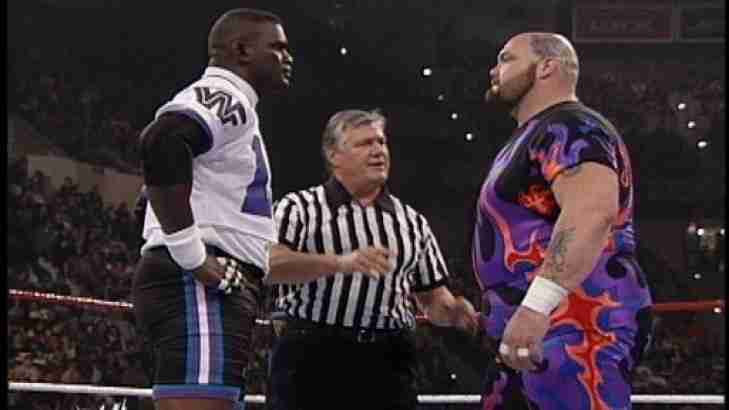
Lawrence Taylor may have been the undeserving recipient of the main event match at Wrestlemania XI, but he did not embarrass himself once he got into the ring. He did all the necessary work leading up to the match (including a very realistic beginning to the angle at the Royal Rumble) and managed to be led to a decent match by Bam Bam Bigelow.
