

Our All Time Top 50 Minnesota Twins have been revised to reflect the 2025 Season

Yes, we know that this is taking a while!
As many of you know, we at Notinhalloffame.com are slowly generating the top 50 of each major North American sports team. That being said, we maintain and update our existing Top 50 lists annually. We are pleased to present our pre-2026 revision of our top 50 Minnesota Twins.
As for all of our top 50 players in baseball, we look at the following:
1. Duration and Impact.
2. Traditional statistics and how they finished in the Major League Baseball.
3. Advanced Statistics.
4. Playoff performance.
5. Their respective legacy on the team.
6. How successful the team was when he was there.
7. Respecting the era in which they played.
Criteria 1-4 will make up the lion’s share of the algorithm. Please note that we have implemented this for the first time. This has changed the rankings all throughout the board.
Last year, the Twins had a poor season, winning only 70 games and finishing fourth in the American League Central. There were changes within the Top 50, with only one active player moving up the list. The new algorithm did see a past player reclaim a spot on the list.
As always, we present our top five, which saw no changes.
*Reminder, this list includes the shared history of the Washington Senators.
1. Walter Johnson
2. Harmon Killebrew
3. Rod Carew
4. Kirby Puckett
5. Joe Mauer
You can find the entire list here.
Byron Buxton is the only active player who moved up the list. He went from #40 to #31.
The new algorithm brought Earl Battey back (at #47) and pushed Max Kepler off the Top 50.
We thank you for your continued support of our lists on Notinhalloffame.com.
Our All-Time Top 50 Minnesota Twins have been revised to reflect the 2022 Season

Yes, we know that this is taking a while!
As many of you know, we here at Notinhalloffame.com are slowly generating the 50 of each major North American sports team. That being said, we have existing Top 50 lists out and we always consistently look to update them when we can and based on necessity. As such, we are very happy to present our post 2022 revision of our top 50 Minnesota Twins.
As for all of our top 50 players in baseball we look at the following:
1. Advanced Statistics.
2. Traditional statistics and how they finished in the American League.
3. Playoff accomplishments.
4. Their overall impact on the team and other intangibles not reflected in a stat sheet.
Last year, Minnesota had a decent year, though was mildly disappointing. There is one new entrant into the top 50, with no other fluctuation.
As always, we present our top five, which had no changes.
2. Rod Carew
5. Joe Mauer
You can find the entire list here.
The only new entry is Outfielder, Byron Buxton, who enters at #47, who knocks out Bump Hadley from the Top 50. Notably, Max Kepler and Jorge Polanco almost made this portion of the list.
We welcome your input and comments and as always, we thank you for your support.
Our All-Time Top 50 Minnesota Twins have been revised
Yes, we know that this is taking a while!
As many of you know, we here at Notinhalloffame.com are slowly generating the 50 of each major North American sports team. That being said, we have existing Top 50 lists out and we always consistently look to update them when we can and based on necessity. As such, we are very happy to present the pre-2021 update of our top 50 Minnesota Twins of all-time.
As for all of our top 50 players in hockey we look at the following:
1. Advanced Statistics.
2. Traditional statistics and how they finished in the American League.
3. Playoff accomplishments.
4. Their overall impact on the team and other intangibles not reflected in a stat sheet.
There are no new additions but as always, we announce our top five immediately, but out full list can be found here.
2. Rod Carew
5. Joe Mauer
There were no significant changes in the overall list, only minor tinkering due to change in advanced statistics from Baseball Reference.
We welcome your input and commentsand as always, we thank you for your support.
Our Top 50 All-Time Minnesota Twins are now up
We here at Notinhalloffame.com have completed our next all-time top 50, this time that of the Minnesota Twins.
As for all of our top 50 players in baseball we look at the following:
- Sabremetric tallies while with that team, mostly WAR.
- Traditional metrics and how they finished in their respective league overall.
- Playoff accomplishment.
- Their overall impact on the team and other intangibles not reflected in a stat sheet.
Here is something else worth noting: While the Minnesota Twins really don’t acknowledge much of their Washington Senators past, this is part of it according to the official history of the organization according to Major League Baseball. The Minnesota Twins Hall of Fame may not have any Senators in it, but this list does…until MLB tells us not to recognize this as franchise history.
The complete list can be found here, but as always we announce our top five in our news. They are:
So which team is up next?
The New York Yankees, the most successful team in North American team sports. Look for that in a week.
As always, we here at Notinhalloffame.com thank you for your support.
2. Harmon Killebrew
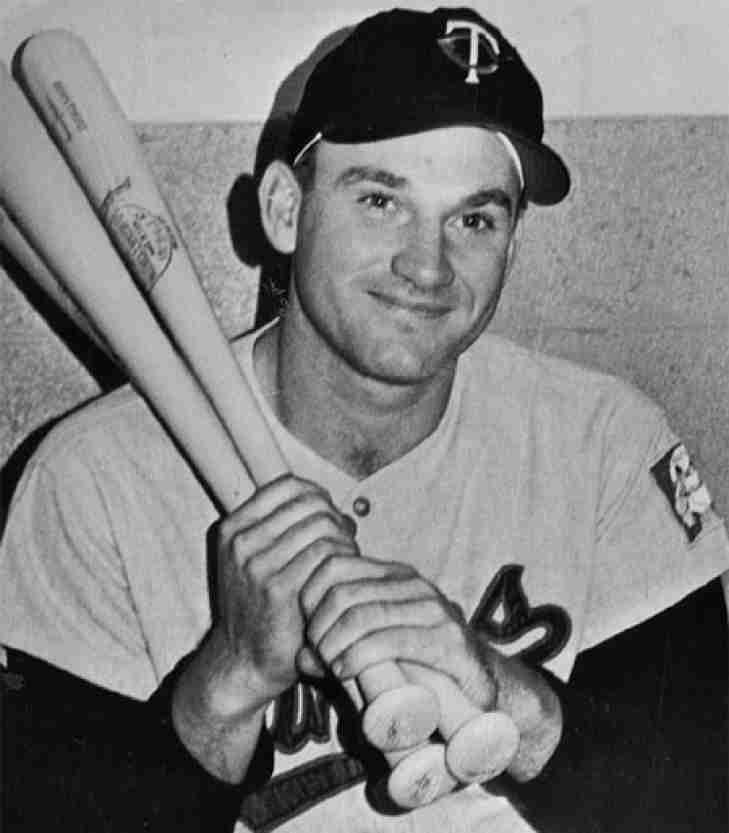
Harmon Killebrew arrived in Washington, D.C. in 1954 as a prized "Bonus Baby," a teenager whose raw strength was so prodigious that MLB rules forced him to stay on the big-league roster before he was technically ready for the assignment. While he spent his first few seasons navigating a slow, deliberate apprenticeship, the Senators' front office's patience eventually yielded one of the most feared power threats in the sport's history.
Killebrew had a breakout 1959 season that validated years of patience. After becoming the starting third baseman in Washington, he led the American League with 42 home runs and earned his first of thirteen All-Star selections. He proved a reliable mainstay capable of carrying a lineup, a trend that continued after the franchise moved to Minnesota in 1961. This period established a high-quality baseline, as he became the first player to hit 40+ home runs in a season eight times, a rare power achievement.
Killebrew hit his peak in 1969, setting the standard for Twins’ offense. That summer, he demonstrated patience and power, winning AL MVP with league-leading home runs (49), RBIs (140), and walks (145). His disciplined approach earned him a .427 OBP, showing he's more than a slugger. This dominance made him a superstar, supporting the Twins' first AL West division title.
Over his career, he was a tactical nightmare for pitchers, capturing six home run titles and finishing in the top five of the MVP voting six times. While he was never a traditional contact hitter, he demonstrated specialized value to the organization by drawing walks, leading the league in walks four times. His impact with the Senators/Twins with 559 home runs and 1,540 RBIs marks that reflect a lifetime of heavy lifting in the middle of the order.
Killebrew was inducted into the Baseball Hall of Fame, a fitting capstone to a journey that saw him become the first player in franchise history to have his number retired. He was also part of the inaugural Twins Hall of Fame Class in 2000.
