
Our All Time Top 50 Indianapolis Colts have been revised to reflect the 2025 Season

Yes, we know that this is taking a while!
As many of you know, we at Notinhalloffame.com are slowly generating the top 50 of each major North American sports team. That being said, we maintain and update our existing Top 50 lists annually. As such, we are delighted to present our post-2024 revision of our top 50 Indianapolis Colts.
As for all of our top 50 players in football, we look at the following:
1. Advanced Statistics.
2. Traditional statistics and how they finished in the National Football League.
3. Playoff accomplishments.
4. Their overall impact on the team and other intangibles that are not reflected in a stat sheet.
Last year, the Colts went 8-9 and missed the playoffs for the fourth straight year. There were no new entrants, and two elevations.
As always, we present our top five, which remain unchanged.
1. Peyton Manning
2. Johnny Unitas
3. Gino Marchetti
4. Marvin Harrison
5. Raymond Berry
You can find the entire list here.
Offensive Lineman and seven-time Pro Bowl Selection Quenton Nelson rose to #15 from #22.
The only new entrant was Center Ryan Kelly, who is now with the Minnesota Vikings. He debuts at #45.
We thank you for your continued support of our lists on Notinhalloffame.com.
The Pro Football Hall of Fame Revisited Project: 1979 Final VOTE
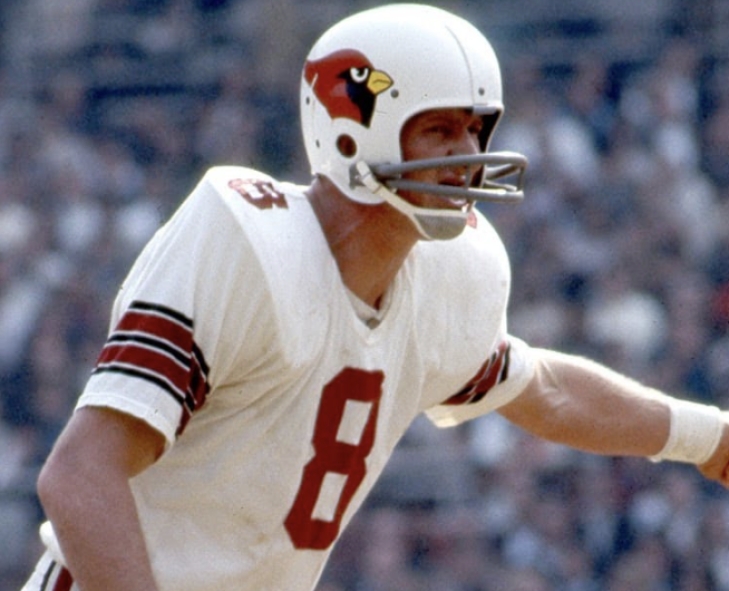
1979 Pro Football Hall of Fame Revisited Project Class.
Here we are! Again!!
If you have been following our Pro Football Hall of Fame Revisited Project, you know we have asked the rhetorical question: What if the PFHOF began in January 1946?
After soliciting and obtaining a passionate group of football fans and historians, we sent out a ballot for a Preliminary Vote, in which we asked each voter to give us 25 names as their semi-finalists and 5 in the Senior Pool. We then asked the group to vote for their 15 Finalists in the Modern Era and 3 in the Senior Category. The final stage was to vote for their five Modern Era inductee and one Senior inductee.
This is the result of the 34th official class.
Below are the final results of this project based on 32 votes.
Remember that we have reverted back to the top five candidates entering the Hall in the Modern Era
This is for the “Modern Era”
*Bold indicates they have been elected to the Pro Football Hall of Fame Revisited Class of 1979:
|
Player |
Year of Eligibility |
Vote Total |
|
Dick Butkus LB |
1 |
32 |
|
Johnny Unitas QB |
1 |
32 |
|
Larry Wilson DB |
2 |
22 |
|
Don Maynard E-FL-HB |
1 |
11 |
|
Leroy Kelly RB |
1 |
10 |
|
Tom Sestak DT |
6 |
8 |
|
Billy Shaw G |
5 |
7 |
|
Bob Brown T |
1 |
7 |
|
Gene Hickerson G |
1 |
7 |
|
Abe Woodson DB |
8 |
6 |
|
Dick LeBeau DB |
2 |
6 |
|
Chuck Howley LB |
1 |
6 |
|
Eddie Meador DB |
4 |
4 |
|
Alan Ameche FB |
14 |
3 |
|
Johnny Robinson DB-FL-HB |
3 |
2 |
This is for the “Senior Era”,
*Bold indicates they have been elected to the Pro Football Hall of Fame Revisited Class of 1979.
|
Pat Harder |
1 |
13 |
|
Ward Cuff |
7 |
9 |
|
Woody Strode |
5 |
7 |
|
None of the Above |
N/A |
3 |
This is for the “Coaches/Contributors”,
*Bold indicates they have been elected to the Pro Football Hall of Fame Revisited Class of 1978.
|
Art Rooney (Owner) |
1 |
18 |
|
Weeb Ewbank (COACH) |
3 |
11 |
|
Charles Bidwill (OWNER) |
10 |
1 |
|
None of the Above |
N/A |
2 |
About the 1979 Inductees:
Dick Butkus LB, CHI 1965-73: Inducted in the Pro Football Hall of Fame Revisited Project in 1979 on his 1st Ballot. Inducted into the actual Pro Football Hall of Fame in 1979.
A beast at the University of Illinois, Dick Butkus was a two-time All-American who won the Big Ten MVP in 1963. Butkus stayed close to home as a pro, as he was taken with the third overall pick in 1965.
Chicago was not a powerhouse when Butkus played, but he was the reason to pay attention to the team. One of the most punishing tacklers in football history, offensive skill players were quaking with the knowledge that they could be on the end of a Butkus tackle. Butkus would define the middle linebacker position, and his versatility became a standard that only a few have since matched.
Butkus played in the NFL for nine seasons, earning Pro Bowl honors for the first eight and being named a First Team All-Pro for five of them. He is also one of the select few who have won the Defensive Player of the Year award twice.
After Butkus retired, he went on to become a successful actor.
Johnny Unitas, QB, BAL 1956-72 & SDG 1973: Inducted in the Pro Football Hall of Fame Revisited Project in 1979 on his 1st Ballot. Inducted into the actual Pro Football Hall of Fame in 1979.
Johnny Unitas is considered by many (and include us in that category) as the games first modern Quarterback, an incredible accomplishment for someone who was not drafted in the top 100.
“Johnny U” took over the reins full time in 1957 and promptly took the Colts to their first winning season. The following season was even more magical. Unitas took his team to the NFL Championship and won the game in what was then called “The Greatest Game Ever Played”, a win in overtime that cemented the National Football League as a television juggernaut.
Unitas would top that in 1959, again winning the NFL Title and this time winning his first of three MVPs. Four times Unitas would lead the NFL in Touchdown Passes and four times he would lead the league in Passing Yards. The revolutionary pivot and five-time First Team Pro Bowl selection was elected to the Pro Football Hall of Fame in 1979, his first year of eligibility.
Larry Wilson, DB, STL 1960-72. Inducted in the Pro Football Hall of Fame Revisited Project in 1979 on his 2nd Ballot. Inducted into the actual Pro Football Hall of Fame in 1978.
Larry Wilson fell to the Seventh Round of the 1960 Draft as many teams worried about his small stature translating into the pro ranks. As it turned out, the St. Louis Cardinals got one of the biggest bargains in draft history.
Wilson played his entire career with the Cardinals, and is regarded as one of the best Safeties in the game. An eight-time Pro Bowl and five-time First Team All-Pro, Wilson led the NFL in Interceptions in 1966 (10), and had 52 overall. Wilson was also excellent in the pass rush, and while he did not invent the Safety Blitz, he was the first to perfect it.
Don Maynard, FL-WR, NYG 1958, NYT/NYJ 1960-72 & STL 1973. Inducted in the Pro Football Hall of Fame Revisited Project in 1979 on his 1st Ballot. Inducted into the actual Pro Football Hall of Fame in 1987.
A college star at Texas Western (the future UTEP), Don Maynard was drafted by the New York Giants. He played for them sparingly as a rookie, prompting him to leave the team for Hamilton of the Canadian Football League the following season. In his third professional year, Maynard returned to New York City, but this time with the Titans of the upstart American Football League.
Maynard would become the team’s top Wide Receiver, exceeding 1,000 Yards five times, and winning the AFL Receiving Title in 1967. A four-time Pro Bowl and All-AFL Team Selection, Maynard helped lead the Jets to a Super Bowl win as the primary target for Joe Namath.
Retiring after a final season with the St. Louis Cardinals, Maynard left the game with an exceptional 11,834 Receiving Yards and 88 Touchdowns.
Leroy Kelly, RB, CLE 1964-73. Inducted in the Pro Football Hall of Fame Revisited Project in 1979 on his 1st Ballot. Inducted into the actual Pro Football Hall of Fame in 1994.
We can't even imagine what it must have been like for Leroy Kelly to follow in the footsteps of Jim Brown.
Realistically, who could?
Despite this, Kelly, who was drafted by the NFL in 1964, initially served as Brown's understudy and assumed the starting role when Brown unexpectedly retired. Kelly thrived, going to six straight Pro Bowls (1966-71) and winning the Rushing Title twice (1967 & 1968). Kelly also led the NFL in Rushing Touchdowns in three consecutive seasons (1966-68). While his production was not equal to Brown's, whose was?
Kelly rushed for 7,274 Yards and 74 Touchdowns on the ground, which for his era, was very impressive.
Art Rooney, Owner, PIT 1936-87. Inducted in the Pro Football Hall of Fame Revisited Project in 1979 on his 1st Coaches/Contributor Ballot. Inducted into the actual Pro Football Hall of Fame in 1964.
Art Rooney founded the Pittsburgh Steelers in 1933, where they were named the Pirates until 1942. The Steelers struggled for years, but Rooney weathered huge financial losses to keep the team afloat in a city that loved the game of football.
Rooney is very rare in that he was far more successful after he was inducted into the Pro Football Hall of Fame (though not in our revisted project). The Steelers would win four Super Bowls in the 1970s and become one of the most popular teams in sports.
Our All-Time Top 50 Indianapolis Colts Have Been Revised to Reflect the 2023 Season
Yes, we know that this is taking a while!
As many of you know, we at Notinhalloffame.com are slowly generating the top 50 of each major North American sports team. That being said, we have existing Top 50 lists and consistently look to update them when necessary and based on necessity. As such, we are delighted to present our post-2023 revision of our top 50 Indianapolis Colts.
As for all of our top 50 players in football, we look at the following:
1. Advanced Statistics.
2. Traditional statistics and how they finished in the National Football League.
3. Playoff accomplishments.
4. Their overall impact on the team and other intangibles that are not reflected in a stat sheet.
Last year, the Colts failed to make the playoffs, but we saw one new entrant and one elevation.
As always, we present our top five, which saw no changes:
1. Peyton Manning
2. Johnny Unitas
3. Gino Marchetti
4. Marvin Harrison
5. Raymond Berry
You can find the entire list here.
Offensive Lineman and six-time Pro Bowl Selection Quenton Nelson, advances to #22 from #30.
The lone new entry is Center Ryan Kelly, who debuts at #45.
Notably, Shaquille Leonard, who played half last season with Indianapolis, could not rise from his rank of #40.
Buddy Young fell out of the Top 50.
We thank you for your continued support of our lists on Notinhalloffame.com.
Our All-Time Top 50 Indianapolis Colts have been updated to reflect the 2022 Season
Yes, we know that this is taking a while!
As many of you know, we here at Notinhalloffame.com are slowly generating the 50 of each major North American sports team. That being said, we have existing Top 50 lists out and we always consistently look to update them when we can and based on necessity. As such, we are very happy to present our post 2022 revision of our top 50 Indianapolis Colts.
As for all of our top 50 players in football we look at the following:
1. Advanced Statistics.
2. Traditional statistics and how they finished in the National Football League.
3. Playoff accomplishments.
4. Their overall impact on the team and other intangibles not reflected in a stat sheet.
Last year, the Colts entered another rebuilding year and were unable to make the playoffs. There was only one elevation resulting from the past season.
As always, we present our top five, which did not change.
You can find the entire list here.
The only change is Offensive Lineman, Quenton Nelson, climbs ten rungs to #30. He is now a five-time Pro Bowl Selection.
We welcome your input and comments and as always, we thank you for your support.
Our All-Time Top 50 Indianapolis Colts have been revised to reflect the 2020 Season
Yes, we know that this is taking a while!
As many of you know, we here at Notinhalloffame.com are slowly generating the 50 of each major North American sports team. That being said, we have existing Top 50 lists out and we always consistently look to update them when we can and based on necessity. As such, we are very happy to present our pre-2021 revision of our top 50 Indianapolis Colts of all-time.
As for all of our top 50 players in football we look at the following:
1. Advanced Statistics.
2. Traditional statistics and how they finished in the NFL.
3. Playoff accomplishments.
4. Their overall impact on the team and other intangibles not reflected in a stat sheet.
There are two new additions in the Top 50, and one small elevation, from our current Colts, but none of which impact our top five.
As always, we present our top five. They are:
3. Gino Marchetti
5. Raymond Berry
You can find the entire list here.
Wide Receiver, T.Y. Hilton moved up one spot to #24.
Left Guard, Quenton Nelson, who has been a First Team All-Pro in all three of his seasons comes in at #48.
2018 Defensive Rookie of the Year, Darius Leonard enters at #49.
We welcome your input and commentsand as always, we thank you for your support.
The Top 50 Indianapolis Colts of All-Time are now up
We are proud to present our Top 50 Indianapolis Colts, an organization with 2 Super Bowls, 2 NFL Championships and a rich history in two cities.
As always, we will give you a sneak preview of the top 5:
1. Peyton Manning
2. Johnny Unitas
3. Gino Marchetti
4. Marvin Harrison
5. Raymond Berry
The complete list can be found here and we encourage you to check it our and voice your opinions.
Up next will be the Top 50 Minnesota Timberwolves, and yes the #1 choice on that one was very easy!
Look for that soon!
2. Johnny Unitas
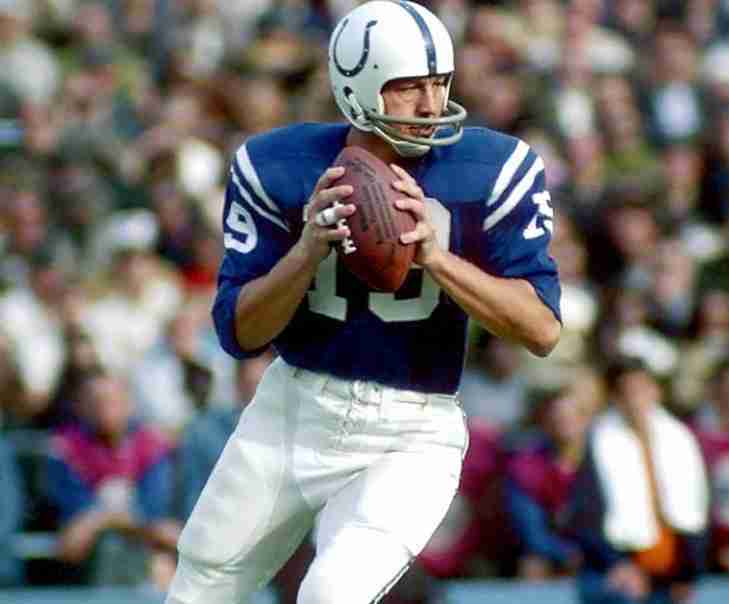
Drafted in the ninth round of the 1955 NFL Draft by the Pittsburgh Steelers—who notoriously cut him before he ever played a down—Johnny Unitas was forced to play semi-pro ball for $6 a game on a dirt field in Pittsburgh while working construction to support his family. Baltimore Colts head coach Weeb Ewbank offered him a second chance in 1956, signing him as a backup. When starter George Shaw broke his leg early that season, Unitas stepped off the bench, threw an interception on his first attempt, and then laid the blueprint for every modern quarterback that followed.
What made "Johnny U" standout among his peers was his exceptional mastery of the passing game, earning him the nickname "The Golden Arm.” Wearing his signature black high-top cleats, Unitas showed unwavering confidence in the pocket, often holding the ball until the last moment to throw accurate passes while absorbing hits from unblocked defenders. He introduced the two-minute drill, made the hurry-up offense popular, and called his own plays from the huddle with a bold, calculated approach that kept defenses guessing and off-balance.
By 1957, Unitas had fully assumed control in Baltimore, leading the franchise to its first winning season while ranking first in the NFL for passing yards (2,550) and touchdown passes (24). The next season was truly remarkable. Unitas guided the Colts to the 1958 NFL Championship Game against the New York Giants, famously called "The Greatest Game Ever Played.” During the league's inaugural sudden-death overtime, Unitas remained calm under pressure as he methodically moved Baltimore down the field, culminating in Alan Ameche’s game-winning touchdown run—a nationally televised moment that propelled professional football into America's top sport.
In 1959, Unitas reached a career high by winning his first AP NFL MVP award, leading the league with 2,899 passing yards and 32 touchdown passes. He finished the season by spearheading a fourth-quarter comeback to beat the Giants in a rematch of the title game, securing back-to-back championships for Baltimore. During this period, Green Bay legend Vince Lombardi famously said about Unitas: "Without him, they're just ordinary. With him, they're great.”
His consistent performance during the regular season set numerous historical records, most famously a streak of 47 straight games with at least one touchdown pass from 1956 to 1960. This record remained unbroken for 52 years, highlighting his dependability week after week during an era when passing rules provided quarterbacks little protection from severe hits.
In 1964, Unitas secured his second NFL MVP award after leading the Colts to a 12–2 season, passing for 2,824 yards and achieving a league-leading 9.3 yards per attempt. He won a third MVP in 1967, completing a league-high 58.5% of his passes for 3,428 yards. Despite injuries toward the end of his career, his veteran leadership helped guide the Colts to victory in Super Bowl V, where they defeated the Dallas Cowboys, and he earned his final world championship ring.
Throughout 17 seasons in Baltimore (1956–1972), Unitas played 206 games, with 39,768 passing yards and 287 touchdowns. A three-time NFL MVP, five-time First-Team All-Pro, and 10-time Pro Bowler, he retired as the NFL's all-time leader in passing yards, completions, and touchdowns. Named to the NFL’s 50th, 75th, and 100th Anniversary All-Time Teams, his No. 19 jersey was retired by the Colts. Enshrined in the Hall of Fame in 1979, Unitas is regarded as the father of modern quarterback play.
