
In the lead-up to the 1998 NFL Draft, the Indianapolis Colts held the first overall pick and sat at a monumental franchise crossroads. The debate between selecting Tennessee’s polished, lineage-backed Peyton Manning or Washington State’s physically gifted Ryan Leaf dominated pre-draft analysis nationwide. While Leaf possessed a booming arm and raw athletic upside, Manning won over general manager Bill Polian with an obsessive work ethic and tactical intelligence. Manning famously told the Colts that if they passed on him, he would spend the next fifteen years coming back to beat them—a confidence that convinced Indianapolis to hand him the keys to the franchise.
Again, seriously, pundits actually debated Manning versus Leaf.
Manning took his lumps during a trial-by-fire 1998 rookie campaign, throwing 28 interceptions for a 3–13 team. Yet even amid those growing pains, he set NFL rookie records with 3,739 passing yards and 26 touchdown passes, showing flashes of a cerebral genius that would quickly reshape the position. He responded in 1999 by orchestrating the biggest one-year turnaround in league history at the time, leading Indianapolis to a 13–3 record, an AFC East division title, and his first of eleven Pro Bowl selections in a Colts uniform.
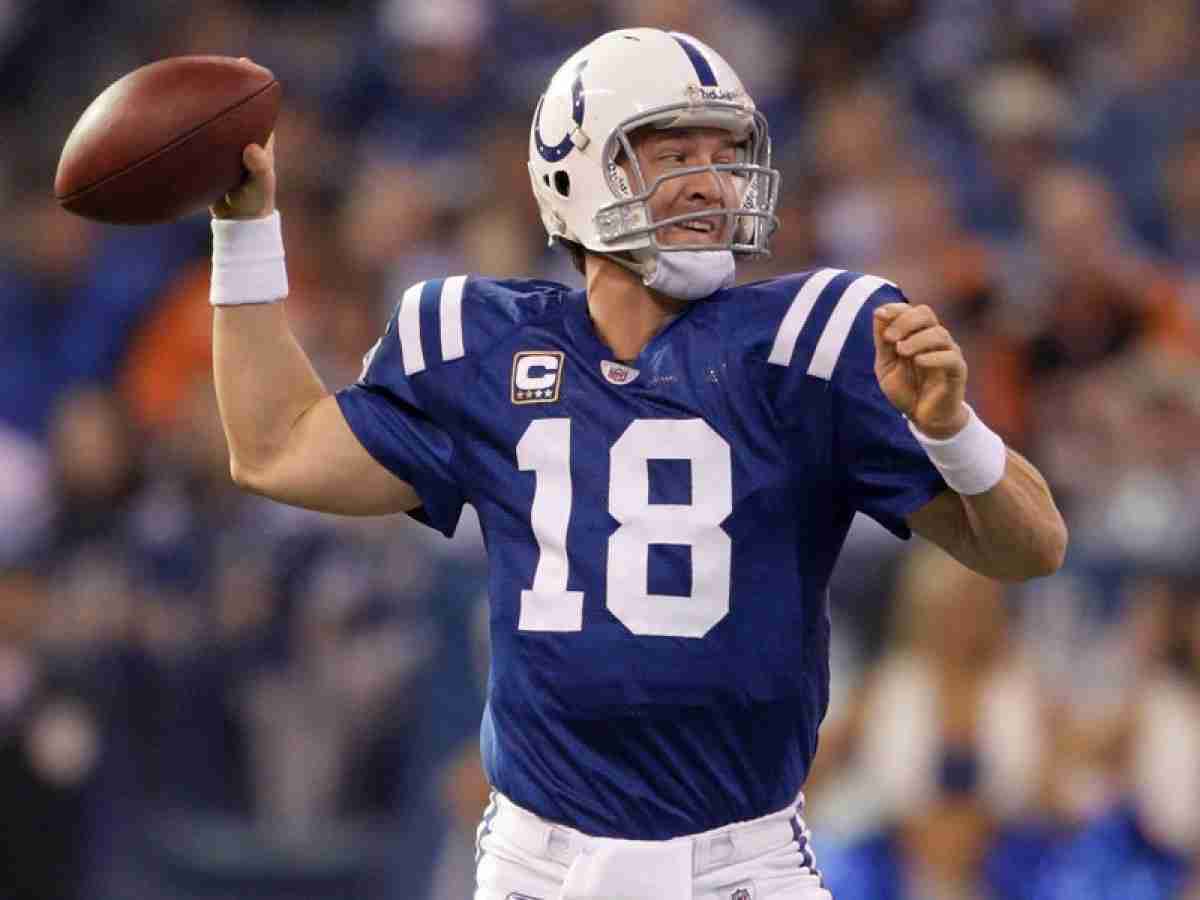
Manning's true distinction lay in his offensive approach, transforming the pre-snap line into a dramatic display. Using a hurry-up, no-huddle offense, he often acted as his own play-caller, analyzing defenses in real-time while issuing dummy calls, quick audibles, and his signature "Omaha!" shouts. His mechanics were precise: a swift, consistent release, excellent footwork, and a remarkable ability to anticipate throws before receivers broke. Manning didn’t just run plays; he often anticipated and out-foxed defensive coordinators well before the snap.
His leadership style was rigorous, passionate, and inspiring, establishing a high benchmark for responsibility within the organization. Manning demanded that his skill players mirror his meticulous preparation, practicing route drills until timing was perfectly precise. Together with Hall of Fame running back Edgerrin James and top-wide receivers Marvin Harrison and Reggie Wayne, Manning built an offensive system that controlled the pace, exploited matchups, and overwhelmed defenses that revealed their plans prematurely.
In 2003, Manning achieved a major milestone by earning his first AP NFL MVP award, passing for 4,267 yards and 29 touchdowns, sharing the honor with Steve McNair. The following year, he had an outstanding season, showcasing one of the most efficient passing performances in football history. Manning surpassed Dan Marino's single-season record with 49 touchdown passes and only 10 interceptions, finishing with an impressive 121.1 passer rating. He also led the Colts to a 12–4 record and won his second consecutive MVP award.
Despite his consistent regular-season success, public focus often centered on whether Manning could clinch the championship. He dispelled these doubts during an exceptional 2006 postseason, beginning with a memorable 18-point comeback against Bill Belichick and the New England Patriots in the AFC Championship. Manning then guided Indianapolis through the rain in Super Bowl XLI, completing 25 passes for 247 yards and a touchdown against the Chicago Bears, earning MVP honors and delivering Indianapolis its first Lombardi Trophy.
Manning’s dominance continued unabated through the back half of the decade, as he added two more NFL MVP awards in 2008 and 2009. In 2009, he rallied the Colts to a franchise-record 14 consecutive wins to start the season, earning his fourth MVP and engineering seven fourth-quarter comebacks. He pushed Indianapolis back to the grand stage in Super Bowl XLIV, cementing his status as the undisputed premier field general of his generation and a perennial title contender.
The fairytale partnership came to a sudden, heartbreaking end when a severe neck injury required multiple surgeries, sidelining Manning for the entire 2011 season. With the team slumping to a 2–14 record without their star and holding the top pick in the 2012 draft, the front office made the agonizing business decision to release their icon. It was an emotional farewell to a quarterback who had not only built the modern Colts franchise but had also effectively built Lucas Oil Stadium—affectionately dubbed "The House That Peyton Built."
Across 13 seasons with the Colts (1998–2010), Manning started 208 consecutive games, with 54,828 yards, 399 TD passes, and 141 wins—franchise records. A four-time MVP, five-time First-Team All-Pro, and 11-time Pro Bowler, he was named to the NFL 2000s All-Decade and NFL 100th Anniversary Teams. The Colts retired his No. 18 jersey, honored him in their Ring of Honor, and built a bronze statue outside Lucas Oil Stadium in 2017. Manning was inducted into the Pro Football Hall of Fame in 2021, cementing his legacy in Indianapolis sports history.


Comments powered by CComment