


Committee Chairman
47. Gaylord Perry
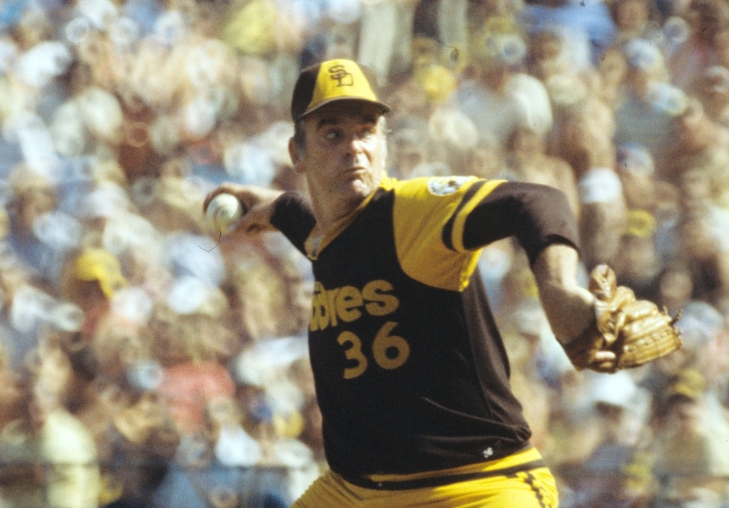
Gaylord Perry was already an established superstar when the Texas Rangers traded him to San Diego before the 1978 season, and the 1972 American League Cy Young winner was poised to add more trophies to his mantle.
The spitball specialist led the NL in Wins in 1978 (21), and he made history as the first hurler to win the Cy Young in both leagues. Perry turned 40 during his second year with San Diego but was still good, going to his fifth (and final) All-Star Game, while posting a 12-11 record with a 3.06 ERA. He was traded back to Texas afterward, leaving San Diego with 33 Wins against 17 Losses and a 2.88 ERA.
While Perry’s sabermetrics hold him back on this list, and it could be argued that he should not have won the ’78 Cy Young, he DID win it, and it will never be taken from him.
Perry entered the Baseball Hall of Fame in 1991.
43. Tim Flannery
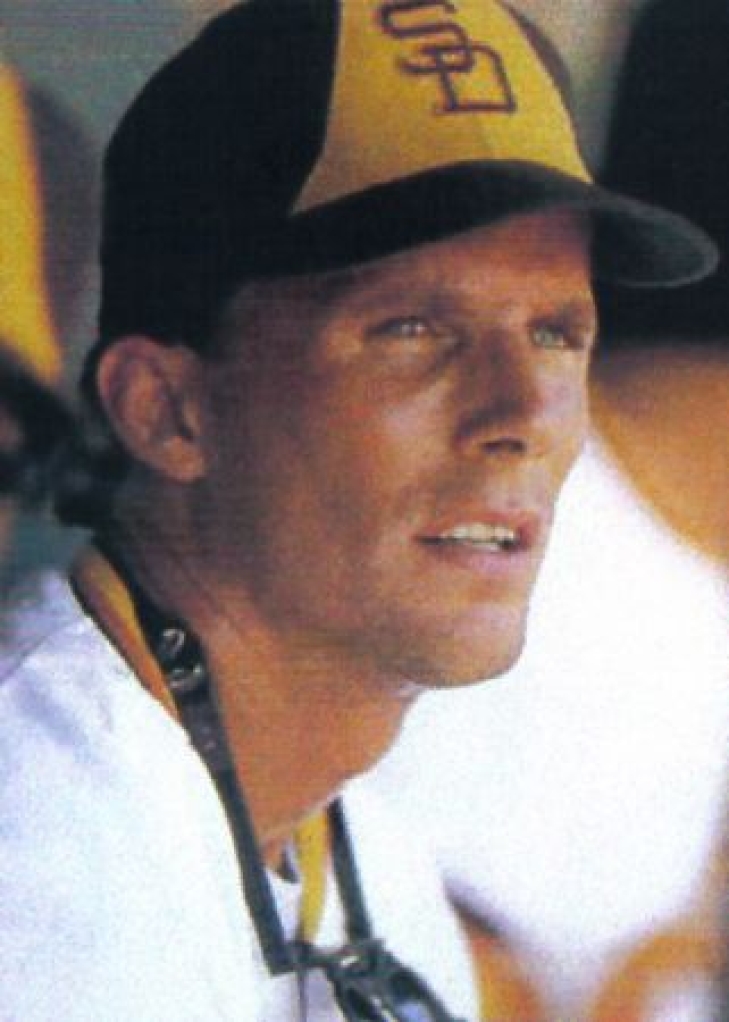
Tracking San Diego Padres history with an algorithm that only scrapes elite box scores and awards will miss the true franchise legacy, which isn't always about 40-home runs or Cy Youngs. It's sometimes rooted in blue-collar loyalty that resonates with a city. For over a decade, a small, gritty left-hander from Oklahoma exemplified local grit. Drafted in 1978, Timothy Earl Flannery lacked superstar tools but embraced his utility role with dedication. During 11 seasons with the Friars, "Flan" combined selflessness and a revered clubhouse presence, becoming one of the team’s most beloved figures.
In the late 1970s, his initial phase was a test of pure professional survival, moving between triple-A and the major leagues before securing a permanent spot on the major league roster. Flannery made a routine of executing high-contact plate appearances and sliding into late-game infield roles. He functioned as a key situational safety net across the dirt, spending substantial time at second, third, and shortstop to support the primary starters.
His best performance as a primary starter came during the historic 1985 season, when he took on the regular second base role and achieved career highs with a .281 batting average, 50 runs scored, and 108 hits, his only season with over 100 hits.
He adeptly complemented his skills with a consistent 1986 encore, hitting 103 times and scoring 48 runs, while drawing 54 walks to achieve an impressive .378 on-base percentage. In addition to his reliable infield abilities, his calm demeanor in clutch moments made him a beloved figure among local fans. Flannery excelled at delivering crucial performances off the bench, notably in Game 4 of the 1984 NLCS against the Chicago Cubs—pinch-hitting in the fifth inning with a sharp single and scoring the tying run, which helped the underdogs secure their first National League pennant.
However, Flannery possessed almost no over-the-fence power, managing just nine home runs across his 972 career appearances, which limited his baseline offensive production and left him with a modest .255 batting average and an 85 career OPS+.
He retired after the 1989 season, with 631 career hits, all as a Padre. Flannery became a Coach and would win three World Series Rings with San Francisco.
49. Dave Roberts
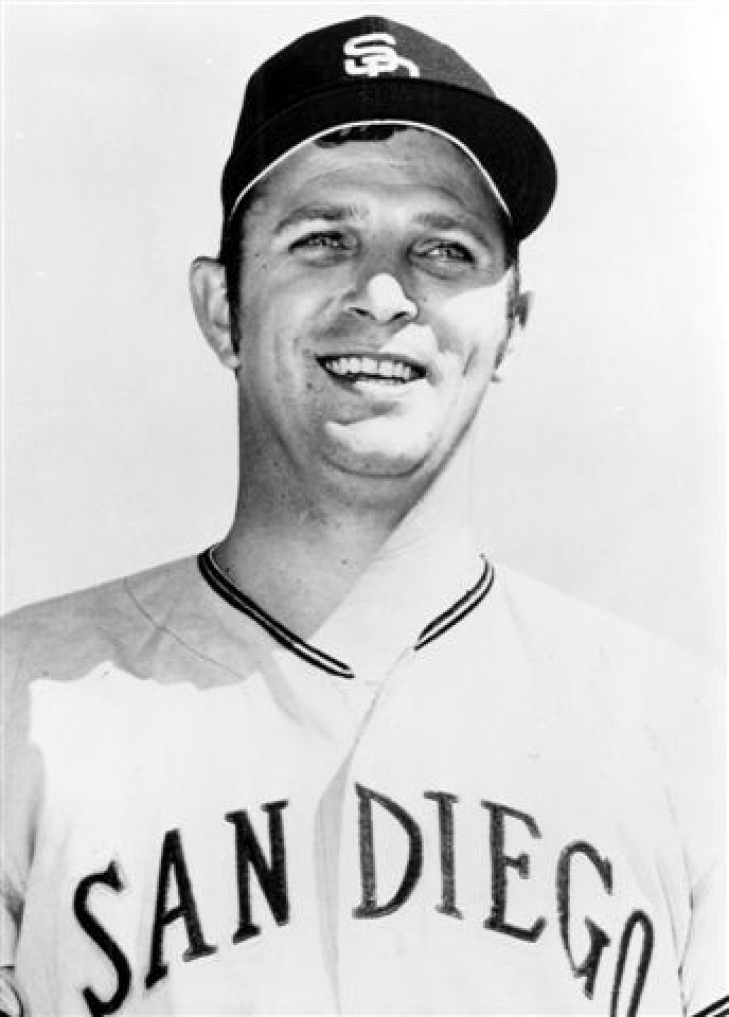
The history of the San Diego Padres commences with the 1968 MLB Expansion Draft, a process designed to assemble a team from the remnants of established franchises. With their 24th selection, the newly established Padres selected a young left-handed pitcher named Dave Roberts from the Pittsburgh Pirates organization. Arriving in Southern California with limited major league experience, Roberts assumed the role of a supporting player for an expansion team, responsible for pitching innings for a team that was destined to remain at the lower end of the National League West standings during its formative years.
His first season in San Diego in 1969 was a quiet period of learning, with the rookie southpaw splitting time between the rotation and bullpen as he adapted to the demands of the senior circuit. By 1970, Roberts was beginning to understand how to handle major-league lineups. He became a key part of the rotation, throwing 181.1 innings in 26 starts. Although he finished with a misleading 8–14 record due to limited run support, his solid 3.81 ERA showed a quick improvement in his composure and stamina.
During the historic 1971 summer season, Roberts delivered his finest performance on the field. While pitching for the struggling Padres—a team that lost 100 games and ranked last in offense—he transformed his starts into must-see events at Jack Murphy Stadium. Although his 14–17 record reflected the team's poor offense, Roberts was outstanding, posting a remarkable 2.10 ERA and a tiny 1.109 WHIP over a career-high 269.2 innings.
That summer, his dominance was highlighted by his remarkable efficiency under pressure. Roberts pitched 15 complete games and two shutouts, providing much-needed relief for a heavily taxed bullpen every fifth day. His skill in limiting runs on a last-place expansion team drew notice from national writers, earning him a sixth-place finish in the National League Cy Young Award voting. This was the only season in his career where he received award consideration, marking the peak of the young franchise's success.
Aware that the young left-hander was at the height of his value, the Padres management chose to capitalize on his breakout performance. In December 1971, San Diego traded Roberts in a significant multi-player deal with the Houston Astros, acquiring veteran pitcher Skip Guinn and infielder Denis Menke. This move typified the early Padres strategy of transforming brief individual success into a set of roster components to strengthen the team's foundational depth.
Roberts would go on to pitch another decade in the majors, carving out a highly respectable career as a versatile arm for Houston, Detroit, and the Texas Rangers, but he never again matched the statistical wizardry of his magical 1971 peak. He left San Diego having compiled 27 wins, 335 strikeouts, and a sharp 3.05 ERA across his 547.1 innings of work.
45. Bip Roberts
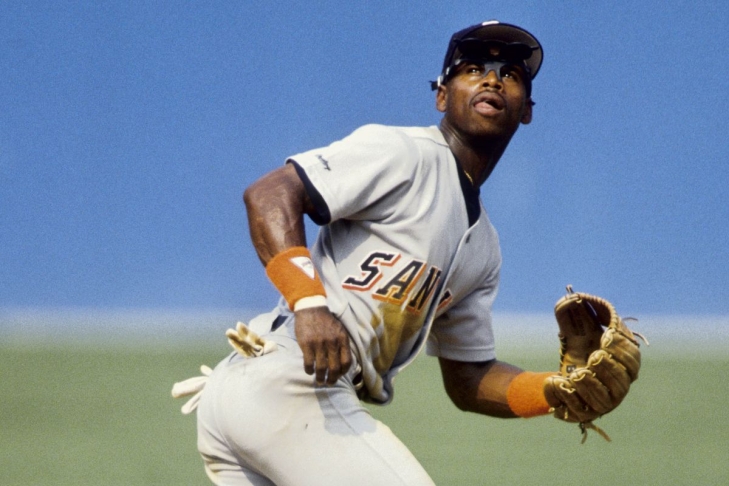
Plucked away from the Pittsburgh Pirates organization as a dynamic Rule 5 draft choice in December 1985, Bip Roberts was instantly subjected to the rigid roster restrictions of the big leagues. Because the front office had to carry him on the major-league bench for the entirety of the 1986 campaign to avoid losing his rights, his initial phase in Southern California was a lesson in pure professional patience, spent operating almost exclusively as a high-velocity pinch runner, situational pinch hitter, and late-game defensive replacement before returning to the minors for two years of essential seasoning.
Once he permanently claimed an everyday role, however, the diminutive switch-hitter universally celebrated as “Bip” transformed the entire operational ceiling of the lineup. He didn't rely on over-the-fence power; instead, Roberts turned tracking pitches, slapping line drives, and orchestrating pure panic on the basepaths into a strict daily routine.
His true breakthrough erupted during the 1989 campaign, where he smooth-talked National League pitchers to log a brilliant .301 batting average across 117 highly productive games.
The peak of his hardware-certified legacy was reached during a stunning 1990 regular season. Roberts delivered an exceptional display of top-of-the-order hitting. That summer, he achieved an impressive 172 hits, 36 doubles, and a career-high 104 runs scored. He maintained a solid .309 batting average and stole 46 bases, finishing in the top ten in the National League batting race and earning his team's local Most Valuable Player award.
After a noticeable performance decline in 1991 caused by persistent physical issues, the front office made a dramatic move in December by trading their versatile player to the Cincinnati Reds in a high-profile deal for top closer Randy Myers. Although Myers gained national recognition in Ohio, ending 1992 with an All-Star appearance and finishing in the top ten MVP voting, his strong emotional connection to Southern California remained deeply rooted.
He orchestrated a highly celebrated, nostalgic homecoming by signing back with San Diego as a free agent ahead of the strike-shortened 1994 calendar.
Roberts quickly regained his elite contact form under the sun, extending his impressive 24-game hitting streak—the best in Major League history—and achieving a strong .320 batting average before the season was cut short. He carried that same steady performance into 1995, batting .304 and stealing 20 bases in only 73 games.
Yet, because the Padres were rapidly approaching a total payroll restructuring under general manager Kevin Towers, a second definitive business departure materialized that December. The organization executed a winter trade, shipping their popular veteran catalyst to the Kansas City Royals in exchange for first baseman Wally Joyner.
Over his 667 total games representing San Diego across two separate stints, he accumulated exactly 673 hits, 98 doubles, 21 triples, and 148 stolen bases, completely validated by an exceptional .298 career batting average and a sterling .361 on-base percentage.
