


Committee Chairman
Our All-Time Top 50 Miami Marlins have been updated to reflect the 2022 Season
Yes, we know that this is taking a while!
As many of you know, we here at Notinhalloffame.com are slowly generating the 50 of each major North American sports team. That being said, we have existing Top 50 lists out and we always consistently look to update them when we can and based on necessity. As such, we are very happy to present our post 2022 revision of our top 50 Miami Marlins.
As for all of our top 50 players in baseball we look at the following:
1. Advanced Statistics.
2. Traditional statistics and how they finished in the National League.
3. Playoff accomplishments.
4. Their overall impact on the team and other intangibles not reflected in a stat sheet.
Last year, the Marlins were not able to make the playoffs, and we had one new entrant and one huge ranking jump.
As always, we present our top five, which was not affected by the last season:
3. Josh Johnson
You can find the entire list here.
Cy Young winner, Sandy Alcantara had a monstrous jump from #30 to #7.
Third Baseman, Brian Anderson, moved up from #31 to #29.
Pitcher, Pablo Lopez, who is now with the Minnesota Twins, climbed from #49 to #32.
Jon Berti is the only debut, and he enters at #48.
We welcome your input and comments and as always, we thank you for your support.
22. Jake Cronenworth
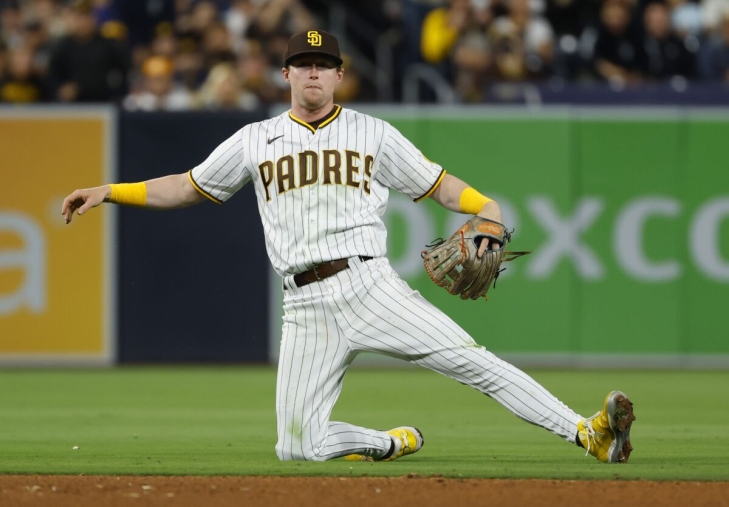
When examining the multi-player trade that sent Tommy Pham to the Tampa Bay Rays in December 2019, the baseball community initially zeroed in on the immediate outfield swap. However, as the seasons passed under the Southern California sun, a minor prospect unexpectedly changed the story of the deal. Jake Cronenworth was originally drafted by the Rays as a two-way player, but after moving west, he gave up pitching to focus solely on his left-handed batting. He made his MLB debut during the shortened 2020 season, delivering a remarkable debut by hitting .285 and narrowly finishing as the runner-up for the National League Rookie of the Year.
His 2021 follow-up performance demonstrated that his rookie burst was no fleeting moment. As a sophomore, Cronenworth established a consistent elite level, recording 151 hits, 33 doubles, 7 triples, and 21 home runs, along with 71 RBIs, which earned him his first All-Star spot.
He maintained his high-volume authority into the 2022 season, hitting 17 more home runs, setting a career high with 70 walks, and driving in 88 runs. His performance in the middle of the lineup earned him a second straight All-Star selection. Cronenworth's ability to perform under pressure became legendary that autumn when his clutch, game-winning single in Game 4 of the NLDS beat the division-rival Dodgers, igniting an unforgettable celebration at Petco Park.
The physical and strategic grind over the next two summers led to a natural dip in performance. Facing positional shuffling and a lower slot in a star-studded batting order, Cronenworth labored through a frustrating, injury-hampered 2023 run where his baseline slipped to 105 hits and just 10 long balls. While the 2024 schedule yielded a respectable bounce-back effort—as he elevated his output to 139 hits, 29 doubles, and 17 home runs—the front office challenges him to rediscover the elite, frontline efficiency that originally defined his peak.
He is coming off a solid 2025, but as he is still a Padre, there is room for him to eventually break the top 15 of this list.
Stacy Keibler named to the WWE Hall of Fame
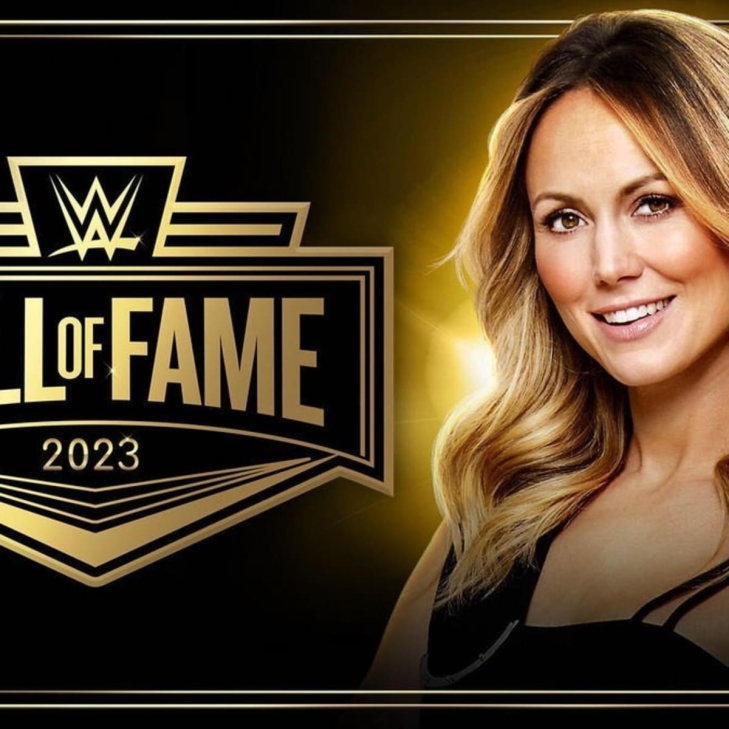
A week before Wrestlemania, and only days before the ceremony, the WWE Hall of Fame has announced the fourth inductee of the 2023 Class, which is former WWE performer, Stacy Keibler.
Keibler first entered professional wrestling as one of the Nitro Girls in WCW, and would later become a heel valet, named “Miss Hancock”. Following the end of WCW in 2001, Keibler was one of the contracts acquired by the WWE, and she would be part of the Invasion storyline, often paired with Torrie Wilson.
Keibler would work programs as the valet of the Dudley Boyz, and later would serve as Vince McMahon’s “Personal Assistant”. She also had programs with Test, Scott Steiner, The Hurricane, Randy Orton among others.
While Keibler was never a top-flight wrestler, but was one of the better-known personalities under the WWE umbrella during her tenure.
Keibler was ranked #218 on our latest rank of those to consider for the WWE Hall of Fame. That list will be revised the month after Wrestlemania.
We here at Notinhalloffame.com would like to congratulate Stacy Keibler for this impending honor.
35. Jon Berti
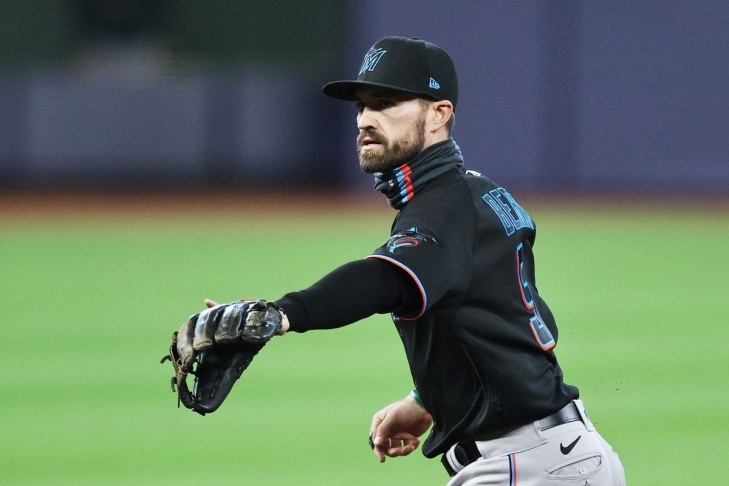
Jon Berti arrived in Miami in 2019 as a baseball journeyman, a 29-year-old minor league veteran who had spent seven seasons working through Toronto's system for a brief appearance in the majors. When the Marlins signed him to a minor league contract, they envisioned a "super-utility" player; what they gained was someone who would eventually carve his name into the franchise record books. Over five seasons in South Florida, he became the ultimate versatile player, offering defensive flexibility and blazing speed that became hallmarks of the Marlins' gritty identity during a rebuilding period.
While he didn’t possess the traditional power of a corner infielder or the high-volume hitting of a primary starter, he made up for it with a unique kind of chaos on the bases. He was a regular for Don Mattingly, moving effortlessly among the outfield, second base, and third base, keeping the roster flexible. By 2022, he reached an unexpectedly high level of efficiency, leading the entire National League with 41 stolen bases in a season. This was a historic anomaly. Berti arguably became the most unlikely stolen base leader in the history of the game, achieving this despite playing in only 102 games.
Berti's 2022 campaign was defined by not just the number of steals but their boldness. He famously swiped second, third, and home in one inning, thrilling Miami fans. In 2023, he had his best offensive year with 114 hits and a .294 average, helping the Marlins reach the postseason.
Berti was traded to the New York Yankees before the 2024 season.
